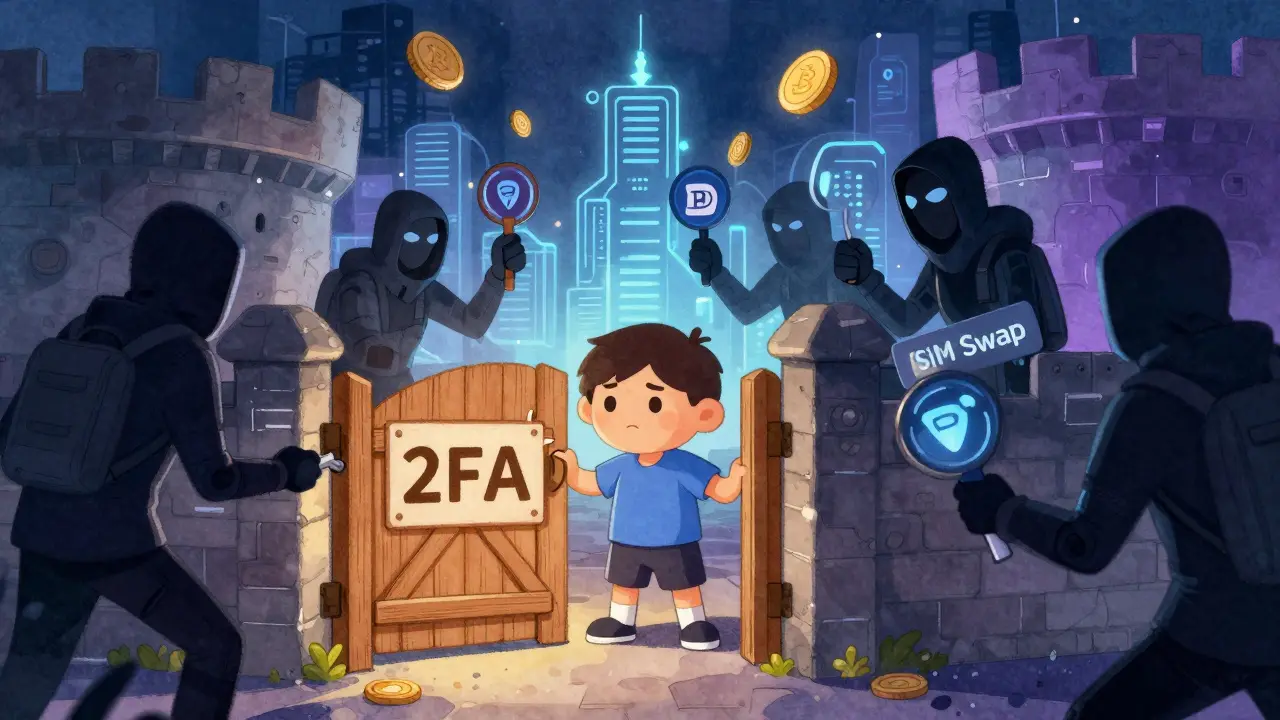
Remember the last time you tried to log into your crypto wallet or a DeFi platform and got hit with that annoying second step? You know, the code sent to your phone or the prompt on your authenticator app. Most people call this Two-Factor Authentication (2FA). It feels secure. It stops the lazy hackers. But here is the uncomfortable truth for anyone holding significant digital assets in 2026: 2FA is no longer enough.
We are living in an era where AI-driven phishing attacks can bypass SMS codes in seconds, and SIM-swapping scams have become industrialized. If your security relies on just two factors, you are playing defense against attackers who have upgraded their offense. This is why we need to talk about Multi-Factor Authentication (MFA) that goes beyond the basic two-step process. We need to look at how combining passwords, hardware keys, biometrics, and behavioral analysis creates a fortress around your blockchain interactions.
The Critical Difference Between 2FA and True MFA
Let’s clear up a common misconception first. Many people use "2FA" and "MFA" interchangeably. They aren’t the same thing. Think of it like buying insurance. 2FA is the minimum coverage required by law. MFA is the comprehensive policy that covers everything from theft to natural disasters.
Two-Factor Authentication (2FA) is a specific subset of multi-factor authentication that requires exactly two distinct verification methods to grant access. Usually, this is something you know (your password) and something you have (a one-time code on your phone).
Multi-Factor Authentication (MFA) is a broader security framework that combines three or more authentication factors to verify user identity, providing layered protection against sophisticated cyber threats. While 2FA is rigidly limited to two steps, MFA is scalable. It can combine what you know, what you have, who you are, where you are, and even how you behave.
Why does this distinction matter for blockchain users? Because blockchain transactions are often irreversible. If someone steals your 2FA credentials, they might get in. With a robust MFA strategy requiring three or four factors, the attacker would need to compromise your password, steal your physical device, spoof your biometric data, and mimic your typical location all at once. That is exponentially harder.
| Feature | Standard 2FA | Advanced MFA (Beyond 2FA) |
|---|---|---|
| Number of Factors | Exactly 2 | 3 or more (scalable) |
| Typical Components | Password + SMS/App Code | Password + Hardware Key + Biometric + Context |
| Vulnerability to Phishing | High (SMS/OTP can be intercepted) | Low (Hardware keys prevent replay attacks) |
| User Experience | Moderate friction | Adaptive friction (low for normal, high for suspicious) |
| Blockchain Suitability | Basic retail accounts | Hot wallets, DAO governance, enterprise custody |
The Five Pillars of Identity Verification
To build an MFA system that actually works, you need to understand the five pillars of identity. Traditional security focused on the first three. Modern blockchain security demands all five.
- Something You Know: Your password, PIN, or passphrase. This is the weakest link because humans are terrible at creating unique, complex passwords. We reuse them. We write them down. In a blockchain context, this is your seed phrase backup knowledge.
- Something You Have: A physical object. This could be a smartphone receiving an SMS, a dedicated authenticator app generating TOTP codes, or-crucially for crypto-a hardware security key like a YubiKey or Ledger device. The hardware key is non-phishable because it signs transactions cryptographically; it doesn't just send a code.
- Something You Are: Biometrics. Fingerprint scans, facial recognition (FaceID), or voice patterns. These are convenient but carry privacy risks. However, when used as a secondary factor to unlock a local hardware wallet, they add significant friction for an attacker.
- Somewhere You Are: Geolocation. If you usually log in from Perth, Australia, and suddenly there is a login attempt from Moscow, Russia, the system flags it. For blockchain exchanges, this prevents unauthorized withdrawals from foreign IP addresses.
- Something You Do: Behavioral biometrics. This is the cutting edge. How fast do you type? How do you hold your mouse? What is your typical transaction pattern? Machine learning models analyze these micro-behaviors. If the behavior deviates, the system demands additional verification.
When you combine these, you create a web of security that is incredibly difficult to penetrate. An attacker might steal your password (Know) and clone your SIM card (Have), but they cannot replicate your fingerprint (Are) or your typing rhythm (Do) while sitting in a different country (Where).
Why Passwords Alone Are a Dead End
The Cybersecurity and Infrastructure Security Agency (CISA) has officially declared single-factor authentication a bad practice. And honestly, looking at the breach data, they are right. Password-only systems are vulnerable to credential stuffing, where bots take usernames and passwords leaked from one site (like a random forum) and try them on thousands of other sites, including crypto exchanges.
In the blockchain world, the stakes are higher. There is no bank to call to reverse a transfer. Once those tokens leave your wallet address, they are gone. Relying solely on a password is like leaving your house door unlocked because you live in a "quiet neighborhood." The quiet neighborhoods are exactly where opportunistic thieves strike.
Furthermore, human error is the biggest vulnerability. We choose "Password123" because it’s easy to remember. We reuse our email password for our trading account. MFA mitigates this human weakness by ensuring that even if you make a mistake with your password, the attacker still needs the other factors to succeed.
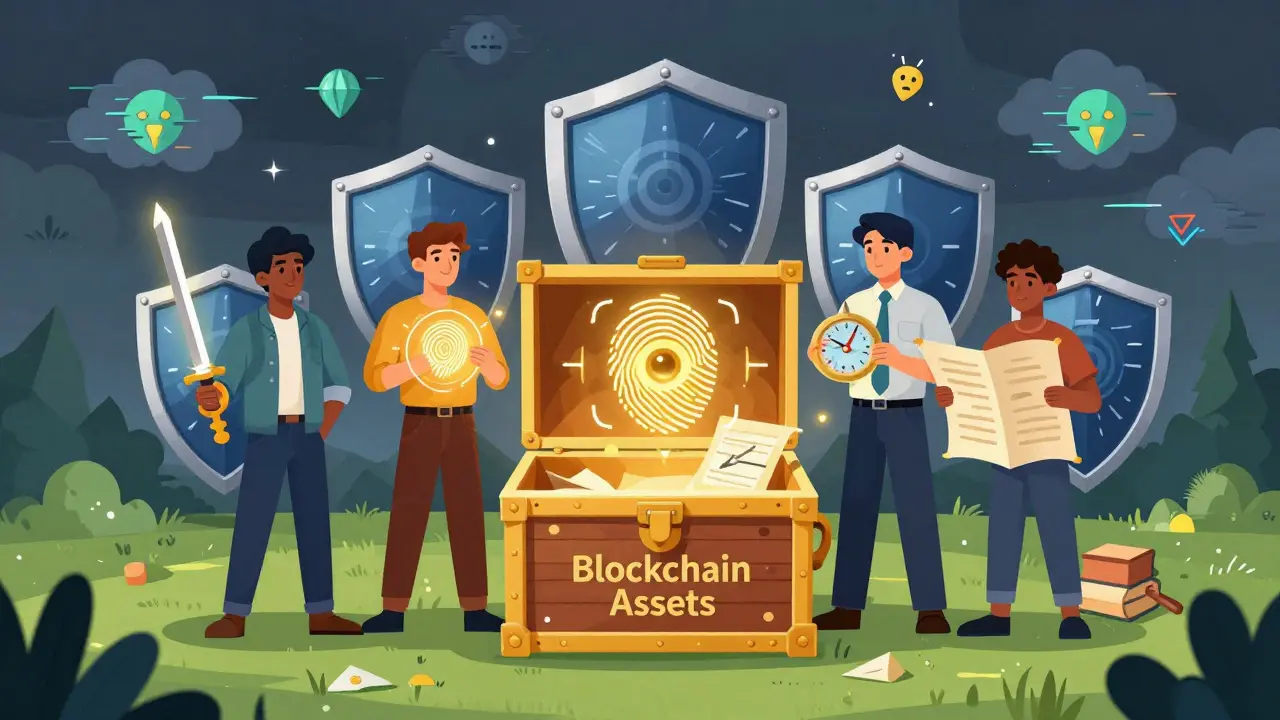
Implementing MFA for Blockchain Assets
So, how do you actually implement this "beyond 2FA" approach in your daily crypto life? It starts with layering.
1. Upgrade Your Exchange Security
Most major exchanges now support hardware keys. Stop using SMS for 2FA. SMS is vulnerable to SIM swapping, where a social engineer tricks your carrier into transferring your number to their phone. Instead, pair your exchange account with a TOTP authenticator app (like Authy or Google Authenticator) AND a WebAuthn-compatible hardware key (like a NitroKey or YubiKey). This gives you three factors: Password (Know) + App Code (Have) + Hardware Signature (Have/Cryptographic Proof).
2. Secure Your Hot Wallets
If you use a hot wallet (connected to the internet) for frequent transactions, ensure it requires biometric confirmation for every signature. MetaMask, for example, can integrate with mobile devices that require FaceID or TouchID to approve transactions. This adds the "Something You Are" factor to the mix.
3. Use Multi-Sig for Cold Storage
For larger holdings, move beyond single-signature wallets. Use a Multi-Signature (Multi-Sig) wallet. This isn't just MFA for logging in; it's MFA for spending. A 2-of-3 Multi-Sig setup means you need two out of three private keys to authorize a transaction. You can keep one key on your laptop, one on a hardware device, and one in a safe deposit box. To drain the wallet, an attacker would need to break into your home, hack your computer, and steal your hardware key simultaneously.
4. Enable Geographic and Device Restrictions
Many enterprise-grade MFA providers allow you to set policies based on location. If you only trade from Australia, block access from other regions unless explicitly whitelisted. Also, bind your account to specific device IDs. If a new device tries to log in, trigger a mandatory re-verification process.
The Role of Zero Trust Architecture
MFA is a core component of Zero Trust Architecture. Zero Trust operates on the principle: "Never trust, always verify." It assumes that breaches will happen and that the network perimeter is porous. Therefore, every access request must be authenticated, authorized, and encrypted-regardless of whether it originates from inside or outside the corporate network.
For blockchain organizations, this means that even if an employee has valid credentials, they don't automatically get access to sensitive smart contract code or treasury keys. They must prove their identity continuously. If their behavior changes (e.g., accessing files at 3 AM instead of 9 AM), the system revokes access until they re-authenticate with additional factors.
This continuous verification model is essential as remote work becomes permanent. Employees access systems from coffee shops, home offices, and travel hubs. Static passwords cannot protect this dynamic environment. Only adaptive MFA, which adjusts its requirements based on risk levels, can provide adequate security.
Challenges and Trade-offs
Adding more security layers inevitably adds friction. Users hate having to click through multiple prompts. This is called "authentication fatigue." If the process is too cumbersome, people will find ways to bypass it, writing down codes or sharing passwords, which defeats the purpose.
The solution lies in adaptive MFA. Instead of demanding all five factors every time, the system analyzes the risk. Logging in from your usual laptop at your home IP? Just a password. Logging in from a new device in a new city? Require password, hardware key, and biometric scan. This balances security with usability.
Cost is another factor. Hardware tokens cost money. Enterprise MFA solutions with behavioral analytics require subscriptions. However, compare this cost to the potential loss of millions in stolen cryptocurrency or the reputational damage of a data breach. The ROI on robust MFA is undeniable.
The Future: Passwordless and Biometric-First MFA
Where is this heading? The trend is moving toward passwordless authentication. Projects like Passkeys (based on the FIDO2 standard) allow users to log in using biometrics and public-key cryptography without ever typing a password. This eliminates the "something you know" factor entirely, replacing it with stronger cryptographic proofs.
Imagine unlocking your blockchain portfolio with just your face and your phone. Behind the scenes, your phone generates a unique cryptographic signature tied to that specific website. No password to steal. No SMS code to intercept. Just pure, mathematically verifiable identity. As these technologies mature, they will become the standard for high-security blockchain applications.
Is SMS-based 2FA safe for my crypto wallet?
No, SMS-based 2FA is not considered safe for high-value crypto assets. It is vulnerable to SIM swapping attacks, where criminals trick your mobile carrier into transferring your phone number to their device, allowing them to receive your verification codes. Use an authenticator app or hardware key instead.
What is the difference between MFA and 2FA?
2FA requires exactly two authentication factors (usually password + code). MFA is a broader term that includes any system using two or more factors. MFA can scale to include biometrics, location data, and behavioral analysis, offering significantly higher security than basic 2FA.
Should I use a hardware security key for blockchain access?
Yes, hardware security keys (like YubiKey or Ledger) are highly recommended. They provide phishing-resistant authentication because they cryptographically sign requests rather than just sending codes. This makes them immune to man-in-the-middle attacks and keyloggers.
How does behavioral biometrics improve security?
Behavioral biometrics analyzes how you interact with devices, such as typing speed, mouse movements, and touch pressure. Since these patterns are unique to each individual, deviations can signal unauthorized access, triggering additional verification steps without user intervention.
What is Zero Trust Architecture in blockchain?
Zero Trust is a security model that assumes no user or device is trusted by default, even if they are inside the network. Every access request must be verified continuously using MFA, encryption, and least-privilege principles, reducing the risk of lateral movement by attackers.



Jay Sharma
June 29, 2026 AT 01:28they want you to believe in the hardware keys but its all a trap designed by the deep state to track your keystrokes and sell your biometric data to the highest bidder on the dark web. i never trust anything connected to the grid because they are watching everything we do.
Rebecca Shoniker
June 29, 2026 AT 19:54Let me be absolutely clear; if you are still relying on SMS for authentication, you are fundamentally incompetent., and frankly, it is embarrassing that you are holding any assets at all., The article states clearly that SIM-swapping is an industrialized threat., You should be using WebAuthn-compliant hardware tokens immediately., Do not expect sympathy when your wallet is drained due to your negligence.,
Emma Rémond
July 1, 2026 AT 06:16The distinction between 2FA and MFA is elementary security hygiene, yet the masses continue to conflate them with alarming regularity., True MFA involves behavioral biometrics and contextual awareness, which most retail users cannot even conceptualize., Relying on a password and a code is akin to securing a bank vault with a piece of string., One must adopt a Zero Trust architecture mindset, verifying identity continuously rather than assuming static credentials provide safety., It is quite tedious explaining these basics to those who refuse to upgrade their cognitive frameworks regarding digital asset protection.,
Melissa L
July 2, 2026 AT 02:51i just use my phone face id and it works fine so why bother with all this extra stuff?
Trent Erman1
July 3, 2026 AT 22:05I appreciate the detailed breakdown of the five pillars of identity verification., It really highlights how much our security needs have evolved beyond simple passwords., The concept of behavioral biometrics is fascinating, especially how typing rhythm can serve as a unique identifier., I think many people underestimate the value of hardware keys like YubiKeys in preventing phishing attacks., It is reassuring to see that adaptive MFA can balance security with usability by adjusting friction based on risk levels., We need to move away from the false sense of security provided by SMS codes., Implementing multi-sig wallets for cold storage seems like a no-brainer for anyone with significant holdings., The future of passwordless authentication using Passkeys looks promising for reducing user fatigue while increasing security., It is important to remember that human error remains the biggest vulnerability in any system., By layering multiple factors, we create a robust defense against sophisticated cyber threats., This approach aligns well with the principles of Zero Trust Architecture., I will definitely be reviewing my current setup to ensure I am utilizing more than just two factors., Thank you for shedding light on these critical security measures., It is better to be safe than sorry when dealing with irreversible blockchain transactions., Let us embrace these technologies to protect our digital futures.,
ross harris
July 5, 2026 AT 06:19the whole idea of trusting a machine to verify your soul through your finger print is dystopian garbage., you are handing over your biological essence to a corporation that will inevitably sell it or lose it in a breach., true security comes from obscurity and keeping your head down, not from some fancy algorithm that tracks where you type.,
Maurice Flynn
July 7, 2026 AT 05:33I tend to agree with the cautious approach here., While hardware keys are great, there is always a risk of losing them or having them stolen physically., It is a bit of a paradox where the more secure you try to be, the more points of failure you introduce in terms of physical access., Still, better than SMS for sure.,
Scott Miller
July 7, 2026 AT 16:04You guys need to wake up and smell the coffee! If you are not using a hardware key, you are basically begging to get hacked., Stop making excuses about convenience and start taking your security seriously., It is not hard to plug in a USB stick!, Get with the program or get wrecked!,
Carl Hanzel
July 8, 2026 AT 15:22This article is completely wrong., MFA is just a marketing buzzword designed to sell more expensive software., In reality, the only thing that matters is the seed phrase., If you keep that offline, nothing else matters., All this talk about behavioral biometrics is just noise to distract you from the real issue.,
Routh Middaugh
July 8, 2026 AT 20:23I find the comparison table very helpful., It clearly shows the limitations of standard 2FA., However, I wonder if the cost of enterprise MFA solutions is prohibitive for small DAOs., It would be nice to see more affordable options for community governance security.,
nancy jarecki
July 9, 2026 AT 10:31The author fails to grasp the fundamental cryptographic principles underlying blockchain security., MFA is merely a gatekeeping mechanism that does nothing to secure the private keys themselves., Focusing on authentication layers is a distraction from the core issue of key management., Furthermore, the reliance on biometrics introduces privacy risks that far outweigh the marginal security gains., It is naive to assume that behavioral analysis can prevent determined attackers.,
Ryan Peters
July 10, 2026 AT 00:35Typical foreign tech companies trying to dictate how Americans should secure their money., Our banks are already weak enough without adding these unnecessary hurdles., Why should we trust some cloud-based service with our biometric data? Keep it simple and keep it local.,
Carl Belgrave
July 10, 2026 AT 10:53If you are smart, you know that the government wants to track every transaction., Using these advanced MFA systems makes it easier for them to link your identity to your wallet., Stick to cash and physical gold if you want real freedom.,
Daniel J. Cox
July 10, 2026 AT 11:08I love how this breaks down the different factors., It reminds me of the old saying: trust but verify., In the crypto world, we should probably just verify., :) The part about geolocation restrictions is something I never thought about before.,
Mélanie Boulay
July 10, 2026 AT 12:53While I understand the necessity of enhanced security measures, I must express my concern regarding the potential invasion of privacy inherent in behavioral biometrics., When we allow systems to monitor our typing rhythms and mouse movements, we are essentially consenting to a continuous surveillance of our physical interactions with technology., This raises significant ethical questions about the boundaries between security and personal autonomy., Furthermore, the implementation of such systems requires vast amounts of data collection, which increases the risk of large-scale data breaches., We must carefully weigh the benefits of adaptive friction against the costs of eroding individual privacy rights., It is crucial that any adoption of these technologies is accompanied by strict regulatory oversight and transparent data handling policies., Users should have the right to opt-out of behavioral tracking without compromising their ability to access essential services., The principle of least privilege should apply not only to network access but also to data collection practices., We need to ensure that the security enhancements do not come at the expense of our fundamental civil liberties.,
Robert Hundley
July 12, 2026 AT 11:36Hey everyone! Just wanted to say that switching to a hardware key was the best decision I made last year., No more worrying about SMS hacks., Plus, it feels cool to tap the key to sign transactions., Who else has made the switch? :)
Rob Morton
July 13, 2026 AT 02:50I have been thinking about the role of zero trust in everyday crypto usage., It seems like a concept borrowed from corporate IT that might be overkill for retail investors., However, given the irreversible nature of blockchain transactions, perhaps it is necessary., How do you balance the need for high security with the desire for ease of use?,
Carol @minaszilda
July 13, 2026 AT 20:49Great insights on adaptive MFA., It balances security and usability well., Hardware keys are highly recommended.,
John Curry
July 15, 2026 AT 03:46The shift towards passwordless authentication is inevitable., Biometrics offer a seamless user experience while providing strong cryptographic proofs., However, we must address the privacy concerns associated with storing biometric templates., If these templates are compromised, they cannot be changed like passwords., Therefore, decentralized storage and local processing of biometric data are essential., The future lies in combining biometrics with public-key cryptography to create a robust and private authentication system.,
Fiona Ellis
July 15, 2026 AT 13:22I recently set up a 2-of-3 multisig wallet for my family’s joint investments., It has been incredibly reassuring to know that no single person can drain the funds., The setup process was a bit technical, but the peace of mind is worth it., 🛡️💰
Nicole Woessner
July 15, 2026 AT 15:04interesting read., i usually just stick to authenticator apps but maybe i should look into hardware keys., the point about sim swapping is scary.,
Jon Milton
July 16, 2026 AT 15:18People need to stop fighting each other online and start focusing on actual security., Whether you prefer hardware keys or biometrics, the goal is to protect your assets., Let us promote education rather than judgment., Everyone is on their own journey to understanding blockchain security.,
Sajjad Ghorbani Moghaddam
July 18, 2026 AT 12:55For those new to this, starting with an authenticator app is a good first step., But eventually, you should move to hardware keys., It is not too late to improve your security habits.,
ELNORA JEFFERSON
July 20, 2026 AT 08:28Ugh, another long article telling me what to do., I am tired of being told I am doing it wrong., My way works for me.,