
Imagine packing your bags for Lisbon, dreaming of sunny days and tax-free crypto profits. You’ve heard the rumors. You’ve seen the forums. But here is the hard truth for 2026: Portugal is no longer the wild west it was in 2018. The golden era of zero taxes on all crypto gains has ended, replaced by a complex mix of strict EU rules, temporary regulatory gaps, and specific tax traps that could cost you thousands if you aren’t careful.
If you are planning to move to or trade from Portugal as a destination for cryptocurrency traders seeking favorable tax treatment and European regulatory alignment, you need more than just a passport. You need to understand how the new MiCA regulation is reshaping the landscape, why the Banco de Portugal paused new licenses in early 2025, and exactly how to keep your long-term gains tax-exempt. This guide cuts through the noise to give you the real deal on trading crypto in Portugal today.
The New Tax Reality: It’s Not Zero Anymore
Let’s kill the biggest myth first. If you sell Bitcoin after holding it for six months, you will pay tax. Under the budget plan implemented in 2023, Portugal introduced a clear distinction between short-term and long-term holdings. This change was designed to align with broader European standards while still keeping the country attractive compared to neighbors like France or Germany.
Here is how the math works now:
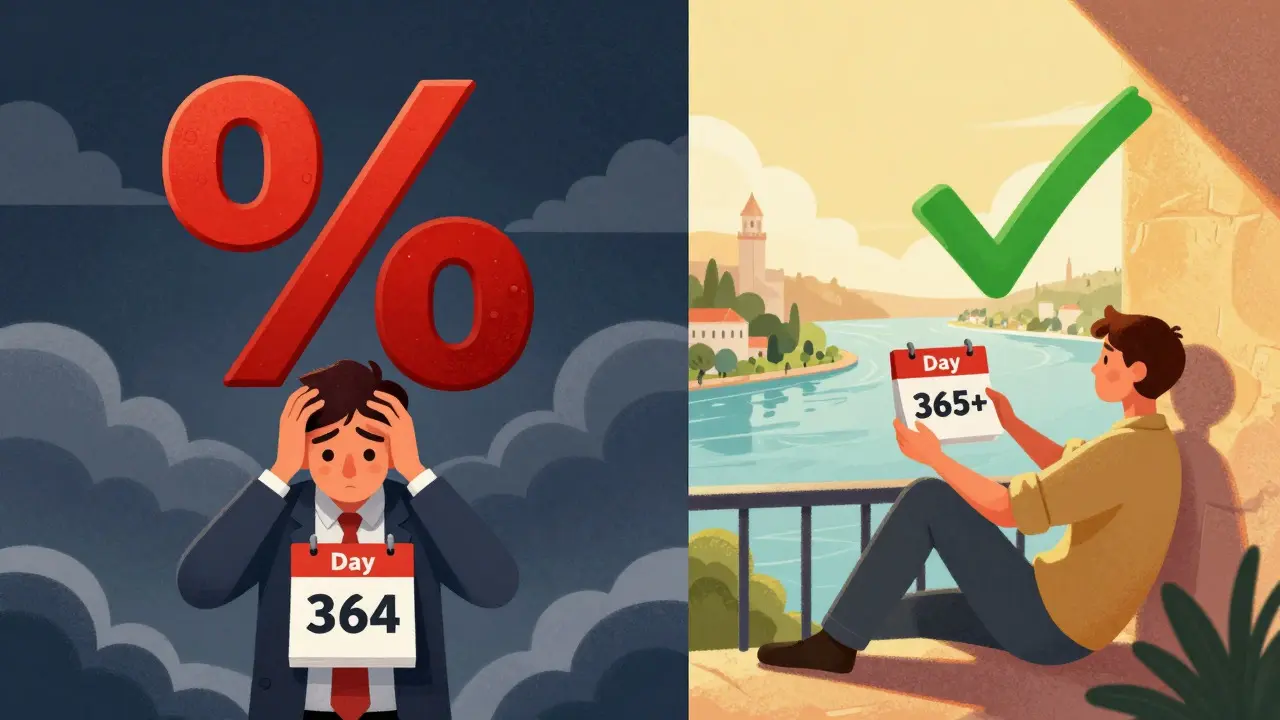
- Short-term gains (held less than 365 days): You pay a flat 28% capital gains tax. This applies to any profit made from buying low and selling high within a year.
- Long-term gains (held one year or more): These remain completely tax-exempt. If you can hold your position for a full 365 days, the government takes nothing.
This rule applies to all crypto income categorized as capital gains. However, be careful with mining or staking rewards. Income from cryptocurrency issuance and mining operations is often treated differently, sometimes falling under business income rather than simple capital gains. Always check with a local tax advisor, but the 365-day clock is your best friend.
For digital nomads and remote traders, the Non-Habitual Residence (NHR) Program offers a special tax regime providing a 20% flat rate on Portuguese-sourced income and exemptions on most foreign earnings remains a powerful tool. While the NHR has faced scrutiny and changes in recent years, it still provides significant benefits for those who qualify, especially when combined with the long-term exemption for crypto assets. Just remember: NHR does not exempt you from the 28% short-term tax if you flip coins quickly.
The Regulatory Gap: Why January 2025 Was a Turning Point
You might have noticed some confusion online about whether you can even register a crypto business in Portugal right now. There is a reason for that. In January 2025, the Banco de Portugal announced that it could no longer authorize or supervise new cryptocurrency-related services due to missing national legislation. This created a strange limbo.
Existing companies-those registered before the pause-continued operating under transitional arrangements. But if you tried to start a new exchange or lending platform in early 2025, you hit a wall. No new licenses were being issued. This wasn’t because Portugal hates crypto; it was because they were waiting for the final pieces of the EU puzzle to fall into place.
The EU’s Markets in Crypto-Assets (MiCA) regulation became effective across the EU on December 30, 2024, requiring member states to transpose rules into national law set the standard, but Portugal needed its own domestic laws to enforce it. As of mid-2025, that transposition was still pending. Secretary of State for Treasury and Finance João Silva Lopes called the upcoming rules a “decisive step” toward consumer protection, but until then, the system was in flux.
By October 2025, Parliament began debating the necessary legislation. The goal? To close the gap before July 1, 2026-the final deadline for MiCA implementation. For traders, this means the environment is stabilizing, but you must stay alert to sudden announcements from the Comissão do Mercado de Valores Mobiliários (CMVM), which determines whether specific tokens qualify as financial instruments on a case-by-case basis.
Who Watches the Watchers? Understanding the Authorities
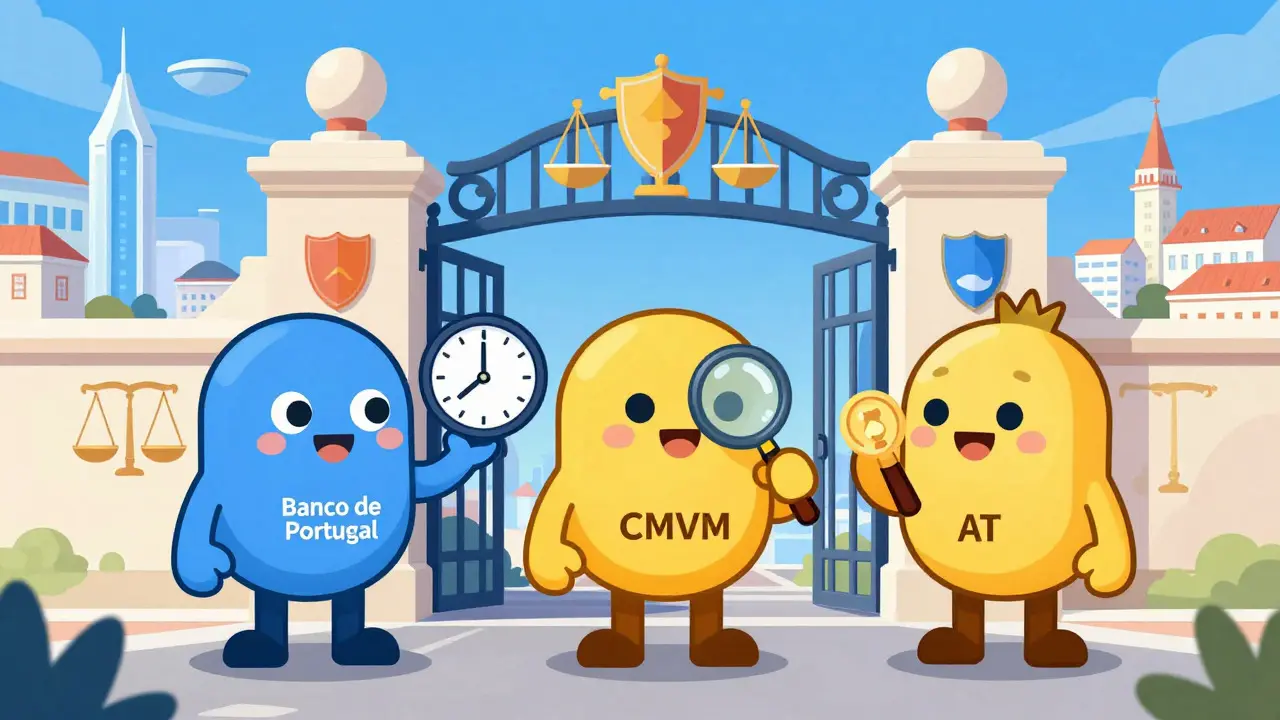
Navigating Portugal’s crypto scene requires knowing who holds the keys. Unlike countries with a single regulator, Portugal uses a multi-authority approach. Here is who you need to know:
| Authority | Role | Impact on Traders | |||
|---|---|---|---|---|---|
| Banco de Portugal | Registers Virtual-Asset Service Providers (VASPs); ensures AML/CFT compliance. | Must register before offering services. No minimum share capital required. | |||
| CMVM | Decides if a token is a “financial instrument.” | Affects how certain tokens are taxed and traded. Case-by-case analysis. | Autoridade Tributaria e Aduaneira (AT) | Enforces IRS rules for crypto income and gains. | Collects the 28% short-term tax. Requires accurate reporting. |
| Financial Intelligence Unit (UIF) | Receives suspicious transaction reports. | Monitors large transfers. Exchanges must report anomalies. |
If you run a business, you must appoint an AML/CFT officer, conduct customer due diligence for transactions over €1,000, and maintain strict KYC records. For individual traders, the main interaction is with the AT during tax season. Keep your records clean. The AT is getting smarter at tracking cross-border crypto flows.
Is Portugal Still Worth It? Comparing the Options
Why choose Portugal over Switzerland or Malta? The answer lies in the balance of lifestyle, cost, and tax efficiency. Switzerland offers robust infrastructure but higher living costs. Malta has a strong regulatory framework but less cultural appeal for some. Portugal sits in the middle: affordable, beautiful, and increasingly compliant.
Consider these factors:
- Tax Competitiveness: At 28% for short-term gains, Portugal is cheaper than Germany (up to 45%) and France (30%). The long-term exemption is unique in Europe.
- Investment Climate: Blockchain technology commanded 36% of all venture funding in Portugal during 2024-2025. This shows money is still flowing in, despite regulatory hiccups.
- Adoption Rates: About 850,000 Portuguese citizens (8.2% of the population) own cryptocurrency. Of these, 23% are foreign residents drawn by the tax perks.
However, enterprise adoption lags. Only 12% of Portuguese businesses accepted crypto payments in Q2 2025, compared to 19% in Switzerland. So, while you can trade easily, spending your crypto locally might still require converting to euros first.
Practical Steps for Traders Moving to Portugal
If you are serious about making the move, follow this checklist to avoid common pitfalls:
- Check Your Holding Period: Before selling, calculate exactly when you bought. If it’s been less than 365 days, expect the 28% hit. If you’re close to the mark, consider waiting.
- Register with the Bank: If you operate a service, ensure you are registered with Banco de Portugal. Even if you’re just a trader, using a registered exchange simplifies tax reporting.
- Understand MiCA Classifications: Know if your tokens are “other” crypto-assets, asset-referenced tokens (ARTs), or electronic money tokens (EMTs). ARTs and EMTs face stricter rules.
- Hire Local Expertise: Firms like Morais Leitão handled dozens of MiCA compliance cases in early 2025. Don’t guess-pay for professional advice.
- Monitor Legislative Updates: With the July 2026 deadline approaching, rules may tighten. Subscribe to updates from The Portugal News or official government channels.
Remember, the learning curve for understanding the dual framework of Portuguese AML Law and MiCA takes time. Budget 40-60 hours of study or consultation to get it right.
Future Outlook: What Comes After 2026?
The industry expects Portugal to become Europe’s third-largest crypto hub after Switzerland and Germany once MiCA is fully implemented. Analysts project crypto-related activity could contribute €1.2 billion annually to Portugal’s GDP by 2027. That’s serious growth.
But risks remain. EU pressure for tax harmonization could threaten the long-term exemption. Implementation delays might cause further uncertainty. Yet, the momentum is undeniable. Venture capital continues to flow, and traders keep arriving. If you play your cards right-holding long, staying compliant, and adapting to new rules-Portugal remains one of the best places in the world to trade crypto.
Is crypto trading legal in Portugal?
Yes, crypto trading is legal in Portugal. Individuals can buy, sell, and hold cryptocurrencies without restriction. However, businesses offering crypto services must register with Banco de Portugal and comply with AML/CFT rules.
How much tax do I pay on crypto gains in Portugal?
If you hold crypto for less than 365 days, you pay a 28% capital gains tax. If you hold it for one year or more, the gain is tax-exempt. Mining and staking income may be taxed differently as business income.
Can I start a crypto business in Portugal right now?
As of mid-2025, new licenses were paused due to pending MiCA implementation. Existing firms operated under transitional rules. By late 2025, legislation was debated to reopen licensing before the July 2026 deadline. Check current status with Banco de Portugal.
What is the NHR program and does it help crypto traders?
The Non-Habitual Residence (NHR) program offers a 20% flat tax on Portuguese income and exemptions on foreign earnings. It helps traders reduce overall tax burden but does not exempt short-term crypto gains from the 28% rate.
When will MiCA be fully enforced in Portugal?
MiCA became effective in the EU in December 2024. Portugal aims to transpose national legislation by July 2026. Until then, transitional arrangements apply, creating some regulatory uncertainty.