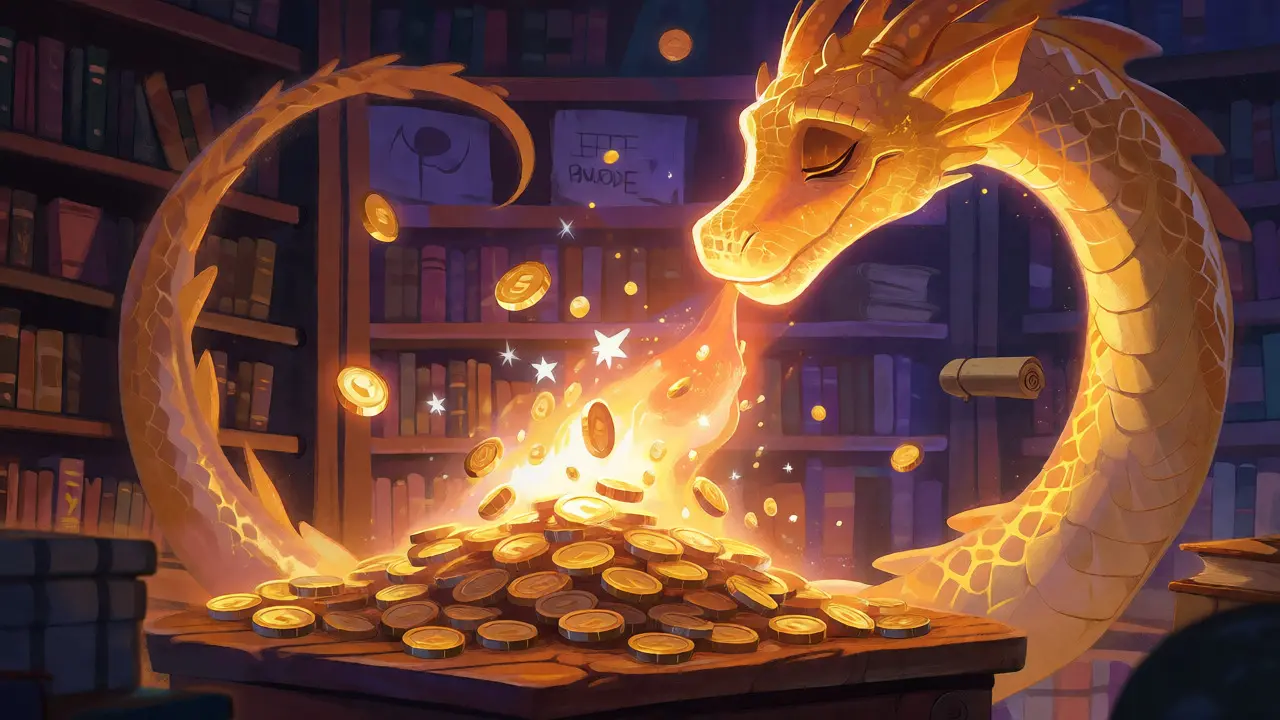
Imagine you own a rare comic book. If the publisher suddenly announces they are burning half of all existing copies of that specific issue, what happens to the value of the copy sitting on your shelf? It likely goes up, assuming demand stays steady. This is the basic logic behind exchange token burn mechanisms. These are systematic processes where cryptocurrency exchanges permanently remove their native tokens from circulation to create scarcity. But does simply deleting digital coins actually make them worth more? Or is it just a marketing trick to pump the price?
If you are an investor or even just a curious trader, understanding how these burns work is crucial. It’s not enough to know that Binance burned another batch of BNB last week. You need to understand why they did it, how the math works, and whether this mechanism has real economic substance or is just accounting theater. Let’s break down the mechanics, the risks, and the reality of token burns in today’s market.
What Is a Token Burn and Why Do Exchanges Do It?
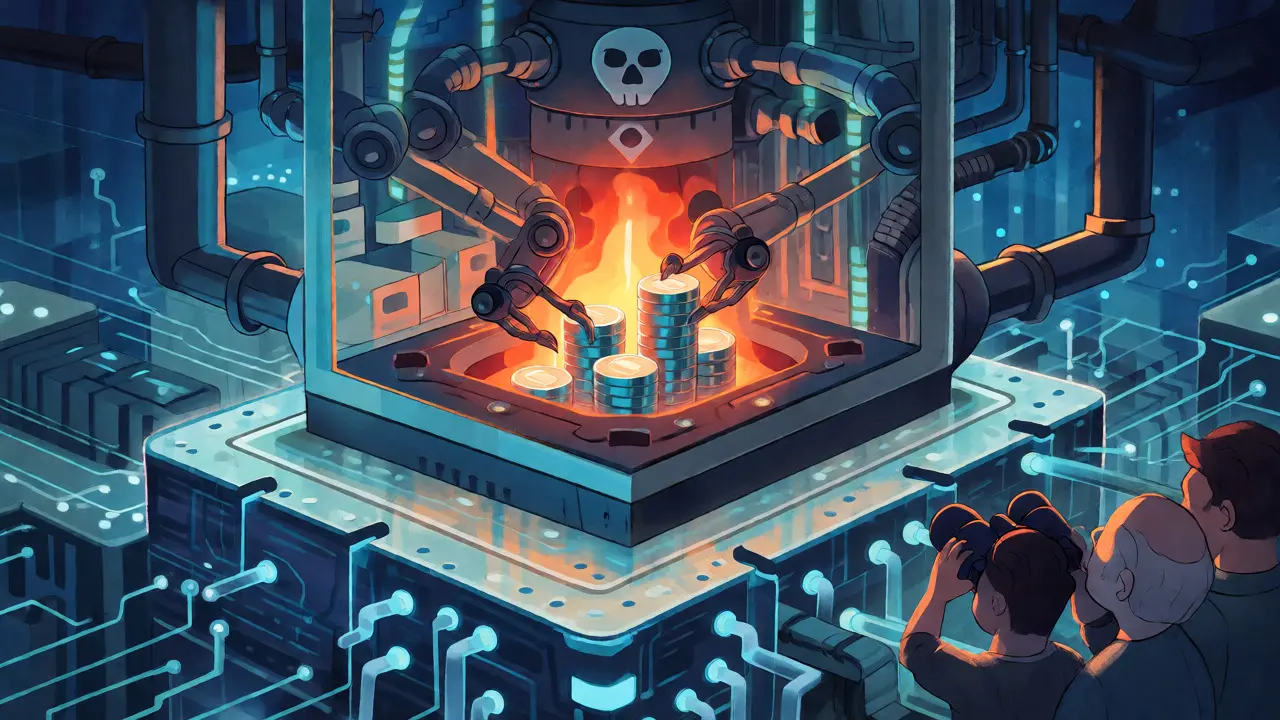
A token burn is the permanent removal of cryptocurrency tokens from the circulating supply. Unlike sending tokens to another user, which keeps them alive in the ecosystem, burning sends them to a "dead" address-often called a null address or eater address-from which they can never be retrieved. Think of it as shredding paper money; once it’s gone, it’s gone forever.
Exchanges do this primarily to influence supply and demand economics. By reducing the total supply of their native utility tokens (like BNB, KCS, or OKB), they aim to increase scarcity. The theory is simple: if demand for the token remains constant or grows while supply shrinks, the price should rise. This benefits long-term holders by potentially increasing the value of their holdings without requiring new capital inflows.
The practice was pioneered by Binance with its BNB token back in 2017. They committed to burning tokens quarterly until 50% of the original 200 million supply was eliminated. This move set a precedent. Today, according to industry reports, over 27 major exchanges have adopted similar strategies, making burns a standard feature of centralized exchange tokenomics rather than a novelty.
The Technical Mechanics: How Burns Actually Happen
You might wonder, who decides when to burn? And how do we know the tokens are actually destroyed? In modern implementations, this isn’t done by a human pressing a delete button. It’s handled by smart contracts.
Most exchanges use automated protocols on blockchains like Ethereum (ERC-20) or BNB Chain (BEP-20). Here is the typical workflow:
- Fee Collection: The exchange collects trading fees from users. For example, Binance historically allocated 20% of its quarterly profits toward buying back BNB.
- Conversion: Those fees (often collected in other cryptocurrencies like BTC or ETH) are converted into the native exchange token at current market prices.
- Transfer to Burn Address: The purchased tokens are sent to a verifiable public address with no private key. Once there, they are effectively removed from circulation.
- Verification: Anyone can check the blockchain explorer to see the transaction hash and confirm the tokens were moved to the dead address.
For instance, KuCoin executes daily burns, converting 50% of its trading fees into KCS and destroying them. This high-frequency approach contrasts with Binance’s quarterly model, which tends to result in larger, more impactful single events. The technical transparency here is vital. If an exchange doesn’t provide clear proof of these transactions, the burn loses its credibility.
Comparing Major Exchange Burn Models
Not all burns are created equal. Different exchanges use different formulas, frequencies, and funding sources. Choosing the right exchange often depends on which model aligns with your investment horizon and risk tolerance.
| Exchange | Token | Burn Frequency | Funding Source | Key Characteristic |
|---|---|---|---|---|
| Binance | BNB | Quarterly | 20% of Trading Fees | Largest cumulative burn volume; highly transparent tracking. |
| KuCoin | KCS | Daily | 50% of Trading Fees | High frequency creates consistent, gradual supply reduction. |
| OKX | OKB | Monthly | 30% of Fees + Buybacks | Hybrid model combining regular burns with opportunistic buybacks during downturns. |
| Gate.io | GT | Dynamic | Variable % based on Volatility | Adjusts burn rate between 10-30% depending on market conditions. |
| Crypto.com | CRO | Scheduled & Event-based | Platform Revenue & Milestones | Combines routine burns with large-scale destruction tied to platform achievements. |
Binance’s model is often cited as the gold standard for scale. By Q4 2025, they had burned over 44 million BNB, nearly half of the original supply. However, critics point out that because the burn size depends on trading volume, it can fluctuate wildly. A quiet quarter means a smaller burn, which might disappoint investors expecting a fixed reduction.
On the other hand, Gate.io’s dynamic model tries to counteract volatility by burning more when the market is unstable. While innovative, some users find this unpredictable. As one Trustpilot review noted, changing rates make it "impossible to predict tokenomics," which can undermine confidence among conservative investors.
Do Burns Actually Increase Price? The Data Speaks
This is the million-dollar question. Does destroying supply really drive value? The short answer is: sometimes, but not always.
Data suggests a strong correlation between successful burns and price appreciation for top-tier exchanges. After 23 consecutive quarterly burns through late 2025, BNB saw significant growth from its initial offering price. Analysts at Messari note that while burns contributed to this, they weren’t the sole driver. Other factors like ecosystem expansion, DeFi integration, and broader bull markets played huge roles.
However, burns alone don’t guarantee success. Consider CoinEgg’s EGG token. Despite regular burns, the token collapsed by 99.7% because the platform lacked fundamental utility and usage. Dr. Linda Xie, founder of Scalar Capital, famously warned that "burns without fundamental usage growth are merely accounting tricks." If nobody uses the token, removing supply doesn’t matter because demand is near zero.
A study by the University of Zurich’s Blockchain Center analyzed 14 exchange tokens and found that only those with burns directly tied to verifiable revenue showed statistically significant positive price correlations. Arbitrary schedules-where an exchange just decides to burn a random amount every month-showed little meaningful impact on long-term value.
Risks and Criticisms: When Burns Go Wrong
While burns sound economically sound, they come with significant risks. The biggest concern is opacity. If an exchange claims to burn tokens but doesn’t provide verifiable proof on-chain, investors are essentially trusting a black box.
The collapse of FTX serves as a cautionary tale. Their controversial burn of FTT tokens shortly before the exchange’s implosion was later cited in court documents as part of a potential market manipulation strategy. It highlighted how burns can be used to artificially prop up a failing asset’s price temporarily, giving insiders time to exit.
Another risk is liquidity dilution. As exchanges burn more tokens, the circulating supply shrinks. While this boosts price per unit, it can reduce overall liquidity if not managed carefully. A Cambridge Centre for Alternative Finance study estimated that current burn practices could eliminate 32% of all exchange tokens by 2030. If utility doesn’t grow alongside scarcity, these tokens could become illiquid assets that are hard to sell in bulk.
Regulatory scrutiny is also rising. The SEC has indicated that certain burn mechanisms tied to profit-sharing promises might classify tokens as unregistered securities. This forces exchanges to be extremely careful in how they communicate the financial implications of burns to avoid legal pitfalls.
How to Evaluate a Token Burn Strategy
If you’re considering investing in an exchange token, don’t just look at the fact that they burn tokens. Dig deeper into the quality of the burn.
- Check Transparency: Does the exchange publish transaction hashes? Can you verify the burn on a blockchain explorer like Etherscan or BscScan? Binance, for example, provides detailed post-burn reports within 24 hours.
- Analyze the Funding Source: Are burns funded by actual profits/revenue, or are they printing new tokens to fund the burn? Burns funded by real revenue are sustainable; those funded by debt or inflation are less so.
- Assess Utility Growth: Is the token being used for fee discounts, staking, or governance? High utility drives organic demand, making the burn effective. Low utility makes the burn irrelevant.
- Look for Independent Audits: Some exchanges, like Binance recently, introduced third-party audits (e.g., by Armanino LLP) to verify burn transactions. This adds a layer of trust.
Also, consider the frequency. Daily burns (like KuCoin) provide steady pressure, while quarterly burns (like Binance) create larger psychological impacts. Neither is inherently better; it depends on your trading style.
The Future of Exchange Tokenomics
We are seeing an evolution in how burns are implemented. The era of arbitrary monthly deletions is fading. Instead, we are moving toward "Proof-of-Burn" systems where smart contracts automatically trigger burns based on predefined, auditable metrics.
Ethereum’s upcoming upgrades, such as EIP-4844, may integrate similar burn-like functionality directly into protocol layers, setting a higher standard for efficiency. Industry analysts predict that by 2028, AI-driven models will optimize burn schedules dynamically, adjusting in real-time based on market volatility and platform performance.
But remember, a burn is a tool, not a magic wand. It amplifies existing trends. If an exchange is growing and useful, burns accelerate value capture. If an exchange is dying, burns just slow the fall. Always look at the whole picture: security, liquidity, regulatory compliance, and product innovation. The burn is just one piece of the puzzle.
Are token burns taxable events?
Generally, no. Since you are not selling or exchanging your tokens, a burn is usually considered a non-taxable event in most jurisdictions. However, tax laws vary by country, so consult a local tax professional for specific advice regarding your holdings.
Can an exchange reverse a token burn?
Technically, yes, but practically, no. Tokens sent to a null address (like 0x...dEaD) cannot be retrieved unless the smart contract code specifically allows for a recovery function, which is rare and defeats the purpose of a permanent burn. Most reputable exchanges use addresses with no private keys, making reversal impossible.
Do I need to hold the token to benefit from a burn?
Yes, typically. The primary benefit of a burn is the potential increase in the token's market price due to reduced supply. If you do not hold the token, you do not directly gain from this scarcity effect, though you might indirectly benefit if the exchange improves its services using the revenue generated from the activity that funds the burn.
What is the difference between a burn and a buyback?
A buyback involves the company purchasing shares or tokens from the open market, which reduces circulating supply but keeps the tokens in the company's treasury (they could theoretically be re-sold). A burn permanently destroys the tokens, removing them from existence entirely. Burns are generally seen as more bullish for long-term value because the supply reduction is irreversible.
Why do some exchanges stop burning tokens?
Exchanges may pause burns if they reach their target supply cap (e.g., Binance aiming to burn 50% of total supply), if they face severe cash flow issues, or if regulatory pressures require them to halt certain financial maneuvers. Additionally, if the token price becomes too volatile, they might adjust the strategy to maintain stability.