Sanctions Evasion Risk Calculator
Enter transaction details to calculate risk score based on blockchain forensics patterns described in the article. This tool demonstrates how authorities detect suspicious activity through transaction analysis.
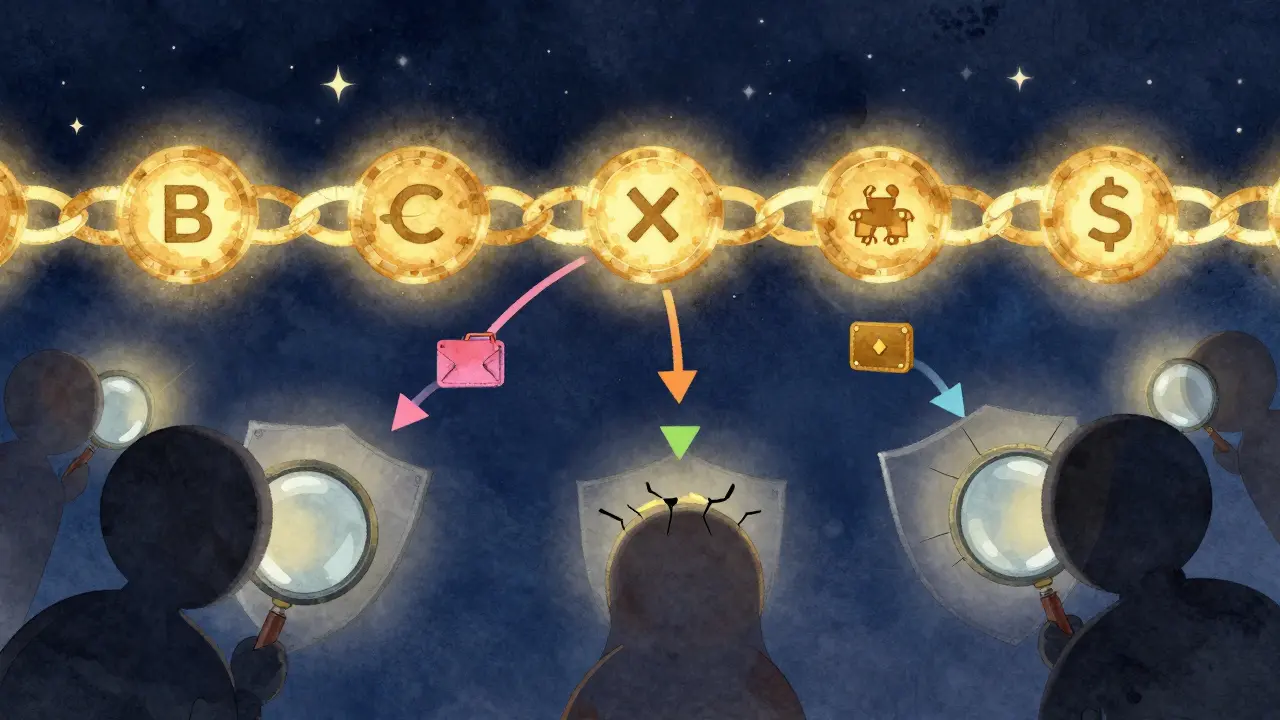
When someone tries to hide money using Bitcoin or Ethereum, they think they’re anonymous. But blockchain forensics makes that illusion vanish. Every transaction leaves a permanent, public trail. Even if funds pass through mixers, tumblers, or multiple wallets, experts can follow the money - not just across one chain, but across dozens. Law enforcement and regulators aren’t guessing anymore. They’re using advanced tools to track, trace, and freeze crypto tied to sanctioned entities, drug cartels, ransomware gangs, and terrorist networks.
Why Blockchain Isn’t Anonymous
People often say Bitcoin is anonymous. It’s not. It’s pseudo-anonymous. Wallet addresses don’t have names attached, but every single transaction is recorded forever on the blockchain. If you send 5 BTC from Wallet A to Wallet B, then Wallet B sends 2 BTC to Wallet C, and Wallet C sends 1 BTC to an exchange that requires KYC - boom. That trail connects back to a real person. The real challenge isn’t finding the first step. It’s following the twists, turns, and splits across hundreds of wallets and multiple blockchains. That’s where blockchain forensics comes in. Tools like Elliptic, TRM Labs, and Chainalysis don’t just show you transactions. They map out networks. They spot patterns. They flag wallets that behave like mixers, like Tornado Cash or Wasabi. They even detect when funds are broken into tiny pieces and sent through dozens of addresses to look like random noise - a technique called “chain hopping.”How Sanctions Evasion Actually Works
Countries like the U.S., EU, UK, and Australia have imposed crypto sanctions on entities linked to Russia, Iran, North Korea, and terrorist groups. But sanctioned actors aren’t dumb. They’ve adapted. Here’s how they try to slip through:- Chain hopping: Moving funds between Bitcoin, Ethereum, Litecoin, and newer chains like Solana to break the trail.
- Layer 2 and privacy protocols: Using ZK-Rollups or privacy coins like Monero to obscure amounts and addresses.
- Decentralized exchanges (DEXs): Swapping tokens without KYC, then moving them to centralized exchanges that might not check properly.
- Peer-to-peer (P2P) marketplaces: Selling crypto directly to buyers in unregulated regions, often with cash or gift cards.
- Smart contract manipulation: Using DeFi protocols to launder funds through liquidity pools or flash loans.
The Helix Case: A Turning Point
In 2016, investigators started tracking Bitcoin from the AlphaBay darknet market. They saw funds flowing into a service called Helix - a mixer that promised anonymity. But the operator, Larry Dean Harmon, made a mistake. He used the same wallet to collect fees from every transaction. Investigators noticed a pattern: every time someone used Helix, a small commission (usually 1-3%) went to one specific address. It took them two years to manually trace thousands of transactions. Today, that same investigation would take hours. Modern platforms use machine learning to find those fee patterns automatically. Harmon was arrested in 2020, pleaded guilty in 2021, and was sentenced to three years in prison in November 2024. His case wasn’t just a win - it proved that blockchain forensics works at scale.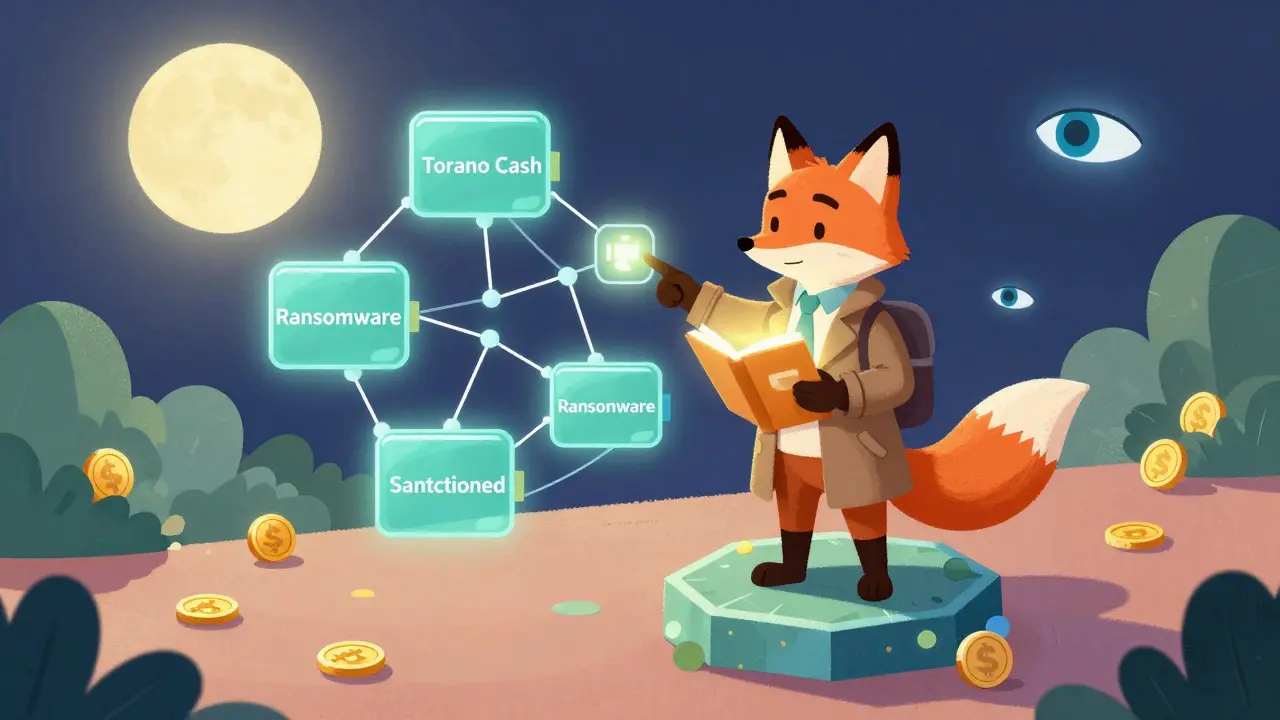
How Tools Like MPOCryptoML Are Changing the Game
Academic research is pushing the field forward. The MPOCryptoML method, developed in 2024, is the first system designed to detect multiple laundering patterns at once - not just one type. It looks for fan-in/fan-out flows, gather-scatter patterns, and even stacked transactions where funds are split, moved, and recombined in complex ways. It doesn’t just count transactions. It scores risk based on behavior. A wallet that receives money from a sanctioned address, then sends small amounts to dozens of new wallets over a week? MPOCryptoML gives it a high anomaly score. In tests, it outperformed seven other systems by up to 10% in accuracy. That might sound small, but in crypto, a 10% improvement means catching hundreds of hidden illicit flows that would’ve slipped through before.Who’s Using This Tech - And How
This isn’t just for the FBI. It’s used by:- Exchanges like Bitget: They scan every deposit and withdrawal. If a wallet has ever been linked to a sanctioned entity, it’s flagged. Funds are frozen until compliance teams review.
- Banks and fintechs: Before they let a client trade crypto, they run their wallets through forensic tools. If the wallet has a history with ransomware, they decline the account.
- Regulators like AUSTRAC (Australia): They monitor cross-border flows. If $2 million in ETH moves from a Russian-linked wallet to an Australian exchange, AUSTRAC gets an alert.
- Nonprofits like the Internet Watch Foundation: They track crypto payments for child abuse imagery. If someone buys illegal content using Bitcoin, they trace the payment and shut down the site.
The Arms Race Is Real
Criminals aren’t standing still. New privacy tools are being built every month. Some are open-source. Others are sold on the dark web. One new tool, called “Nebula,” hides transaction metadata by routing funds through a mesh of decentralized relays. It’s not perfect - yet. But forensics teams are already building detection models for it. The real bottleneck isn’t the tech. It’s the people. There aren’t enough trained blockchain investigators. That’s why companies like Elliptic now offer certification programs for compliance officers. They teach how to read blockchain graphs, interpret smart contract logs, and write forensic reports that hold up in court.
What This Means for Legitimate Users
If you’re just buying Bitcoin to hold, or using Ethereum to pay for a service - you’re fine. Most legitimate wallets are clean. But if you’ve ever bought crypto on a P2P site without KYC, or used a mixer to “enhance privacy,” your wallet might already be flagged. That doesn’t mean you’re guilty. But it means your next transaction could be delayed while compliance teams verify your identity. The system isn’t perfect. False positives happen. But the trade-off is clear: we can’t let crypto become a free pass for criminals. And right now, blockchain forensics is the only tool that gives regulators a fighting chance.The Future: Real-Time, Cross-Chain, AI-Powered
Next year, we’ll see blockchain forensics go real-time. Instead of analyzing transactions after they happen, systems will flag suspicious flows as they occur. Imagine a wallet sending funds to a sanctioned address - and the exchange blocks it before the transaction confirms. Cross-chain analysis is getting better too. Tools can now track a Bitcoin transaction that gets wrapped into Ethereum via a bridge, then swapped into Polygon, then cashed out on a DEX in South Korea. All in under 10 minutes. And AI is learning to predict where funds will go next - not just where they’ve been. The blockchain doesn’t lie. It remembers everything. And the tools to read it are getting smarter every day. The days of crypto being a safe haven for sanctions evaders are ending. Not because governments are banning it - but because they finally learned how to follow the money.Can blockchain forensics track Monero or other privacy coins?
Tracking Monero is extremely difficult - it’s designed to hide sender, receiver, and amount. But authorities aren’t trying to trace individual Monero transactions. Instead, they track the on-ramps and off-ramps. If someone buys Monero from a KYC exchange using funds from a sanctioned wallet, that’s a red flag. If they later cash out Monero into Bitcoin on a non-KYC platform, and that Bitcoin ends up in a known mixer, investigators connect the dots. The privacy coin itself stays hidden, but the surrounding activity doesn’t.
Do I need to worry if I use a crypto mixer?
Yes. Mixers like Tornado Cash and Wasabi are explicitly sanctioned by the U.S. Treasury and other regulators. Using them - even if you think you’re just protecting privacy - can get your wallet blacklisted. Exchanges will freeze funds linked to mixer addresses. You might need to prove your identity and source of funds to get access back. In some cases, you could face legal scrutiny. The risk far outweighs any perceived benefit.
How do exchanges know if a wallet is risky?
Exchanges use blockchain forensics platforms that maintain global databases of risky addresses. These databases are updated daily with new sanctions lists, darknet wallet clusters, ransomware payment addresses, and mixer outputs. When you deposit crypto, the exchange checks your wallet against these lists. If it matches, the deposit is paused. The system doesn’t assume guilt - it flags for review. But repeated flags can lead to account closure.
Can blockchain forensics trace NFTs used for money laundering?
Absolutely. NFTs are now used to wash funds - buying a $100 NFT with illicit crypto, then selling it for $10,000 in clean crypto. Forensics tools track NFT sales on platforms like OpenSea and Blur, linking them to known bad actors. If an NFT is bought with funds from a sanctioned wallet and sold to an exchange address, that’s a clear laundering pattern. Regulators have already seized NFTs tied to North Korean hacking groups.
Is blockchain forensics legal?
Yes. Blockchain data is public. Analyzing it is no different than reviewing bank records in a criminal investigation - except the records are permanently stored and globally accessible. Law enforcement needs warrants to link addresses to real identities, but tracing transactions on-chain is legal in most jurisdictions. Courts in the U.S., EU, Australia, and Singapore have all accepted blockchain forensic reports as evidence.



Sharmishtha Sohoni
December 4, 2025 AT 09:49Now I get why my exchange froze my deposit last month.
Durgesh Mehta
December 4, 2025 AT 19:59Nora Colombie
December 5, 2025 AT 13:40Bhoomika Agarwal
December 5, 2025 AT 23:47Also Tornado Cash got sanctioned but my local bank still lets me wire cash to a shell company in Belize. Hmm.
Katherine Alva
December 6, 2025 AT 14:46The blockchain remembers everything. Even when we forget. Even when we lie. Even when we try to erase ourselves. It just... keeps going. Like a silent witness.
Kinda gives me chills.
Nelia Mcquiston
December 8, 2025 AT 12:18alex bolduin
December 9, 2025 AT 12:48Marsha Enright
December 9, 2025 AT 20:51Think of it like airport security. They're not scanning you because they think you're a thief. They're scanning because someone else was. You're just next in line.
Andrew Brady
December 10, 2025 AT 00:39Murray Dejarnette
December 10, 2025 AT 02:02Maggie Harrison
December 11, 2025 AT 15:44Imagine a world where criminals can’t hide. Where corruption gets exposed. Where dirty money can’t slip through the cracks.
Yeah it’s intense. Yeah it’s invasive. But if you’re not doing anything wrong… why be afraid? Let’s build a cleaner system. One that doesn’t reward secrecy. One that rewards transparency. We can do this.
Akash Kumar Yadav
December 12, 2025 AT 23:08Catherine Williams
December 14, 2025 AT 14:18Jess Bothun-Berg
December 16, 2025 AT 03:13Joe B.
December 16, 2025 AT 16:43Rod Filoteo
December 17, 2025 AT 11:56Greer Dauphin
December 19, 2025 AT 03:56Also - side note - if you used Wasabi, you’re already in trouble. Just saying.
Mark Stoehr
December 19, 2025 AT 19:44Shari Heglin
December 20, 2025 AT 18:44Britney Power
December 22, 2025 AT 05:39ashi chopra
December 24, 2025 AT 04:11Darlene Johnson
December 25, 2025 AT 04:51