
RAI Finance isn't a crypto exchange like Binance or Coinbase. If you're looking to buy Bitcoin with a credit card or trade Ethereum in seconds, you won't find that here. Instead, RAI Finance is a decentralized finance (DeFi) protocol that lets you copy the trades of experienced traders - automatically. Think of it less like a stock broker and more like a social media feed where top traders share their strategies, and you tap a button to follow them.
What RAI Finance Actually Does
RAI Finance launched in 2020 from South Korea with one goal: make smart trading accessible to everyone, even if you don’t know what an AMM is. Its core product is called vaults. These are pre-built trading strategies created by successful traders and locked into smart contracts. You don’t need to watch charts or set stop-losses. You just pick a vault - say, one that buys ETH when the ETH/BTC ratio drops below 0.025 - and your funds follow that rule automatically.
It uses an automated market maker (AMM) system, similar to Uniswap, but with a twist. Instead of just swapping tokens, it adjusts trades based on real-time data from oracles. For example, if a vault is set to trade when the BTC/USD price hits $60,000, it pulls that data from trusted sources and executes without human input. This removes emotion from trading and replaces it with logic.
Unlike traditional DEXs, where you’re on your own, RAI Finance turns trading into a team sport. You follow traders. You see their past performance. You copy their moves. And if they stop performing, you can switch to another vault in seconds.
The SOFI Token: More Than Just a Currency
RAI Finance’s native token is SOFI. As of early 2026, it trades at around $0.000147. That means for $1, you can buy over 6,800 SOFI tokens. It’s not a coin you hold for speculation - it’s a tool. SOFI holders vote on protocol changes: fee structures, new vault types, liquidity rewards, even which blockchains get integrated next.
The token also gives users access to premium vaults and reduced trading fees. If you’re serious about using RAI Finance, holding SOFI isn’t optional - it’s part of the system. It’s not listed on Coinbase or Binance, but you can find it on KuCoin and smaller DEXs like PancakeSwap or SushiSwap. You’ll need a Web3 wallet like MetaMask to connect and swap for it.
Cross-Chain Compatibility: Why It Matters
One of RAI Finance’s biggest advantages is its focus on interoperability. Most DeFi protocols are stuck on one blockchain - Ethereum, BSC, or Solana. RAI Finance operates across multiple chains, especially within the Polkadot ecosystem. This means you can use assets from Ethereum, Polygon, or Avalanche in the same vault. No more bridging tokens manually. No more paying high Ethereum gas fees just to trade a small amount.
This cross-chain approach solves a real pain point: fragmentation. If you’re holding $500 in MATIC and $300 in WBTC, you used to need separate apps to manage them. RAI Finance lets you pool them into one strategy. That’s a huge time-saver.

How It Compares to Other Platforms
| Feature | RAI Finance | Uniswap | Binance (CEX) |
|---|---|---|---|
| Type | DeFi social trading protocol | Decentralized swap | Centralized exchange |
| Trading Strategy | Follow pre-built vaults | Manual swaps only | Manual trading + AI tools |
| Blockchain Support | Multi-chain (Polkadot, Ethereum, etc.) | Ethereum only | Multi-chain (but centralized) |
| Minimum Knowledge | Medium (wallet, gas, vaults) | High (slippage, LP risk) | Low (buy/sell UI) |
| Liquidity | Low ($2M+ TVL) | Very High ($10B+) | Extremely High ($100B+) |
| Token | SOFI (governance) | UNI (governance) | BNB (utility) |
RAI Finance sits between two worlds. It’s more advanced than a simple DEX like Uniswap, but less polished than a centralized exchange like Binance. If you’re a beginner, you’ll find it confusing. If you’ve used MetaMask before and understand what gas fees are, you’ll appreciate the automation.
Who Is RAI Finance For?
Not everyone. It’s not for people who want to buy Bitcoin and hold it. It’s not for those who want to trade daily with charts and indicators. It’s for a specific group: DeFi users who want to automate their trading without coding their own strategies.
Think of it this way: If you’re the type of person who follows a fitness coach on YouTube and replicates their workouts, RAI Finance is your financial coach. You don’t need to understand macros - you just hit "start" and let the system do the work.
It’s also ideal for people who already hold assets across multiple chains. If you’ve got ETH, SOL, and DOT in your wallet and want to turn them into passive income without constantly monitoring markets, RAI Finance’s vaults are designed for that.
The Risks You Can’t Ignore
RAI Finance has promise, but it’s not without red flags.
- Low liquidity: With a total value locked (TVL) of just over $2 million, slippage can be high on larger trades. If you try to deposit $10,000, you might not get the price you expect.
- Learning curve: You need to understand wallets, gas fees, approvals, and how vaults work. One wrong click and you could approve a malicious contract.
- Strategy risk: A vault might have done well last month, but markets change. If the trader behind it stops updating, your returns could tank overnight.
- Small team: RAI Finance has backing from NGC Ventures and Alphabit Fund, but it’s still a small team. Updates are slow. Support is mostly through Telegram.
- Regulatory gray zone: Social trading platforms are under scrutiny. If regulators crack down on copy-trading, RAI Finance could face legal hurdles.
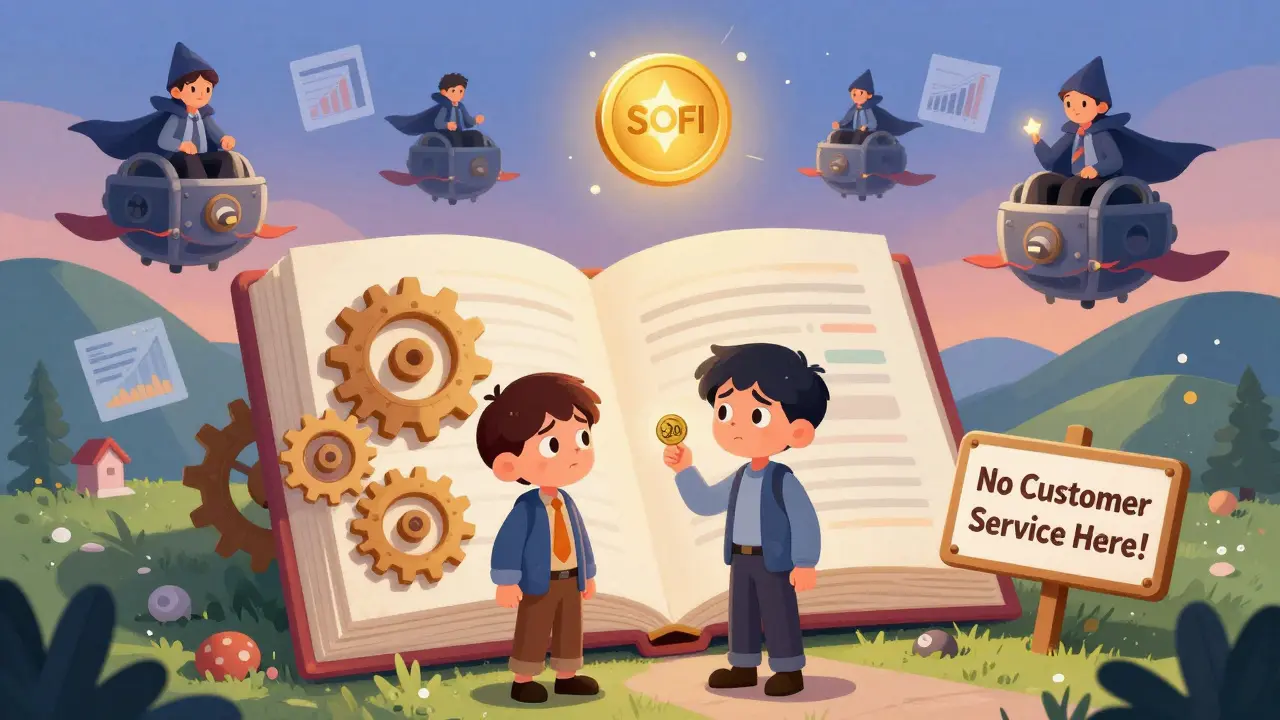
There’s no insurance here. If a vault gets hacked or a strategy fails, you lose your money. No customer service line. No refund policy. Just code.
Getting Started: What You Need to Do
If you’re ready to try it, here’s how to get started:
- Get a Web3 wallet (MetaMask or Binance Wallet).
- Buy some ETH, MATIC, or DOT - you’ll need gas to pay for transactions.
- Swap for SOFI on a DEX like SushiSwap or KuCoin (if you’re using Web3).
- Connect your wallet to the RAI Finance app.
- Browse vaults. Look at past performance, not just current returns.
- Deposit funds. Start small - $50 to $100 to test.
- Monitor. Check weekly. Don’t assume it’s "set and forget."
There’s no mobile app. No customer support chat. Everything happens through your browser and wallet. If you’re not comfortable with that, skip it.
The Bottom Line
RAI Finance is not a replacement for Coinbase or Binance. It’s a niche tool for DeFi-savvy users who want to automate their trading without building their own algorithms. It’s bold, innovative, and still very early.
Its social trading model could be the future of DeFi - if it scales. Right now, it’s a small experiment with big potential. The fact that institutional investors like NGC Ventures backed it means someone believes in it. But that doesn’t guarantee success.
If you’re curious, start small. Use $20. Try one vault. See how it feels. If you like it, add more. If it feels like a maze, walk away. There’s no shame in that. DeFi isn’t for everyone.
Is RAI Finance a real crypto exchange?
No, RAI Finance is not a traditional crypto exchange. It’s a decentralized finance protocol that lets users follow automated trading strategies called "vaults." You can’t buy Bitcoin with a credit card or deposit fiat. You need a crypto wallet and existing tokens to use it.
How do I buy SOFI tokens?
You can buy SOFI on decentralized exchanges like SushiSwap or PancakeSwap. You’ll need to swap ETH, BNB, or another major token for SOFI using your Web3 wallet. It’s also listed on KuCoin, but only if you’re using their Web3 wallet feature. Never send funds to a website claiming to sell SOFI directly - it’s likely a scam.
Is RAI Finance safe to use?
It’s as safe as any DeFi protocol - meaning you’re responsible for your own funds. The code has been audited, but smart contracts can still have bugs. There’s no insurance or recovery option. Always start with small amounts, double-check contract addresses, and never connect your wallet to unknown websites.
Can I lose money using RAI Finance?
Yes, absolutely. Vault strategies can fail. Market conditions change. Liquidity can dry up. Slippage can eat into your returns. And if the trader behind a vault stops managing it, your strategy may no longer work. Treat this like investing in a startup - not a bank account.
Does RAI Finance have a mobile app?
No, there is no official mobile app. The platform works through web browsers only. You can access it on your phone via your wallet’s browser, but there’s no dedicated app for iOS or Android. Be wary of fake apps in app stores.
What blockchains does RAI Finance support?
RAI Finance is built to work across multiple chains, with a strong focus on the Polkadot ecosystem. It supports Ethereum, Polygon, Binance Smart Chain, and others through cross-chain bridges. This lets you use assets from different networks in the same vault, reducing the need to move tokens manually.
Who backs RAI Finance?
RAI Finance received early funding from blockchain investment firms including NGC Ventures, GBIC, and Alphabit Fund. These are serious players in crypto, which adds credibility. However, backing doesn’t guarantee success - many well-funded projects still fail. The team remains small, and updates are infrequent.
Is RAI Finance better than Uniswap?
It depends on your goal. Uniswap is great for simple swaps - buying, selling, or adding liquidity. RAI Finance is better if you want to copy automated trading strategies without managing them yourself. If you’re a hands-off trader, RAI Finance adds value. If you’re just swapping tokens, Uniswap is simpler and has far more liquidity.
RAI Finance doesn’t promise quick riches. It promises a different way to trade - one that leans on community, automation, and cross-chain flexibility. It’s not perfect. But in a world where most DeFi platforms feel like black boxes, RAI Finance tries to make trading feel human again.




Shannon Holliday
March 2, 2026 AT 08:12Sriharsha Majety
March 4, 2026 AT 02:22Andrew Hadder
March 6, 2026 AT 02:15Neeti Sharma
March 8, 2026 AT 00:25Mary Scott
March 9, 2026 AT 22:19Lucy Simmonds
March 11, 2026 AT 20:31Paul Reinhart
March 13, 2026 AT 08:56Michelle Xu
March 13, 2026 AT 14:27Robert Conmy
March 15, 2026 AT 10:05Dianna Bethea
March 16, 2026 AT 09:11Jan Czuchaj
March 17, 2026 AT 15:39Phillip Marson
March 18, 2026 AT 12:27Arya Dev
March 19, 2026 AT 11:11Nadia Shalaby
March 21, 2026 AT 00:55Lilly Markou
March 21, 2026 AT 03:56George Suggs
March 21, 2026 AT 15:26Tracy Whetsel
March 23, 2026 AT 08:07Jeremy buttoncollector
March 23, 2026 AT 23:11