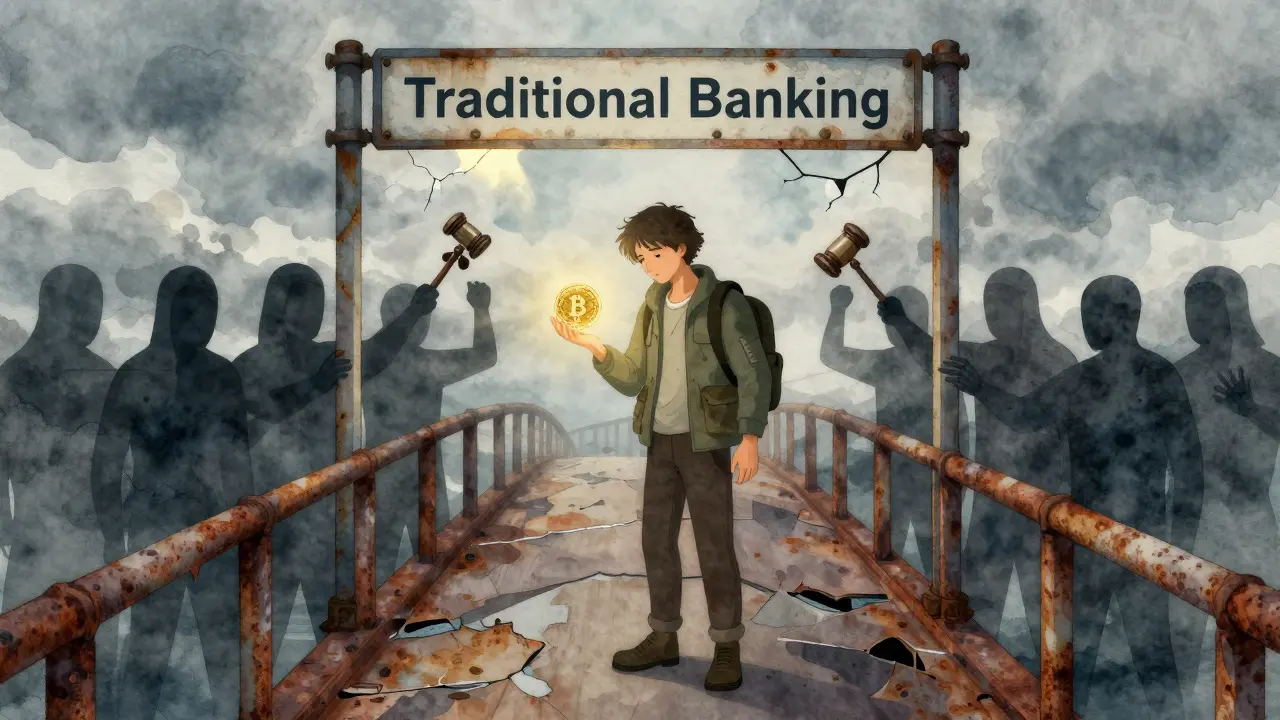
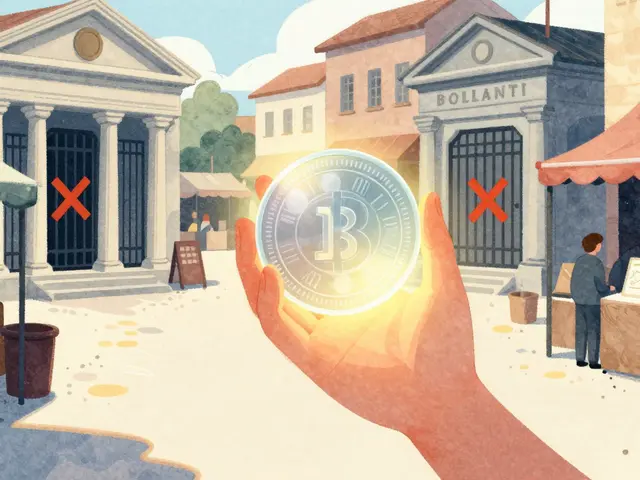
Imagine trying to send money to a family member abroad. You can’t use a bank because they’ve blocked the transfer. You can’t use Western Union because your country is on a sanctions list. So, you turn to P2P crypto trading, which is a method of exchanging digital assets directly between individuals without a centralized intermediary. It sounds like freedom. But if you live in a restricted country, that freedom comes with heavy chains.
In 2026, the landscape for peer-to-peer cryptocurrency trading has changed drastically. The days of wild west-style anonymous swaps are largely over. Between international sanctions, aggressive compliance by major exchanges, and new local laws, P2P volumes in restricted nations have taken a massive hit. If you’re trying to trade in these regions, understanding why volumes are dropping-and where the loopholes remain-is critical for your financial safety.
The Shrinking Window for P2P Trading
Let’s look at the big picture first. For years, people assumed that because blockchain is decentralized, no government could stop it. That assumption was wrong. While outright bans on crypto ownership have decreased globally, the mechanisms to restrict trading have become smarter and more effective.
As of 2025, only about 12% of emerging markets maintained total bans on crypto trading, down from 19% in 2023. On paper, this looks like progress. However, this statistic hides a crucial detail: while 88% of these markets allow crypto, they do so under strict regulatory frameworks that often choke off P2P liquidity. The difference between "legal" and "accessible" is widening.
In many jurisdictions, holding Bitcoin might not be illegal, but converting it into fiat currency through P2P platforms is heavily monitored or effectively blocked by banking partners. This creates a paradox where users own assets they cannot easily spend or cash out, leading to stagnant P2P volumes despite high wallet balances.
The OFAC Hammer: Sanctions and Volume Drops
The biggest driver of declining P2P volumes in restricted countries is the Office of Foreign Assets Control (OFAC). Based in the United States, OFAC enforces economic sanctions that ripple across the entire global crypto ecosystem. Their impact isn't just theoretical; it’s measurable and severe.
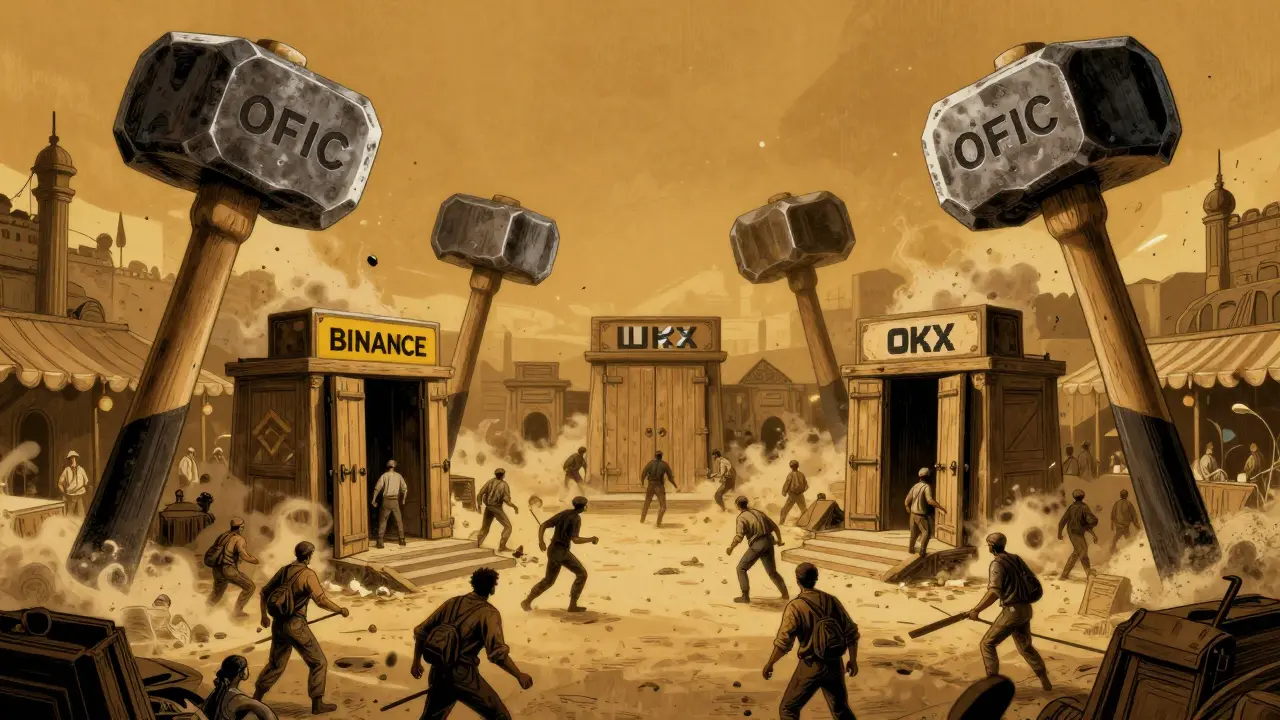
Consider Russia and Iran. Following expanded sanctions enforcement, P2P trading volumes on exchanges serving these regions dropped by approximately 60%. Why? Because major platforms like Binance and OKX started aggressively blocking users from sanctioned jurisdictions to avoid billions in fines. This wasn't just a policy tweak; it was an existential threat to their business models.
| Metric | Change Percentage | Context |
|---|---|---|
| P2P Volume (Russia/Iran) | -60% | Direct result of exchange restrictions |
| Global Transaction Volume (Sanctioned Entities) | -18% | Broader market impact |
| Crypto Liquidity (Sanctioned Countries) | -25% | Reduced market depth |
| International Remittances via Crypto | -21% | Decline in cross-border flows |
The data shows a clear trend: when sanctions tighten, liquidity dries up. In 2024 alone, $740 million worth of stablecoins were frozen due to OFAC enforcement actions-a 35% increase from the previous year. For a trader in a restricted country, this means your counterparty might suddenly lose access to their funds, leaving you with crypto you can’t sell and no recourse.
Major Exchanges: The Gatekeepers of P2P
You might think you can bypass sanctions by using smaller, niche exchanges. But even those are feeling the pressure. Major platforms have implemented varying levels of restriction, creating a fragmented map of availability.
OKX, one of the world's largest exchanges, currently restricts users in more than twenty countries. They categorize these restrictions into tiers:
- High-Sanctioned Jurisdictions: Afghanistan, Iran, North Korea, Syria, Cuba. Access is completely blocked.
- Strict National Bans: Algeria, Bangladesh, Bolivia, Nepal. No services offered.
- Selective Restriction Markets: Canada, India, Nigeria, Uzbekistan. Services are limited or require enhanced verification.
- Conflict-Affected Regions: Crimea, Donetsk, Luhansk. Total exclusion.
Binance has faced similar headwinds. In Nigeria, the Securities and Exchange Commission declared Binance illegal in 2023. By 2024, this led to executive detentions and the disabling of Naira services. In Europe, Binance exited the Dutch market after failing to secure approval, followed by bans in Belgium and revoked permissions in the UK. These exits don't just remove convenience; they remove the primary venues where P2P traders find liquidity.
Country-Specific Realities: Bans vs. Restrictions
Not all restricted countries are created equal. Some enforce blanket bans, while others maintain a grey area that allows limited P2P activity. Understanding this distinction is vital for risk management.
Total Bans: Countries like China, Qatar, Egypt, Algeria, Morocco, Nepal, Bangladesh, and Tunisia effectively eliminate P2P trading. In these places, any attempt to trade can lead to legal consequences, including asset seizure or imprisonment. The lack of legal protection means you have no one to call if a trade goes wrong.
Limited Oversight: Pakistan represents a middle ground. They maintain overall restrictions on cryptocurrency but allow limited P2P trading under strict oversight. This creates a fragile environment where trades happen, but always with the sword of Damocles hanging overhead.
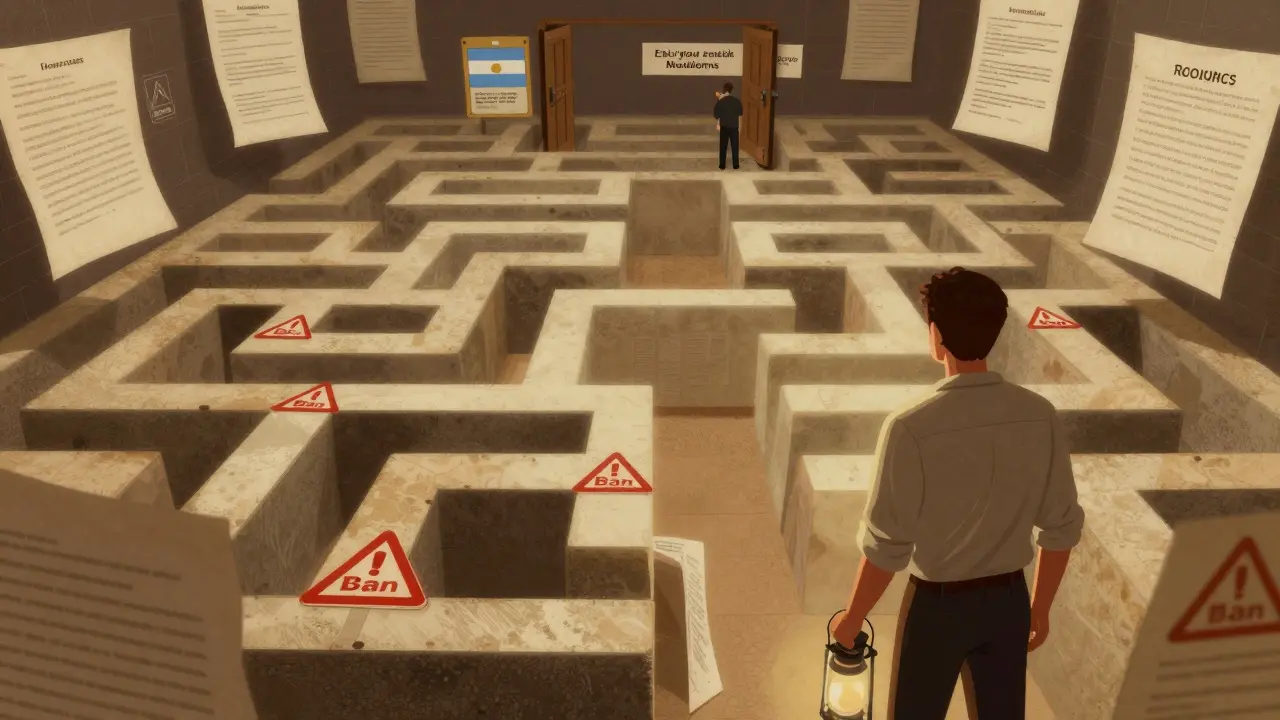
Evolving Regulations: Other countries are shifting their stance. Argentina legalized cryptocurrency for international trade settlements in 2025, opening new avenues for P2P. Kenya reversed its ban on crypto banking services in 2024, allowing regulated P2P exchanges to flourish. Vietnam decriminalized crypto usage in 2025, focusing instead on tax compliance. Turkey introduced limited legalization in 2025, permitting regulated exchanges but banning crypto for daily retail purchases.
These shifts show that regulation is moving faster than technology. What was possible last year may be illegal today. Traders must stay updated on local laws, as ignorance is rarely a valid defense.
DeFi and the Illusion of Anonymity
Many users in restricted countries turn to Decentralized Finance (DeFi) platforms, believing they offer true anonymity. Unfortunately, this belief is increasingly outdated. Compliance measures in DeFi have tightened significantly, affecting international P2P volumes.
In 2024, approximately 42% of DeFi platforms reported drops in international transactions after implementing OFAC compliance measures. How? By integrating tools that screen wallet addresses against sanctions lists before allowing transactions. This means even if you’re using a non-custodial protocol, your transaction might be flagged and blocked by downstream bridges or aggregators.
The enforcement actions against crypto mixing services, particularly the sanctions on Tornado Cash, had a profound effect. Illicit transaction volumes using mixers dropped by 48%, indirectly affecting P2P trading privacy options. Ethereum-based transactions involving sanctioned entities declined by 29% after stricter monitoring protocols were introduced in mid-2024.
This trend suggests that privacy is becoming a premium feature, not a default. For traders in restricted countries, this means higher costs and greater complexity to maintain anonymity, further suppressing P2P volumes.
Navigating the Risks in 2026
If you must engage in P2P crypto trading in a restricted country, awareness is your best defense. Here are practical steps to mitigate risk:
- Verify Counterparties: Never trust reputation scores alone. Use multiple channels to verify the identity and reliability of your trading partner.
- Understand Local Laws: Know whether your country imposes criminal penalties for crypto trading. In some places, the risk isn’t just losing money-it’s losing freedom.
- Avoid Sanctioned Wallets: Ensure your wallet address hasn’t been flagged by OFAC or other regulatory bodies. One tainted interaction can freeze all your assets.
- Diversify Platforms: Don’t rely on a single exchange. Spread your activity across multiple platforms to reduce the impact of sudden bans or restrictions.
- Keep Records: Document every trade, including chat logs and payment confirmations. In case of disputes, evidence is your only leverage.
The future of P2P crypto trading in restricted countries depends on evolving regulatory frameworks. While 88% of emerging markets now permit crypto under specific regulations, the continued enforcement of international sanctions ensures that P2P volumes will remain constrained. Technical limitations aren’t the barrier anymore-compliance is.
Is P2P crypto trading legal in restricted countries?
It depends on the country. In nations with total bans like China or Egypt, it is illegal and carries significant risks. In countries like Pakistan or Turkey, it may be allowed under strict oversight or limited conditions. Always consult local laws before trading.
How have OFAC sanctions affected P2P trading volumes?
OFAC sanctions have caused a dramatic decline in P2P volumes, particularly in sanctioned jurisdictions like Russia and Iran, where volumes dropped by 60%. Global transaction volumes linked to sanctioned entities also decreased by 18% between 2023 and 2024.
Which major exchanges restrict P2P trading in specific countries?
Exchanges like OKX and Binance restrict users in numerous countries. OKX blocks high-sanctioned jurisdictions such as Iran and North Korea, while Binance has faced bans in Nigeria, the UK, and Belgium, among others.
Can DeFi platforms help bypass P2P restrictions?
Not reliably. Many DeFi platforms now implement OFAC compliance measures, screening wallets against sanctions lists. In 2024, 42% of DeFi platforms reported drops in international transactions due to these compliance efforts.
What happened to Tornado Cash and how does it affect P2P trading?
Tornado Cash was sanctioned by OFAC, leading to a 48% drop in illicit transaction volumes using mixers. This reduced privacy options for P2P traders, making it harder to obscure transaction origins and destinations.



Tobias Gjerlufsen
May 13, 2026 AT 11:04you people are still talking about p2p like its a viable option in 2026. the entire premise is flawed because compliance has won. ofac didn't just crack down they rewrote the rules of engagement for every single node on the network. if you think you can hide behind a vpn and a burner wallet you are deluding yourself into thinking you are smarter than the algorithms tracking chain analysis. the data doesn't lie and neither does the reality that liquidity has dried up to near zero in sanctioned zones. stop pretending there is a loophole when the door was welded shut years ago.
Ashley Rodriguez
May 14, 2026 AT 00:01i really wish we could just go back to the days where sending money to family wasn't such a huge ordeal but i understand why things changed so much over the years and it seems like everyone is trying their best to navigate these new rules even though it feels incredibly restrictive and unfair to those who just want to support their loved ones abroad without having to worry about getting banned from platforms or losing all their hard earned savings because some government decided to put sanctions in place which makes me feel sad for everyone involved in this mess
Caique Muniz
May 15, 2026 AT 18:42lol another article telling us how great regulations are while ignoring the fact that normal people get screwed over every single day. the stats are whatever but the reality is that if you live in a restricted country your life is basically over financially unless you have connections. not gonna read the whole thing tbh.
Tricia Alach
May 16, 2026 AT 01:31i feel like the whole concept of privacy being a premium feature is just so sad really. it used to be something we took for granted and now we have to pay extra to keep our transactions secret from governments and corporations alike. maybe thats just how the world is evolving tho and we need to accept that anonymity isnt coming back anytime soon. its kind of scary to think about what else will become paid features in the future but i guess thats just capitalism at work again right
robert Whitehead
May 16, 2026 AT 16:12the moral decay of society is evident in how people cling to these illegal activities despite clear warnings. when you choose to engage in P2P trading in sanctioned regions you are not a victim you are a participant in a system that undermines global financial stability. the drop in volumes is not a tragedy it is a necessary correction. those who complain about restrictions are simply unwilling to accept responsibility for their actions and instead blame external forces for their poor decisions. it is time for individuals to take accountability rather than seeking loopholes that do not exist.
Kiran CS
May 17, 2026 AT 02:34one must appreciate the sheer audacity of these exchanges attempting to regulate themselves while simultaneously claiming they are decentralized entities. it is quite the paradox isn't it. the pretension of believing that one can escape the reach of OFAC through some clever trickery is laughable at best and dangerous at worst. the elites who designed these systems knew exactly what would happen and yet they sold the dream of freedom to the masses who were too naive to realize they were being sold a bill of goods wrapped in blockchain jargon.
Gavin Wonnacott
May 17, 2026 AT 07:28you clearly don't understand the geopolitical implications here. this isn't just about crypto it's about control. the west wants to strangle economies that don't align with their interests and using financial sanctions is the most effective way to do it. anyone complaining about this is either ignorant or complicit. i know people in those regions and let me tell you the situation is dire but blaming crypto for your problems is pathetic. get a grip.
Destiny Kilby
May 19, 2026 AT 01:16i hear you all saying that the system is broken but i also see the fear in people who rely on these methods to survive. it is heartbreaking to know that someone might lose access to funds meant for medicine or food because of a sanction list update. we should focus on finding ways to help those individuals rather than judging them for trying to stay alive in a hostile environment. empathy matters more than technical correctness here.
Sheldon Friesen
May 20, 2026 AT 03:05so you're telling me that after all this time we still haven't figured out a way to make cross-border payments easy and cheap? seriously! the technology exists but the bureaucracy keeps getting in the way! it's almost as if the banks want to keep their fees high! anyway, good luck to everyone trying to navigate this mess! remember to diversify your risks! and maybe invest in some gold too! just kidding! or am i?
Michael Berggren
May 20, 2026 AT 22:38it's important to stay optimistic even when the odds seem stacked against us 🌟. many communities have found innovative ways to adapt to these changes and I believe that human ingenuity will always find a path forward. let's support each other and share knowledge about safe practices rather than spreading fear. together we can build a more inclusive financial future 💪.
Larry Port
May 22, 2026 AT 14:53i wonder if the definition of 'restricted' is going to change in the next few years. with more countries adopting digital currencies maybe the line between legal and illegal will blur even further. it's interesting to think about how regulation evolves alongside technology. perhaps we'll see a hybrid model where local laws dictate usage but global protocols remain open. only time will tell i suppose.
Ruben Michel
May 23, 2026 AT 08:57the notion that DeFi offers any semblance of true anonymity is a misconception held by the uneducated masses. sophisticated actors understand that chain analysis tools are far more advanced than the average user realizes. furthermore the integration of compliance measures into DeFi platforms demonstrates that the industry is maturing towards regulatory acceptance rather than evasion. those who persist in using mixers are merely delaying the inevitable consequences of their actions.
Bijan Das
May 23, 2026 AT 16:51yeah sure whatever. you guys talk big but half of you probably never traded a single satoshi outside of a regulated exchange. the real story is how the rich use these loopholes while the poor get crushed by fees and bans. typical.
Bradley Geldenhuys
May 24, 2026 AT 07:14look man i get that regulations are tough but you gotta look at the bigger picture here. the world is changing fast and we need to adapt or get left behind. its not about right or wrong its about survival. if you can trade safely then do it but dont expect sympathy if you get caught. stay sharp out there bros.
Bridget Coogle
May 24, 2026 AT 18:52let's try to keep the conversation respectful please. everyone has different experiences with this topic and it's okay to disagree. i hope we can learn from each other instead of attacking one another. staying calm helps us find better solutions together.
Zara Zaman
May 25, 2026 AT 12:05this is an internal matter for sovereign nations to decide. foreign interference in financial systems is unacceptable. our country has the right to control its own economy and protect its citizens from external threats. anyone suggesting otherwise is undermining national sovereignty.
Jocelyn Garcia
May 26, 2026 AT 07:46from a technical standpoint the implementation of OFAC filters on bridges is becoming increasingly sophisticated. the latency introduced by these checks is negligible but the impact on throughput is significant for high-frequency traders. however for retail users in restricted jurisdictions the primary bottleneck remains the fiat off-ramp availability rather than the on-chain mechanics themselves.
Jerry CUNNINGHAM SR
May 26, 2026 AT 18:55i appreciate the detailed breakdown of the current landscape. it is crucial that we approach this topic with respect for all parties involved including regulators and traders alike. understanding the nuances allows us to make informed decisions and advocate for policies that balance security with accessibility. let us continue this dialogue constructively.
Mike S
May 28, 2026 AT 14:23oh wow another doom post about crypto dying. classic. you guys are so dramatic it's exhausting. meanwhile i'm sitting here making bank because i listened to my gut and ignored the FUD. sorry not sorry.
H F
May 29, 2026 AT 21:25bloody hell this is a mess isn't it? i mean honestly it's brilliant in a twisted sort of way how they've managed to squeeze every last bit of profit out of people trying to send money home. but hey at least we're learning valuable lessons about resilience right? let's give ourselves a round of applause for surviving yet another year of financial chaos!
Jan Gilmore
May 30, 2026 AT 08:10listen up folks. the key takeaway here is that knowledge is power. if you don't know the rules you will lose. simple as that. i've seen too many people get burned because they thought they were special. you are not special. follow the guidelines verify your counterparties and keep your records clean. that's the only way to win in this game.
Shelby Cantu
May 31, 2026 AT 17:56stay strong everyone. you got this.