You’ve probably seen it pop up on a price tracker or heard a rumor about it in a crypto chat group. Sol Beats-ticker symbol BEATS-is one of those projects that promises something big but currently operates with almost zero visibility. It claims to be a bridge between the blockchain world and the lucrative global music industry. But if you look at the numbers right now, things get confusing fast.
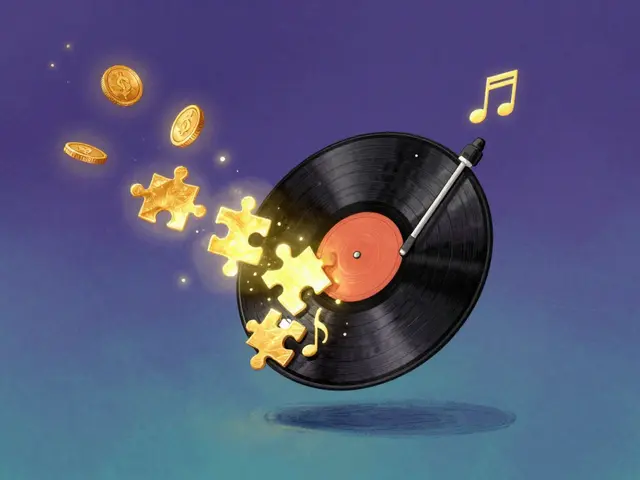
So, what is Sol Beats really? At its core, it is a micro-cap cryptocurrency token built on the Solana blockchain. The project positions itself as a platform for tokenizing real-world assets (RWAs), specifically music catalogs. In theory, this means turning ownership stakes in songs into digital tokens you can buy and sell. In practice, based on current market data from June 2026, it is an extremely illiquid asset with conflicting information across major exchanges.
The Core Concept: Tokenizing Music Rights
To understand Sol Beats, you first have to understand what it is trying to do. The project falls under the category of Real World Assets (RWAs), which are physical or legal rights transformed into digital tokens on a blockchain. For Sol Beats, the target is music.
The idea is straightforward: instead of buying shares in a public company, you buy tokens that represent a fraction of revenue from specific music tracks or catalogs. This could include publishing rights (the songwriters' share) or master rights (the recording label's share). If the song gets streamed on Spotify or licensed for a movie, the revenue flows back to the token holders.
This concept is not new. Several platforms have tried to fractionalize music royalties using blockchain technology. However, Sol Beats aims to do this on Solana, a high-speed blockchain known for low transaction fees. This makes sense theoretically because streaming payouts are often small; if the network fee was $5 per transaction, tokenizing a song that earns $0.003 per stream would be impossible. Solana’s sub-penny fees make micro-transactions viable.
However, there is a massive gap between the pitch and the product. While the description on sites like CoinMarketCap talks about "direct access to the lucrative global music industry," there is no public evidence of which music catalogs are actually onboarded. There are no listed partnerships with major record labels like Universal or Sony, nor are there transparent reports showing royalty distributions to token holders.
Conflicting Data: The Supply Problem
If you try to research Sol Beats today, you will run into a common problem with micro-cap tokens: inconsistent data. Different exchanges and trackers report completely different numbers for supply and circulation. Here is how the data looks across major platforms:
| Platform | Total Supply | Circulating Supply | Reported Price | Market Cap |
|---|---|---|---|---|
| Coinbase | 798,025 BEATS | 0 BEATS | N/A | $0 |
| CoinMarketCap | 798,020 BEATS | 798,020 BEATS | ~$0.00001 | ~$7.97 |
| Binance | N/A | 0 BEATS | $0.00001 | $0 |
| Crypto.com | 798,025 BEATS | N/A | $0.000015 | N/A |
Notice the contradiction. Coinbase and Binance list the circulating supply as zero, implying the token is not actively traded or recognized as liquid on their platforms. CoinMarketCap, however, lists the entire supply as circulating, giving it a market cap of roughly $8. This discrepancy usually happens when a token has very few trades, causing algorithms to guess at liquidity rather than measure it directly.
The total supply itself is tiny-less than 800,000 tokens. Most cryptocurrencies have supplies in the billions or even trillions. A small supply isn’t inherently bad, but combined with near-zero trading volume, it suggests that the token is held by a very small number of people, likely the founders or early insiders.
The Price Crash: From $43 to Near Zero
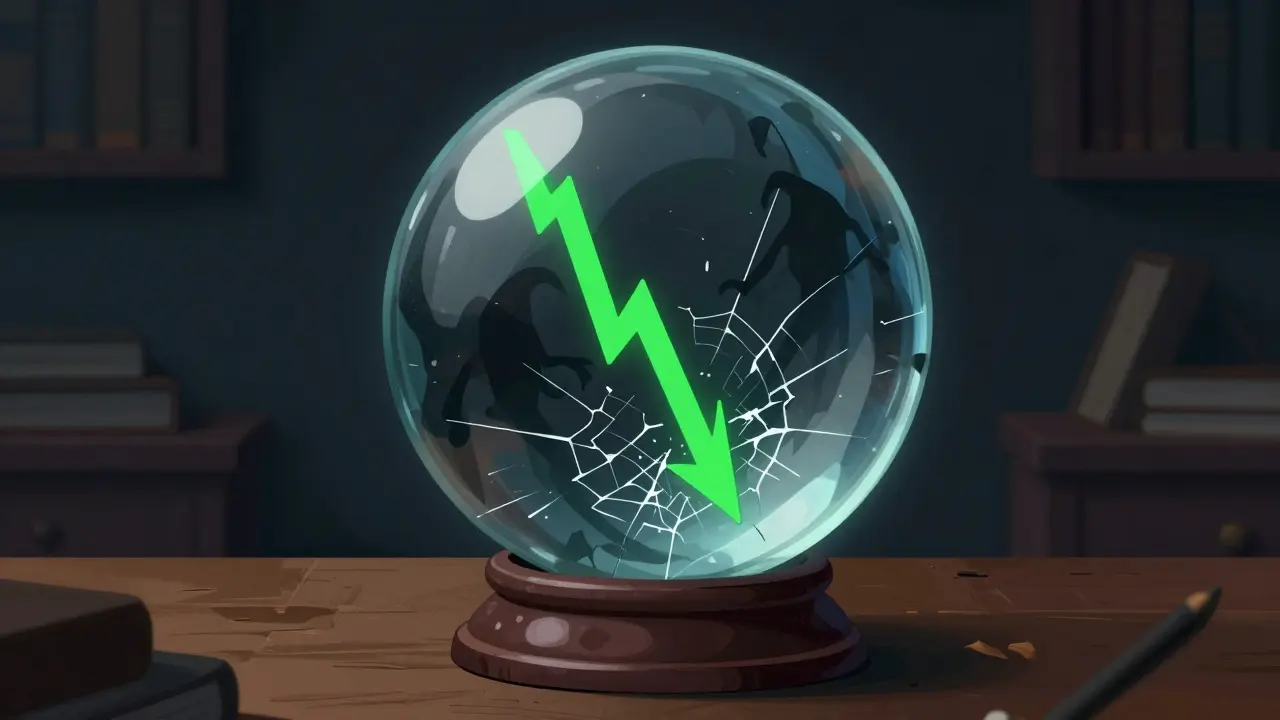
Perhaps the most alarming aspect of Sol Beats is its price history. According to historical data, Sol Beats reached an all-time high (ATH) of $43.62 on January 5, 2025. Let that sink in. With a total supply of roughly 800,000 tokens, that ATH represented a fully diluted valuation (FDV) of nearly $35 million.
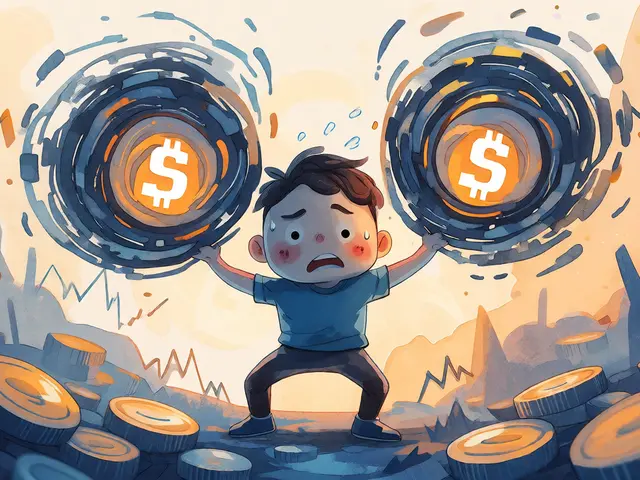
Today, in June 2026, the price hovers around $0.00001. That is a drop of more than 99.99%. The current market capitalization is less than $10. What happened?
In the world of micro-cap crypto, such crashes are typical of "pump and dump" scenarios or failed launches. When a token spikes to $43 without any underlying utility, real users, or verified partnerships, it is driven purely by speculation. Once the initial hype fades and no real value (like royalty payments) starts flowing in, the price collapses. The fact that the price has been flat with zero volume for extended periods suggests that the speculative interest has dried up completely.
For context, legitimate RWA projects usually show gradual growth tied to real-world metrics, such as the number of assets tokenized or the amount of yield distributed. Sol Beats shows none of these signs. The crash indicates that the market has voted with its feet: the promise of music tokenization has not yet translated into a working product.
Liquidity and Trading Risks
You might be thinking, "If I buy it now at $0.00001, can’t I just wait for it to go back up?" The problem is liquidity. Liquidity refers to how easily you can buy or sell an asset without affecting its price. For Sol Beats, liquidity is effectively non-existent.
- Zero Volume: Major trackers report $0 in 24-hour trading volume. This means no one is buying or selling significant amounts.
- No Exchange Listings: While Coinbase and Binance track the price, they do not offer active order books for BEATS. You cannot simply log in and click "Buy."
- P2P Difficulty: On peer-to-peer platforms like Symlix, the price is rounded to $0.00, making it hard to find buyers willing to trade fiat currency for such a low-value token.
If you manage to acquire some BEATS tokens, you may find yourself unable to sell them. Without a deep pool of buyers, your only option might be to hold indefinitely, hoping someone else decides to buy later. This is a classic trap of micro-cap tokens: easy to buy (if you can find a source), nearly impossible to sell.
Who Holds Sol Beats?
Data from CoinMarketCap indicates there are approximately 333 unique holders of Sol Beats. In the crypto world, where top projects have millions of holders, 333 is an incredibly small community. This suggests that the token is concentrated among a handful of wallets. Often, this includes the development team, early investors, or bots.
There is no visible decentralized governance structure, no active Discord or Telegram community discussions, and no regular updates from the team. The absence of social proof is a red flag. Successful crypto projects thrive on community engagement. Sol Beats appears to be operating in silence.

Regulatory Hurdles for Music Tokens
Beyond the technical and market issues, Sol Beats faces significant regulatory challenges. Tokenizing music rights involves securities law. In many jurisdictions, including the United States, offering tokens that represent a share in profits from an enterprise can be classified as selling unregistered securities.
Music rights are complex legal instruments. They involve copyright laws, performance rights organizations (PROs) like ASCAP or BMI, and licensing agreements. To tokenize these legally, a project needs robust legal frameworks and partnerships with rights holders. There is no public documentation suggesting Sol Beats has navigated these waters. Without proper legal structuring, the project risks being shut down or facing lawsuits, which would render the tokens worthless.
Is Sol Beats Worth Your Attention?
Based on the available data, Sol Beats does not appear to be a viable investment or a functional platform at this time. It sits in the danger zone of crypto: high promise, zero delivery, and extreme risk. The massive price drop from its 2025 peak, the lack of trading volume, and the absence of real-world music assets on the platform all point to a stalled project.
If you are interested in the intersection of music and blockchain, there are more established players exploring similar ideas with greater transparency and regulatory compliance. Sol Beats serves as a cautionary tale of how quickly micro-cap tokens can lose value when they fail to deliver on their core promises. Always verify the fundamentals, check the liquidity, and ensure there is a real product behind the hype before putting any money into a token.
Can I buy Sol Beats (BEATS) on Coinbase?
No. While Coinbase tracks the price of BEATS, it lists the circulating supply as zero and does not offer an active trading pair. You cannot buy or sell BEATS directly on the Coinbase exchange.
Why did Sol Beats crash from $43 to near zero?
The crash likely resulted from a lack of fundamental value. The initial spike was probably driven by speculation rather than real usage. Once traders realized there were no actual music assets tokenized or revenue being generated, they sold off their holdings, causing the price to collapse.
What is the total supply of Sol Beats?
The total supply of Sol Beats is approximately 798,020 to 798,025 tokens. This is a very small supply compared to most cryptocurrencies, which often have billions of tokens.
Does Sol Beats actually tokenize music rights?
Currently, there is no public evidence that Sol Beats has successfully tokenized any specific music catalogs or distributed royalties to token holders. The project describes this as its goal, but implementation details are missing.
Is Sol Beats a safe investment?
Sol Beats carries extreme risk. It has experienced a >99% price drop, has near-zero liquidity, and lacks transparent team information or regulatory compliance. It should be considered highly speculative and potentially unsafe for investment.