When the bolívar loses half its value in a single month, you don’t treat money like a savings account-you treat it like a hot potato. In Venezuela, that’s exactly what people do. With annual inflation at 229% in May 2025 and the currency losing over 70% of its value since January, the national currency is no longer a store of value. It’s a relic. And for millions of Venezuelans, crypto has become the only thing standing between them and financial collapse.
From Bolívar to Binance Dollars
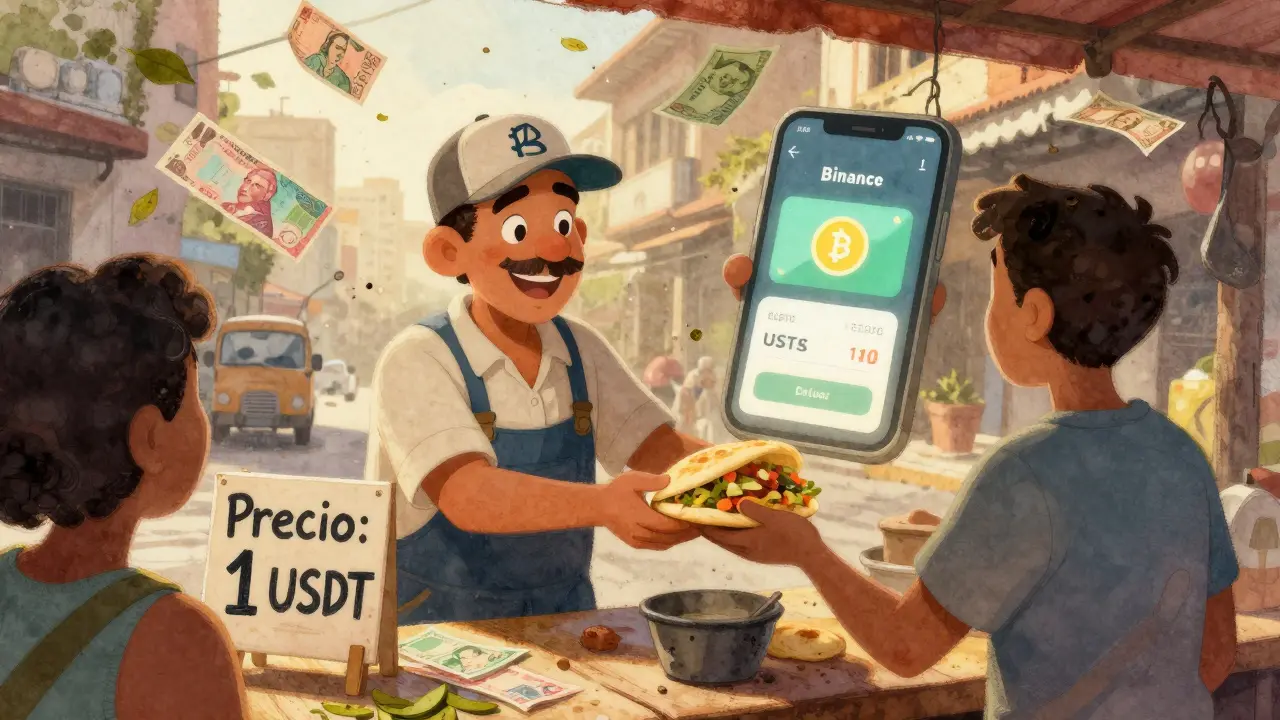
You won’t find many receipts in Caracas that list prices in bolívares anymore. Instead, you’ll see totals in "Binance dollars"-a local nickname for USDT, the Tether stablecoin pegged to the U.S. dollar. This isn’t slang. It’s the new standard. Merchants, from street vendors selling arepas to clinics offering dental care, now price goods in USDT because it’s the only thing that holds its value from morning to afternoon. The shift didn’t happen overnight. After years of hyperinflation peaking at 10 million percent in 2018, people stopped trusting the government’s money. They started looking elsewhere. Bitcoin was the first alternative, but its price swings made it risky for daily purchases. USDT changed everything. It’s stable. It moves fast. And on the TRC-20 network, transaction fees are so low-often under $0.10-that even a $5 grocery run makes sense.By July 2025, private sector crypto transactions in Venezuela hit $119 million in a single month. That’s not speculation. That’s survival. People use it to pay rent, buy medicine, send money to family, and even pay for university tuition. The government’s own Petro cryptocurrency, launched in 2018 as a state-backed solution, collapsed by 2024. No one trusted it. But USDT? It’s trusted because it’s not tied to Caracas. It’s tied to the blockchain.
How It Works: The Underground Network
There’s no bank branch in Venezuela that lets you deposit bolívares and withdraw dollars. So Venezuelans built their own financial system-on their phones. Most people use Binance or LocalBitcoins. They don’t need a bank account. They don’t need ID. They just need a smartphone and a Wi-Fi connection-when it’s working. Transactions happen through peer-to-peer (P2P) trades. Someone in Maracaibo might sell $100 worth of USDT for cash. Someone in Valencia picks it up. No middleman. No delay. No paperwork.These trades often happen through WhatsApp groups, Telegram channels, or even Facebook posts. You find a seller, agree on a price, meet in a public place like a mall or café, and swap cash for crypto. Some use prepaid debit cards loaded with crypto, then withdraw cash at ATMs that accept them. Others trade gift cards for USDT-Amazon, Google Play, even Netflix cards-because those can be sold internationally for real dollars.
It’s messy. It’s informal. But it works. And it’s how 9% of all remittances into Venezuela in 2023 were sent. Family abroad? They don’t wire money through Western Union anymore. They send USDT. In minutes. With no fees. And the recipient doesn’t lose half its value by the time they spend it.
Why USDT, Not Bitcoin?
Bitcoin gets all the headlines. But in Venezuela, Bitcoin is mostly for bigger purchases-like a laptop, a car, or rent for a studio apartment. For daily bread? USDT is king. Why? Because it’s stable. One USDT = one U.S. dollar. Always. That’s the whole point. Bitcoin might go up 20% in a week. But it might also drop 15%. For someone buying milk or paying for a bus ride, that volatility is dangerous. USDT doesn’t move like that. It’s predictable. And predictability is priceless when your salary can’t buy a kilo of rice by Friday.Even businesses that accept Bitcoin often list prices in USDT equivalents. A coffee might cost 0.0005 BTC-but they’ll tell you it’s $1.50 in Binance dollars. That way, you know exactly what you’re paying. No guessing. No panic.

Challenges: Power, Internet, and Security
Crypto isn’t magic. It still needs electricity. And in Venezuela, power cuts are common. Some neighborhoods go days without consistent current. People charge phones with solar panels, car batteries, or even hand-crank chargers. If your phone dies, your wallet dies with it. Internet access is patchy too. In rural areas, 4G is a luxury. Many rely on public Wi-Fi in parks, libraries, or even fast-food restaurants. Some users carry portable hotspots. Others trade crypto through SMS-based services that work on basic phones-no apps needed. Security is another issue. Private keys are everything. Lose them, and your money is gone forever. Most users don’t understand cold wallets or hardware security. They keep keys on their phones. Some write them down on paper. Others store them in cloud notes. It’s risky. But they have no better option. The government doesn’t offer protection. Banks don’t exist. So they take the chance.Government Attitude: Tolerate, Then Crack Down
The Venezuelan government has never officially legalized crypto. But it hasn’t banned it either. It’s a game of cat-and-mouse. In 2024, authorities shut down mining operations in several states, claiming they used too much electricity. They’ve raided crypto exchange offices. They’ve arrested people for operating P2P trading hubs. Yet, at the same time, they allow Binance and other platforms to operate. Why? Because the economy can’t function without it. The government needs people to buy food, pay taxes, and keep working. Crypto keeps that engine running.There’s no policy. Just chaos. And that chaos gives people freedom. The state can’t control what it can’t monitor. And blockchain? It’s invisible to them.
What’s Next? The Irreversible Shift
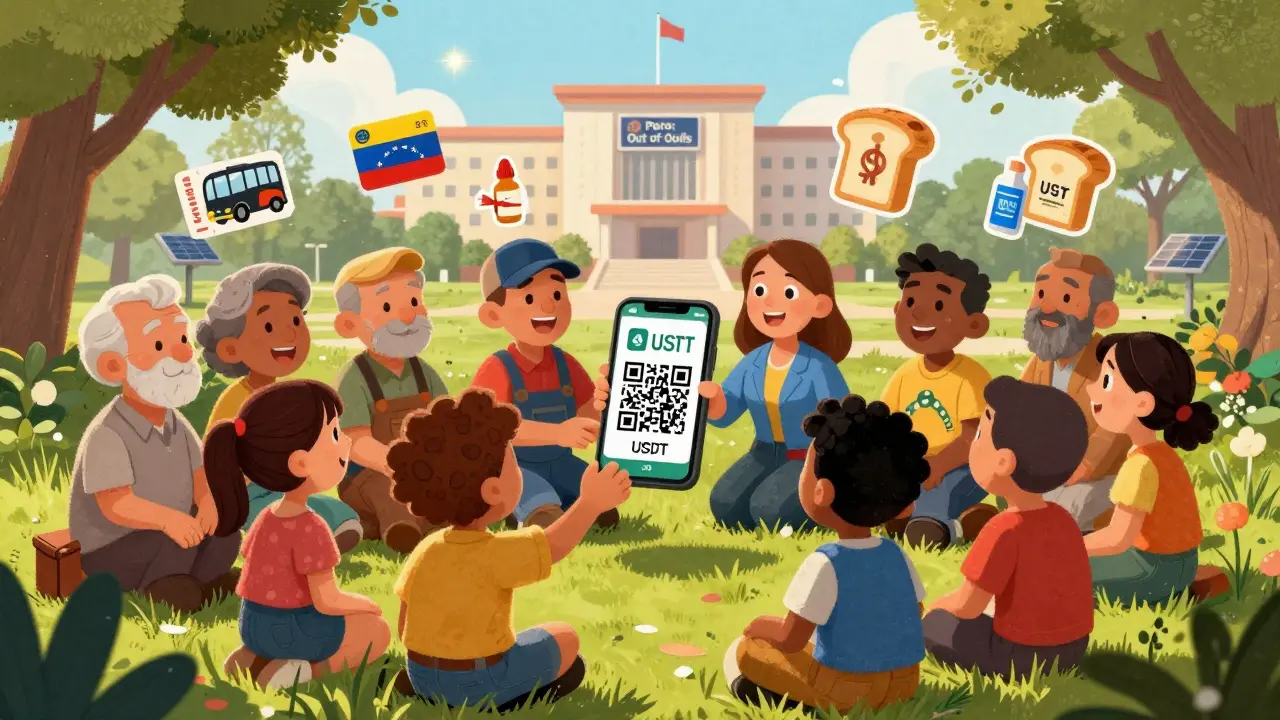
No one expects Venezuela to fix its economy overnight. Sanctions, corruption, mismanagement-these aren’t solved by crypto. But crypto has solved one thing: daily survival.More people are learning how to use it. Teens teach their grandparents. Community centers run free workshops. YouTube videos in Spanish explain how to set up a wallet. The learning curve is short-two to three weeks to get comfortable. After that, it’s just part of life.
Businesses are adapting too. Universities accept crypto for tuition. Hospitals use it to pay staff. Even small farms now sell produce via QR codes linked to USDT wallets. The bolívar is fading. Not because it was replaced. But because it became irrelevant.
There’s no going back. Even if Maduro’s government falls tomorrow, crypto won’t disappear. It’s too embedded. Too useful. Too necessary. The dollarization of Venezuela isn’t happening through policy. It’s happening through code.
Real Stories, Real Life
Carlos, 34, works as a mechanic in Caracas. He earns 10 million bolívares a month. That’s about $0.25 at the official rate. But he doesn’t even look at the bolívar anymore. "I get paid in USDT," he says. "I pay my rent in USDT. I buy my son’s medicine in USDT. I even pay for my bus ticket in USDT. If I had to use bolívares, I’d starve. Crypto isn’t an investment. It’s my paycheck. My food. My life."Laura, a teacher in Maracay, uses crypto to send money to her sister in Miami. "Before, I’d wait weeks for a wire transfer. Fees were $50. Now, I send $200 in USDT. It arrives in 12 minutes. She gets $199. No one takes a cut. No one asks questions."
These aren’t exceptions. They’re the norm.
There’s no grand plan. No central authority. Just millions of people using a technology they didn’t ask for-but now can’t live without.
Is crypto legal in Venezuela?
Crypto isn’t officially legal or illegal in Venezuela. The government hasn’t passed laws banning it, but it also hasn’t recognized it as legal tender. They tolerate its use because the economy depends on it. However, they occasionally crack down on mining and exchange operators, especially when they think crypto is undermining control over financial flows.
Why do Venezuelans prefer USDT over Bitcoin?
USDT is stable-it’s pegged to the U.S. dollar, so its value doesn’t swing like Bitcoin’s. For daily purchases like food or transportation, price stability matters more than potential gains. Bitcoin’s volatility makes it risky for paying rent or buying groceries. USDT gives people certainty: $1 today is $1 tomorrow.
Can you use crypto without internet?
Not easily. Most crypto transactions require internet access to send or receive funds. But some Venezuelans use SMS-based services or offline QR code swaps where one person scans a code and sends cash immediately. These methods are rare and risky, but they exist. Power outages and poor connectivity remain major barriers.
How do Venezuelans protect their crypto wallets?
Most users store private keys on their phones, write them on paper, or save them in cloud notes. Few use hardware wallets due to cost and lack of awareness. Security is weak, but many accept the risk because losing crypto is still better than losing everything to inflation. Community groups now teach basic security practices, like never sharing keys and using two-factor authentication.
Is the Petro cryptocurrency still in use?
No. The Petro, Venezuela’s government-backed cryptocurrency launched in 2018, was officially discontinued in 2024. It never gained public trust due to lack of transparency, poor infrastructure, and widespread belief that it was a scam. Today, no businesses accept it. People avoid it. USDT and Bitcoin are the real alternatives.
Can crypto solve Venezuela’s economic crisis?
No. Crypto helps people survive, but it doesn’t fix the root problems: political instability, sanctions, corruption, and broken institutions. It’s a tool, not a solution. Without economic reform, crypto alone can’t restore the value of wages, rebuild infrastructure, or bring back foreign investment. But for now, it’s the only thing keeping millions from total financial ruin.



Bonnie Jenkins-Hodges
March 3, 2026 AT 08:36Melissa Ritz
March 4, 2026 AT 01:35jack carr
March 5, 2026 AT 16:18James Burke
March 6, 2026 AT 10:20Ian Thomas
March 6, 2026 AT 21:19Austin King
March 7, 2026 AT 20:05Bryanna Barnett
March 8, 2026 AT 04:10Josh Moorcroft-Jones
March 10, 2026 AT 03:53Rachel Rowland
March 12, 2026 AT 01:45Eva Gupta
March 12, 2026 AT 11:16Nancy Jewer
March 12, 2026 AT 14:06prasanna tripathy
March 13, 2026 AT 07:20jay baravkar
March 14, 2026 AT 08:57Cerissa Kimball
March 15, 2026 AT 13:08