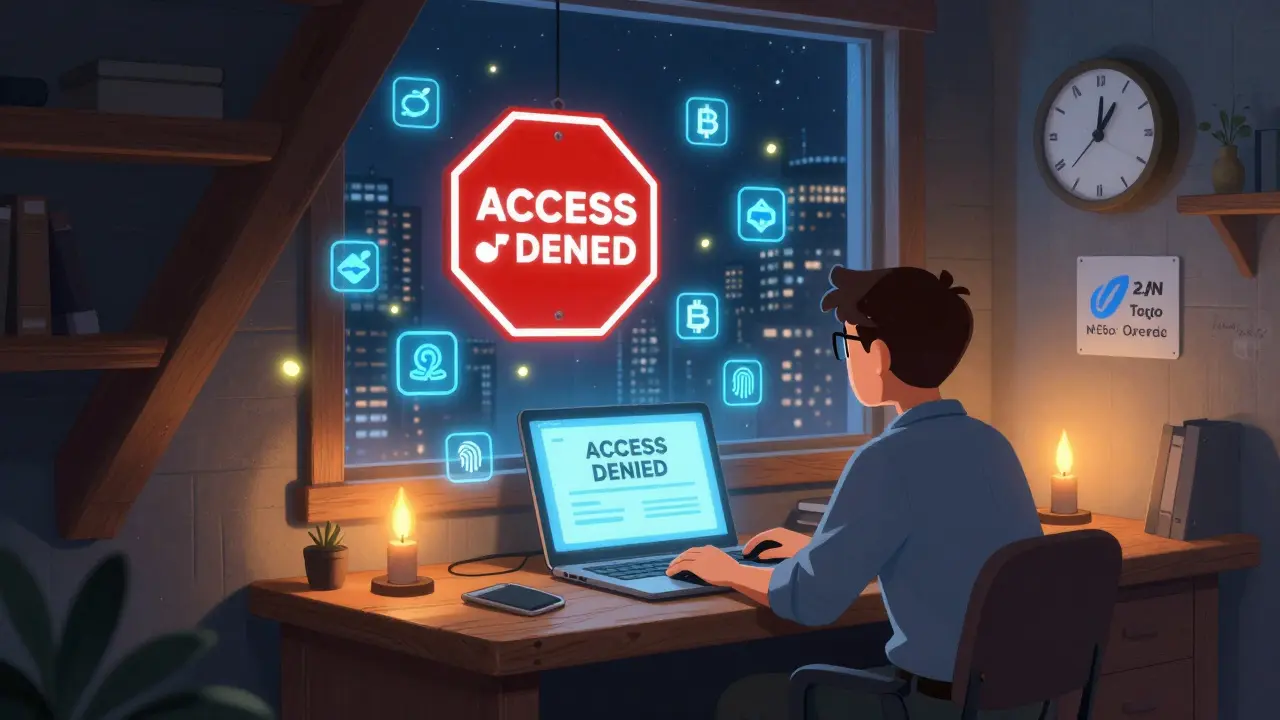
When you're trading crypto and your exchange blocks access because you're using a VPN, it's not just a technical glitch-it's a system designed to catch you. The 70-80% detection rate isn't a guess. It's what top exchanges like Binance and Coinbase actually achieve when scanning for VPN traffic. If you're using a free or budget VPN to access a restricted exchange, you're almost certainly flagged. And if you think your premium service makes you invisible, think again. Detection isn't just about IP addresses anymore. It's about behavior, timing, and digital fingerprints you didn't even know you were leaving behind.
How Crypto Exchanges Detect VPNs-It’s Not Just IP Blocks
Most people assume crypto exchanges only block known VPN IP addresses. That’s the easy part. The real detection happens in the background, silently analyzing how you use the platform. Exchanges track patterns: Do you log in from New York at 2 a.m., then Tokyo at 2:05 a.m.? That’s impossible for a real person. That’s a red flag. Do your trades happen in perfect 30-second intervals, no matter the market movement? That looks like automation, not human behavior. Even your browser gives you away. WebRTC leaks your real IP. DNS queries reveal your true location. Your device fingerprint-screen size, fonts, plugins-is unique. Combine all that, and you’re not hiding. You’re broadcasting.
Platforms like Binance and Coinbase use machine learning models trained on millions of real user sessions. These models don’t look for one thing. They look for dozens of small anomalies that, together, scream "VPN." A 2025 analysis by PureVPN found that exchanges cross-reference IP addresses against databases of known data centers, proxy networks, and cloud hosting providers. Free VPNs? Almost always flagged. Even some paid services with shared IPs get caught. It’s not about whether you’re using a VPN-it’s about which one, and how you use it.
Why Premium VPNs Still Get Caught-And How Some Don’t
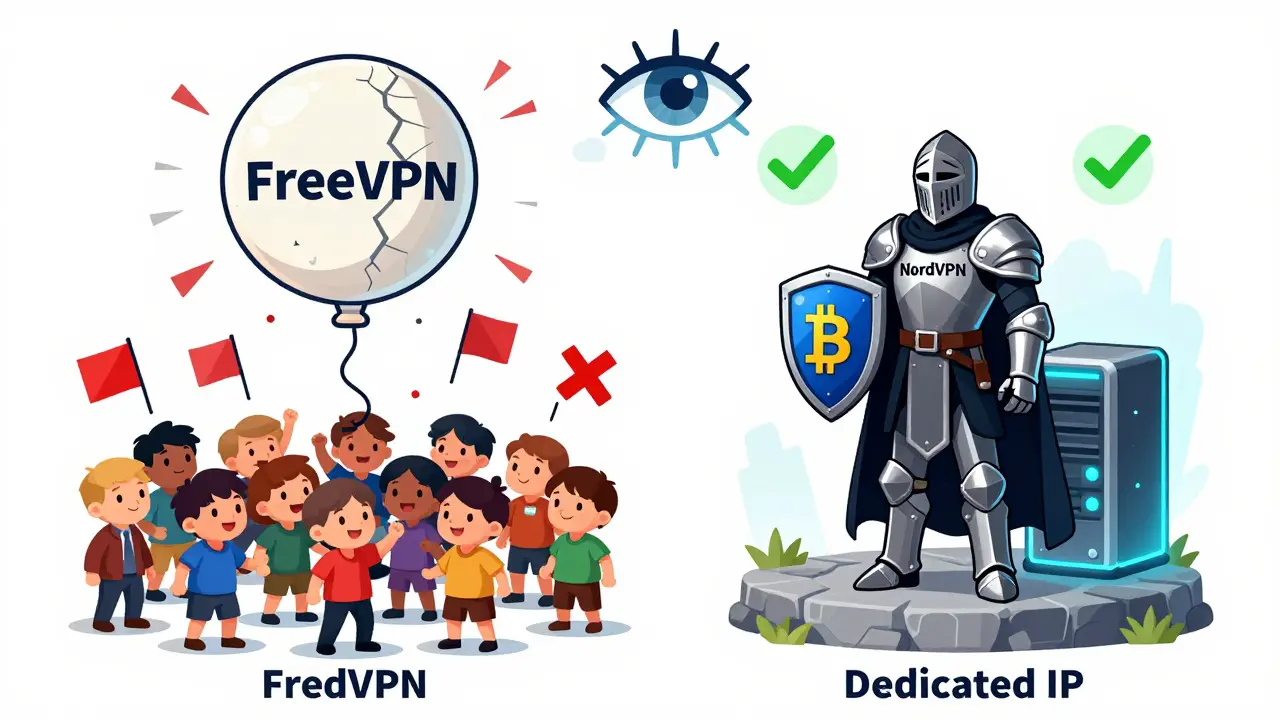
Not all VPNs are equal. NordVPN and ExpressVPN are the two most talked-about options for crypto traders, and for good reason. They don’t just hide your IP-they make it look like you’re a real person. NordVPN offers dedicated IP addresses, meaning your connection isn’t shared with 100 other users. That’s huge. Shared IPs are the #1 reason free and mid-tier VPNs get blocked. If 50 people from the same IP suddenly start trading on Binance, the system assumes fraud. One clean, unique IP? Much harder to flag.
Both services also use RAM-only servers. That means no hard drives. No logs. No trace. NordVPN operates from Panama. ExpressVPN is based in the British Virgin Islands. Both are outside major data retention laws. But here’s the catch: even these services can be detected if you switch servers too often. If you hop from Singapore to London to Miami in one hour, exchanges notice. They don’t care if you’re using NordVPN-they care if your behavior looks suspicious.
Another key difference? Payment. NordVPN accepts Bitcoin, Ethereum, and other cryptos. ExpressVPN accepts Bitcoin. Paying with crypto means your payment isn’t tied to your bank account or name. It adds another layer of separation between you and your trading activity. Most users skip this. They pay with a credit card linked to their real identity. That defeats half the purpose.
The Real Risk: Not Getting Blocked-Getting Locked Out
Being blocked is annoying. Getting your account locked is catastrophic. Exchanges don’t just say "no VPN" and cut you off. They trigger security protocols. Your withdrawal limits drop. You’re forced into extra KYC checks. Your account gets flagged for "suspicious activity." Some users report being locked out for days, even weeks, while they submit ID documents and proof of address. And if you’re using a VPN to access an exchange in a restricted country? You might be permanently banned.
Chainalysis, one of the biggest blockchain analytics firms, says VPN usage doesn’t significantly skew their global crypto adoption data. That’s because most traders aren’t trying to hide. The ones who are? They’re the outliers. But for those outliers, the cost is high. A 2025 survey of 2,000 active crypto traders found that 43% had experienced account restrictions due to VPN use. Of those, 28% lost access to funds for over a week. And 12% never got full access back.
It’s not just about bypassing geo-blocks anymore. It’s about protecting your account from being flagged as risky. If you’re using a VPN, you’re already in the crosshairs. The question isn’t whether you’ll be detected-it’s whether you’ll be able to recover from it.
What Works? Real Strategies That Still Hold Up in 2026
If you need to access a crypto exchange from a restricted region, here’s what actually works in 2026:
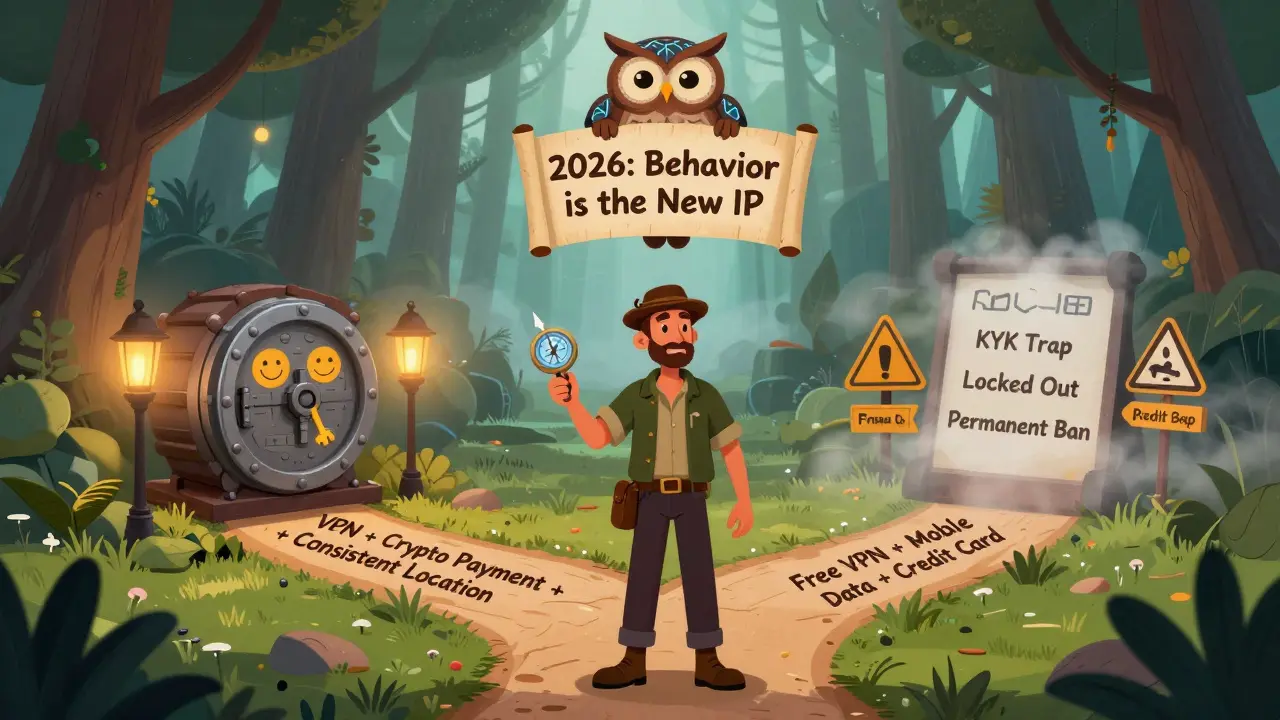
- Use a premium VPN with a dedicated IP-NordVPN and ExpressVPN are still the top choices. Avoid services that don’t offer dedicated IPs.
- Pay with crypto-Use Bitcoin or Ethereum to cover your subscription. Never use a credit card tied to your real identity.
- Stay in one server location-Don’t switch. Pick one country, stick with it. Consistency beats mobility.
- Use residential proxies-These are harder to detect because they use real home internet connections. Services like Luminati or OxyProxy cost more, but they’re far less likely to be flagged.
- Don’t combine VPN with mobile data-Your phone’s GPS can leak your real location even if your IP is hidden. Use Wi-Fi only.
Some advanced users run a VPN through Tor or use browser fingerprinting tools like Privacy Badger. But these methods are risky. Most exchanges ban them outright. You’re trading security for obscurity-and you might lose access permanently.
Security vs. Access: What You’re Really Sacrificing
Let’s be clear: using a VPN isn’t just about bypassing geo-blocks. It’s about protection. Crypto traders are prime targets for phishing, malware, and man-in-the-middle attacks. A good VPN encrypts your traffic, blocks malicious ads, and monitors the dark web for leaked wallet keys. NordVPN even includes dark web monitoring as a standard feature. That’s worth something.
But here’s the trade-off: the same tools that protect you also make you look suspicious. Exchanges see a user with a hidden IP, irregular login times, and crypto payments as a high-risk account. They’re not wrong. You are high risk. And they’re built to handle risk, not accommodate it.
So if you’re using a VPN for security, you’re doing the right thing. But if you’re using it to hide your location, you’re playing a game you can’t win. The detection rate isn’t 70-80% because the tech is perfect. It’s because most users don’t understand how it works. They use a cheap VPN, switch servers daily, pay with PayPal, and wonder why they got locked out.
The Future: More Detection, Not Less
Exchanges aren’t backing down. In 2026, they’re investing more in AI-driven behavioral analysis. New systems will track mouse movements, typing speed, and even how long you hover over buttons before clicking. They’ll compare your session patterns to millions of real users. If you’re acting like a bot-or like someone hiding behind a proxy-you’re flagged.
Some regulators are pushing for mandatory IP verification. The EU’s MiCA framework already requires exchanges to verify user location. The U.S. is moving toward similar rules. That means even if you bypass geo-blocks today, you’ll be forced to prove you’re who you say you are tomorrow.
The only way forward? Accept that you can’t be fully anonymous and fully compliant at the same time. If you need access to a restricted exchange, use a premium service, stay consistent, and accept that occasional verification is part of the cost. There’s no magic bullet. Just smart choices.
Is it legal to use a VPN for crypto exchanges?
In most countries, using a VPN is legal. But crypto exchanges have terms of service that prohibit bypassing geo-restrictions. Violating those terms can lead to account suspension or permanent banning-even if you didn’t break any law. Always check local regulations and the exchange’s rules before using a VPN.
Why do free VPNs get blocked so easily?
Free VPNs use shared IP addresses from data centers that are already on exchange blocklists. They also lack encryption controls, leak DNS data, and often sell user traffic. Exchanges know these IPs are used by bots, scammers, and fraudsters. A single free VPN IP might be used by thousands of users-making it a red flag by design.
Can I use a VPN on my phone to access crypto exchanges?
Yes, but it’s risky. Mobile devices leak GPS location, Wi-Fi networks, and Bluetooth signals-even with a VPN. If your phone’s location doesn’t match your VPN’s server, exchanges will flag you. For best results, disable location services and use Wi-Fi only. Never combine mobile data with a VPN for crypto access.
Do all crypto exchanges detect VPNs the same way?
No. Large, regulated exchanges like Binance and Coinbase have advanced detection systems. Smaller or decentralized exchanges may not detect VPNs at all. But if you’re using a major platform, assume detection is active. Your best bet is to assume you’re being watched, even if you don’t see it.
What happens if I get caught using a VPN?
You’ll likely face account restrictions: reduced withdrawal limits, mandatory KYC verification, or temporary suspension. In severe cases, your account may be permanently banned. Funds aren’t usually seized, but access may be locked until you prove your identity and stop using the VPN. Recovery is possible-but not guaranteed.





Julie Potter
March 4, 2026 AT 18:41Leah Dallaire
March 5, 2026 AT 13:55prasanna tripathy
March 6, 2026 AT 02:40James Burke
March 6, 2026 AT 18:19Jonathan Chretien
March 7, 2026 AT 17:55Bill Pommier
March 8, 2026 AT 10:51Olivia Parsons
March 8, 2026 AT 22:08Nick Greening
March 9, 2026 AT 17:39Issack Vaid
March 11, 2026 AT 03:47Shawn Warren
March 12, 2026 AT 03:59Jackson Dambz
March 14, 2026 AT 03:51Megan Lutz
March 14, 2026 AT 05:05Jesse VanDerPol
March 14, 2026 AT 12:51jonathan swift
March 16, 2026 AT 04:18Datta Yadav
March 16, 2026 AT 17:35Lydia Meier
March 17, 2026 AT 13:13jay baravkar
March 18, 2026 AT 10:03Ian Thomas
March 20, 2026 AT 05:29Austin King
March 21, 2026 AT 01:11Bryanna Barnett
March 22, 2026 AT 23:16Josh Moorcroft-Jones
March 23, 2026 AT 14:20