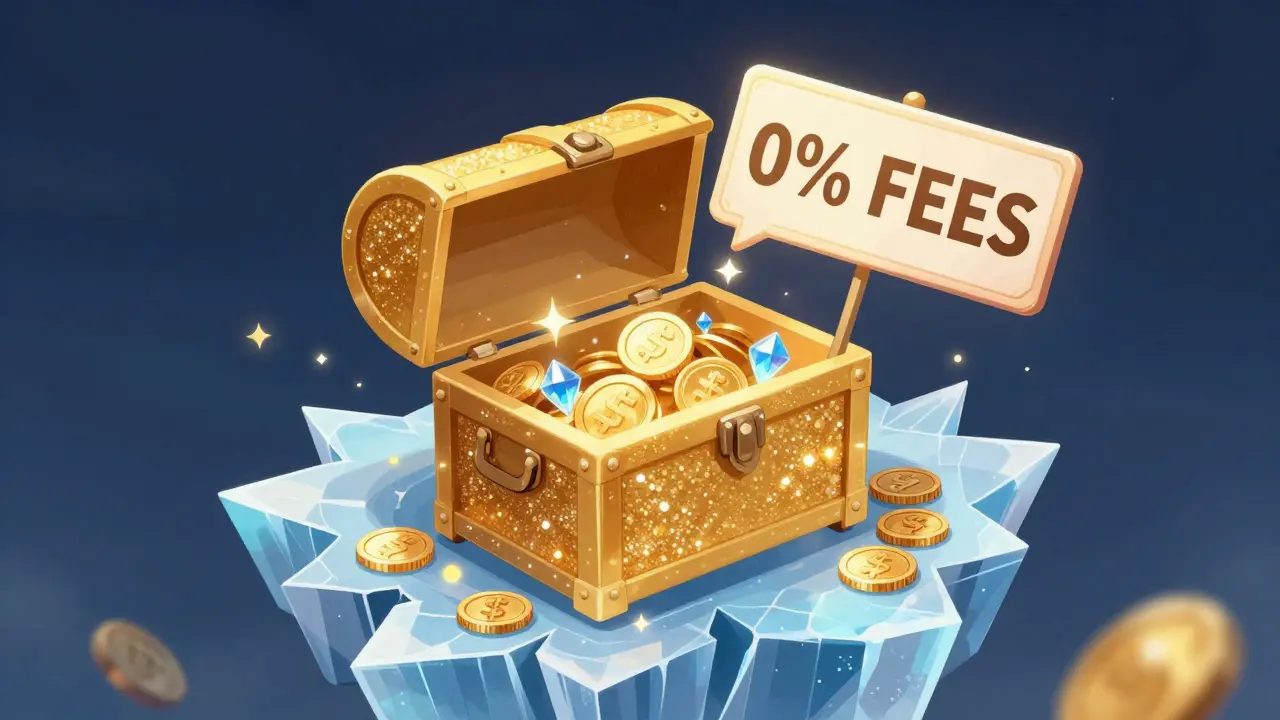
Finding a crypto exchange that doesn't eat your profits with fees sounds like a dream. When you stumble upon a platform like DAO Swap (specifically the Core Dao Swap version) offering 0.00% fees for both makers and takers, it's tempting to jump in. But in the world of digital assets, "free" often comes with a hidden price tag. Is this a breakthrough in decentralized finance or a red flag for investors?
The Allure of Zero Fees
Most of us are used to the standard fee structures on major platforms. Usually, you're paying somewhere between 0.1% and 0.5% per trade. For high-volume traders, those pennies add up to thousands of dollars. Core Dao Swap flips the script by removing these costs entirely. On paper, this makes it an incredibly attractive option for anyone looking to move assets without losing a slice of their capital to the house.
However, we have to ask: how does the platform survive? Most exchanges use fees to fund security updates, customer support, and infrastructure. When a platform claims zero fees while lacking a clear revenue model, it usually means they are either in a massive growth phase fueled by venture capital or they are cutting corners in areas you can't see-like security and regulation.
Regulatory Red Flags
Here is where things get concerning. Core Dao Swap is currently an unregulated trading platform. This isn't just a technicality; it's a massive gap in consumer protection. When you use a regulated exchange, there are legal frameworks that protect your funds and provide a path for recourse if something goes wrong.
On an unregulated site, you are essentially operating on trust. If the site vanishes overnight or your account is frozen, you have very little one-on-one leverage to get your money back. Contrast this with Crypto Dao, another player in the DAO space based in the UK, which opts for a regulated approach and a flat fee of 0.15%. They've chosen the path of stability over the "free" marketing lure, which is often a sign of a more sustainable business model.
Performance and Ghost Town Metrics
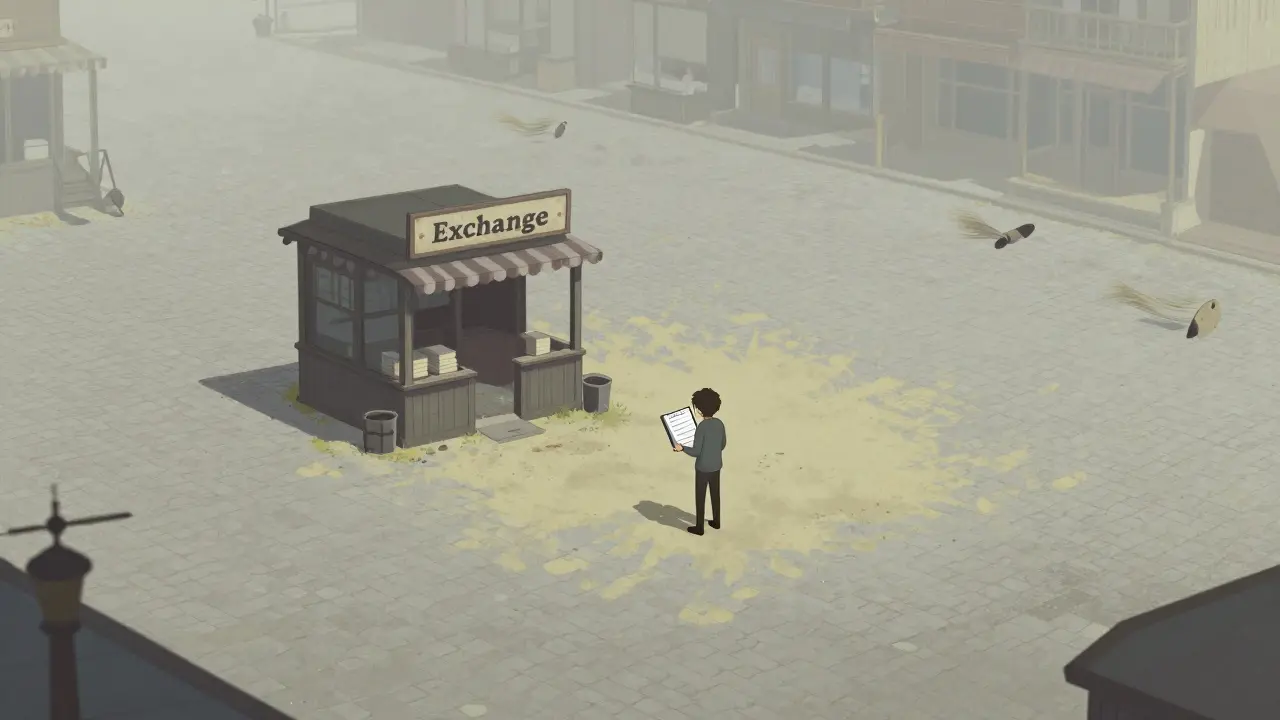
Numbers don't lie, and the data for DAO Swap is unsettling. Organic traffic analysis shows the platform ranking near the bottom of the barrel-around 599 out of 630 analyzed cryptocurrency exchanges. Even more worrying are the engagement metrics. Some reports show a 0% bounce rate and zero seconds of average visit duration. Now, this could be a glitch in how the data is collected, but it more likely points to a platform that simply isn't being used by real people.
If you've ever tried to sell a token on a platform with no liquidity, you know the pain of "slippage." When there aren't enough buyers and sellers, the price you actually get is much worse than the market price. With such low traffic, anyone trading significant amounts on Core Dao Swap risks getting hit by massive slippage, effectively erasing the "savings" from the zero-fee promise.
| Feature | Core Dao Swap | Crypto Dao | Uniswap |
|---|---|---|---|
| Trading Fees | 0.00% | 0.15% Flat | Variable (Pool based) |
| Regulation | Unregulated | UK Regulated | Decentralized (Protocol) |
| Liquidity | Very Low | Moderate | Extremely High |
| User Base | Minimal | Growing | Massive |
The Tech: Core DAO and the Satoshi Plus Consensus
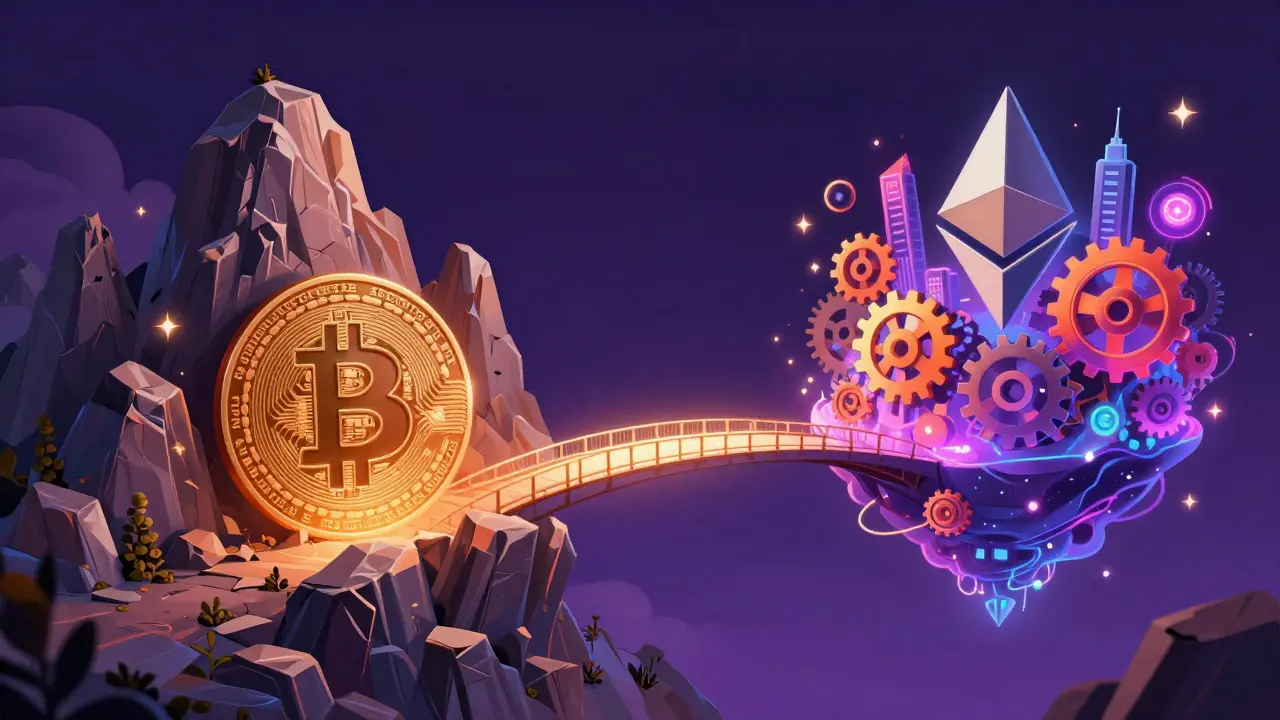
To understand the platform, you have to understand the engine behind it. Core DAO utilizes what they call the Satoshi Plus consensus mechanism. This is an attempt to blend the rugged security of Bitcoin's proof-of-work with the flexibility and speed of Ethereum's smart contracts. It's an ambitious goal: bridging the gap between the world's most secure coin and the world of DeFi.
While the underlying blockchain technology is interesting, there is a disconnect between the tech and the exchange. A great blockchain doesn't automatically mean a great exchange. Many projects launch a swap interface just to check a box on their roadmap, without actually building the liquidity or security infrastructure needed to protect users. Right now, DAO Swap feels more like a placeholder than a powerhouse.
Safer Alternatives for Swapping
If you're looking for a way to swap tokens without the anxiety of an unregulated platform, you have plenty of options. If you want decentralization and massive liquidity, Uniswap is the gold standard for Ethereum-based assets. It's permissionless and transparent.
For those who prioritize privacy and want to avoid the hassle of KYC (Know Your Customer), GhostSwap provides a no-KYC environment with support for over 1,500 different cryptocurrencies. Similarly, Symbiosis is a great choice for cross-chain swaps, allowing you to move assets between different blockchains instantly without needing a centralized middleman.
The Final Verdict: Should You Use It?
The lack of community feedback is perhaps the biggest red flag. In the crypto world, the community is your early warning system. When you search for reviews on Trustpilot or Reddit and find absolutely nothing, it means the platform hasn't been battle-tested. You don't want your portfolio to be the test case for a new, unregulated exchange.
While the zero-fee model is a great headline, the lack of regulation and dismal traffic make DAO Swap a high-risk environment. Until they provide transparent security audits, clear regulatory standing, and a demonstrable user base, your funds are better off in a platform that has a proven track record.
Is DAO Swap a scam?
There isn't enough public evidence to definitively label it a scam, but the lack of regulation, zero user reviews, and extremely low traffic are classic red flags. Use extreme caution and avoid depositing large sums of money.
Why are the trading fees 0% on Core Dao Swap?
The platform likely uses zero fees as a loss-leader strategy to attract new users from established exchanges. However, without a clear revenue model, this raises questions about how they maintain security and operations.
What is the Satoshi Plus consensus mechanism?
It is a consensus method used by the Core DAO blockchain that attempts to combine the security of Bitcoin's proof-of-work with the efficiency and smart contract capabilities of Ethereum.
How does it compare to Crypto Dao?
Crypto Dao is a UK-based, regulated exchange with a flat fee of 0.15%. In contrast, Core Dao Swap is unregulated and offers 0% fees, making Crypto Dao the safer, albeit more expensive, option.
What are the alternatives for no-KYC swaps?
GhostSwap and Symbiosis are popular alternatives that allow users to swap assets across different chains without requiring identity verification.
Robert Mosolygo
April 22, 2026 AT 08:38The lack of transparency regarding the revenue model is a textbook indicator of a honeypot. When a platform claims zero fees, they aren't providing a service; they are acquiring liquidity to facilitate a future exit scam. It is mathematically impossible to sustain a secure infrastructure without a consistent inflow of capital, especially given the overhead costs of maintaining a blockchain interface. The data on the bounce rate isn't a glitch; it is a clear signal that there is no organic human activity, only bot-driven fluff to deceive the gullible. This is a systemic failure of due diligence for anyone blindly trusting "decentralized" promises without auditing the smart contracts. We are seeing a pattern of predatory platforms targeting retail investors who are too blinded by the prospect of free trades to realize they are the product. The apathetic acceptance of unregulated platforms is exactly how the next FTX-level catastrophe begins. Only an idiot would ignore the correlation between zero fees and zero security audits. I have seen this cycle a dozen times and it always ends in a total loss of funds for the users. The industry needs a hard reset on how we perceive these "innovative" fee structures. Stop chasing ghosts and start looking at the actual ledger activity.
Benjamin Forg
April 23, 2026 AT 23:32typical govt puppet talk just ignore the fees and look at who owns the servers probably some black box in a country that doesnt exist man wake up the whole system is rigged to make u feel safe while they bleed u dry
Tony Gurley-Ward
April 25, 2026 AT 20:39Maybe the zero fees are just a cosmic joke on our obsession with margins! Who cares if it's a ghost town, as long as the vibes are free, right? Just kidding, but really, the irony of a "decentralized" swap needing "regulation" to be safe is just chef's kiss perfection.
Yvette P
April 27, 2026 AT 10:40Oh honey, imagine thinking that a 'Satoshi Plus' consensus is actually going to solve the trilemma while you're trading on a platform with the liquidity of a dried-up puddle. It's absolutely adorable that people still fall for the 'zero-fee' siren song when the slippage is going to absolutely murder your ROI before the transaction even hits the block. We're talking about a total lack of TVL here, yet some people act like this is some hidden gem of DeFi. Please, for the love of all that is holy, use a bridge that doesn't look like it was coded by a toddler in a basement. I've seen more activity in a dead cemetery than on this exchange's order book. If you don't understand the basic relationship between liquidity providers and fee incentives, you're basically just donating your crypto to the void. Just go to Uniswap and stop pretending this is a legitimate financial strategy. It's pure comedy at this point.
Kyle Bush
April 28, 2026 AT 18:23America should be leading the way in DeFi not some random unregulated sites! 🇺🇸 Get some real US-backed security or get out! 🚀💰
Sarah Fisher
April 28, 2026 AT 21:45It makes me wonder if the pursuit of 'free' is actually a psychological trap that blinds us to the inherent value of security. We trade a small percentage of our wealth for peace of mind, yet we treat that fee as a loss rather than an investment in stability.
Sara Ellis
April 30, 2026 AT 08:56just sounds like a bad idea honestly
Doc Coyle
May 1, 2026 AT 18:58It is quite simple. People are greedy and they want things for free. They ignore the warnings because they think they are the exception to the rule.
Jason M
May 2, 2026 AT 18:25OH MY GOD, please listen to the warnings here! Your hard-earned money is not a toy for a beta test! I cannot emphasize enough how terrifying it is to use a platform with zero community feedback. It is a HEART-STOPPING risk that no one should take!
Miranda Jamieson
May 4, 2026 AT 09:16Honestly, only a complete amateur would even consider a platform with no traffic. Do yourself a favor and actually learn how to read a balance sheet before touching a swap.
Mary Tawfall
May 4, 2026 AT 09:23I appreciate the heads up. It's always better to be a bit slower and safer than to rush into something that seems too good to be true.
Ellie Drews
May 6, 2026 AT 01:38Let's all just try to help each other find the safest paths. No need for aggression, just shared knowledge to keep our funds safe.
Alex Wan
May 7, 2026 AT 20:36I am truly deepley moved by this discusion!! It is so importnt that we all work together to avoid these pitfalls of the modren digital age!! Let us all embrace a more secure and inclusive way of trading together!
Findlay Duncan Lyon
May 9, 2026 AT 02:56Quite right. Better a known fee than a total loss.
Ali Tate
May 10, 2026 AT 14:56zero fees is just a fancy word for we're gonna steal your keys you absolute clowns lol
Paige Raulerson
May 12, 2026 AT 06:24The layout of this site is just as mediocre as the liquidity. I can't even be bothered to fully audit it because it's so clearly a low-effort project.
Tara Aman
May 12, 2026 AT 07:41We can definitely find better ways to swap! Let's all move toward the platforms that actually respect our security!
praveen subbiah
May 13, 2026 AT 10:59The technology of Core DAO is truly a masterpiece of engineering that will bring glory to the world of finance! Even if the swap is small now, the vision is magnificent!
Lisa Camp
May 14, 2026 AT 12:52STOP LOOKING AT THE FEES AND START LOOKING AT THE RISK! ARE YOU PEOPLE INSANE?! GET OFF THESE SCAMMY SITES NOW!