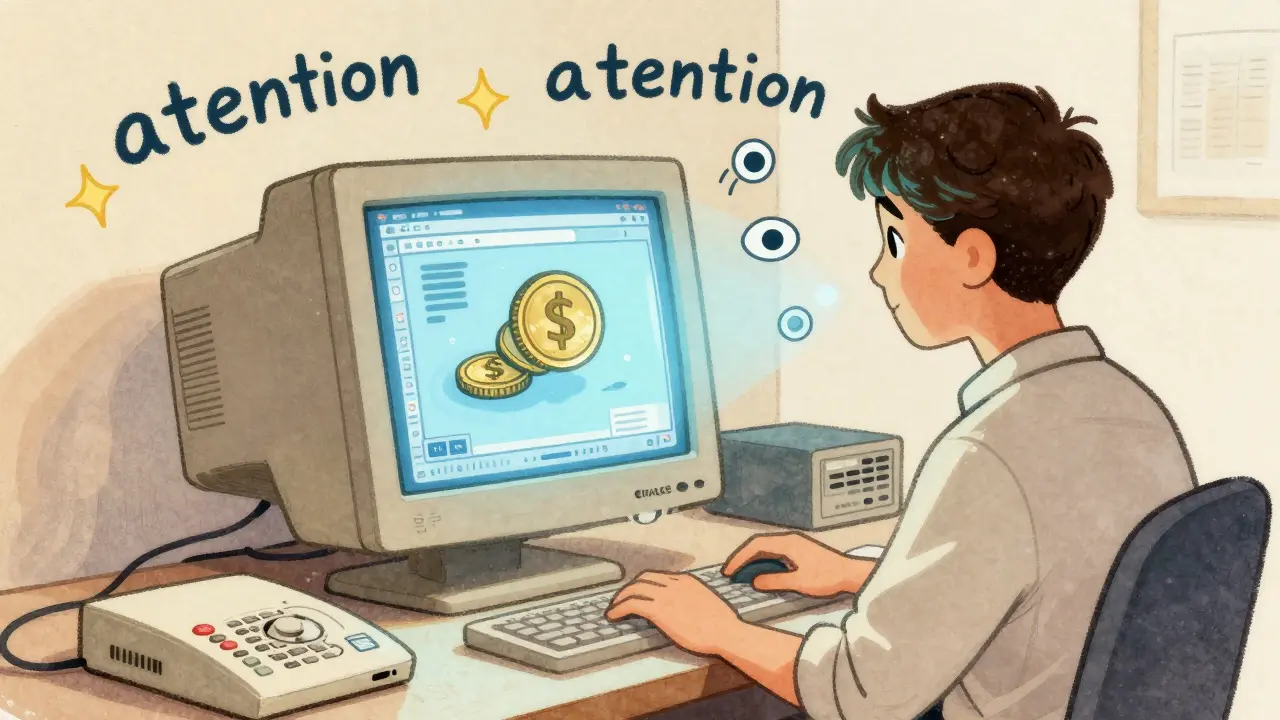
Have you ever heard of a currency that tried to change the internet before Bitcoin even existed? That’s the story behind BEENZ, a cryptocurrency token that carries the name of a pioneering 1990s digital payment platform. Today, it trades as a memecoin with high volatility and low liquidity. If you are looking at this coin because you saw a spike in price or read about its nostalgic roots, you need to understand exactly what you are dealing with. This isn’t just another copy-paste meme token; it has a unique, albeit failed, historical lineage that shapes its current identity.
The Original Beenz.com: A Pre-Bitcoin Pioneer
To understand the modern token, you have to look back to the late 1990s. Before blockchain technology was a household term, there was Beenz.com, created by Charles Cohen. The vision was bold: a free, frictionless, real-time internet currency. It wasn’t backed by gold or government decree. Instead, it was backed by attention and activity.
Users earned "beenz" by doing things we do online every day: visiting websites, completing surveys, shopping, or simply logging in through their Internet Service Provider (ISP). These digital coins could then be spent at participating online merchants. Each merchant set their own exchange rate for accepting beenz, while they could sell them back to Beenz.com at a pre-defined rate. The company made money on the spread between buying and selling these units.
| Feature | Description |
|---|---|
| Earning Mechanism | Visiting sites, surveys, online shopping, ISP login |
| Spendability | Accepted by participating online merchants |
| Economic Model | Spread-based profit from buy/sell rates |
| Funding Raised | Nearly $100 million |
| Fate | Casualty of the dot-com crash |
This model was groundbreaking. Unlike airline miles or closed-loop loyalty points, original beenz had real transactional value across multiple vendors. It anticipated concepts like reward tokens and activity-based earning models that are now common in blockchain applications. However, despite raising nearly $100 million, the company collapsed during the dot-com bubble burst. The modern BEENZ token is not a continuation of that business but rather a homage to its legacy.
Modern BEENZ Token: Specs and Mechanics
The current BEENZ cryptocurrency operates as a standard memecoin. It does not have the complex utility or merchant integration network of its predecessor. Its primary value proposition rests on community participation and historical nostalgia. Here are the hard numbers you need to know before considering any interaction with this asset.
- Total Supply: 1 billion tokens
- Circulating Supply: Approximately 999.7 million to 999.98 million tokens
- Token Type: Memecoin
- Development Roadmap: No active development roadmap or announced upcoming features as of May 2026
The near-total circulation of the supply means there is minimal inflation pressure from new minting, which is typical for mature memecoins. However, the lack of a development roadmap suggests that the project relies entirely on market sentiment rather than technological innovation or ecosystem growth. When you buy BEENZ today, you are betting on brand recognition and meme culture, not on a functioning digital economy.
Price Volatility and Liquidity Concerns
If you check different data aggregators, you will see wildly different prices for BEENZ. This is a major red flag for retail investors. As of mid-2025 and early 2026, reports vary significantly:
- Bybit: Reported trading around $0.00024398 with a market cap of ~$243K.
- CoinGecko: Listed at $0.00004456 with a market cap of ~$294K (note: some alternative data showed discrepancies up to $0.008).
- CoinMarketCap: Showed a price of $0.000044 with a much lower market cap of ~$37K.
- LiveCoinWatch: Ranged between $0.000038 and $0.000126.
Why such huge differences? It comes down to liquidity and data aggregation timing. BEENZ has low trading volumes, often ranging from tens to hundreds of thousands of dollars per day depending on the platform. Low liquidity means that large trades can drastically move the price, and different exchanges may not be syncing their order books effectively. This creates arbitrage opportunities for professional traders but poses significant slippage risks for everyday users. You might see a price of $0.0002 on one screen and only find buyers at $0.00004 on another.
Investment Risks: What You Need to Know
Before putting money into BEENZ, consider these specific risks. This is not financial advice, but it is essential due diligence.
- No Utility: Unlike the original Beenz.com, the modern token has no merchant acceptance network. You cannot spend it to buy goods or services in a meaningful way.
- Data Inconsistency: The wide variance in reported prices indicates fragmented liquidity. Exiting your position quickly without losing value is difficult.
- Meme Dependency: The price is driven purely by social sentiment. If the community loses interest, the price can drop vertically with little support.
- Historical Baggage: While the history is interesting, the original brand failed. The modern token inherits the name but none of the infrastructure.
Compare this to established cryptocurrencies like Bitcoin or Ethereum, which have deep liquidity, clear use cases, and massive developer ecosystems. BEENZ sits in the speculative tier alongside other memecoins like Dogecoin or Shiba Inu, but with significantly less volume and recognition.
How to Track BEENZ Accurately
If you decide to monitor this token, rely on multiple sources. Do not trust a single aggregator. Check TradingView for charting tools, CoinGecko for broader market context, and Bybit or Bitrue if you plan to trade. Always check the 24-hour volume. If the volume is below $100,000, expect high slippage and potential issues moving funds in or out.
Is BEENZ the same as the original Beenz.com?
No. The original Beenz.com was a centralized digital currency platform from the 1990s that collapsed during the dot-com crash. The modern BEENZ token is a decentralized memecoin launched years later, using the name for nostalgic appeal but lacking the original platform's merchant network or economic model.
Why are there different prices for BEENZ on different websites?
The discrepancies arise from low liquidity and fragmented trading pairs across various exchanges. Different platforms report data at different times, and some may include inactive or illiquid orders in their calculations, leading to inaccurate average prices.
Does BEENZ have a future development roadmap?
As of May 2026, there is no public active development roadmap or announced features for the BEENZ cryptocurrency. It operates primarily as a community-driven memecoin without planned technical upgrades or utility expansions.
Can I spend BEENZ tokens online?
Currently, no. Unlike the original Beenz.com which had merchant partnerships, the modern BEENZ token lacks widespread merchant acceptance. It is primarily traded for speculation rather than used for purchasing goods or services.
Who created the original Beenz.com?
The original Beenz.com was created by Charles Cohen in the 1990s. He envisioned it as a frictionless internet currency earned through user activity and spent at online merchants, predating many modern fintech concepts.



Rachel S
May 3, 2026 AT 05:23It is truly fascinating to observe the historical parallel between the original Beenz.com and this modern token. The concept of earning currency through attention and activity was remarkably prescient for the late 1990s, even if the execution ultimately failed due to the dot-com crash. One must appreciate the boldness of Charles Cohen’s vision in attempting to create a frictionless internet economy before blockchain technology existed. However, the current iteration lacks the fundamental utility that made the original platform interesting. It is essentially a hollow shell relying on nostalgia rather than functional mechanics. This distinction is crucial for any observer trying to understand the asset's true value proposition.
Jan Conrad
May 4, 2026 AT 23:48I have been tracking the liquidity discrepancies across Bybit and CoinGecko for weeks now. The variance is not just a data error; it indicates severe fragmentation in the order books. Professional traders exploit these spreads while retail investors get stuck with massive slippage. If you see a price of $0.0002 on one screen, do not assume you can exit at that rate. The reality is likely much closer to the lower end of the spectrum found on less liquid aggregators. This structural weakness makes the token extremely risky for anyone without deep pockets or advanced trading tools.
its me
May 5, 2026 AT 21:28You people are so naive for believing there is any substance here. It is a joke. A complete waste of time and energy to even discuss this garbage. The original company failed because it was flawed, and this new thing is just a desperate attempt to cash in on a dead name. Why do you care about a memecoin that has no roadmap? It shows a lack of intellectual curiosity to engage with such trivial matters. You should focus on real investments instead of chasing ghosts from the 90s.
Carli Bates
May 6, 2026 AT 13:29Oh how quaint we are pretending this has any meaning beyond a quick pump and dump scheme. The history lesson is cute but irrelevant to the bottom line which is zero utility and zero future. We are all just dancing around the corpse of a dot-com casualty hoping for a spark that will never come. It is amusing how seriously some take these nostalgic tokens as if they hold intrinsic value. They do not. It is all smoke and mirrors and you are buying the smoke.
Abhishek Verma
May 6, 2026 AT 18:31Look at the comments section full of people who clearly don't understand basic market dynamics. You think checking CoinMarketCap is enough? Pathetic. Real traders know that low volume means you are trapped until someone decides to let you out. This coin is a perfect example of why retail investors lose money. They buy based on stories and sell based on panic. Enjoy your bag holding experience.
Brendan Thraxton
May 7, 2026 AT 14:37Hey everyone lets look at this from a different angle maybe there is something here we are missing. The community aspect of memecoins is powerful and sometimes sentiment drives prices more than utility does. I think we should encourage discussion about the potential for brand recognition to drive value even without a roadmap. Its important to stay optimistic and support each other in learning about these unique assets. Who knows what might happen next
Aaron Zeiler
May 9, 2026 AT 10:38i've looked at the charts on tradingview and the volume is basically non-existent most days. its hard to analyze a trend when there are so few actual trades happening. the price swings are just noise caused by tiny orders moving the book around. if you want to trade this you need to be very careful about entry and exit points because you might not find a buyer when you need one. its better to stick with coins that have deeper liquidity pools
Tracy McBurney
May 10, 2026 AT 14:05The psychological profile of the investors in this token is quite revealing. They are drawn to the narrative of redemption and historical significance rather than cold hard data. This emotional attachment blinds them to the obvious red flags such as the lack of merchant acceptance and the fragmented pricing. It is a toxic cycle where hope sustains the price temporarily until reality sets in. The analysis of their behavior suggests a collective delusion that is ripe for exploitation by more cynical actors.
Ipsita Seal
May 10, 2026 AT 19:15This post is so boring and long. I did not read any of it. Just tell me if I can make money or not. If not then why am I wasting my time reading all this nonsense about history and liquidity. Life is too short for bad crypto posts.
Kathleen Warren
May 12, 2026 AT 02:40I really appreciate how this article breaks down the differences between the old and new versions of Beenz. It helps clear up a lot of confusion for people like me who just heard the name and got curious. Understanding that the original had a real business model while this one is just a meme is super helpful. It makes sense why the prices are so weird since there is no real use for it right now. Thanks for sharing this info so we can make smarter choices.
Gabby Puche
May 13, 2026 AT 09:37Wow! 🌟 This is such an interesting deep dive into the history of digital currency! 😊 I love learning about how things evolved from the 90s to now! 💻✨ It is amazing how far we have come with blockchain technology! 🚀 But yeah, the risks are definitely real! ⚠️ Let us all stay safe and keep learning together! 📚💖 #CryptoHistory #LearnAndGrow
Barbara Jones
May 14, 2026 AT 15:53hey i think its cool that someone wrote this up. the part about the spread based profit model is pretty neat actually. i never knew they tried to do that back then. seems like a good idea but timing was everything. glad we have better tech now even if this specific coin is kinda sketchy lol
Janis Naglis
May 14, 2026 AT 16:44Let us consider the broader implications of this case study!!! It serves as a cautionary tale regarding the importance of robust infrastructure!!! While the nostalgic appeal is undeniable, the lack of a development roadmap is a significant concern!!! We must remain vigilant and prioritize projects with clear utility metrics!!! The market rewards innovation and penalizes stagnation!!! Let us continue to engage in thoughtful discourse about these critical issues!!!
Gabrielle Danis
May 15, 2026 AT 07:48The grammatical precision of the original Beenz.com documentation was impressive compared to the vague marketing materials of today's memecoins. It is evident that the modern token relies entirely on social sentiment rather than technological merit. Investors should note the absence of a technical roadmap as a primary indicator of speculative risk. The disparity in reported prices across aggregators further underscores the illiquid nature of the asset. Due diligence remains paramount when evaluating such high-risk instruments.
Lynne Teperman
May 16, 2026 AT 17:56the story of beenz is really wild when you think about it. it was almost like a preview of the internet economy we have now. but yeah the current coin is just riding the coattails of that history. nothing wrong with being curious though. just dont bet the farm on it. vibes are off anyway.
Rushell Perry
May 16, 2026 AT 18:10its great to see people taking the time to research before jumping in. understanding the difference between utility and speculation is key. i would suggest looking at multiple sources as mentioned in the post to get a clear picture. always trust your gut if something feels too risky. staying informed is the best way to protect yourself in this space