Have you seen the ticker PIAI popping up in your feed or on crypto trackers? It’s marketed as the "Pi Network AI Agent," a project that claims to merge the community-driven spirit of Pi Network with advanced artificial intelligence. The pitch sounds incredibly appealing: accessible AI technology, mobile-friendly mining concepts, and a decentralized future. But if you look past the marketing buzzwords, what are you actually holding?
The short answer is that Pi Network AI Agent is a highly speculative, micro-cap cryptocurrency token operating on the Solana blockchain, not an official product of the Pi Network team. Launched in 2025, it carries a massive total supply and extremely low liquidity. Before you consider swapping any stablecoins for PIAI, it is crucial to separate the branding from the technical reality. Let’s break down exactly what this token is, how it works, and why the data tells a cautious story.
The Core Identity: What Is PIAI Really?
To understand PIAI, we first need to clear up a major misconception. Many new investors assume that because the name includes "Pi Network," it is directly affiliated with the popular Pi Network project known for its mobile mining app. That is not the case. Based on available listings from major aggregators like CoinMarketCap and Coinbase, PIAI is an independent token built on the Solana blockchain.
Solana is chosen here likely for its speed and low transaction costs, which are standard features for many meme coins and experimental tokens launched in 2025. However, there is no public evidence linking PIAI to the core development team of Pi Network. No whitepaper, no official partnership announcement, and no legal entity details are provided in the primary data sources. This means PIAI is essentially a thematic token-it borrows the recognition of the Pi brand to attract attention, but it operates in a completely different technical ecosystem.
The project describes itself as aiming to "democratize AI access" through smartphones. While the goal sounds noble, the execution details are missing. There are no links to open-source code repositories, no documentation on specific AI models used, and no explanation of how the "AI Agent" functionality actually works on-chain. For now, the "AI" part appears to be a label rather than a verified technological feature.
Supply Shock: Understanding the 42 Quadrillion Tokens
If you have ever looked at Bitcoin or Ethereum, you know their supplies are limited-21 million BTC, ~120 million ETH. Now, look at PIAI. The total supply is approximately 42.69 quadrillion tokens (42,690,000,000,000,000).
| Token | Total Supply | Blockchain |
|---|---|---|
| Bitcoin (BTC) | 21,000,000 | Bitcoin |
| Ethereum (ETH) | ~120,000,000 | Ethereum |
| Pi Network AI Agent (PIAI) | 42,690,000,000,000,000 | Solana |
Why does this matter? Inflation and dilution. With nearly 100% of these tokens reported as circulating, the value per individual token is infinitesimally small. As of recent snapshots, the price hovered around $0.00000000000008535 USD. To put that in perspective, you would need billions of PIAI tokens just to equal a fraction of a cent. This structure is typical of "micro-cap" tokens where the sheer volume of units creates an illusion of affordability, but the actual market capitalization remains tiny.

Market Reality: Liquidity and Volatility
Let’s talk about money. Or rather, the lack of it. When evaluating a crypto asset, liquidity is king. Can you sell it when you want to? For PIAI, the answer is often no.
Data from CoinMarketCap shows a 24-hour trading volume of $0 USD in multiple snapshots. Other platforms like CoinTips report a market cap of $0.00. Even when a price is quoted, such as the ~$4,330 market capitalization seen on some trackers, it represents an extremely thin market. With only about 1,990 holders tracked, the pool of buyers and sellers is minuscule.
This leads to extreme volatility. CoinCodex, a technical analysis platform, rated PIAI’s 30-day volatility as "Extremely High" at 22.50%. They also assigned it a "Fear & Greed Index" score of 29, categorized as "Fear." In late 2025, their algorithms predicted a bearish trend, forecasting a drop of over 24% in the short term. This isn't just normal crypto ups and downs; this is the behavior of an asset with almost no underlying economic activity supporting it.
How Do You Actually Use PIAI?
Here is the tricky part. If you buy PIAI, what do you get? Unlike buying shares in a company or tokens in a DeFi protocol that yields interest, PIAI currently offers no documented utility.
- No AI Tools: There are no instructions on how to use PIAI to access AI agents or perform computational tasks.
- No Staking Rewards: Public listings do not mention staking pools or yield farming opportunities.
- Pure Speculation: The primary interaction is trading-buying low and hoping someone else buys higher.
To even acquire the token, you need to navigate Web3 infrastructure. Guides from Binance Web3 Wallet explain that users must fund their wallet with stablecoins like USDT or USDC, then connect to a decentralized exchange (DEX) on Solana to swap for PIAI. This process requires managing private keys and understanding gas fees, adding a layer of complexity for a token that lacks clear utility.
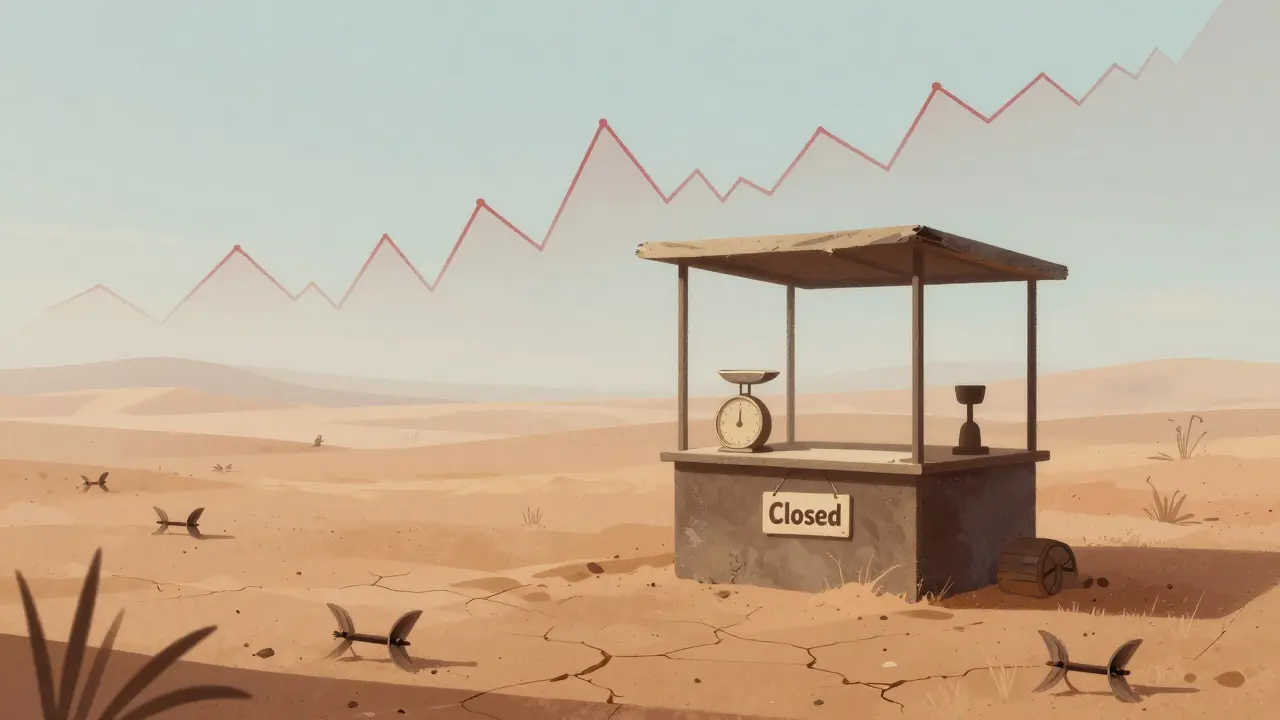
Risk Assessment: Should You Invest?
As someone who tracks these trends closely, I have to be direct: PIAI carries significant risk. Here are the red flags to consider before connecting your wallet:
- Brand Confusion: The name leverages the trust associated with Pi Network without being officially connected to it. This is a common tactic in the crypto space to attract unsuspecting users.
- Lack of Transparency: No named founders, no audited smart contracts, and no roadmap. Who is behind this? We don’t know.
- Micro-Cap Status: With a market cap in the thousands of dollars, a single large sale could crash the price by 50% or more instantly.
- Zero Utility Evidence: The "AI Agent" claim is unsubstantiated by technical documentation.
If you are looking for exposure to AI in crypto, there are established projects with verifiable partnerships, active developer communities, and real-world usage. PIAI, in its current state, fits the profile of a speculative experiment rather than a foundational technology.
Conclusion: Proceed with Extreme Caution
Pi Network AI Agent (PIAI) is a Solana-based token that uses catchy branding to stand out in a crowded market. While the concept of combining AI and decentralized networks is promising, PIAI currently lacks the substance to back up those claims. The enormous supply, negligible liquidity, and absence of official affiliation with Pi Network make it a high-risk asset.
Treat it as you would a lottery ticket, not an investment. If you decide to interact with it, ensure you are using a secure non-custodial wallet, never invest more than you can afford to lose entirely, and always verify the contract address yourself. In the world of crypto, if something sounds too good to be true-and especially if it hides behind vague promises-the truth is usually found in the fine print. In this case, there is barely any print at all.
Is Pi Network AI Agent (PIAI) officially part of Pi Network?
No. PIAI is an independent token built on the Solana blockchain. There is no public evidence of official endorsement, partnership, or integration with the core Pi Network team or its native blockchain.
What blockchain does PIAI run on?
PIAI operates on the Solana blockchain. This allows for fast transactions and low fees, but it also means you need a Solana-compatible wallet (like Phantom or Solflare) to hold or trade it.
Why is the price of PIAI so low?
The price is low because the total supply is massive-approximately 42.69 quadrillion tokens. With such a huge number of tokens in circulation and a very small market capitalization, the value per individual token is microscopic.
Can I mine PIAI on my smartphone?
There is no verified mechanism for mining PIAI. While the marketing mentions "mobile mining mechanisms," this refers to the branding inspiration from Pi Network, not an actual mining protocol for PIAI itself. Currently, you can only obtain PIAI by swapping other cryptocurrencies for it on decentralized exchanges.
Is PIAI a safe investment?
PIAI is considered a high-risk, speculative asset. It has extremely low liquidity, high volatility, and lacks transparent information about its developers or technical utility. Investors should exercise extreme caution and assume the potential for total loss of funds.
Where can I buy PIAI?
PIAI is not listed on major centralized exchanges like Binance Spot. It can be accessed via Web3 wallets (such as Binance Web3 Wallet) by connecting to decentralized exchanges (DEXs) on the Solana network and swapping stablecoins like USDT or USDC for PIAI.
What is the total supply of PIAI?
The total supply of Pi Network AI Agent is approximately 42.69 quadrillion (42,690,000,000,000,000) tokens. Most of this supply is reported as already circulating.
Does PIAI have any AI functionality?
Currently, there is no publicly available technical documentation or software demonstrating AI functionality for PIAI. The "AI Agent" aspect appears to be part of the project's branding narrative rather than a deployed, verifiable feature.