For years, if you tried to mine Bitcoin in Pakistan, you were walking a tightrope. The State Bank of Pakistan (SBP) said digital currencies weren't legal tender, while the government quietly encouraged adoption. It was a confusing mess of contradictions that kept most serious miners away. But as of mid-2025, the ground has shifted beneath our feet. The Pakistan Virtual Asset Regulatory Authority (PVARA) is the new autonomous federal regulator established under the Virtual Assets Act, 2025 to oversee all virtual asset activities including mining operations is now the gatekeeper for this industry. If you are looking to set up a mining operation or understand where your existing setup stands, the rules have changed from "illegal grey area" to "strictly regulated business."
This isn't just about permission slips anymore. It's about energy quotas, international compliance standards, and specific tax brackets. With the government allocating 2,000 megawatts of electricity specifically for mining, Pakistan is positioning itself as a global hub. But with great power comes great scrutiny. Here is exactly what you need to know to operate legally and profitably in Pakistan’s new crypto mining landscape.
The New Legal Framework: Virtual Assets Act, 2025
The cornerstone of the current regulatory environment is the Virtual Assets Act, 2025 is legislation enacted in July 2025 that establishes the legal framework for cryptocurrency activities in Pakistan, creating PVARA as the oversight body. Before this act, miners operated in fear of sudden bans. Now, there is a clear path to legitimacy. The act defines "block reward mining" explicitly within its scope of Virtual Asset Service Providers (VASPs). This means if you are running ASICs, you are considered a service provider in the eyes of the law, not just a tech hobbyist.
The creation of PVARA marks a significant departure from previous approaches. Previously, the State Bank of Pakistan (SBP) is the central bank of Pakistan which historically maintained that cryptocurrencies were illegal under existing banking laws, creating regulatory conflicts held the purse strings with a restrictive hand. While the SBP still notes that digital currencies are not legal tender, the establishment of PVARA creates a parallel structure where mining can thrive under specific licenses. This separation allows the government to promote blockchain technology without immediately reclassifying Bitcoin as currency. For operators, this means you must engage with PVARA for operational licenses, but you may still face hurdles when trying to open traditional corporate bank accounts due to lingering SBP caution.
Electricity Allocation: The 2,000 MW Game Changer
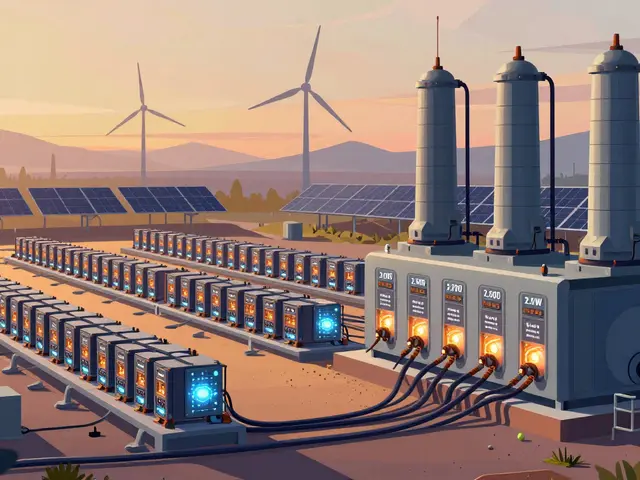
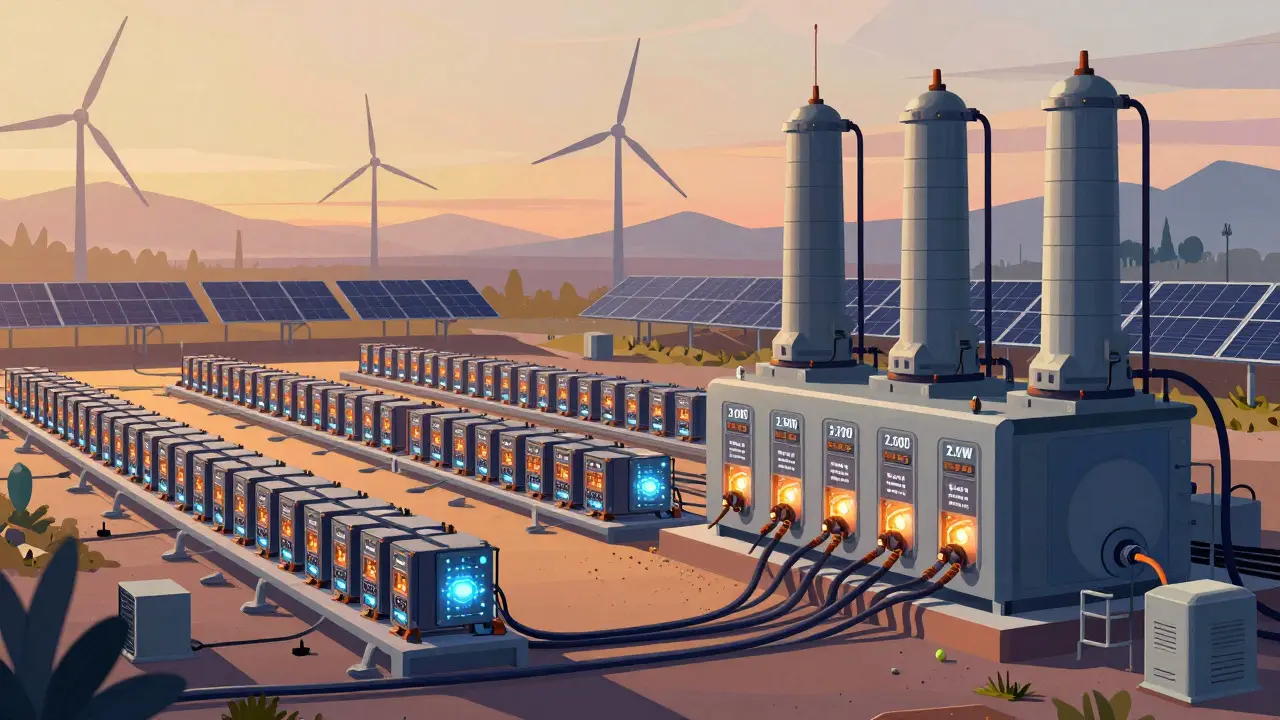
You cannot talk about mining in Pakistan without talking about power. In August 2025, the government announced a massive allocation of 2,000 Megawatts (MW) of Electricity is a dedicated power quota allocated by the Pakistani government in August 2025 specifically for Bitcoin mining and AI data centers, utilizing surplus energy from underutilized coal plants. This is not theoretical; it is a strategic move to monetize excess capacity. Many coal-based power stations in Pakistan operate below capacity, and small businesses have switched to solar, leaving grid surplus. The government wants miners to absorb this waste.
If fully deployed using modern ASIC miners with efficiency ratings between 30-40 joules per terahash, this allocation could add over 60 exahashes per second (EH/s) to the global network. That would potentially push Pakistan into the top five mining nations globally. However, there are strict conditions attached to this power:
- No Residential Subsidies: You cannot plug industrial rigs into home meters. All commercial mining facilities must operate on industrial tariffs.
- Minimum Connection Size: Facilities require a minimum connection of 500 kW to qualify for the commercial mining framework.
- Renewable Mandate: According to draft guidelines released in late August 2025, mining operations must utilize at least 70% renewable or repurposed energy sources by 2027. This pushes miners toward hybrid setups combining grid surplus with solar or wind.
The International Monetary Fund (IMF) initially raised eyebrows over subsidized tariffs, fearing fiscal leakage. To appease these concerns, the regulations ensure that miners pay industrial rates, protecting the national grid's financial stability while still offering competitive costs compared to global averages.
Licensing Requirements via PVARA
Getting a license from PVARA is not a simple form submission. It is a rigorous vetting process designed to keep out fly-by-night operators and attract serious capital. The authority has outlined a two-phase implementation plan:
- Phase 1 (Q3-Q4 2025): Focuses on major international mining operations. To qualify, you must already hold a license from a recognized global regulator such as the US SEC, UK FCA, EU VASP framework, UAE's VARA, or Singapore's MAS. Additionally, your operation must demonstrate a hash rate capacity exceeding 1 EH/s. This phase prioritizes established players who bring proven security and compliance track records.
- Phase 2 (Q1 2026): Opens the door to domestic small-scale miners. The threshold here is lower, requiring a minimum capacity of 100 PH/s. This aims to foster local entrepreneurship while maintaining baseline security standards.
When applying, you will need to submit detailed documentation covering your technology stack, security protocols, expected hash rate, and energy consumption metrics. Crucially, you must present a Pakistan-specific business model that addresses environmental impact. PVARA also enforces strict conflict of interest measures, barring board members from insider trading or misusing non-public information. This level of transparency aligns Pakistan with Financial Action Task Force (FATF) standards, making it easier for global investors to trust the ecosystem.

Taxation Policies: What You Keep vs. What You Pay
Profitability hinges on taxes. The 2025 reforms introduced a clear taxation structure for mining income, removing the ambiguity that previously led to inconsistent enforcement. Here is how the Federal Board of Revenue (FBR) treats your earnings:
| Tax Type | Rate / Structure | Details |
|---|---|---|
| Mining Income (Block Rewards) | Progressive (5% - 35%) | Taxed as regular income. 5% for income up to ₨600,000; scales up to 35% for income over ₨12 million. |
| Capital Gains (Selling Crypto) | Flat 15% | Applied when you sell mined cryptocurrency for fiat or other assets. |
| Filing Deadline | September 30 | All mining income must be reported in Form IT-1 annually. |
Note that PVARA shares transaction data with the FBR starting mid-2025. This means your mining pool transactions are visible to tax authorities. There is no hiding spot. Ensure your accounting systems are robust enough to separate block rewards (income) from trading profits (capital gains) to apply the correct tax rates. Failure to report accurately can lead to audits and penalties, especially since the system is designed to integrate seamlessly with FATF anti-money laundering (AML) protocols.
Shariah Compliance and Religious Considerations
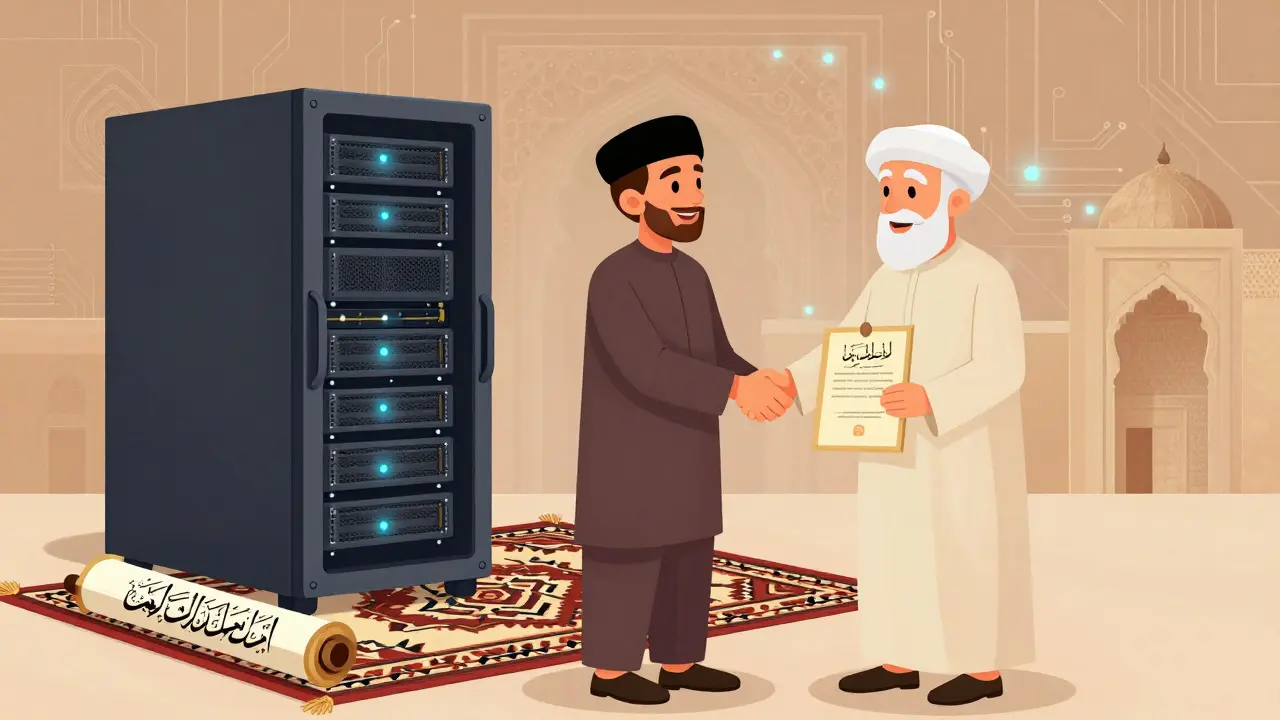
In a country where religious sentiment plays a huge role in economic behavior, ignoring Shariah compliance is a strategic error. Previous resistance to crypto often stemmed from debates over whether Bitcoin constituted gharar (excessive uncertainty) or riba (usury). PVARA has addressed this head-on by introducing regulatory sandboxes for Shariah-Compliant Mining Operations are specialized mining frameworks approved by Islamic scholars and PVARA that ensure mining activities adhere to Islamic financial principles, reducing religious barriers to entry.
These sandboxes allow operators to prove that their mining activities are based on tangible effort (electricity and hardware depreciation) rather than speculative gambling. By obtaining a Shariah-compliance certificate alongside your PVARA license, you unlock access to a broader base of local investors and community support. Bilal bin Saqib, the chair of PVARA and Minister of State for Crypto, emphasized that Pakistan is not just following trends but setting them, aiming to build global-level companies that respect local cultural and religious values.
Challenges and Contradictions Remain
Despite the progress, the road is not perfectly smooth. A major friction point remains the relationship between PVARA and the State Bank of Pakistan. In August 2025, the SBP reiterated that digital currencies are not legal tender and that existing banking laws prohibit institutions from dealing in them. This creates a practical nightmare for miners: you have a license to mine, but getting your profits out of a local bank account can still involve red tape. Many operators are currently relying on licensed exchange intermediaries or cross-border payment solutions to navigate this gap.
Additionally, there is internal governmental debate. In September 2025, a Senate standing committee recommended moving the Pakistan Crypto Council from the Ministry of Finance to the Ministry of Information Technology. They argued that digital assets are fundamentally tech products, not financial instruments. Until this administrative shuffle is resolved, you might encounter bureaucratic delays as departments clarify their mandates. Stay updated on these political shifts, as they can affect processing times for licenses and permits.
Strategic Outlook for 2026 and Beyond
Looking ahead, Pakistan aims to leverage its status as the world's third-largest crypto adopter, with over 40 million wallets. The goal is to capture 15-20% of the estimated $21 billion market value through mining contributions within two years. For operators, this means scaling up. The government is incentivizing the use of latest-generation ASICs to maximize hash rate per kilowatt-hour. As the Phase 2 licensing opens in early 2026, expect a surge in domestic applications. Early movers in Phase 1 will likely secure the best geographic locations near surplus power grids, giving them a cost advantage over later entrants.
The key takeaway is this: the era of informal, risky mining is over. The future belongs to compliant, efficient, and transparent operations. If you can navigate the PVARA licensing process, manage your tax obligations, and secure stable industrial power, Pakistan offers one of the most competitive mining environments in Asia. But you must do it by the book.
Is Bitcoin mining legal in Pakistan in 2026?
Yes, Bitcoin mining is legal in Pakistan provided you obtain a license from the Pakistan Virtual Asset Regulatory Authority (PVARA) under the Virtual Assets Act, 2025. Operating without a license remains a violation of the new regulatory framework.
What are the tax rates for crypto mining income in Pakistan?
Mining income (block rewards) is taxed as regular income at progressive rates ranging from 5% to 35%, depending on the total annual income. Capital gains from selling mined cryptocurrency are subject to a flat 15% tax rate. All income must be reported via Form IT-1 by September 30 each year.
How much electricity is allocated for crypto mining in Pakistan?
The government has allocated 2,000 megawatts (MW) of electricity specifically for Bitcoin mining and AI data centers. This power primarily comes from underutilized coal plants and surplus grid capacity, aimed at boosting Pakistan's global hash rate contribution.
Can I mine crypto using residential electricity connections?
No, commercial mining operations are prohibited from using subsidized residential electricity rates. All licensed mining facilities must operate on industrial tariffs and maintain a minimum connection size of 500 kW to comply with PVARA guidelines.
What are the requirements for PVARA mining licenses?
Requirements vary by phase. Phase 1 (late 2025) requires prior licensing from major regulators (SEC, FCA, etc.) and a hash rate over 1 EH/s. Phase 2 (early 2026) opens to domestic miners with a minimum 100 PH/s capacity. Applicants must also demonstrate FATF compliance, security standards, and an environmental impact plan.
Does Pakistan offer Shariah-compliant crypto mining options?
Yes, PVARA has introduced regulatory sandboxes for Shariah-compliant mining operations. These frameworks allow operators to certify that their mining activities adhere to Islamic financial principles, helping to address religious concerns among local investors and communities.