
Using a VPN to access cryptocurrency exchanges in China isn’t just risky-it’s a high-stakes game with no clear rules. By 2025, China has shut down nearly every door to private crypto trading, mining, and even holding. But some people still try to slip through the cracks using VPNs. They think if they can bypass the Great Firewall, they can trade on Binance or other foreign platforms like before. What they don’t realize is that VPN usage for crypto access now doubles their legal exposure: one violation for breaking internet rules, another for breaking financial ones.
China’s Crypto Ban Is Total-No Loopholes
As of June 1, 2025, China’s ban on cryptocurrency is absolute. It’s not just about banning exchanges. You can’t mine it. You can’t trade it. You can’t even hold it as an asset in a legal sense. The People’s Bank of China, along with the National Administration of Financial Regulation and the Cyberspace Administration of China, made it clear: private digital currencies have no legal standing. Any transaction involving Bitcoin, Ethereum, or even stablecoins like USDT is treated as an illegal financial activity. This isn’t just about big traders. It applies to anyone. A student buying $50 worth of Bitcoin through a VPN? Illegal. A freelancer paid in crypto? Illegal. A parent sending crypto to a child overseas? Still illegal. The government doesn’t care about the amount. It cares about the act. The only digital currency China allows is the e-CNY, or digital yuan. It’s not blockchain-based. It’s not decentralized. It’s a government-controlled payment system that tracks every transaction. If you want digital money in China, you use the official app. Anything else is a red flag.VPNs Are Not a Safe Workaround
People think a VPN is just a tool to watch Netflix or access Google. In China, it’s a digital trespassing device. The Great Firewall doesn’t just block websites-it hunts down the tools used to bypass it. In 2025, most consumer-grade VPNs don’t work reliably. Even the ones that still connect are unstable. Servers get blocked overnight. Apps disappear from app stores. Payment methods for subscriptions get frozen. And here’s the catch: using a VPN to access crypto exchanges doesn’t just make you a rule-breaker. It makes you a target. The same agencies that monitor crypto transactions-PBOC, SAFE, MPS-are also the ones tracking VPN traffic. When you connect to a foreign server to reach Binance, your digital footprint gets flagged. Your IP, device ID, connection times, and even the size of your transactions can be logged. You don’t need to be caught in the act to be investigated. Suspicious patterns are enough. There are no public arrest records for VPN use alone. But that’s not because it’s legal. It’s because authorities don’t need to arrest you to punish you. They shut down your phone service. They force you to go to a police station to explain why you installed a VPN. They wipe your device clean and return it-with a warning. For many, that’s enough. The fear isn’t jail. It’s disruption.When Crypto and VPNs Combine, Risk Multiplies
Using a VPN to access crypto isn’t two separate violations. It’s one dangerous combo. Think of it like this: you’re not just breaking internet rules-you’re breaking financial ones at the same time. That’s a red flag on steroids. Banks and payment apps like Alipay and WeChat Pay are required to flag any transaction linked to crypto. If you buy crypto using a bank transfer routed through a VPN, that’s a triple hit: you’re using a banned tool, accessing a banned service, and moving money through a banned channel. Even if you use a third-party payment gateway or a friend’s account, it’s still traceable. China’s financial surveillance system is built to catch exactly this. And the penalties? They’re harsh. Authorities can freeze your bank accounts. Confiscate any crypto you hold-even if you didn’t trade it, just stored it. Fine you up to 10 times the value of the transaction. In extreme cases, if they believe you’re involved in “illegal fundraising” or “money laundering,” you could face criminal charges. This applies to foreigners too. Tourists have had phones seized and been barred from re-entering China after being caught using crypto via VPN. There’s no gray area in the law. The government doesn’t say, “Don’t trade over $10,000.” It says, “Don’t trade at all.”
Stablecoins Are Just as Banned
Some people think stablecoins like USDT or USDC are safer because they’re tied to the U.S. dollar. They’re wrong. In China, stablecoins are treated the same as Bitcoin. The government sees them as tools to bypass capital controls. Even if you’re using them to pay for goods overseas or send money to family, it’s still illegal. In 2024, China cracked down on stablecoin gateways that allowed users to convert fiat to crypto through online gaming platforms or forex brokers. These were popular workarounds. Now, those platforms are blocked. Payment processors that once accepted stablecoin deposits are fined or shut down. The message is clear: no digital asset, no matter how stable, is allowed. There are whispers of offshore yuan-backed stablecoins being tested in Hong Kong or Macau-but those are for cross-border trade under strict supervision. They’re not meant for mainland citizens to use as a crypto alternative. If you’re in Guangdong or Shanghai and try to use one, you’re still breaking the rules.What Happens If You Get Caught?
Most people assume they’ll get a warning. Maybe a fine. But in reality, the consequences are unpredictable. - Your bank account gets frozen for 30-90 days while investigators review your transactions. You can’t pay bills, rent, or even buy groceries without access to your money. - Your phone is confiscated. Police delete all apps-VPN, crypto wallets, messaging apps. You get it back, but you’re on a watchlist. - You’re summoned to a local police station. You’re asked to sign a statement promising not to use crypto or VPNs again. Refuse, and you risk a longer investigation. - If you’ve sent large amounts overseas or used multiple accounts, you could be flagged for “illegal foreign exchange activity” under SAFE regulations. That’s a serious charge. There’s no public record of anyone being jailed for this alone. But that doesn’t mean it can’t happen. In 2024, a man in Shenzhen was sentenced to two years in prison for running a crypto exchange via VPN. He wasn’t a big operator-he just helped 12 friends trade. The court called it “illegal financial activity.”There’s No Safe Way Out
Some suggest using Tor, proxy servers, or decentralized networks like IPFS to access crypto. Those don’t work in China. The Great Firewall now blocks Tor nodes. Proxies are detected within minutes. Decentralized apps are blocked before they load. Even if you find a way, the risk stays the same. The government doesn’t need to catch you red-handed. They just need to see a pattern: frequent connections to foreign servers, crypto wallet addresses linked to your identity, large transfers around market spikes. Algorithms flag you. Humans follow up. The only real way to avoid risk? Don’t try it. Use the digital yuan if you need a digital payment system. Accept that crypto isn’t part of China’s financial future. The government isn’t waiting for global trends to change. It’s building its own system-and it won’t let private alternatives exist.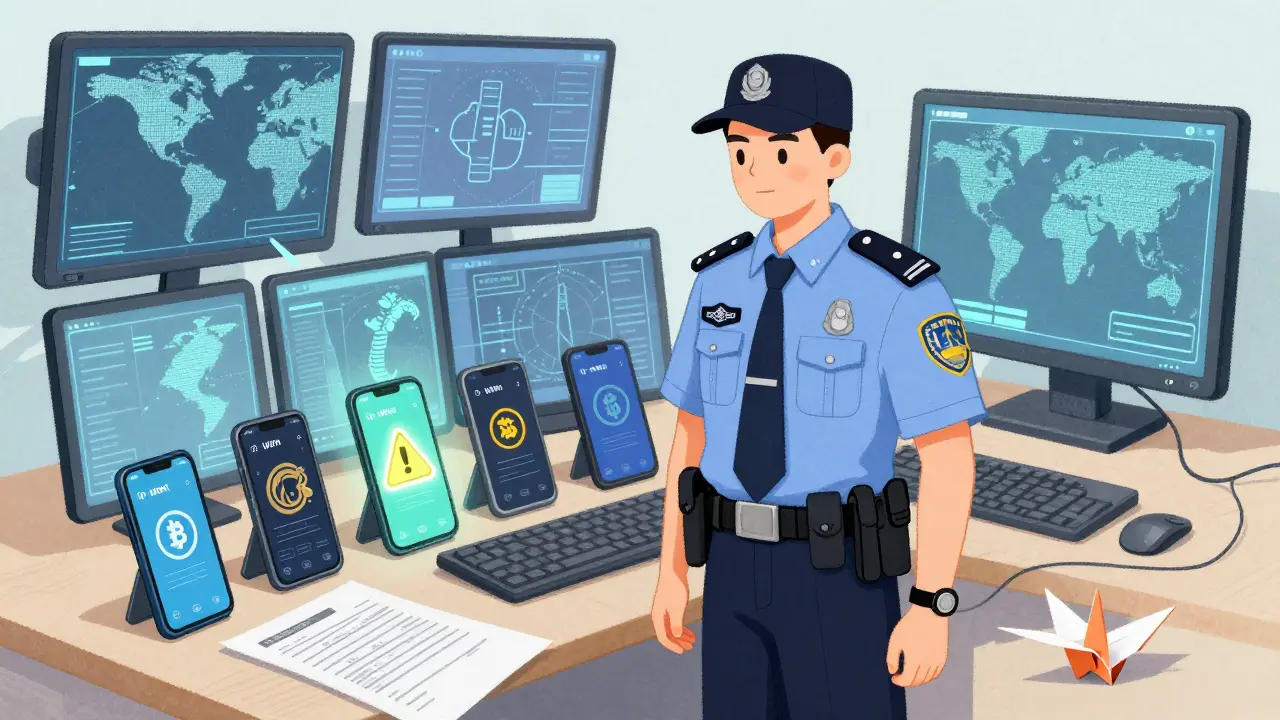
What About Foreigners in China?
If you’re a tourist, expat, or business traveler, you’re not immune. Chinese law applies to everyone within its borders. Foreigners have had their phones seized, been questioned at airports, or been denied visa renewals after being found with crypto apps or VPNs. Some think, “I’m just visiting. They won’t bother me.” But in 2025, enforcement is no longer selective. Border control checks for crypto-related apps during entry. Hotels report suspicious internet activity. Even if you’re not trading, just holding crypto in a wallet on your phone, it’s enough to raise flags. The safest move? Remove all crypto wallets and VPN apps before entering China. Don’t bring your hardware wallet. Don’t store keys in the cloud. Don’t even keep browser bookmarks to exchanges. If you’re here for work, focus on the digital yuan. It’s legal. It’s safe. It’s the only option.The Bigger Picture: Why China Won’t Back Down
China isn’t banning crypto because it’s dangerous. It’s banning it because it’s uncontrollable. The digital yuan gives the state full visibility into every payment. It can track spending, control interest rates in real time, and even limit how much people can spend on certain goods. Crypto breaks that control. The government sees decentralized finance as a threat to its power-not just financially, but socially. If people can move money without oversight, they can bypass sanctions, evade taxes, or fund dissent. That’s not acceptable. There’s no sign this will change. Even as other countries regulate crypto, China is doubling down. New AI tools are being deployed to detect crypto wallet addresses linked to Chinese IDs. Blockchain analysis firms are working with Chinese authorities to trace transactions across borders. The message is simple: if you want to use crypto in China, you do it on the government’s terms-or not at all.Final Reality Check
Using a VPN to access crypto in China is not a technical problem. It’s a legal gamble with no upside. The risks aren’t theoretical. They’re real, documented, and growing. The rewards? A few hours of trading on a platform that could be blocked tomorrow. A wallet that could be seized. A life that could be disrupted. There’s no clever hack. No secret app. No loophole. The only safe choice is to walk away.Is it legal to use a VPN in China?
There’s no single law that says “using a VPN is illegal,” but the government actively blocks and punishes unauthorized VPN use-especially when tied to banned activities like crypto trading. Only government-approved VPNs for businesses are allowed, and they’re monitored. For individuals, using any VPN to bypass the Great Firewall carries serious risk, including service shutdowns, device seizures, and police summonses.
Can I get arrested for using a VPN to trade crypto in China?
While there are no public cases of arrests for VPN use alone, people have been jailed for running crypto exchanges or facilitating trades via VPN. If authorities link you to crypto transactions-especially large or repeated ones-you could be charged with illegal fundraising, money laundering, or violating foreign exchange rules. The VPN is just the method; the crypto activity is the crime.
Are stablecoins like USDT allowed in China?
No. Stablecoins are treated exactly like Bitcoin or Ethereum under Chinese law. They’re considered private digital assets and are fully banned. Even if they’re pegged to the dollar or yuan, they’re seen as tools to bypass capital controls. Using them via a VPN doubles your legal risk.
What happens if I’m caught with a crypto wallet on my phone in China?
Your phone may be confiscated. Police will delete all crypto-related apps, wallets, and browser history. You’ll likely be asked to sign a statement promising not to use crypto or VPNs again. If you’ve made transactions, your bank accounts could be frozen for investigation. Even holding crypto without trading can trigger scrutiny.
Can I use the digital yuan instead of crypto?
Yes, and it’s the only legal option. The digital yuan (e-CNY) is China’s official central bank digital currency. It’s fully compliant, widely accepted, and works through the official app. Unlike crypto, it’s not decentralized-it’s controlled by the state. If you need digital payments in China, this is your only safe choice.





Rishav Ranjan
December 21, 2025 AT 10:18Just don’t do it. Simple.
Vyas Koduvayur
December 22, 2025 AT 18:08Look, I get it-you think you’re some crypto anarchist outsmarting the state, but let’s be real: China’s surveillance state doesn’t care if you’re holding $5 or $500K in Bitcoin. They’ve got AI that can trace a wallet address to your mom’s WeChat account. The VPN? That’s just the glitter on the dumpster fire. You think you’re anonymous? Your phone’s IMEI, your router’s MAC, your browser fingerprint-they’re all logged, timestamped, and cross-referenced with your e-CNY spending habits. And when you get summoned to the local police station, they won’t even yell. They’ll just hand you a printed screenshot of your Binance trade history and ask, ‘Why?’ And then you’ll cry. Because you thought you were clever. You weren’t. You were just predictable.
Lloyd Yang
December 23, 2025 AT 04:29I’ve spent years working with fintech teams across Asia, and I’ve seen this play out in real time. The Chinese government isn’t playing chess-they’re playing 4D Go. Every move is calculated, and the board is bigger than most people realize. The digital yuan isn’t just a payment tool; it’s a behavioral nudge engine. They don’t want to ban crypto because it’s risky-they want to ban it because it’s *uncontrollable*. And let me tell you, the infrastructure behind their surveillance is terrifyingly efficient. I’ve seen engineers from Shanghai tell me they can detect a Tor connection by the way the packets jitter. A VPN? That’s like trying to sneak into a museum by hiding behind a poster. They’ve got motion sensors on the frame. The only way out is to stop seeing this as a tech problem and start seeing it as a power one. And power doesn’t negotiate. It just resets the system.
Jake Mepham
December 24, 2025 AT 16:57Let’s cut through the noise: this isn’t about freedom or censorship-it’s about control. And China’s got the most advanced, integrated control system on the planet. Forget the VPN myth. The real hack? Don’t engage. Use the digital yuan. It’s faster, cheaper, and won’t get your bank frozen. I’ve talked to expats in Shanghai who swore they’d never use it-then they got locked out of their accounts for 45 days after a single crypto transaction. Now? They’re all using e-CNY for groceries, rent, even coffee. It’s not sexy. It’s not libertarian. But it’s safe. And sometimes, safety isn’t surrender-it’s strategy. You don’t have to love the system to live in it without getting crushed.
Craig Fraser
December 25, 2025 AT 04:16Frankly, anyone using a VPN for crypto in China is either dangerously naive or actively seeking trouble. The notion that this is a ‘personal freedom’ issue is absurd. You’re not a dissident-you’re a financial liability. The state doesn’t need to jail you to ruin you. Freeze your accounts, block your phone, revoke your work visa. Done. And let’s not pretend this is unique to China. Every authoritarian regime does this. The difference? China does it better. You think you’re tech-savvy? You’re just a data point with a wallet.
Sybille Wernheim
December 26, 2025 AT 19:27Hey, I get why people do it. I really do. Crypto feels like freedom when your local economy is shaky. But in China? It’s like trying to light a candle in a hurricane. The system doesn’t just block you-it absorbs you. I’ve seen friends lose everything-jobs, savings, even family trust-just because they thought ‘it’s just a little Bitcoin.’ The real win? Walking away with your phone, your bank account, and your peace of mind. You don’t need to own crypto to be smart. Sometimes, the bravest move is just… not playing.
Jordan Renaud
December 28, 2025 AT 13:47There’s a quiet wisdom in surrender-not the kind that gives up, but the kind that chooses its battles. China’s digital yuan isn’t a betrayal of innovation-it’s a different kind of innovation. One that prioritizes stability over speculation. Maybe the real question isn’t ‘Why ban crypto?’ but ‘Why assume everyone needs it?’ We’re so obsessed with decentralization that we forget some societies value cohesion more than chaos. And in a country of 1.4 billion, cohesion isn’t a weakness-it’s the only thing holding the system together. The VPN? That’s not a tool of liberation. It’s a symptom of misunderstanding the game.
Dan Dellechiaie
December 29, 2025 AT 04:25Bro, you think you’re the 1% hacking the firewall? Nah. You’re the 99% getting flagged by an algorithm that’s been trained on 200 million transactions last week. The ‘stablecoin loophole’? Dead. The ‘Tor workaround’? Blocked since January. The ‘I’m just holding’ excuse? They don’t care. They see your wallet address, your VPN IP, your phone’s location history, and your e-CNY spending pattern-and boom, you’re in a dossier. And guess what? Your ‘crypto portfolio’? It’s not yours anymore. It’s a case file. You’re not a pioneer. You’re a compliance alert.
Charles Freitas
December 29, 2025 AT 14:15Oh wow, another ‘crypto freedom fighter’ in China. Let me guess-you’re using Mullvad on a rooted Pixel 8, sending USDT through a friend’s Alipay QR code, and you think you’re slick? Newsflash: your ‘privacy’ is a myth. The state doesn’t need to catch you red-handed. They just need to see you logged into Binance at 2 a.m. every Tuesday for six months. Then they call your employer. Then they call your landlord. Then they call your mom. You think you’re anonymous? You’re just a ghost with a wallet and a bad habit. And when the hammer drops, you won’t even get a trial. Just a signed form and a confiscated phone. Congrats, you’re now a cautionary tale.
Grace Simmons
December 30, 2025 AT 06:55China’s sovereignty is not up for debate. The digital yuan is the legitimate currency of the People’s Republic. Any attempt to circumvent state financial control through unauthorized digital assets or proxy networks is not only illegal-it is an affront to national order. Foreigners who bring crypto wallets into China do so at their own peril. This is not censorship. This is governance. And those who misunderstand this are not victims-they are reckless.
Collin Crawford
December 31, 2025 AT 05:45It is patently evident that the utilization of virtual private networks for the purpose of accessing illicit financial instruments constitutes a multi-vector violation of both telecommunications and monetary regulatory statutes under the PRC’s comprehensive legal framework. The conflation of technological circumvention with personal liberty is a Western fallacy that fails to account for the structural imperatives of a socialist market economy under centralized oversight. One does not ‘outsmart’ a state with a GDP of $17 trillion and an AI-driven surveillance apparatus that processes over 1.2 billion data points daily. The only rational course of action is compliance. Anything else is statistically indefensible.
Aaron Heaps
January 1, 2026 AT 02:25VPN + crypto = instant red flag. Done.
Helen Pieracacos
January 2, 2026 AT 07:17So you’re telling me the only way to be ‘free’ in China is to use a tool the government actively hunts… to access something they’ve outlawed… to hold money they say doesn’t exist? Sounds less like a hack. More like a suicide pact with a Wi-Fi router.
chris yusunas
January 4, 2026 AT 06:46China ain’t gonna change. The e-CNY is the new normal. You want to play crypto? Go to Thailand. Go to Dubai. Don’t bring the fire to a house with sprinklers on every wall. Stay chill. Stay safe. Your wallet ain’t worth your phone, your job, or your peace.
Steve B
January 5, 2026 AT 09:20One must ask: is the pursuit of decentralized finance truly a moral imperative, or merely a manifestation of capitalist individualism in a collectivist context? The Chinese state, in its wisdom, has opted for a path of financial harmony over speculative chaos. To resist this is not to champion liberty-it is to romanticize instability. The VPN user is not a hero. He is a symptom of a deeper cultural dissonance. And like all symptoms, he will be treated-not with violence, but with silence. The system does not need to shout. It simply needs to wait.
Sophia Wade
January 5, 2026 AT 19:37There’s something profoundly poetic about a civilization choosing to anchor its digital future in a currency it can fully control-like a painter refusing to use a brush that might slip from their hand. Crypto, with its volatility and anonymity, is the antithesis of order. And China, after centuries of dynastic cycles and economic upheaval, has chosen stability as its highest virtue. The VPN isn’t a tool of resistance-it’s a relic of a mindset that believes freedom lies in escape. But true freedom, perhaps, is knowing when to stay-and build within the walls, not beyond them.
Brian Martitsch
January 6, 2026 AT 21:29LOL you think you’re a hacker? You’re a walking compliance violation with a Ledger. 🤡
Rebecca F
January 7, 2026 AT 18:07They don’t arrest you because they don’t need to. They just make your life so inconvenient you beg them to take your phone back. And you’ll do it smiling. Because you’re scared. And they know it.
vaibhav pushilkar
January 9, 2026 AT 01:26Been there. Got the warning. Lost my phone for 3 days. Now I use e-CNY for everything. No drama. No stress. No police visits. If you’re smart, you’ll do the same. It’s not about giving in-it’s about not giving them a reason to notice you.
SHEFFIN ANTONY
January 10, 2026 AT 11:52Oh wow, so the government’s right and we’re all just dumb criminals? Let me grab my torch and pitchfork-I’ve got a crypto witch to burn. This isn’t about ‘control,’ it’s about fear. And fear doesn’t build the future-it buries it. The digital yuan? It’s a digital leash. And you’re all just licking it like it’s a treat. Pathetic.