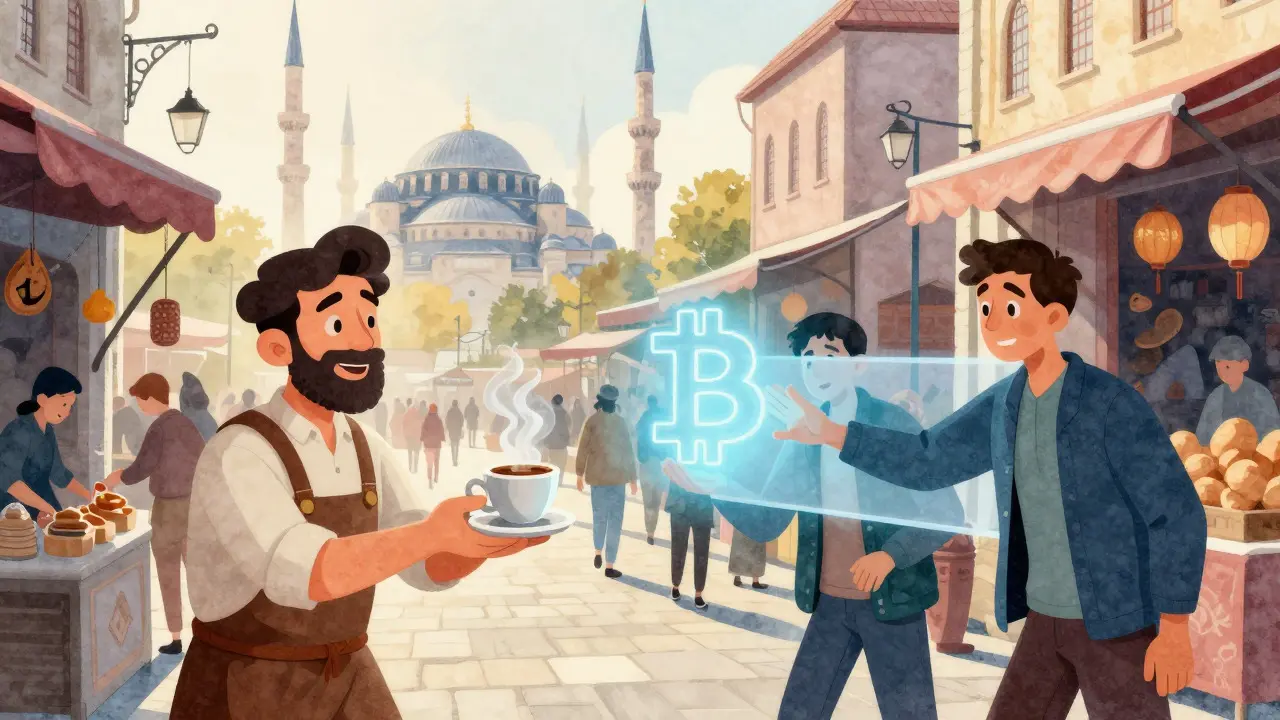
Imagine trying to buy a coffee with Bitcoin in Istanbul. As of today, you can't. But if you want to trade that Bitcoin on a licensed platform, the government is watching every move you make. This is the reality of Turkey's crypto regulation landscape in 2026. It’s a system built on a strict contradiction: trading is welcome, but spending is forbidden.
For years, Turkey was known as the wild west of cryptocurrency. With high inflation driving citizens toward digital assets for protection, adoption skyrocketed. But the chaos of unregulated exchanges and money laundering risks forced the government's hand. The result? One of the most comprehensive-and restrictive-regulatory frameworks in the world. If you are operating in or investing in the Turkish market, understanding this shift isn't just helpful; it's mandatory.
The Turning Point: From Ban to Framework
To understand where things stand now, we have to look back at the pivotal moments that shaped the current rules. The story really begins in April 2021. That’s when the Central Bank of Turkey (TCMB) dropped a bombshell: they banned the use of cryptocurrencies as a means of payment for goods and services.
This wasn't a total ban on crypto itself. You could still own it. You could still trade it. But you couldn't use it to pay your bills. The goal was clear: protect the sovereignty of the Turkish lira. The government didn't want digital currencies undermining its monetary policy.
For three years, this created a gray area. Exchanges operated under informal guidelines, and enforcement was sporadic. Then came 2024. On June 26, 2024, Law No. 7518, also known as The Law on Amendments to the Capital Markets Law, officially became law. This legislation changed everything. It moved crypto from the shadows into the light, creating formal legal definitions for terms like "wallet," "cryptoasset," and "platform." More importantly, it established the requirement for licenses.
Who Watches the Watchers? The Regulatory Trio
Turkey didn't just hand oversight to one agency. They created a tri-party structure to cover all bases: legal, financial crime, and technical compliance. Here is how the power is divided:
- Capital Markets Board (CMB): The primary regulator responsible for licensing exchanges, setting rules, and issuing sanctions.
- Financial Crimes Investigation Board (MASAK): Enforces anti-money laundering (AML) laws and has the power to freeze accounts linked to suspicious activity.
- Scientific and Technological Research Council of Türkiye (TÜBİTAK): Focuses on technical standards, ensuring that exchange infrastructure meets security and operational requirements.
This setup means that if you run an exchange, you aren't just dealing with paperwork. You're dealing with a coordinated effort across three major government bodies. The CMB sets the rules, MASAK polices the crimes, and TÜBİTAK checks the code. It’s a tight net.
The High Cost of Entry: Licensing Requirements
If you are a business looking to operate in Turkey, here is the hard truth: it’s expensive. Law No. 7518 introduced minimum capital requirements that effectively shut out small players and consolidated the market around well-funded operators.
| Service Type | Minimum Capital (TRY) | Approximate USD Value (2026) |
|---|---|---|
| Crypto Exchange | 150,000,000 TRY | $4.1 million |
| Custody Service Provider | 500,000,000 TRY | $13.7 million |
These numbers are staggering for startups. For context, many international exchanges operate with significantly lower initial capital reserves. The logic behind this is stability. The government wants to ensure that if an exchange fails, there is enough buffer to protect users' funds. However, the side effect is reduced competition. Fewer exchanges mean less choice for consumers, but potentially higher security standards for those who remain.

The Crackdown: What Happened in 2025?
Rules on paper are one thing. Enforcement is another. Throughout 2025, the Turkish government showed exactly how serious they were about cleaning up the market.
In February 2025, full Anti-Money Laundering (AML) rules went into effect. Every crypto firm had to be licensed and undergo regular audits. But the real shock came in July 2025. Authorities blocked access to 46 unlicensed exchanges overnight. This included major decentralized finance (DeFi) platforms like PancakeSwap. For users accustomed to accessing global DeFi protocols via their browsers, this was a massive disruption.
Then, on July 28, 2025, the founder of ICRYPEX, a major local exchange, was detained. The allegations linked crypto funding to political opposition figures. This event highlighted a darker side of the regulation: the potential for regulatory tools to be used for political leverage. While the official narrative focuses on financial crime, observers noted that the timing and targets suggested a broader agenda of control.
User Experience: Life Under the Microscope
So, what does this mean for the average Turkish citizen holding crypto? The experience has become more secure but significantly more bureaucratic.
Licensed exchanges now offer robust consumer protections. Your funds are safer from hacks because these platforms must meet TÜBİTAK's technical standards. However, privacy is virtually non-existent. Identity verification (KYC) is mandatory. If you try to move more than 15,000 Turkish lira (roughly $425-$450), you need to provide documented explanations for the transaction.
Users on Reddit and other forums frequently complain about the friction. Account verifications take longer. Documentation requirements are extensive. And the biggest frustration? You still can't spend your crypto. If you want to use your Bitcoin to pay for online shopping or send remittances abroad easily, you're out of luck. The payment ban remains absolute.
Many users have tried to migrate to international platforms. But the government actively monitors and blocks IP addresses associated with unlicensed foreign exchanges. It’s a cat-and-mouse game that favors the house.

Turkey vs. The World: How Does It Compare?
To appreciate the uniqueness of Turkey's approach, we need to look at it alongside other major markets. Turkey’s framework is often compared to the European Union's Markets in Crypto-Assets (MiCA) regulation, but with key differences.
| Region/Country | Regulatory Approach | Payment Usage | Key Difference |
|---|---|---|---|
| Turkey | Centralized (CMB-led) | Banned | High capital reqs; strict AML |
| European Union (MiCA) | Harmonized Regional | Allowed (with limits) | Focus on consumer protection & stability |
| United States | Fragmented (SEC/CFTC) | Allowed | Unclear jurisdiction; legal battles |
| China | Total Ban | Banned | No trading, no ownership (mostly) |
| Switzerland | Friendly/Decentralized | Allowed | Low barriers; innovation-focused |
Turkey stands out for its centralization. Unlike the US, where agencies fight over jurisdiction, Turkey puts all eggs in the CMB basket. It’s more restrictive than Switzerland but less severe than China. The unique selling point-or pain point-is the payment ban. Most major markets allow some form of crypto payment. Turkey does not. This distinction makes Turkey a model for emerging markets that want to harness crypto investment while protecting their national currency.
What Comes Next? Future Restrictions
If you think things are settled, think again. The regulatory trajectory suggests further tightening. As of mid-2026, the Turkish government is drafting new legislation to expand MASAK's powers. The proposed bill aims to give authorities even faster access to freeze cryptocurrency accounts without prior court approval.
Expect stricter limits on stablecoins. The government views stablecoins like USDT or USDC as threats to capital controls. New rules may restrict transfers of these assets to prevent unregulated capital flight. Additionally, reporting requirements will likely become more granular, with heavier penalties for non-compliance. These moves align with Financial Action Task Force (FATF) recommendations, signaling Turkey's desire to be seen as a compliant global financial partner.
For businesses, the consulting industry specializing in Turkish crypto compliance is booming. Legal and technical advisory services command premium rates because the documentation is complex and primarily available in Turkish. For international operators, the language barrier alone adds a layer of difficulty.
Final Thoughts on Navigating the Landscape
Turkey’s pivot toward comprehensive regulation is a lesson in balance. The government successfully brought order to a chaotic market, reducing fraud and increasing security for legitimate traders. But it did so by sacrificing user freedom and innovation. The payment ban and high entry costs create a walled garden.
If you are an investor, stick to licensed exchanges. The risks of using unlicensed platforms are too high given the aggressive blocking tactics. If you are a developer or entrepreneur, prepare for a steep learning curve. Compliance isn't just a checkbox; it's an ongoing operational cost. The era of wild west crypto in Turkey is over. Welcome to the regulated age.
Is cryptocurrency illegal in Turkey?
No, owning and trading cryptocurrency is legal in Turkey. However, using cryptocurrency as a means of payment for goods and services is banned by the Central Bank of Turkey (TCMB). You must trade through licensed Crypto Asset Service Providers (CASPs).
What is Law No. 7518?
Law No. 7518, enacted in June 2024, is the cornerstone of Turkey's modern crypto regulation. It defines key terms like 'cryptoasset' and 'wallet,' mandates licensing for exchanges and custodians, and establishes the Capital Markets Board (CMB) as the primary regulator.
How much capital do I need to start a crypto exchange in Turkey?
You need a minimum of 150 million Turkish Lira (approx. $4.1 million) to operate a crypto exchange. For custody services, the requirement is 500 million Turkish Lira (approx. $13.7 million). These funds must be held as part of the licensing process.
Why were exchanges like PancakeSwap blocked in Turkey?
In July 2025, Turkish authorities blocked 46 unlicensed exchanges, including decentralized platforms like PancakeSwap, to enforce the new licensing regime. The goal was to eliminate unregulated operations and ensure all crypto activity passed through licensed entities subject to AML/KYC rules.
Can I use crypto to pay for online shopping in Turkey?
No. The Central Bank of Turkey maintains a strict ban on using cryptocurrencies for payments. Merchants cannot accept crypto directly. Users must convert crypto to Turkish Lira before making purchases, adding friction to the process.
Who regulates cryptocurrency in Turkey?
Three main bodies oversee crypto: the Capital Markets Board (CMB) handles licensing and general regulation, the Financial Crimes Investigation Board (MASAK) enforces anti-money laundering laws, and TÜBİTAK ensures technical compliance and security standards.
Are there transaction limits for crypto in Turkey?
Yes. Transactions exceeding 15,000 Turkish Lira require strict Know Your Customer (KYC) checks and documented explanations. This threshold is designed to prevent money laundering and large-scale capital flight.
How does Turkey's regulation compare to the EU's MiCA?
Turkey's framework is similar to MiCA in its comprehensiveness but differs in key areas. Turkey bans crypto payments entirely, whereas the EU allows them with restrictions. Turkey also has higher capital requirements for exchanges and centralizes oversight under the CMB, unlike the EU's harmonized but multi-agency approach.





Pernelia Wahkan
July 29, 2026 AT 10:55The whole concept of banning payments while allowing trading is like letting people buy lottery tickets but forbidding them from cashing in the winnings unless they go through a specific bank. It creates this weird limbo where your assets exist on paper but have no utility in the real world. I find it fascinating how governments try to control money that was designed specifically to escape their control. The high capital requirements are just a way to keep out the little guys and ensure only state-approved entities can play. It’s not about safety, it’s about surveillance.
Ed Mitchell
July 29, 2026 AT 21:14They aren't protecting you. They are building a cage. Look at who got detained. Political opposition. This is classic authoritarian playbook disguised as financial regulation. The moment they block DeFi platforms like PancakeSwap, they admit they fear decentralization because it cannot be taxed or controlled. MASAK isn't fighting crime; they are fighting freedom. Wake up sheeple.
Michael Mostyn
July 30, 2026 AT 19:29One must consider the broader geopolitical implications of such strict monetary sovereignty measures. While the restriction on payments seems draconian, it aligns with a global trend among emerging markets to stabilize local currencies against volatile digital assets. The tri-party regulatory structure suggests a sophisticated approach to compliance rather than mere suppression. However, the efficacy of IP blocking remains questionable in an era of widespread VPN usage.
Joshua Hofford
July 31, 2026 AT 04:29I think there's a silver lining here for the average person. Sure, it's annoying, but remember how many scams were happening before? Now you have some recourse if things go wrong. It's like wearing a seatbelt. You don't love it, but you're glad it's there when you crash. The high entry fees mean the exchanges staying open are probably legit businesses, not fly-by-night operations. We should appreciate the stability even if it costs us some privacy.
Erica Johnson
August 1, 2026 AT 03:20You guys are missing the point entirely 😒. This is exactly what happens when regulators actually do their jobs. The US is a mess because of fragmented oversight. Turkey is cleaning house. If you can't handle KYC, maybe crypto isn't for you. It's not a get-rich-quick scheme anymore, it's a financial instrument. Grow up and adapt to the new normal.
Carl Michaud
August 2, 2026 AT 19:26The pretension of calling this 'protection' is laughable. It is a wealth extraction mechanism. By forcing all liquidity through licensed channels, the state can easily track capital flight. The detention of the ICRYPEX founder was a warning shot to any other exchange owners thinking too independently. This is not regulation; it is nationalization by stealth. The technical standards from TÜBİTAK are likely backdoors waiting to be exploited.
Matt Kay
August 3, 2026 AT 15:19boring read. too much text. just say its hard to trade now.
Dave Kjendal
August 4, 2026 AT 13:02It's always the same story. First they ban it, then they regulate it, then they tax it. Turkey is just ahead of the curve. The 150 million lira requirement is insane for startups though. It basically guarantees a monopoly for the big players who already have government connections. Not good for innovation.
Kat Bennett
August 4, 2026 AT 16:46I've been following the Turkish market closely and honestly, the shift feels inevitable given the inflation rates we saw a few years ago. When your local currency loses value so fast, people naturally flock to Bitcoin as a lifeboat. But the government realized that if everyone leaves the lira, the economy collapses. So they created this hybrid model. It's messy, sure, and the bureaucracy is a nightmare, but it keeps the lights on. I wonder if other countries will copy this model once they see how well it stabilizes their own currencies. It's a fascinating case study in economic survivalism.
Candice Cornett
August 6, 2026 AT 05:43Everyone here is complaining about privacy but ignoring the fact that unregulated crypto was just a playground for criminals. Sure the government overreaches sometimes but is that better than having your funds stolen by a rogue developer? Probably not. The payment ban is stupid yes but at least your savings are safe from hackers who vanish into thin air.
Ed Wallace
August 7, 2026 AT 23:22There is a profound philosophical tension here between the libertarian ideal of absolute financial freedom and the social contract that requires some level of oversight to prevent systemic collapse. Turkey has chosen order over chaos, which is understandable given their history. But one has to ask: at what point does protection become imprisonment? The blocking of DeFi protocols suggests a fear of the unknown, a desire to keep technology within comfortable, controllable bounds. It is a cautionary tale for all nations watching.
Emma Smith
August 8, 2026 AT 15:43so basically they want to watch every penny you move right? its creepy af. why do they need to know why i bought 500 dollars worth of eth? its my money. the whole kyc thing is just data harvesting for future blackmail. dont trust these institutions they lie
Prudence Flemming
August 10, 2026 AT 12:22the jargon heavy reality is that casps are now the gatekeepers. if you cant pass their due diligence you are locked out. its a centralized chokepoint. smart contracts meant to be trustless are now dependent on legal compliance officers in istanbul. irony is thick here.
Matthew Smith
August 10, 2026 AT 23:33Morally speaking, the state has a duty to protect citizens from fraud. Technically speaking, they are failing by creating barriers that push users to the dark web anyway. The solution isn't bans, it's education. But bureaucrats love power more than they love solutions. The detention of political figures linked to crypto is the smoking gun. It's not about AML, it's about silencing dissent.
Rita Dutta
August 12, 2026 AT 03:01as someone from india we understand this pain. our gov also hates crypto. but turkey went full steam ahead with the blocks. pancake swap gone? really? thats sad for defi lovers. hope they bring it back soon cause its super useful for yield farming. typos aside the sentiment is clear regulation is tough
Paul Smith
August 14, 2026 AT 02:05Hey folks! 👋 Just wanted to add that if you're traveling to Istanbul, don't expect to pay for your coffee with BTC anytime soon ☕️🚫. But hey, at least the licensed exchanges are pretty secure now! 🛡️ It's wild how fast the landscape changed. Stay safe out there and double-check those KYC docs! 📄✨
Rodmun Tarnowski
August 15, 2026 AT 01:52Indeed! The regulatory framework is quite robust! One must commend the efforts of the CMB in establishing clear guidelines! It provides a sense of security that was previously lacking! Although the capital requirements are steep, they ensure only serious players remain! A positive step forward for financial integrity!
Subhash Kashyap Dm
August 15, 2026 AT 06:55look at the fatf recommendations they are just tools for western hegemony. turkey is trying to break free but gets crushed. the stablecoin ban is key because usdt is dollar imperialism. they want to force you back to the lira. it is a war on capital controls. wake up to the matrix
Billy Cunningham
August 16, 2026 AT 18:59😐 tired of hearing about regulations. just let us trade.
Ken G
August 18, 2026 AT 00:22the elites are scared of losing control. simple as that. they use words like 'security' and 'compliance' to hide their greed. the common man suffers while the banks profit. it is a rigged game. never trust the system. keep your keys offline and stay hidden
Joy Kwant
August 19, 2026 AT 13:57This article is depressing. Why do we have to deal with all this red tape? I just want to send money to my family without filling out forms. It feels like living in a prison where every transaction is monitored. Who cares about 'stability' if you lose your freedom? The government is suffocating innovation. It's time to revolt against these bureaucratic monsters.
amy miranda
August 19, 2026 AT 17:46Truly pathetic how quickly people accept surveillance as 'safety'. The dramatic increase in reporting requirements is nothing short of tyranny. Grammatically precise in its cruelty. They want to know everything about you. It is the end of privacy as we know it. Sad.
Marcia Albert
August 21, 2026 AT 03:31I just sit back and watch the drama unfold. The cat-and-mouse game with IP addresses is entertaining in a bleak sort of way. Users will always find a way around blocks, just like they did with torrent sites. The government spends millions blocking PancakeSwap while people just use a proxy. It's like trying to stop water with a sieve. Fascinatingly futile.