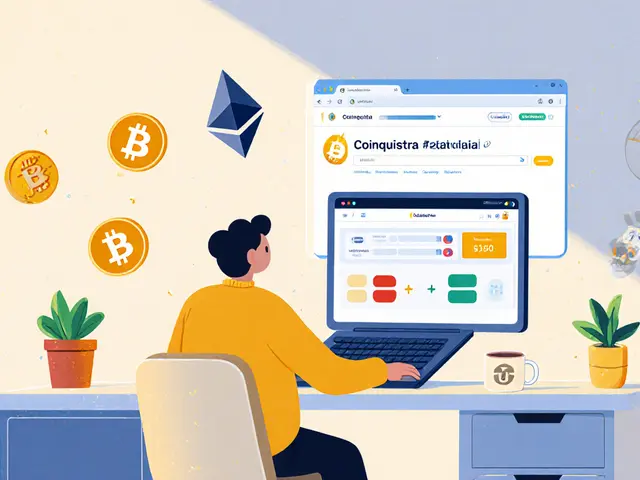
Remember the last time you paid $40 in gas fees just to swap a handful of tokens? It felt like burning money. If that pain point rings a bell, you’re not alone. The shift toward Layer 2 solutions has changed how we trade, and PancakeSwap is leading the charge by bringing its popular automated market maker (AMM) decentralized exchange to Arbitrum One. But does moving from Binance Smart Chain to an Ethereum scaling solution actually improve your trading experience, or is it just marketing hype?
This review cuts through the noise. We aren’t here to tell you PancakeSwap is perfect. We’re here to look at what works, what doesn’t, and specifically how the V2 deployment on Arbitrum stacks up against competitors like Uniswap or even its own BSC version. Whether you are a yield farmer looking for lower entry costs or a trader chasing high-volume swaps, understanding the mechanics of this specific deployment is crucial before you connect your wallet.
Why Move PancakeSwap to Arbitrum?
To understand the value proposition, you have to look at where PancakeSwap started. Built originally on the Binance Smart Chain (BSC), it became famous for low fees and fast transactions. However, as the DeFi ecosystem matured, users began craving access to the deep liquidity pools native to Ethereum without paying Ethereum-level gas fees. Enter Arbitrum.
Arbitrum is an Optimistic Rollup layer-2 scaling solution for Ethereum. In plain English? It bundles hundreds of transactions into one, settles them on Ethereum, and passes the savings back to you. By deploying PancakeSwap V2 here, the platform taps into Ethereum’s security while offering near-instant finality and negligible transaction costs. For traders based in regions with volatile energy costs or those who simply hate waiting for confirmations, this architecture is a game-changer.
The move isn't just about speed. It’s about asset accessibility. Many high-quality projects launch first on Ethereum or Arbitrum. By supporting these chains, PancakeSwap stops being just a "BSC DEX" and becomes a true multi-chain hub. You can now trade assets that never touched BSC, all within the familiar interface you already know.
Core Features and User Experience
If you’ve used PancakeSwap before, the interface will feel instantly familiar. That’s both a strength and a weakness. The layout remains clean, with tabs for Swap, Liquidity, Earn, and more. On Arbitrum, the "Swap" tab functions exactly as you’d expect: you select input and output tokens, check the rate, and execute. The difference lies under the hood.
One standout feature available on this deployment is Limit Orders. Unlike traditional AMMs where you must be online to catch a price dip, limit orders let you set a target price. The protocol executes the swap automatically when the market hits that number. Note that this feature currently excludes tokens with transfer taxes, so keep that in mind if you’re trading meme coins with heavy fee structures.
Another critical aspect is self-custody. Unlike centralized exchanges (CEXs) like Binance or Coinbase, you hold your keys. When you swap on PancakeSwap Arbitrum, the assets move directly from your wallet to the liquidity pool. There is no deposit address to wait for, no withdrawal queue, and no risk of the exchange freezing your funds due to regulatory hiccups. This non-custodial nature means you are responsible for your own security, but you also retain full control over your capital.
Fees and Transaction Costs Analysis
Let’s talk numbers, because this is usually why people switch networks. On Ethereum mainnet, a simple swap might cost $15-$50 depending on network congestion. On BSC, it’s typically $0.10-$0.30. So, what does Arbitrum offer?
On PancakeSwap Arbitrum, transaction fees generally hover between $0.01 and $0.05. Yes, cents. This makes small trades viable again. If you want to rebalance a portfolio worth $100, doing it on Ethereum eats 20% of your capital in fees. On Arbitrum, it’s less than 1%. This micro-efficiency adds up significantly for active traders who make dozens of swaps per week.
| Feature | Ethereum Mainnet | Binance Smart Chain (BSC) | Arbitrum One |
|---|---|---|---|
| Average Swap Fee | $15 - $50+ | $0.10 - $0.30 | $0.01 - $0.05 |
| Transaction Speed | 12-15 seconds | 3-5 seconds | ~1 second (L2 settlement) |
| Liquidity Depth | Highest | High | Moderate to High (Growing) |
| Asset Variety | Extensive | High (BEP-20 focused) | High (ERC-20 compatible) |
It’s important to note that while fees are low, they are not zero. You still pay a small percentage to liquidity providers (usually 0.25% or 0.05% depending on the pool tier). Additionally, you need ETH on Arbitrum to pay for gas. Don’t try to send USDT directly from an exchange to Arbitrum without ensuring the bridge supports it; you’ll lose your funds if the network mismatches.

Liquidity Pools and Yield Farming
PancakeSwap V2 uses constant product automated market makers ($x \times y = k$). This means prices are determined algorithmically by the ratio of two tokens in a pool. On Arbitrum, the most popular pools involve stablecoins (USDC, USDT) paired with major assets like ETH, WBTC, or ARB itself.
Yield farming opportunities exist, but they differ slightly from BSC. Because Arbitrum attracts institutional-grade liquidity, the APYs (Annual Percentage Yields) on blue-chip pairs tend to be more sustainable but lower than the wild west rates seen on newer chains. However, the stability often outweighs the raw percentage for conservative investors. You can stake your LP (Liquidity Provider) tokens in Syrup Pools to earn CAKE rewards.
CAKE is the native governance and utility token. On Arbitrum, holding CAKE allows you to participate in governance votes and reduce trading fees. Recent updates have introduced more sophisticated burn mechanisms, aiming to reduce total supply over time. Keep an eye on the "Earn" section for new farm launches, as incentives are frequently rotated to bootstrap liquidity for new token listings.
Risks and Limitations
No platform is flawless. While PancakeSwap Arbitrum offers great tech, it comes with risks inherent to DeFi. First, smart contract risk. Even audited contracts can have vulnerabilities. Although PancakeSwap has undergone multiple audits, the complexity of cross-chain bridges adds another layer of potential failure points.
Second, liquidity fragmentation. Since PancakeSwap exists on multiple chains (BSC, Ethereum, Polygon, Arbitrum), liquidity is split. A token might have massive volume on BSC but thin order books on Arbitrum. This leads to higher slippage for large trades. Always check the depth chart before executing a swap larger than $10,000.
Finally, user error is rampant. Sending tokens to the wrong network is the most common mistake. If you send ERC-20 tokens to a BSC address, they may be unrecoverable. Always double-check that your wallet is switched to the Arbitrum network before initiating any transaction.

How to Get Started on PancakeSwap Arbitrum
Ready to try it out? Here is the straightforward path to your first trade:
- Set up your wallet: Install MetaMask or Rabby. These wallets support EVM-compatible chains seamlessly.
- Add Arbitrum Network: Most modern wallets detect Arbitrum automatically. If not, add the RPC URL manually via Chainlist.org.
- Fund your wallet: Bridge ETH from Ethereum Mainnet to Arbitrum using the official Arbitrum Bridge or a third-party service like Stargate. Ensure you have enough ETH for gas.
- Connect to PancakeSwap: Visit the official website and ensure you select "Arbitrum" from the chain selector dropdown in the top right corner.
- Execute a Swap: Choose your tokens, approve the spending allowance, and confirm the transaction in your wallet.
Once you’ve made a swap, explore the "Earn" tab. Look for farms with high TVL (Total Value Locked) as these are generally safer bets for long-term staking. Remember, past performance does not guarantee future results, especially in crypto markets.
Final Verdict: Is It Worth Your Time?
PancakeSwap V2 on Arbitrum is a robust option for traders who want Ethereum-grade security without the Ethereum-grade bill. It successfully bridges the gap between usability and cost-efficiency. For casual swappers, the interface is intuitive enough to hide the underlying complexity. For power users, the availability of limit orders and deep liquidity in major pairs provides professional tools.
However, it won’t replace specialized platforms for niche needs. If you need extreme leverage, dedicated perp DEXs might still offer better options. If you need obscure altcoins, BSC might still have deeper pools for certain BEP-20 tokens. But for general trading, staking, and accessing the growing Arbitrum ecosystem, PancakeSwap remains a top-tier contender. It’s reliable, cheap, and constantly evolving.
Is PancakeSwap on Arbitrum safe?
Yes, PancakeSwap is one of the most audited protocols in DeFi. The Arbitrum deployment uses the same core smart contracts as other versions, which have been battle-tested. However, always interact with the official URL to avoid phishing sites, and remember that DeFi carries inherent smart contract risks.
Do I need ETH to trade on PancakeSwap Arbitrum?
Yes, you need ETH on the Arbitrum network to pay for gas fees. Even if you are swapping stablecoins, the transaction execution requires a small amount of ETH to cover the computational resources used by the validators.
What is the difference between PancakeSwap V2 and V3?
V2 uses standard automated market makers with fixed liquidity ranges. V3 introduces concentrated liquidity, allowing providers to allocate capital within specific price ranges for higher efficiency. V3 is more complex for beginners but offers better capital efficiency for experienced liquidity providers.
Can I use my existing CAKE tokens on Arbitrum?
You cannot directly use BSC-based CAKE on Arbitrum without bridging. You must bridge your CAKE tokens from BSC to Arbitrum using a supported bridge. Once bridged, they function as ERC-20 tokens on the Arbitrum network and can be used for staking or governance there.
Why are my transactions failing on Arbitrum?
Common causes include insufficient ETH for gas, incorrect slippage settings (too low), or attempting to trade a token with transfer taxes using a feature that doesn't support them. Check your wallet balance and adjust slippage tolerance to 0.5% - 1% for standard swaps.