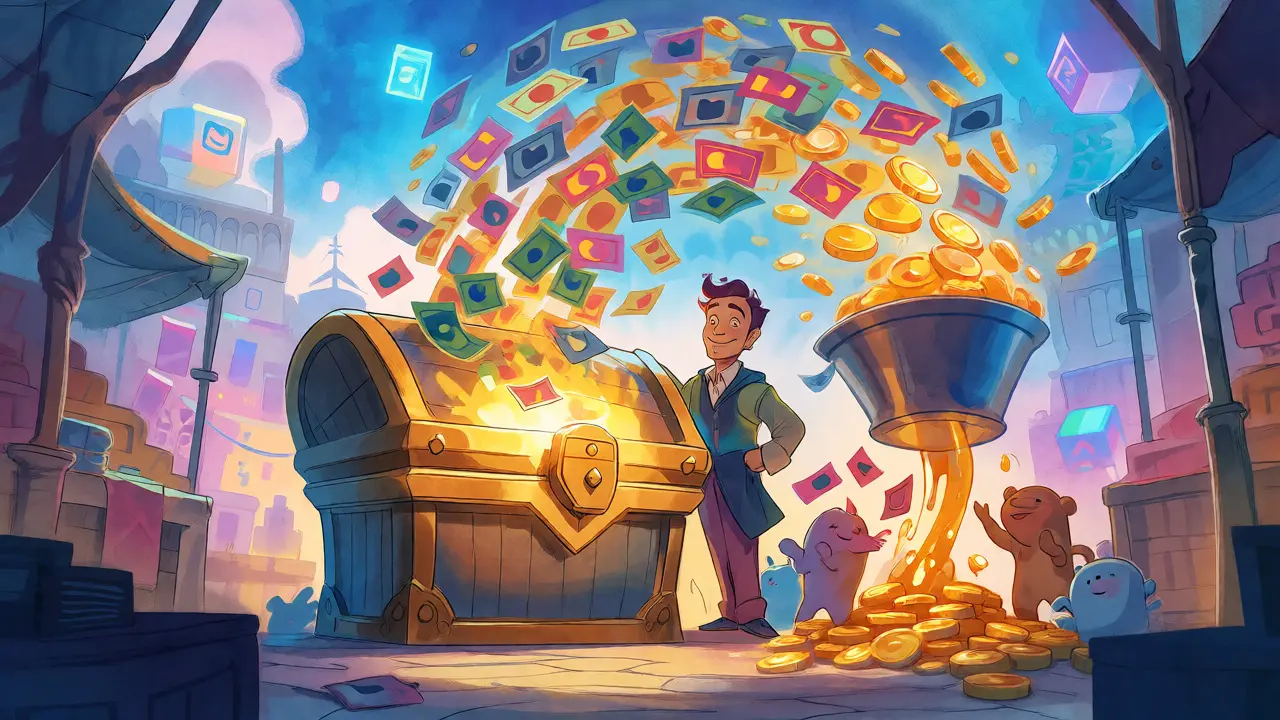
You’ve probably heard of NFT marketplaces where you list an item and wait weeks for a buyer. Or maybe you’ve tried to sell a real-world asset on-chain and found the liquidity dry as dust. Eesee (ESE) claims to fix this by turning sales into raffles. Instead of waiting for the perfect offer, sellers convert illiquid assets into ticket revenue instantly, while buyers gamble for a chance at high-value prizes. It sounds like a casino mixed with a stock exchange, but it’s actually a structured liquidity solution for digital and physical assets.
If you’re looking at the charts, ESE looks like just another small-cap token hovering under a cent. But if you dig into the mechanics, you’ll see a complex ecosystem involving staking tiers, governance, and a specific launchpad model called the Initial Raffle Offering (IRO). This article breaks down exactly what Eesee is, how the ESE token functions within it, and whether the numbers add up in September 2026.
The Core Problem: Why Traditional Marketplaces Fail Sellers
Traditional exchanges rely on order books. You set a price, and someone has to match it. For popular coins like Bitcoin or Ethereum, this works fine because volume is massive. But for unique assets-like a rare NFT, a specific fungible token, or a fraction of a real-world asset (RWA)-liquidity is fragmented. If you own a one-of-one piece of digital art, you might have zero buyers willing to pay your asking price today. You either lower the price drastically or hold indefinitely.
Eesee flips this dynamic. It doesn’t ask "Who wants to buy this?" It asks "Who wants to win this?" By using a raffle system, the platform aggregates many small purchases (tickets) to create immediate liquidity for the seller. The seller gets paid out in ESE tokens from the ticket pool, regardless of whether the prize is sold to a single buyer or distributed among many losers. This mechanism ensures that even obscure assets can be monetized quickly, provided there’s enough community interest in the potential upside.
How Eesee Works: The Raffle Mechanism
At its heart, Eesee is a gamified liquidity solution and marketplace built primarily on Ethereum and extended to Layer-2 networks like Blast and Polygon. The user experience revolves around three main roles: Sellers, Buyers, and Stakers.
- Sellers: List their assets (NFTs, tokens, RWAs) as prizes in a raffle. They define the number of tickets and the price per ticket in ESE.
- Buyers: Purchase tickets using ESE. Each ticket gives them a chance to win the asset. If they don’t win, they lose the cost of the ticket, which funds the payout to the seller and the platform rewards.
- Stakers: Hold ESE in the protocol to unlock benefits like higher allocation limits in new launches and revenue sharing.
This isn’t just a gimmick; it’s a financial instrument. The randomness is handled by smart contracts, ensuring transparency. Because all transactions are denominated in ESE, the token becomes the lifeblood of the economy. Every purchase, sale, reward distribution, and withdrawal flows through ESE, creating constant demand pressure when activity is high.
Tokenomics: Supply, Allocation, and Vesting
Understanding the supply side is critical before buying any altcoin. The maximum supply of ESE is capped at 1,000,000,000 tokens. However, don’t let that big number scare you off; what matters is how much is actually circulating and who holds the rest.
Data providers report varying figures due to cross-chain bridging and different counting methodologies, but here is the consensus breakdown based on official documentation and vesting schedules observed in early 2026:
| Category | Percentage | Purpose |
|---|---|---|
| Marketplace Mining | 26-30% | Rewards for active users trading and engaging on the platform. |
| Team & Shareholders | 22.5% | Founders and early investors, subject to long-term vesting. |
| Treasury | 18% | Funds for operations, marketing, and ecosystem growth. |
| Community Airdrops | 12.8% | Incentives for early adopters and referral programs. |
| Liquidity | 13% | Ensuring smooth trading pairs on DEXs and CEXs. |
| Staking | 7% | Rewards for locking up ESE to gain tier status. |
A key detail often missed is the vesting schedule. As of mid-2026, a significant portion of the team and treasury allocations remains locked. The next major unlock event was scheduled for April 2028, indicating a multi-year roadmap. This reduces immediate sell pressure from insiders but means future dilution is inevitable if the project succeeds and unlocks more tokens.
The Initial Raffle Offering (IRO) Launchpad
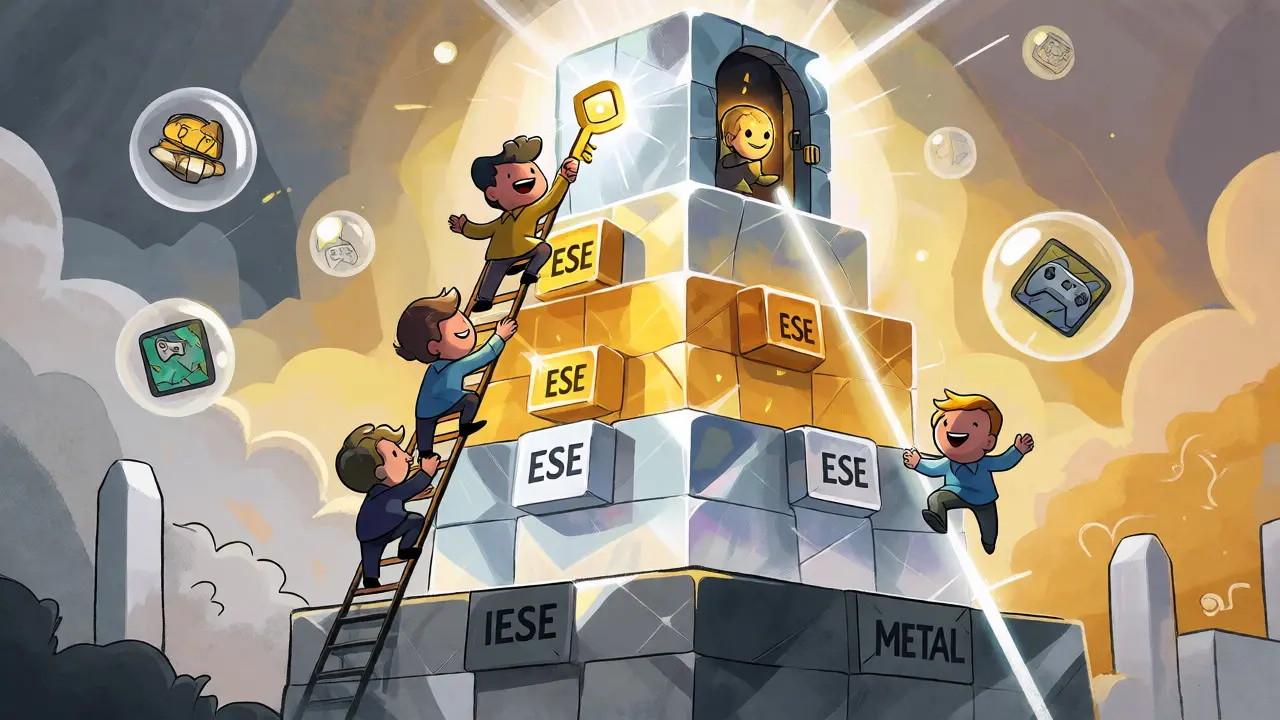
Most crypto projects use an ICO or IDO to raise funds. Eesee uses an Initial Raffle Offering (IRO). This is a twist on the traditional launchpad. Instead of everyone getting a fixed allocation based on how much ETH they sent, users stake ESE to "level up" their accounts.
The staking tiers range from Metal to Platinum. Higher tiers grant larger allocations in IROs and access to premium drops. This creates a flywheel effect: to get better deals on new assets launching on Eesee, you need to hold and stake more ESE. This locks up supply and incentivizes long-term holding rather than quick flipping.
For example, if a new gaming token launches via IRO, Platinum-tier stakers might get a guaranteed allocation, while Metal-tier users enter a lottery. This gamifies the investment process itself, aligning with the broader brand identity of fun and engagement.
Market Performance and Liquidity in 2026
Let’s look at the hard numbers. As of September 2026, ESE trades on centralized exchanges like KuCoin, Gate.io, and Bybit. The most active pair is typically ESE/USDT.
Price action tells a story of initial hype followed by consolidation. During pre-market trading around the Token Generation Event (TGE) in April 2024, ESE reportedly traded between $0.50 and $1.50, representing massive multiples over the public sale price. Fast forward to late 2026, and the price hovers around $0.007 to $0.009. This compression is common for small-cap tokens that experience early speculative frenzies.
Market capitalization sits around $5.9 million, ranking ESE roughly #1542 globally. This places it firmly in the micro-cap category. While this offers high potential upside if adoption grows, it also comes with extreme volatility and lower liquidity compared to major DeFi protocols. Daily trading volumes fluctuate between $300k and $7M depending on market conditions, meaning large orders can significantly impact the price.

Risks and Considerations
No investment is without risk, and Eesee has specific ones you should weigh.
- Volatility Exposure: Since all platform actions require ESE, your participation is tied to the token’s price. If ESE crashes, your staking rewards and ticket purchasing power drop simultaneously.
- Regulatory Uncertainty: Gamified finance and RWA tokenization are areas regulators are still defining. There is no explicit regulatory licensing mentioned in recent materials, so compliance risks remain.
- Adoption Hurdles: The platform launched with 2 million connected wallets, but retaining active users who regularly participate in raffles is harder than just connecting a wallet. Sustained engagement is key to the mining rewards model.
- Smart Contract Risk: Like any DeFi protocol, bugs in the raffle logic or staking contracts could lead to losses. Always check for audit reports before committing large sums.
Despite these risks, the niche focus on liquidity for illiquid assets sets Eesee apart from generic NFT marketplaces. If the trend toward tokenizing real-world assets continues to grow, platforms that solve the "how do I sell this easily?" problem will find a dedicated audience.
FAQ
Is Eesee only for NFTs?
No, while it started with strong NFT integration, Eesee supports fungible tokens and Real-World Assets (RWAs). This allows users to tokenize and trade items like collectibles, equity shares, or luxury goods using the same raffle-based liquidity mechanism.
Where can I buy ESE tokens?
As of 2026, ESE is listed on several centralized exchanges including KuCoin, Gate.io, and Bybit. It is an ERC-20 token, so you can also store it in any Ethereum-compatible wallet like MetaMask after withdrawing from an exchange.
What is the difference between staking and mining on Eesee?
Staking involves locking ESE to earn revenue share and gain higher tier status for IRO allocations. Marketplace Mining refers to earning ESE rewards through active participation, such as trading volume and engaging with raffles. Both contribute to the token economy but serve different purposes: staking for passive yield and access, mining for active engagement rewards.
Why does the circulating supply vary across data sites?
Discrepancies arise because ESE exists on multiple chains (Ethereum, Blast, Polygon) and some platforms may count bridged tokens differently or include synthetic representations. Always verify the contract address (0x908ddb096bfb3acb19e2280aad858186ea4935c4 on Ethereum) for the most accurate on-chain data.
Is Eesee a good investment for beginners?
It carries higher risk than established coins due to its micro-cap status and complex gamified mechanics. Beginners should start with small amounts to understand the raffle dynamics and staking tiers before committing significant capital. It requires active management rather than a 'buy and forget' approach.