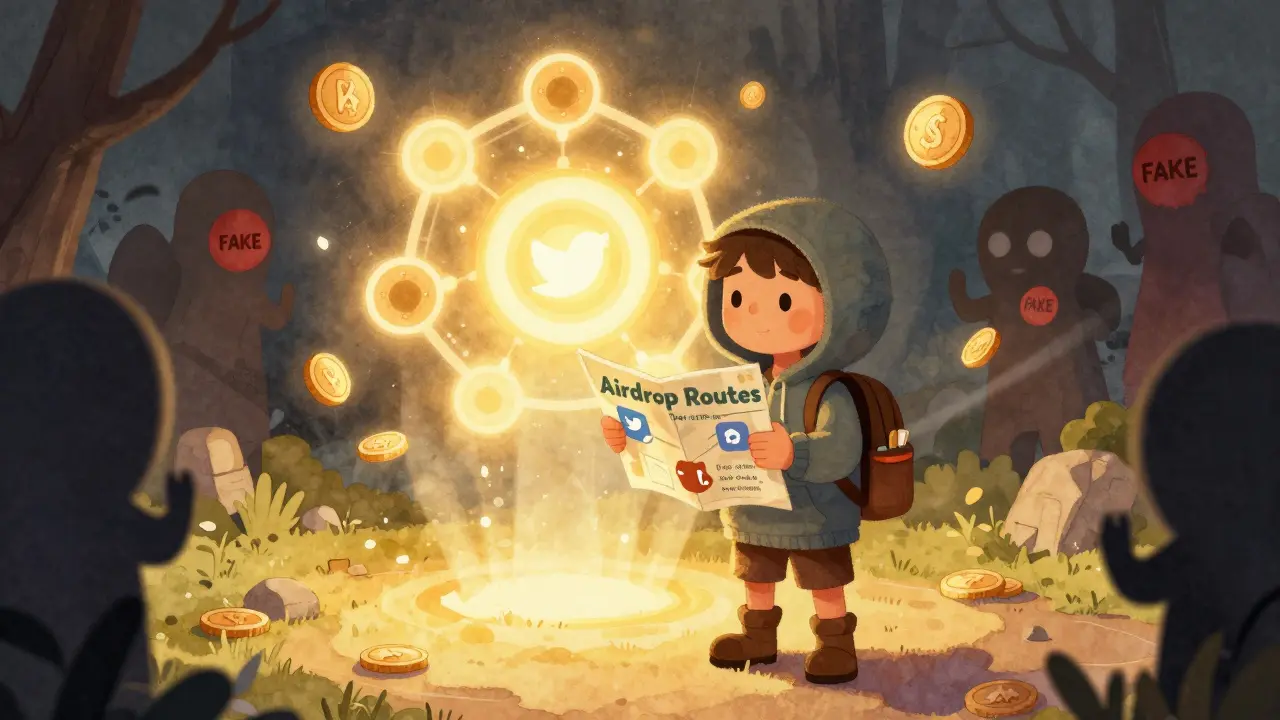
Getting free cryptocurrency might sound too good to be true-but it’s not. Airdrops are real, and people are making thousands from them every month. But here’s the catch: most people miss them. Or worse, they lose money trying to claim fake ones. If you want to find legitimate airdrops and actually get paid without getting scammed, this guide shows you exactly how to do it in 2026.
What Exactly Is an Airdrop?
An airdrop is when a blockchain project gives away free tokens to users’ wallets. It’s not a gift-it’s a marketing tool. Projects use airdrops to get people to try their platform, hold their token, or use their app. The goal? Build a real user base fast. The biggest airdrops don’t just hand out coins randomly. They look at your activity. Did you swap tokens on a decentralized exchange? Did you stake your crypto? Did you use their app for months? If yes, you might qualify. Take Uniswap’s 2020 airdrop: they gave 400 UNI tokens to anyone who had traded on their platform before September 2020. At the time, that was worth about $1,200 per person. Or Jito on Solana: users who staked ETH or SOL for months got thousands of dollars in JTO tokens-some over $25,000. There are four main types:- Holder airdrops: You get tokens just for holding a specific coin (like ETH or SOL) on a certain date.
- Task-based airdrops: You complete actions-follow on Twitter, join Discord, refer friends.
- Retroactive airdrops: You didn’t know it was coming, but the project rewards you anyway for using their service. Arbitrum did this in 2023 and paid out $1.2 billion to early users.
- Exclusive airdrops: Reserved for early testers, developers, or users who met specific technical criteria.
Where to Find Real Airdrops (Not Scams)
Most fake airdrops show up on Telegram or random Twitter threads. Legit ones? They start on official channels. Start with these five sources:- Official project websites-Always check the domain. If it’s not the exact URL (like
https://jito.network), it’s fake. - Twitter/X accounts-Look for the blue checkmark and check when the account was created. Real projects usually have accounts older than 6 months.
- Discord and Telegram-Join only if the link is on the project’s official website. Never click links from DMs or random group invites.
- CoinGecko and CoinMarketCap-They track upcoming airdrops and list eligibility rules. As of May 2025, CoinGecko had over 1,200 documented airdrops since 2020.
- Reddit communities-r/CryptoAirdrops has over 1.2 million members. Filter posts by “Top” and check comments for proof of claims.
How to Claim an Airdrop (Step by Step)
Claiming an airdrop isn’t hard-but one wrong step can cost you everything. Here’s how to do it safely:- Use a separate wallet-Never use your main wallet with your life savings. Create a new one just for airdrops. Use MetaMask or Phantom (for Solana). Keep your seed phrase offline.
- Check the eligibility requirements-Some need you to hold 0.1 ETH. Others want you to have made 50 swaps on their DEX. Read the rules carefully. If it says “send 0.01 ETH to verify,” that’s a scam. Legit airdrops never ask you to send money.
- Complete the tasks-Follow their Twitter, join their Discord, link your wallet. Take screenshots as proof.
- Wait for the snapshot-Projects take a “snapshot” of wallet balances on a specific date. If you didn’t hold the required token on that day, you’re out. Set calendar reminders.
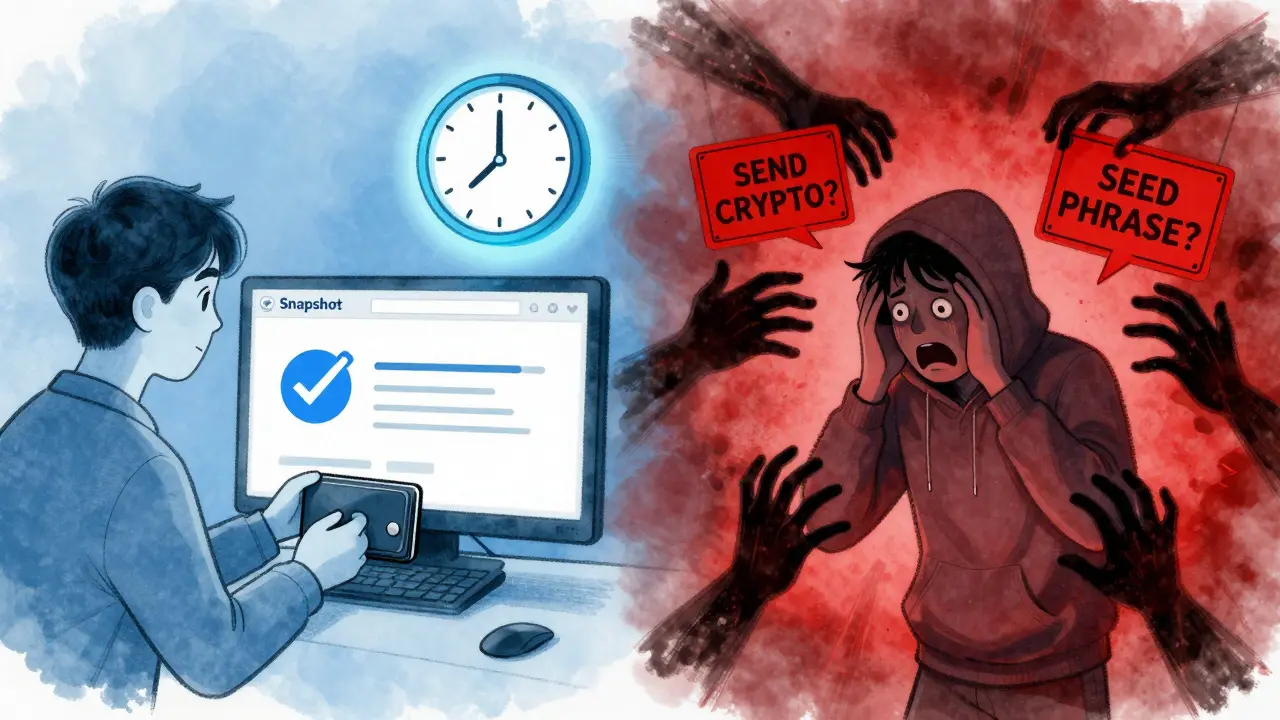
- Claim when it’s live-Go to the official website. Connect your wallet. Sign a transaction. That’s it. No passwords. No fees. If it asks for your private key or seed phrase, close the tab immediately.
Red Flags: How to Spot a Scam Airdrop
Scams are everywhere. In 2024 alone, the FTC received over 14,000 complaints about airdrop fraud. Here’s how to avoid them:- “Send crypto to claim”-If they ask you to send any amount of crypto to unlock tokens, it’s a scam. Always. No exceptions.
- Too-good-to-be-true promises-“Get $10,000 in 5 minutes!” is fake. Real airdrops take weeks or months to roll out.
- Spelling mistakes or bad grammar-Legit teams hire professionals. Typos in official announcements? Red flag.
- Unverified contract addresses-Before you connect your wallet, check the contract on Etherscan or Solana Explorer. Look for “Verified” status and check if it matches the project’s official site.
- DMs from “support”-No legitimate project will message you first. If someone DMs you saying “your airdrop is ready,” block them.
Security Best Practices (Don’t Skip This)
Your wallet is your bank. Treat it like one.- Never share your seed phrase-Not with anyone. Not even “support.” This causes 67% of all airdrop thefts, according to Immunefi’s 2025 report.
- Use a hardware wallet for big holdings-Ledger or Trezor. Keep your main funds there. Use software wallets (MetaMask, Phantom) only for airdrops.
- Revoke unused approvals-After claiming, go to Revoke.cash and cancel any token approvals you don’t need. Many scams use old approvals to drain wallets.
- Turn off auto-connect-In MetaMask, disable “Connect to websites automatically.” Every time you visit a site, you should manually approve the connection.
- Use a VPN if needed-Some airdrops are region-restricted. Use a trusted VPN to access them, but never lie about your identity during KYC. Fake info can get you banned or flagged by regulators.
Taxes and Legal Risks
The IRS says airdrops are taxable income. You owe taxes on the fair market value of the tokens the day you receive them. In 2024, TurboTax found that 12% of crypto tax errors were from people forgetting to report airdrops. If you got 100 JTO tokens worth $250 on the day you claimed them, that’s $250 of taxable income. The SEC also warned that some airdrops could be considered securities if they’re marketed as investments. Projects like Arbitrum and Uniswap avoided this by distributing tokens to users who actively used their platform-not those who just bought and held. If you’re in the U.S., keep records of:- The date you received the tokens
- The token’s price on that day (use CoinGecko’s historical data)
- The number of tokens received
Upcoming Airdrops to Watch in 2026
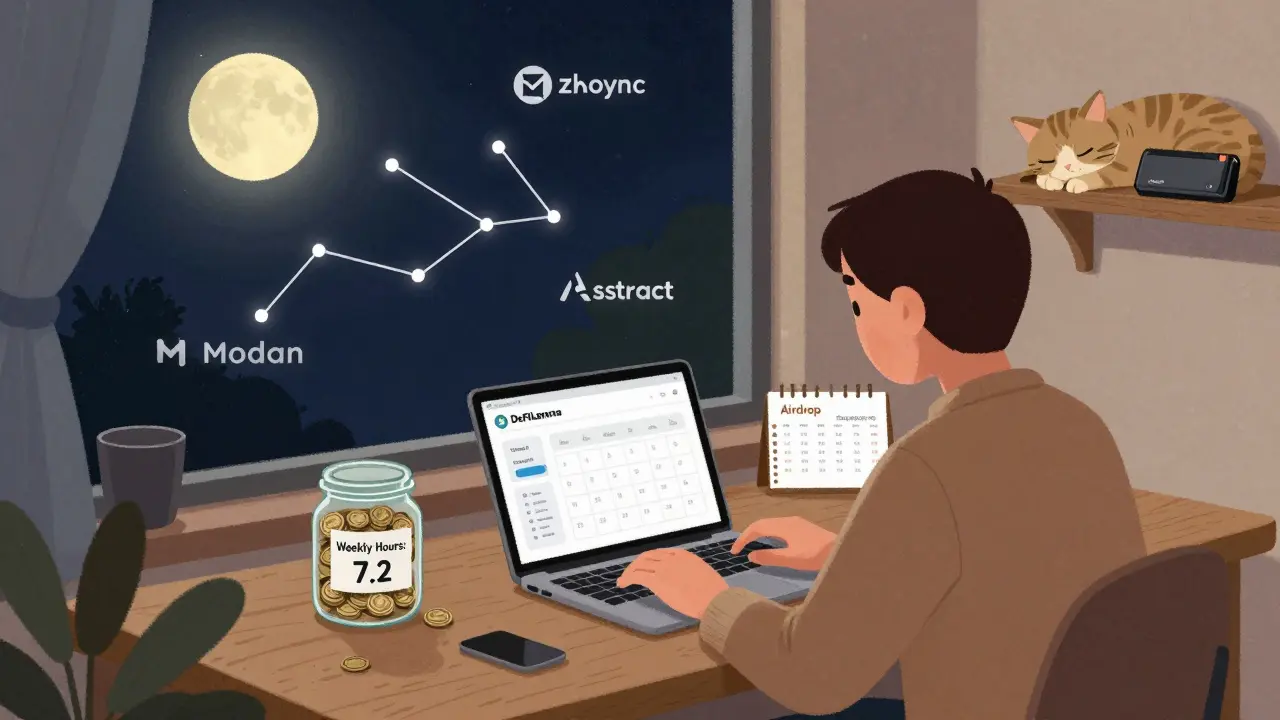
Here are six projects with strong airdrop potential based on user activity and community growth as of early 2026:- Pump.fun-A memecoin platform with over 5 million active users. No official announcement yet, but early users are already tracking points.
- Monad-A high-speed Ethereum L1 with 1.3 million testnet users. Likely to reward early testers.
- Abstract-An Ethereum L2 with 890,000 active wallets. Strong team, active community.
- zkSync-Already running a points system. You need 1,500+ points from swaps, bridging, and using apps. Points reset quarterly.
- LayerZero-Cross-chain protocol. Users who bridge tokens across chains are being tracked.
- Eclipse-Modular blockchain with 410,000 daily transactions. Airdrop expected in Q2 2026.
How Much Time Do You Need to Invest?
You don’t need to spend hours every day. But you do need to be consistent. Successful users spend about 7.2 hours per week across three activities:- Monitoring 3-5 official project channels (Twitter, Discord, website)
- Using 3-5 protocols regularly (swap tokens, stake, bridge)
- Checking wallet security and approvals weekly
Final Tips: What Works in 2026
- Start small. Pick one protocol you already use. Do one thing daily-swap, stake, or bridge.
- Track your activity. Use tools like DeFiLlama or Nansen to see your wallet’s behavior.
- Don’t rush. Airdrops take months. The biggest payouts go to those who stuck around.
- Security is your #1 priority. One mistake can erase years of gains.
- Ignore the noise. Don’t follow influencers promising “free money.” Follow the protocol’s official channels.
Can you lose money claiming an airdrop?
Yes-if you make mistakes. Never send crypto to claim a token. Never share your seed phrase. Never connect your main wallet to unknown sites. Scammers trick people into approving malicious tokens that drain wallets. Always use a separate wallet and revoke approvals after claiming.
Do you need to pay taxes on airdrops?
Yes. The IRS treats airdrops as ordinary income. You owe taxes on the fair market value of the tokens on the day you receive them. Keep records of the date, token amount, and price at receipt. Use crypto tax tools like Koinly to auto-import airdrops and avoid filing errors.
What’s the difference between a holder airdrop and a task-based airdrop?
A holder airdrop gives you tokens just for owning a specific cryptocurrency (like ETH or SOL) on a snapshot date. A task-based airdrop requires you to complete actions-like following social media, joining Discord, or referring friends. Holder airdrops are easier but often smaller. Task-based ones take more work but can be more valuable.
Are retroactive airdrops better than announced ones?
They’re often more valuable and fair. Retroactive airdrops reward real usage-not social media noise. Arbitrum’s 2023 airdrop paid users who made over 100 transactions, leading to 47% higher retention than task-based drops. But they’re harder to predict. You have to use the protocol before it’s announced.
How do I know if an airdrop is real?
Check three things: 1) Is the announcement on the project’s official website or verified Twitter/X? 2) Does it ask you to send crypto? If yes, it’s fake. 3) Is the contract address verified on Etherscan or Solana Explorer? If you can’t verify the contract, don’t interact with it.
What wallets are best for airdrops?
Use MetaMask for Ethereum, Polygon, and other EVM chains. Use Phantom for Solana. Never use your main wallet. Create a new one just for airdrops. Keep your seed phrase offline. Hardware wallets like Ledger are best for storing large amounts, but not for daily airdrop claiming.


nathan yeung
January 16, 2026 AT 22:40just claimed my first airdrop last week on monad-took me 3 weeks of swapping tiny amounts and staking 0.5 sol. got 1,200 tokens worth $18. not life changing but hey, free money. also didn’t lose anything, which is the win.
Chris O'Carroll
January 17, 2026 AT 13:56oh wow another ‘free crypto’ guide. next they’ll tell us the tooth fairy pays in btc. i lost $400 last year because i trusted a ‘verified’ discord link. now i just ignore all airdrops. if it’s real, it won’t need to beg me to join.
Chidimma Okafor
January 18, 2026 AT 13:33As a Nigerian crypto enthusiast, I must say this guide is both comprehensive and timely. The emphasis on security cannot be overstated-many of my peers have lost everything to phishing scams disguised as airdrops. I personally use a hardware wallet for storage and a burner MetaMask for all interactions. Also, the tax note is critical; the Nigerian tax authority has started auditing crypto gains, and ignorance is not a defense. Stay safe, stay informed, and always verify the source before connecting your wallet.
Bill Sloan
January 19, 2026 AT 11:09bro i did this last year and made $11k in airdrops just from using zkSync and layerzero. i didn’t even try hard. just swapped a little every day, staked my usdc, and kept my wallet active. the key? consistency. not hype. i didn’t even know i was eligible until the tokens dropped. now i just chill and use the apps i like. if you’re reading this and haven’t started yet… what are you waiting for? 🚀
ASHISH SINGH
January 20, 2026 AT 09:19they want you to think this is about participation but it’s really about data harvesting. every time you connect your wallet to a ‘legit’ airdrop, they track your behavior. who you swap with. how much you hold. where you live. then they sell it to hedge funds. the airdrop is the bait. your wallet activity is the real product. don’t be fooled. this isn’t free money-it’s surveillance with a bonus.
Vinod Dalavai
January 21, 2026 AT 16:53been doing this since 2022. my advice? pick 2-3 chains you actually like and stick to them. don’t jump on every new project. i use solana and polygon mostly. do one swap a week. stake if it’s easy. check revoke.cash once a month. no drama. no stress. i’ve earned $18k total. not because i’m smart-because i showed up.
Tony Loneman
January 22, 2026 AT 09:12oh please. ‘retroactive airdrops are fair’? that’s what they want you to believe so you’ll keep using their protocol for free. the truth? the devs already knew who the whales were. they gave the big wallets 10x more than the small ones. and guess who got nothing? the people who actually did the tasks. this whole system is rigged. if you think you’re getting ‘rewarded for participation,’ you’re just the fuel in their engine.
Callan Burdett
January 23, 2026 AT 15:48just got my pump.fun airdrop-15k tokens, $220 value. didn’t even know i qualified. i just posted 3 memes and swapped a few bucks. now i’m hooked. this is the most fun crypto has been in years. no stress, no FOMO, just vibes. if you’re not doing this yet, you’re missing the point. crypto’s not about HODLing anymore-it’s about playing.
Anthony Ventresque
January 25, 2026 AT 03:55interesting guide. i’ve been tracking airdrops for a while and noticed something-most of the big ones come from projects that already have real usage, not just marketing. i’ve been using monad’s testnet since january, and i’m not even sure if i’ll get anything. but i like the tech. so i keep using it. maybe that’s the real lesson: build habits, not expectations.
Nishakar Rath
January 25, 2026 AT 22:11you think this is about crypto but its about control. the government lets you claim airdrops so they can monitor your wallet. once you get tokens, you have to report them. once you report them, they tax them. once they tax them, you become a data point. this isn’t freedom. its a trap wrapped in glitter. dont fall for it. just buy btc and shut up.
Jason Zhang
January 27, 2026 AT 10:27the whole thing feels like a cult. you’re told to ‘use the app’ like it’s some sacred ritual. i did. i spent 3 months swapping on abstract. got nothing. meanwhile, some guy in canada who held 0.01 eth for 6 months got 80k worth of tokens. it’s not fair. it’s not smart. it’s just gambling with more steps.
Katherine Melgarejo
January 29, 2026 AT 08:11so you’re telling me i need to become a crypto janitor to get free money? clean your wallet, revoke approvals, use a vpn, don’t blink wrong, and maybe-just maybe-you’ll get a token worth $5? thanks but i’ll stick to my job.
Patricia Chakeres
January 31, 2026 AT 03:22of course the guide says ‘don’t trust Telegram’-because the real airdrops are run by the same entities that control the media, the banks, and now the blockchain. this is all orchestrated. they want you to think you’re getting something free while feeding them your identity, your transaction history, your wallet footprint. you’re not a participant-you’re a product.
Alexis Dummar
February 1, 2026 AT 02:12i’ve been thinking about this a lot. airdrops are basically the digital equivalent of loyalty cards from the 90s-except instead of free coffee, you get tokens. but here’s the twist: the coffee machine is owned by a decentralized org that doesn’t even exist yet. it’s beautiful, in a weird way. we’re building new economic behaviors from scratch. messy? yes. dangerous? absolutely. but also kind of magical? maybe.
Anna Gringhuis
February 2, 2026 AT 13:45the fact that people still fall for ‘send 0.01 eth to claim’ scams is embarrassing. i’ve seen friends lose their life savings because they thought ‘the team will refund you’. no one will. no one can. the blockchain doesn’t care. your wallet is your responsibility. stop hoping. start protecting.
Michael Jones
February 4, 2026 AT 04:28excellent breakdown. i especially appreciate the emphasis on revoking approvals. i had an old approval from a 2023 airdrop that let a bot drain $800 from my wallet last month. after using revoke.cash, i haven’t had a single issue. if you’re doing airdrops, this is non-negotiable. thank you for the clarity.
Telleen Anderson-Lozano
February 5, 2026 AT 04:37Okay, so let me just say-I’ve been doing this since 2021, and I’ve had everything from $2 to $18,000 in airdrops, and honestly, the emotional rollercoaster is wild. One day you’re ecstatic because you got 500 tokens, the next you’re crying because you connected your wallet to a sketchy site and lost your entire stash. I’ve learned to treat it like gardening: plant seeds, water them, wait, and then-sometimes-you get fruit. But you gotta be patient, and you gotta protect your garden. I use a separate wallet, I check approvals weekly, I don’t touch anything that asks for my seed phrase (EVER), and I use Koinly to track taxes. It’s not glamorous, but it’s sustainable. And honestly? That’s the real win.
Haley Hebert
February 5, 2026 AT 19:44i just started last month. i’m not trying to get rich. i just like using new apps. i swapped on pump.fun once, staked 0.2 sol on jito, and joined one discord. i didn’t even check if i qualified. then last week i got 1,200 jto. i cashed out $300 and bought myself a new laptop. i didn’t do anything special. i just showed up. maybe that’s the secret.
Jill McCollum
February 7, 2026 AT 04:47as a black woman in crypto, i gotta say-this guide is a breath of fresh air. most of the advice out there feels like it’s written by bros in their garage. but this? it’s clear, it’s safe, it’s practical. i’ve been using abstract and zkSync for months, and i’ve never felt more included in this space. also, the tax note? huge. so many of us don’t even know we’re supposed to report this stuff. thank you for making this feel like it’s for people like me.
Hailey Bug
February 7, 2026 AT 17:24if you’re not using a separate wallet for airdrops, you’re already losing. i have one wallet for everything: metaMask, name: ‘airdrop-temp’. no funds, no history, just clean. i connect it to everything. after claiming, i revoke everything. i don’t even look at the tokens until i’m ready to sell. it’s simple. it’s safe. it’s the only way.
Liza Tait-Bailey
February 7, 2026 AT 21:03my first airdrop was $400 worth of jito. i didn’t even know i was eligible. i just had a small stake on solana. now i check every project’s twitter every morning. it’s my coffee ritual. not for money-for the thrill. 🤫
Alexis Dummar
February 9, 2026 AT 19:30you know what’s wild? the people who complain about airdrops being ‘gaming the system’ are the same ones who used to complain about stock options. this is just capitalism with a blockchain skin. the real question isn’t ‘is it fair?’-it’s ‘do you want to play?’ if you don’t, fine. but don’t pretend you’re above it. you’re just not participating.