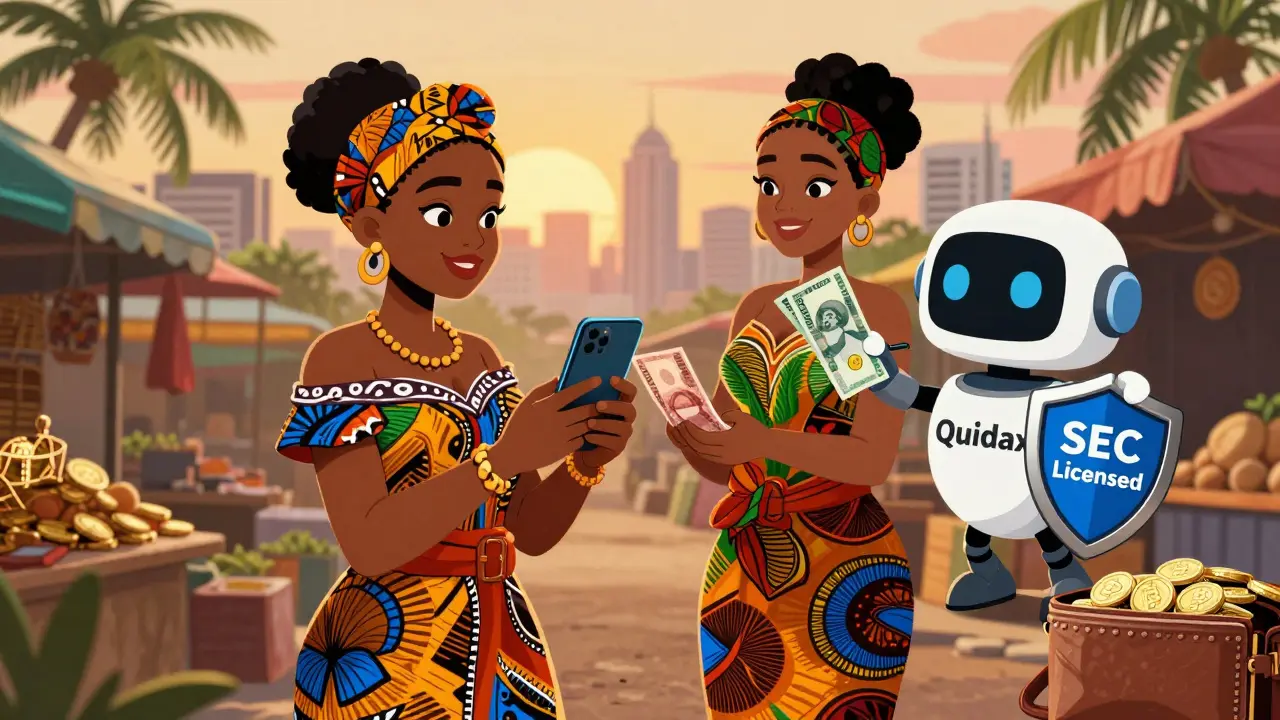
When it comes to buying and selling cryptocurrency in Nigeria and other parts of Africa, Quidax is one name that keeps popping up. It’s not the biggest exchange in the world, but if you’re based in West Africa and want to trade crypto without jumping through hoops, it might be exactly what you need. This isn’t a platform for advanced traders looking to short Bitcoin futures or mint NFTs. It’s built for everyday users who just want to buy Bitcoin with Naira, send crypto to a friend, or earn interest on their holdings - all without needing a bank account that supports crypto.
Founded in 2017 and headquartered in Lagos, Quidax has spent nearly a decade fine-tuning itself for the African market. Unlike global exchanges that treat Nigeria like just another country on the map, Quidax was built from the ground up to handle local payment methods, regulatory demands, and mobile-first usage. By 2024, it claimed to be Africa’s most downloaded crypto app on Google Play - and with over 32% of Nigerian adults having used cryptocurrency, according to Statista’s 2024 report, that’s not a small feat.
What You Can Trade on Quidax
Quidax supports 75 cryptocurrencies as of early 2026. That sounds like a lot until you compare it to global giants like OKX (329 coins) or Kraken (278). You won’t find obscure altcoins here. The selection leans heavily toward the big names: Bitcoin (BTC), Ethereum (ETH), Solana (SOL), XRP, Cardano (ADA), and USDT. There’s also QDX, Quidax’s own token, which you can stake or use to pay reduced fees.
If you’re looking to trade lesser-known tokens like Render, Arbitrum, or Fetch.ai, you’ll be disappointed. Quidax doesn’t list them. But if you just want to swap Naira for Bitcoin or convert your USDT to ETH, it’s smooth. The platform adds about 5 to 7 new coins every quarter, so the list grows slowly but steadily.
How Trading Works
Quidax offers two main ways to trade: instant swaps and order book trading. Instant swaps let you exchange one crypto for another in seconds - no need to set prices or wait for matches. It’s like using a digital currency converter. Order book trading is more traditional. You see live bids and asks, place limit orders, and let the market do the work. Both are accessible through the mobile app, which is clean, fast, and designed for people who aren’t traders by trade.
There’s no futures trading, no options, and no NFT marketplace. If you’re into leverage, derivatives, or speculative NFT flipping, look elsewhere. Quidax is not built for that. But if you want to buy, sell, or hold crypto without overcomplicating things, it works.
Fees: Simple, But Not Always Cheap
Quidax’s fee structure is transparent, but it has sharp edges. The taker fee (for market orders) is on the higher side - around 0.2% to 0.3%. That’s more than Binance or Kraken, which often charge 0.1% or less. Maker fees (for limit orders) are lower, but most users stick to instant swaps, where fees are bundled into the price.
Withdrawal fees are another pain point. Sending Bitcoin out of Quidax costs between $1 and $5, depending on network congestion. If you want faster processing, you pay extra. That’s not unusual, but it’s frustrating if you’re in a hurry. On the plus side, depositing via bank transfer or P2P is free, and there are no fees for holding crypto in your wallet.
One hidden perk: using QDX, Quidax’s native token, cuts trading fees by up to 25%. If you’re active on the platform, holding QDX makes financial sense.
Security: Built for Trust
Security is where Quidax shines. The platform holds a provisional Digital Assets Exchange license from Nigeria’s Securities and Exchange Commission (SEC). That’s rare. Most global exchanges operate in a gray zone in Nigeria. Quidax doesn’t. This alone makes it a safer bet for Nigerian users.
All customer funds are stored in cold wallets - offline, air-gapped, and encrypted. Two-factor authentication (2FA) via Google Authenticator is mandatory. The app also has biometric login (fingerprint and face ID) and real-time transaction alerts. There have been no major security breaches since launch, and users consistently praise the platform’s reliability.
Customer support is available 24/7 via in-app chat and email. Response times are under 12 hours, even on weekends. That’s better than most global exchanges offer.
Mobile Experience: Built for Africa
Most Quidax users access the platform through their phones. The Android and iOS apps are lightweight, load fast, and work even on older devices with slow internet. Real-time price tracking, instant buy/sell buttons, and a clean dashboard make it easy to check your portfolio without scrolling through charts.
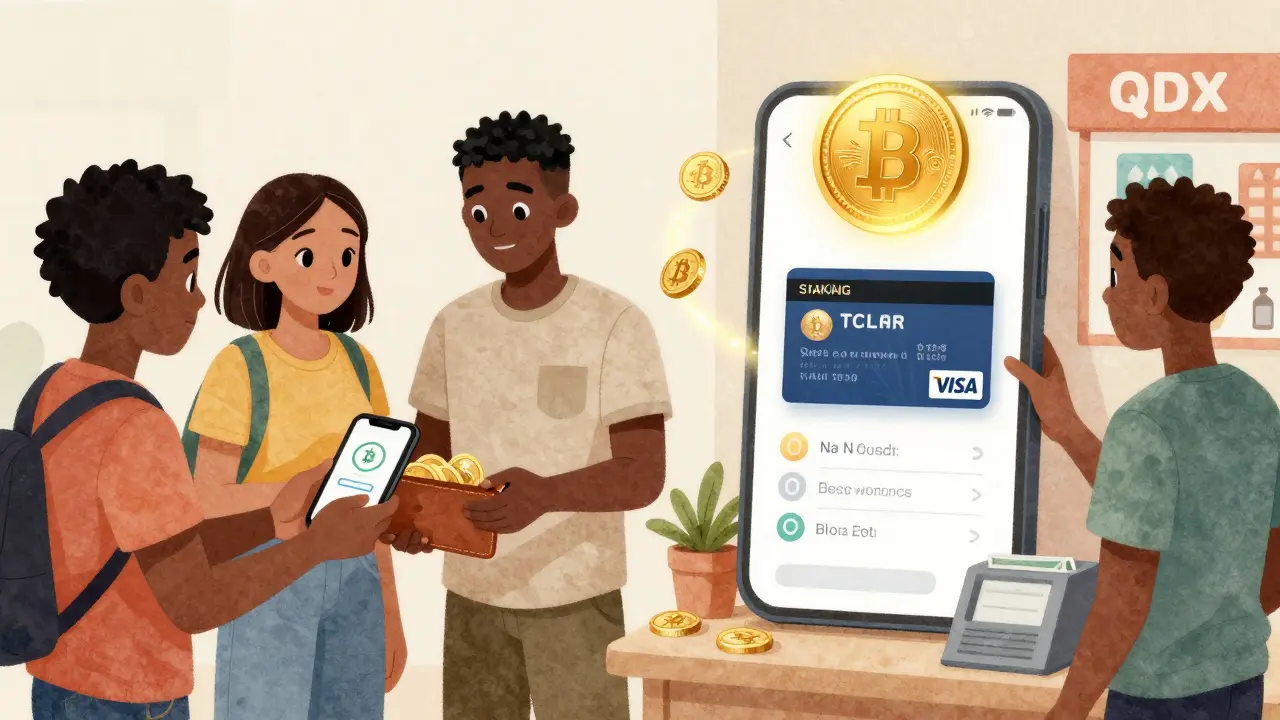
The app also includes a built-in wallet for QDX, allowing you to stake it directly and earn rewards. You can even use the Quidax Visa card (available in Nigeria) to spend crypto at physical stores - it auto-converts your crypto to Naira at checkout.
What’s Missing
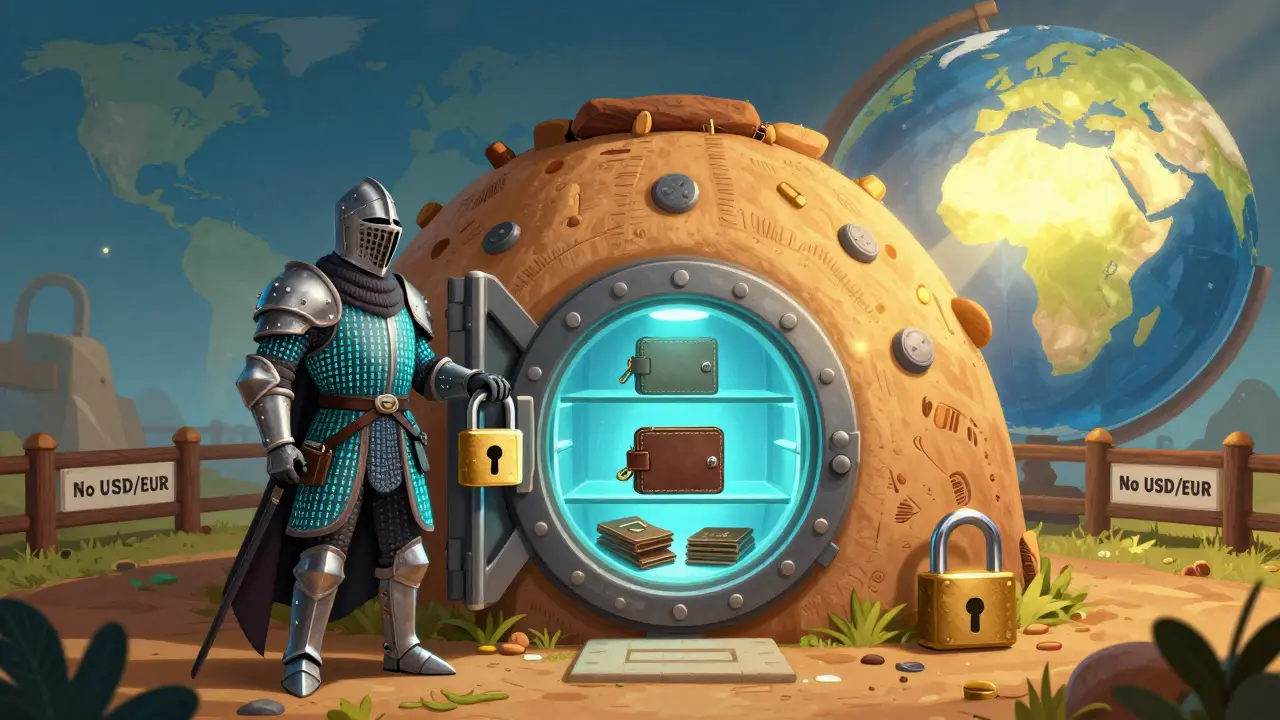
Quidax has clear limitations. First, no USD or EUR trading pairs. You can’t deposit dollars or euros. You can’t trade BTC/USD or ETH/EUR. All trades are in local African currencies - mostly Naira, but also Ghanaian Cedi and Kenyan Shilling. That’s great for locals, terrible if you’re outside Africa.
Second, there’s no API for automated trading. If you’re a bot trader or run a business that needs programmatic access, Quidax won’t help. Third, the OTC desk exists, but it’s only for large transactions (over $50,000). Smaller traders can’t use it.
Finally, the QDX token is underpromoted. While it offers fee discounts and staking rewards, its utility is limited. It’s not listed on major exchanges outside Quidax, and there’s no clear roadmap for expanding its use.
Who Is Quidax For?
Quidax isn’t for everyone. If you’re in the U.S., Europe, or Asia and want to trade hundreds of coins with advanced tools, skip it. But if you’re in Nigeria, Ghana, Kenya, or another African country - and you want a simple, secure, and regulated way to buy crypto with your local currency - Quidax is one of the best options.
It’s perfect for:
- People using crypto to send money across borders
- Small business owners accepting crypto payments
- Students or freelancers getting paid in crypto
- Anyone who wants to avoid bank restrictions on crypto
It’s not for:
- Traders looking for leverage or derivatives
- Investors wanting exposure to hundreds of altcoins
- Users outside Africa who need USD/EUR support
The Bigger Picture
Quidax operates in a market where crypto adoption is growing fast. Nigeria had a 120% year-over-year increase in crypto usage in 2024, according to the World Bank. The Central Bank of Nigeria once banned banks from handling crypto transactions - but in 2023, it backed away from that stance. Now, licensed platforms like Quidax are filling the gap.
Its partnership with BNB developers to create tokens on Binance Smart Chain shows it’s investing in long-term infrastructure. Plans to launch USD trading pairs by Q3 2025 could change everything - if they happen. But for now, Quidax’s strength is its local focus.
It’s not trying to beat Binance or Coinbase. It’s trying to make crypto work for people who’ve been left out of the global system. And in that, it’s succeeding.
Is Quidax safe to use?
Yes, Quidax is one of the safest crypto exchanges in Africa. It holds a provisional license from Nigeria’s Securities and Exchange Commission, uses cold storage for all customer funds, and requires two-factor authentication. There have been no major security incidents since its launch in 2017. The app also includes biometric login and real-time transaction alerts for added security.
Can I trade USD or EUR on Quidax?
No, Quidax does not currently support USD or EUR trading pairs. All transactions are conducted in African local currencies - primarily Nigerian Naira, Ghanaian Cedi, and Kenyan Shilling. This makes it ideal for African users but limits its usefulness for international traders. Quidax has announced plans to introduce USD support by Q3 2025, but no firm date has been confirmed.
Does Quidax have a mobile app?
Yes, Quidax has fully functional apps for both Android and iOS. The apps are lightweight, easy to navigate, and optimized for low-bandwidth connections. They allow instant crypto swaps, real-time price tracking, staking of QDX tokens, and even crypto-to-Naira spending via a linked Visa card. As of September 2025, it was the most downloaded crypto app on Google Play in Africa.
What is QDX, and should I use it?
QDX is Quidax’s native cryptocurrency token. Holding QDX gives you discounts on trading fees (up to 25%), access to staking rewards, and priority support. You can buy QDX directly on the platform or earn it through referral programs. While it’s not listed on major exchanges outside Quidax, using it on the platform makes financial sense if you trade regularly.
Can I use Quidax outside Africa?
Technically, yes - you can sign up from anywhere. But without support for USD or EUR, and with account verification tied to African IDs, it’s not practical for most users outside Nigeria, Ghana, Kenya, or other supported African countries. The platform is designed for African users and optimized for local payment methods and regulations.
Does Quidax offer futures or leverage trading?
No, Quidax does not offer futures, perpetual contracts, options, or margin trading. It’s focused on spot trading and instant swaps. If you want to trade with leverage or short Bitcoin, you’ll need to use a global exchange like Binance or Bybit.
Final Verdict
Quidax isn’t trying to be the next Binance. It’s trying to be the most reliable, simple, and secure way for Africans to get into crypto. And for that purpose, it’s doing an excellent job.
Its regulatory license, mobile-first design, and local currency support make it stand out in a region where trust is scarce. The fees are higher than global platforms, and the coin selection is narrow - but those trade-offs come with real benefits: speed, safety, and simplicity.
If you’re in Africa and want to buy Bitcoin without a bank hassle, Quidax is one of the top choices. If you’re outside Africa or want advanced trading tools - look elsewhere. But if you’re looking for a no-nonsense crypto gateway for the African market, Quidax delivers.


Derek Lynch
March 18, 2026 AT 17:20shreya gupta
March 20, 2026 AT 03:24Shreya Baid
March 21, 2026 AT 00:22Sarah Zakareckis
March 22, 2026 AT 02:23Henrique Lyma
March 24, 2026 AT 01:32Steph Andrews
March 24, 2026 AT 11:35Prakash Patel
March 25, 2026 AT 10:51Zachary N
March 27, 2026 AT 10:08Elizabeth Kurtz
March 28, 2026 AT 21:44john peter
March 30, 2026 AT 17:54Marc Morgan
March 31, 2026 AT 03:40Kira Dreamland
March 31, 2026 AT 04:28Sarah Hammon
April 1, 2026 AT 21:17iam jacob
April 3, 2026 AT 18:49Jesse Pals
April 5, 2026 AT 09:14Diane Overwise
April 7, 2026 AT 06:19Ann Liu
April 7, 2026 AT 14:32Dionne van Diepenbeek
April 9, 2026 AT 14:15Graham Smith
April 10, 2026 AT 23:43Jerry Panson
April 11, 2026 AT 00:14Katrina Smith
April 12, 2026 AT 02:50Anastasia Danavath
April 12, 2026 AT 13:21