
When you're looking for a crypto exchange in 2026, you’re not just picking a website-you’re choosing a partner for your money. The market isn’t the wild west it was five years ago. Regulations are in place, security is tighter, and the big players have clear strengths. But that doesn’t make it easier to pick one. In fact, it makes it harder. Too many options. Too many fees. Too many hidden catches. So let’s cut through the noise. This isn’t a list of the top five. It’s a real, no-fluff breakdown of what actually matters when you’re trading crypto in the U.S. today.
What Makes a Crypto Exchange Worth Using?
Not all exchanges are built the same. Some feel like a mobile app. Others feel like a trading floor. The best one for you depends on what you want to do. If you’re buying $50 of Bitcoin every month, you don’t need advanced charting tools. If you’re trading altcoins daily, you need low fees and fast execution. Here’s what actually separates the good from the bad:
- Number of coins available - You can’t trade what isn’t listed. Some exchanges offer 25 coins. Others offer 350. That’s not a small difference.
- Fees - Trading fees, deposit fees, withdrawal fees. Some hide fees in the spread. Others charge flat rates. Know what you’re paying before you click buy.
- Security - Cold storage isn’t optional anymore. 95%+ of assets should be offline. Multi-signature wallets and biometric logins are the baseline now.
- Speed - Trade execution under one second? That’s normal. If it’s taking 3-5 seconds, you’re on a slow platform.
- Customer support - When something goes wrong, you need help fast. Average response times vary from 2 hours to over 8 hours.
- Tax reporting - The IRS isn’t joking. Exchanges that auto-generate Form 8949 or CSV files save you hours of work.
These aren’t nice-to-haves. These are the things that determine whether you keep your money-or lose it to delays, fees, or hacks.
Best for Beginners: Coinbase
Coinbase is the entry point for most new users. It’s simple. Clean. Almost too simple. You can buy Bitcoin in under three minutes, even if you’ve never typed a crypto address before. That’s why it has 32% of U.S. trading volume as of late 2025.
It supports 235 cryptocurrencies, including major ones like Bitcoin, Ethereum, Solana, and Cardano. You can buy with bank transfer, debit card, or PayPal. Fees range from 0.5% to 3.99%, depending on how you pay. Card purchases are the most expensive. Bank transfers are cheaper. But even the lowest fee is higher than what you’ll find on Kraken or Binance US.
The interface is designed to avoid confusion. No order books. No limit orders by default. It’s a “buy now” experience. That’s great if you’re new. Terrible if you want to trade strategically. You’ll need to switch to Coinbase Advanced Trade for that-and even then, it’s not as powerful as Kraken’s tools.
Withdrawals take about 1.8 business days via bank transfer. Customer support averages 4.2 hours to respond. And yes, people complain about delays. But Coinbase has one thing no other exchange can match: trust. It’s the only U.S. exchange listed on the NASDAQ. That matters when regulators are watching.
And for taxes? Coinbase gives you downloadable reports that line up with IRS forms. If you’re just starting out, this is the safest place to begin.
Best for Advanced Traders: Kraken
If you’ve moved past buying Bitcoin on autopilot, Kraken is where you grow up. It’s not flashy. It doesn’t have a Visa card or NFT marketplace built in. But it has the deepest markets, the lowest fees, and the most reliable execution.
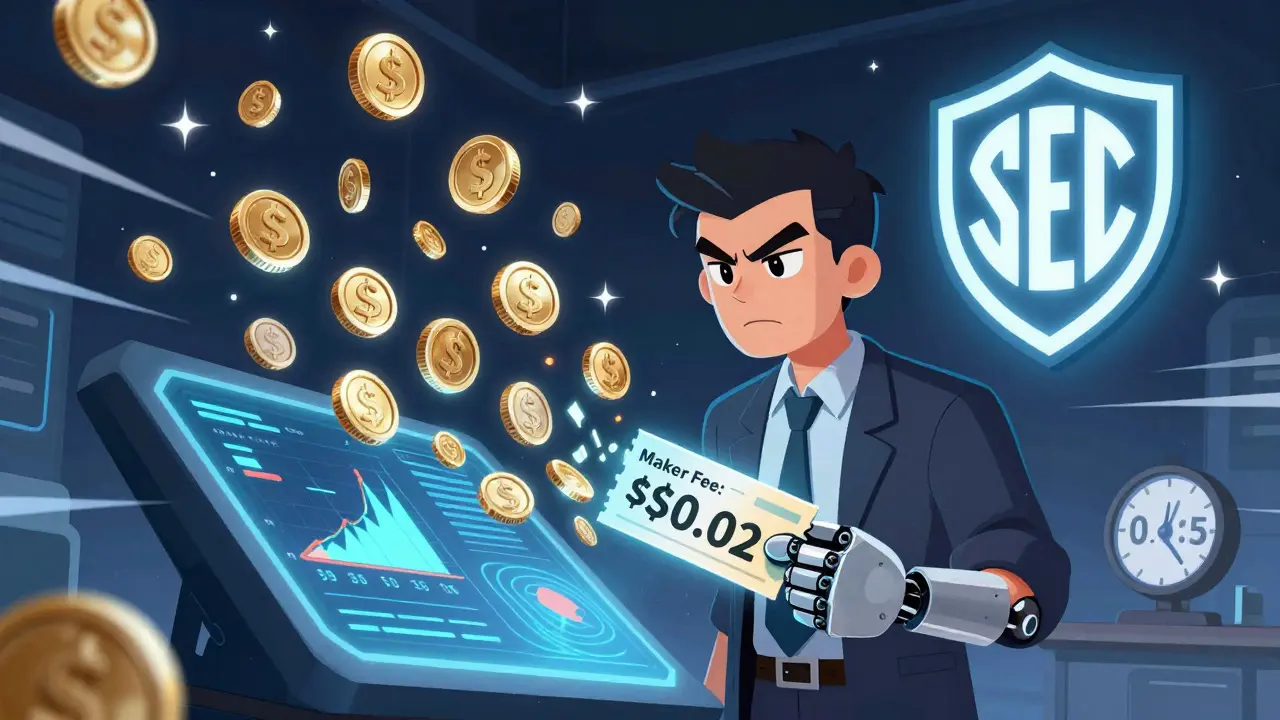
Kraken lists over 350 cryptocurrencies-more than any other U.S. exchange. It supports spot trading, margin trading, futures, and even staking with up to 14.5% APY on some coins. Its fee structure is simple: 0% to 0.4% for takers, and negative fees (rebates) for makers. That means if you place limit orders that get filled later, you get paid.
There’s also Kraken Plus, a $4.99 monthly subscription that gives you zero fees on trades up to $10,000 per month. For active traders, that pays for itself in a week.
Security is top-tier. 98% of assets are in cold storage. Multi-signature wallets. Two-factor authentication with biometrics. Kraken was also the first major exchange to settle with the SEC in March 2025, clearing its name after a 2023 regulatory battle. That’s a big deal. It means they’re not just compliant-they’re ahead of the curve.
Execution speed? 0.85 seconds on average. That’s the fastest in the U.S. And unlike Coinbase, Kraken gives you full access to order types: limit, stop-limit, trailing stop, OCO, and more.
The downside? The interface is overwhelming for beginners. It takes 8-10 hours to learn how to use it properly. Account verification can take up to 72 hours during high-volume periods. Customer support takes 6.8 hours on average to respond. But if you’re serious about trading, you’ll accept that. Because when the market moves, you need speed, not hand-holding.
Best for No Fees: Robinhood
Robinhood’s slogan is “Investing for everyone.” And for crypto, that means zero trading fees. No matter how much you trade, you pay nothing. That’s the only thing it does better than anyone else.
But here’s the catch: it only offers 25 cryptocurrencies. No Solana. No Chainlink. No Polkadot. Just Bitcoin, Ethereum, Dogecoin, Shiba Inu, and a handful of others. If you want to diversify beyond the top 5 coins, you’re out of luck.
It’s fast. Verification takes under 15 minutes for most users. Withdrawals take about 1.2 business days. The app is clean and easy. But it’s also barebones. No charting tools. No staking. No margin trading. No API access. You can’t even see the order book.
Robinhood is perfect if you’re buying Bitcoin once a month and don’t care about anything else. It’s terrible if you want to trade altcoins, use advanced orders, or build a portfolio. And don’t expect help if something goes wrong-support is minimal.
They’ve promised to expand to 50 coins by December 2025. That’s good. But it still won’t come close to Kraken or Crypto.com. And until then, it’s a toy, not a tool.
Best for Staking and Rewards: Crypto.com
Crypto.com is the exchange that turned crypto into a lifestyle. It’s not just a trading platform-it’s a wallet, a Visa card, a staking hub, and a rewards program rolled into one.
It lists 313 cryptocurrencies, which puts it right behind Kraken. But where it shines is in rewards. You can earn up to 14.5% APY on staking assets like Ethereum, Solana, and Polygon. That’s higher than any other major U.S. exchange.
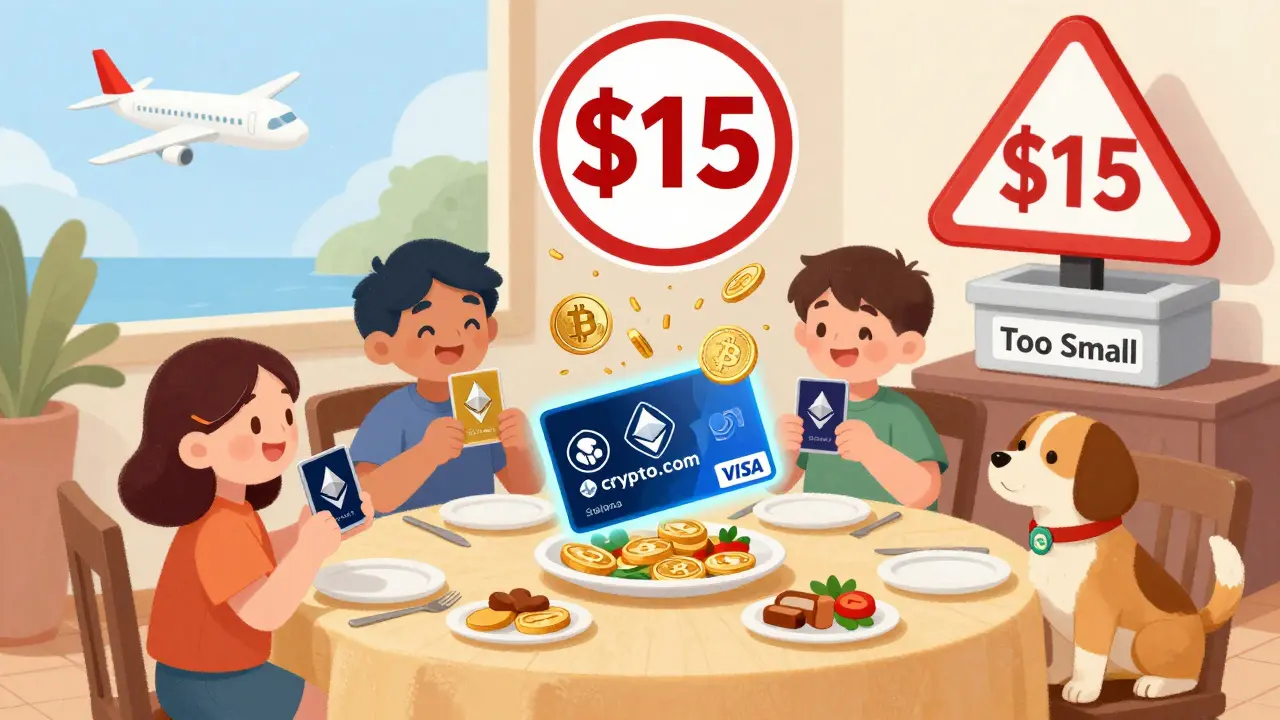
Its Visa card lets you spend crypto and earn cash back-up to 5% back on purchases. You get travel insurance, airport lounge access, and even Netflix subscriptions covered if you hold enough CRO tokens. It’s addictive.
But there’s a catch. Withdrawal fees are high. For most coins, the minimum withdrawal is $50. And the fees can be as high as $15 for some tokens. That’s not a typo. You pay $15 to send $50 worth of Bitcoin? That’s a 30% fee. That’s insane if you’re moving small amounts.
Customer support is fast-2.1 hours on average. But the app feels bloated. Too many tabs. Too many promotions. Too many upsells. It’s designed to keep you inside the ecosystem, not just trade.
If you want to earn passive income and spend crypto like cash, Crypto.com is your best bet. If you just want to buy and sell? There are better options.
Who Should Avoid These Platforms?
Not every exchange is for everyone. Here’s who should stay away:
- Don’t use Gemini if you want a wide selection. It only offers 73 coins. And its fees? 0.5% to 3.49%. You pay more for less.
- Avoid bitFlyer USA unless you only want to trade Bitcoin and Ethereum. It lists just 11 coins. And while its fees are low (0.03%-0.1%), the lack of variety makes it useless for anyone serious.
- Stay away from Binance US if you need altcoins. It’s limited to 158 coins-far fewer than its global counterpart. Regulatory restrictions have crippled its offerings.
- Don’t use Bitstamp if you’re depositing via credit card. Its fees can go as high as 27% for card deposits. That’s a trap.
These platforms exist. But they’re either too narrow, too expensive, or too restricted to be worth your time in 2026.
The Bottom Line: What to Choose in 2026
Here’s the simple decision tree:
- If you’re new and want to buy Bitcoin or Ethereum once in a while → Coinbase. It’s safe, simple, and tax-ready.
- If you’re trading daily, want low fees, and need 300+ coins → Kraken. It’s the only one that balances power and compliance.
- If you want zero fees and don’t care about altcoins → Robinhood. But know you’re missing half the market.
- If you want to earn interest and spend crypto like cash → Crypto.com. Just avoid small withdrawals.
There’s no “best” exchange. There’s only the best one for you. And that depends on how you trade, how much you trade, and what you want to do with your crypto after you buy it.
One last thing: avoid chasing “the next big thing.” The market doesn’t reward speculation anymore. It rewards preparation. Pick an exchange that’s regulated, secure, and built to last. The ones listed here are. The rest? They’re still playing catch-up.
Is Crypton Exchange a real crypto exchange?
No, Crypton Exchange is not a real or registered cryptocurrency exchange in the U.S. as of 2026. It does not appear in any official regulatory filings, industry reports, or user reviews from major platforms like Trustpilot or CoinGecko. The name may be used by scam sites or phishing pages designed to mimic legitimate exchanges like Kraken or Coinbase. Always verify an exchange’s domain, regulatory status, and user reviews before depositing funds.
Which crypto exchange has the lowest fees in 2026?
Kraken has the lowest trading fees in the U.S. market, ranging from 0% to 0.4% depending on your trading volume. With its Kraken Plus subscription ($4.99/month), you can eliminate trading fees entirely on trades up to $10,000 per month. Robinhood offers zero trading fees but only supports 25 coins, making it useful only for basic Bitcoin and Ethereum trading.
Which exchange is safest for beginners?
Coinbase is the safest for beginners. It’s the only U.S.-based exchange publicly traded on NASDAQ, follows strict SEC compliance, and offers FDIC insurance on USD balances up to $250,000. Its interface is simple, and it provides automatic tax reporting tools. While Kraken is more secure technically, Coinbase’s user experience reduces the risk of mistakes for new users.
Can I stake crypto on these exchanges?
Yes. Kraken, Crypto.com, and Coinbase all offer staking. Crypto.com leads with up to 14.5% APY on select assets like Ethereum and Solana. Kraken offers up to 10% APY on proof-of-stake coins and allows you to unstake anytime. Coinbase offers lower yields (around 4-6%) but integrates staking directly into its app with no lock-up periods for most coins.
Why do some exchanges have fewer coins than others?
U.S. exchanges must comply with strict SEC regulations. Coins that are classified as securities-like many altcoins-are banned from trading on U.S. platforms. Binance US, for example, offers only 158 coins because it can’t list tokens the SEC considers unregistered securities. Kraken and Coinbase list more because they’ve spent years working with regulators to clear tokens for trading. Global exchanges like Binance.com list hundreds more because they operate outside U.S. jurisdiction.
How long does account verification take?
Verification times vary. Robinhood approves most users in under 15 minutes. Coinbase takes 1-2 business days. Kraken can take 24-72 hours, especially during high-volume periods. Crypto.com is usually 1-2 days. The delay is due to KYC (Know Your Customer) checks required by U.S. law. If you’re submitting documents on a weekend or holiday, expect longer wait times.
What’s the fastest crypto exchange for trading?
Kraken has the fastest trade execution in the U.S., averaging 0.85 seconds during peak hours. Coinbase and Crypto.com average 1.0-1.2 seconds. Robinhood’s execution speed is not publicly disclosed, but its simplified interface means trades execute quickly-though without advanced order types. Speed matters if you’re scalping or trading volatile altcoins.
Do any of these exchanges offer NFT trading?
Yes. Kraken launched direct NFT trading in October 2025, allowing users to buy, sell, and store NFTs on its platform. Crypto.com also has an NFT marketplace integrated into its app. Coinbase offers NFT trading through its Coinbase NFT platform, but it’s separate from its main exchange. Robinhood does not support NFTs.





orville matibag
February 3, 2026 AT 13:17Man, I've been trading since 2021 and this breakdown actually got me thinking again. I thought I knew the space, but the part about Kraken's negative maker fees? That's wild. I've been paying fees on both sides thinking it was standard. Turns out I was leaving money on the table.
Also, the tax reporting thing-honestly, that's the real MVP. I spent 3 weekends last year manually logging every trade. If Coinbase or Kraken can auto-generate that, it's worth the slightly higher fee. No more Excel hell.
Josh Flohre
February 4, 2026 AT 11:29You people are delusional if you think Coinbase is 'safe.' It's a corporate shell with NASDAQ branding. The SEC is its puppet master. Real traders use Kraken because it doesn't kowtow to regulators. And don't even get me started on Robinhood-zero fees? Yeah, because they sell your order flow to hedge funds like a commodity. You're not a customer-you're the product.
Jesse Pasichnyk
February 5, 2026 AT 16:36Look, I don't care about all this fancy talk. I just want to buy Doge and not get scammed. Coinbase works. Robinhood works. Crypto.com? Nah, I don't need a damn Visa card to tell me how to spend my crypto. Keep your rewards. I just want to buy low, sell high, and go home. Simple. Done.
Jordan Axtell
February 6, 2026 AT 18:50Let me ask you something real-why do we keep pretending these exchanges are 'trustworthy'? They're all just digital casinos with compliance stickers. Kraken? Sure, they settled with the SEC. But did they admit guilt? No. They paid a fine and kept trading. That's not integrity-that's business.
I used to think crypto was about freedom. Now it's just Wall Street with better graphics. We're all just sheep in crypto hoodies. The real winners? The ones who sold their Bitcoin in 2021 and bought gold.
And don't even get me started on staking. You're lending your assets to a platform that could vanish tomorrow. That's not yield-that's gambling with your life savings.
James Harris
February 6, 2026 AT 23:53Just wanted to say thanks for this. I'm 19, started with $200, and thought I had to be some kind of trader to make it work. This post made me realize I don't need fancy tools. Coinbase is fine for now. I'm just learning. And honestly? That's enough.
Also, staking on Crypto.com? I tried it. Got 10% APY on ETH. It's like free money while I sleep. I don't care if it's 'too flashy'-I'm taking it. I'll figure out the rest later.
aryan danial
February 8, 2026 AT 17:39One must interrogate the ontological foundations of these platforms-not merely their fee structures or coin listings, but the epistemic violence they enact upon decentralized ideals. The very notion of 'best exchange' implies a centralized hierarchy, a neoliberal commodification of autonomy masquerading as utility. Kraken’s 'negative maker fees' are not generosity-they are algorithmic manipulation designed to extract liquidity asymmetries under the guise of market efficiency. And yet, we celebrate this as progress?
The IRS-formatted tax reports? A Kafkaesque surrender to surveillance capitalism. We trade in decentralized assets, yet willingly submit to the very institutions we claim to reject. The paradox is beautiful. And tragic.
Matthew Ryan
February 9, 2026 AT 21:57I’ve been on Kraken for two years now. The interface is a nightmare at first, but once you get used to it, it’s like driving a manual car after only ever driving automatic. You feel more in control. And yeah, support takes a while-but when I had an issue with a withdrawal last month, they got back to me within 12 hours. Just be patient, read the docs, and don’t panic.
Molly Andrejko
February 10, 2026 AT 03:26I really appreciate how clear this is. I’m a single mom who just started with crypto last year. I was scared to even try because I thought I needed to be an expert. But knowing that Coinbase has tax tools and FDIC insurance? That made me feel safe enough to start small. I’ve only bought $50 worth so far-but it’s a start. Thank you for not talking over me.
Alisha Arora
February 11, 2026 AT 07:52Robinhood is trash. Full stop. Zero fees? Sure. But you can’t even see the order book. That’s like buying a car without a dashboard. And staking? No. Crypto.com’s 14.5% APY? That’s a pyramid scheme waiting to collapse. If it sounds too good to be true, it is. Especially when they’re pushing you to buy CRO tokens like it’s a cult.
Michael Sullivan
February 11, 2026 AT 10:57Kraken is the only real one. Period. 🚀
Robinhood? Bro, you’re not trading-you’re playing a mobile game.
Coinbase? It’s the Apple Store of crypto-nice, safe, and overpriced.
Crypto.com? You’re not an investor, you’re a marketing target.
And if you’re using anything else? You’re just donating to the next crypto crash. 🤡
Reda Adaou
February 11, 2026 AT 23:51I’ve tried all of them. My favorite? Kraken for trading, Crypto.com for staking. I use Coinbase to cash out. Each has a role. Don’t try to make one app do everything. That’s how people lose money. Specialization wins.
Paul Gariepy
February 12, 2026 AT 03:26Hey, just wanted to add-Kraken Plus is a game changer. I pay $4.99 a month and I’ve saved over $300 in fees in 4 months. I’m not rich, but I trade small. That subscription paid for itself in like 3 weeks. Also, if you’re new, don’t skip the video tutorials on their site. I didn’t and I almost sent crypto to the wrong wallet. Scary stuff.
Sharon Lois
February 14, 2026 AT 02:18Of course they say Kraken is 'compliant.' They’re all in bed with the Fed. The real crypto is on decentralized DEXs. These centralized exchanges? They’re just gatekeepers for the banking system. You think they care about you? They care about your data. Your IP. Your transaction history. They sell it to the government. You’re not trading-you’re being monitored.
Oliver James Scarth
February 15, 2026 AT 07:55One must acknowledge the profound irony that in an era of purported financial liberation, the most robust platforms are those that have submitted to the most stringent regulatory frameworks. Kraken’s adherence to SEC compliance is not a betrayal of decentralization-it is, paradoxically, its most authentic expression. To reject regulation is to embrace chaos. And chaos, my friends, is the true enemy of capital.
Kieren Hagan
February 17, 2026 AT 06:56While the analysis is largely accurate, I would emphasize the importance of verifying the exact legal jurisdiction of each platform. For instance, Kraken’s U.S. entity is separate from its global operations, and this distinction affects asset custody and regulatory oversight. Always confirm you are interacting with the U.S.-regulated subsidiary-not a shell entity. This is critical for FDIC-insured balances and tax compliance.
sachin bunny
February 19, 2026 AT 05:32Who even trusts these U.S. platforms? They’re all controlled by the same people who run the stock market. Real crypto is Bitcoin on your own wallet. Not on some app with your SSN. I use P2P. No KYC. No fees. No lies. Why are you letting them hold your money? 🤔