
You see an ad promising zero fees on Bitcoin trades. It sounds too good to be true. That is exactly the hook used by Bitcastle, a cryptocurrency exchange that has been generating buzz-and confusion-since its launch in 2019. But does this platform actually deliver on its promises, or is it another risky offshore operation trying to lure in inexperienced traders?
In this review, we are going to look past the marketing hype. We will examine where Bitcastle is registered, what kind of trading tools they offer (including their controversial use of MetaTrader 5), and most importantly, whether your funds are safe. If you are looking for a reliable place to store or trade crypto in 2026, understanding the red flags here is crucial.
What Is Bitcastle? A Quick Overview
Bruce Pea has analyzed dozens of exchanges, and Bitcastle stands out for one reason: its aggressive marketing versus its lack of transparency. Launched on July 11, 2019, Bitcastle LLC positions itself as a global crypto-to-crypto trading platform. However, over time, it has morphed into something more complex-a hybrid ecosystem offering spot trading, derivatives, forex, and CFDs (Contracts for Difference).
The company behind the platform is registered in St. Vincent and the Grenadines. Specifically, their address is listed as the First Floor, First St. Vincent Bank Ltd Building, James Street, Kingstown. For those familiar with the crypto industry, this location should immediately raise questions. St. Vincent and the Grenadines is known for having lax financial regulations compared to jurisdictions like the US, EU, or Australia. This means there is little to no government oversight protecting your money if things go wrong.
| Feature | Details |
|---|---|
| Launch Date | July 11, 2019 |
| Registration | St. Vincent and the Grenadines |
| Primary Asset Types | Crypto, Forex, CFDs, Indices |
| Trading Platform | Proprietary Web + MetaTrader 5 (MT5) |
| Regulatory Status | Unregulated / Offshore |
| Prohibited Countries | USA, Russia, China, UK, Canada, and many others |
The "Zero Fee" Claim and Hidden Costs
The biggest selling point for Bitcastle is their claim of "zero percent transaction fees" for major cryptocurrencies. On paper, this looks unbeatable compared to Binance or Coinbase, which charge small percentages per trade. But in finance, nothing is truly free. Someone is always paying the cost.
So, how do they make money? The answer lies in the spread and the types of products they push. While spot trading might have low visible fees, Bitcastle heavily promotes leveraged trading through MetaTrader 5. When you trade with leverage (up to 100x), the risks skyrocket. The exchange earns from the volume of these high-risk trades and potentially from the widening spreads between buy and sell prices.
Furthermore, new users are often enticed with a welcome bonus of up to $15. While a free gift sounds nice, bonuses in unregulated exchanges usually come with strict withdrawal conditions. You may find yourself unable to withdraw your own deposited funds until you meet unrealistic trading volume requirements tied to that bonus. Always read the fine print on bonus terms before depositing real money.
MetaTrader 5 Integration: A Double-Edged Sword
One unique feature of Bitcastle is its integration with MetaTrader 5 (MT5). MT5 is a legendary platform among forex traders, known for its robust charting tools, technical indicators, and ability to handle multiple asset classes. By integrating MT5, Bitcastle allows users to trade not just Bitcoin and Ethereum, but also forex pairs like EUR/USD, commodities like Gold (XAU/USD), and indices.
This might sound convenient for a trader who wants one account for everything. However, it also signals that Bitcastle is not just a crypto exchange; it is acting as a broker for CFDs. Trading CFDs on crypto via MT5 is different from buying actual Bitcoin. You do not own the underlying asset. Instead, you are betting on the price movement. This distinction is vital because if Bitcastle goes bankrupt, you cannot simply withdraw your Bitcoin to a private wallet. You only have a claim against the company, which, given their offshore status, could be worthless.
The platform offers three default chart types and up to 21 timeframes, which is standard for MT5. It provides fast execution, which is necessary for leveraged trading. But speed doesn't matter much if the counterparty (the exchange) is not trustworthy.

Safety and Security: The Major Red Flags
When evaluating any exchange, security is paramount. Here is where Bitcastle struggles significantly. Let's break down the key concerns:
- No Major Regulatory Licenses: Bitcastle is not regulated by the SEC (USA), FCA (UK), ASIC (Australia), or CySEC (EU). Being registered in St. Vincent and the Grenadines offers almost no consumer protection. If they freeze your account or disappear, you have no legal recourse.
- Lack of Transparency: Reputable exchanges publish proof of reserves, undergo regular audits, and disclose their insurance coverage. Bitcastle provides none of this. There is no public information about cold storage arrangements or how much of user funds are held offline.
- Geographical Restrictions: The platform explicitly prohibits residents of the United States, Afghanistan, Central African Republic, Congo, Cuba, Egypt, Guinea, Iraq, Iran, Lebanon, Belarus, Libya, North Korea, Pakistan, Somalia, Sudan, Syria, Venezuela, Vietnam, Yemen, Zimbabwe, China, South Sudan, Myanmar, Russia, and regions like Crimea. This long list suggests they are avoiding jurisdictions with strict anti-money laundering (AML) and know-your-customer (KYC) laws.
- Data Privacy Concerns: Their privacy policy states they collect personal data for verification, handled by a "Personal Data Inspector" reachable at [email protected]. With no independent regulatory body overseeing data handling, there is a risk of data misuse or breaches without accountability.
In the crypto world, trust is earned through years of consistent performance and transparency. Bitcastle, despite claiming to serve "millions of users daily," lacks the third-party verification to back this up. Most user testimonials found online are brief and focus solely on bonus withdrawals, lacking depth regarding long-term reliability or customer service during crises.
Who Should Avoid Bitcastle?
Based on the analysis, Bitcastle is not suitable for most retail investors. Specifically, you should avoid this platform if:
- You live in a prohibited jurisdiction (especially the USA, EU, or Australia).
- You want to hold cryptocurrency long-term. Since you don't own the private keys when trading CFDs or holding assets on an unregulated exchange, you are exposed to counterparty risk.
- You prioritize capital preservation. The high-leverage options (up to 100x) can wipe out your entire investment in minutes due to normal market volatility.
- You need reliable customer support. Without regulatory pressure, response times and issue resolution can be poor.
The platform’s partnership with Atomic Wallet, which supports their native token CASTLE, adds another layer of complexity. While Atomic Wallet is a legitimate non-custodial wallet, associating with it does not validate Bitcastle’s exchange operations. Users have praised Atomic Wallet for its ease of use and multi-asset support, but this reflects well on the wallet, not necessarily the exchange.
Better Alternatives for Crypto Trading
If you are looking for a safe, regulated, and transparent way to trade cryptocurrency in 2026, consider established platforms that operate under strict regulatory frameworks. These alternatives offer better security, clearer fee structures, and actual ownership of your digital assets.
| Exchange | Regulation | Best For | Key Advantage |
|---|---|---|---|
| Binance | Varies (Global presence, local licenses) | High-volume traders | Largest liquidity, wide range of coins |
| Kraken | US, EU, Canada, Japan | Security-conscious users | Strong reputation, proof of reserves |
| Coinbase | USA (SEC compliant) | Beginners, US residents | Publicly traded, highly regulated |
| Bybit | Offshore (but reputable) | Derivatives traders | Good leverage options with better transparency than Bitcastle |
These platforms may charge small fees, but they provide peace of mind. They are subject to audits, have clear insurance policies for hot wallets, and offer ways to withdraw your crypto to self-custody wallets like Ledger or Trezor. This ensures that even if the exchange fails, your assets remain safe.
Final Verdict: Proceed with Extreme Caution
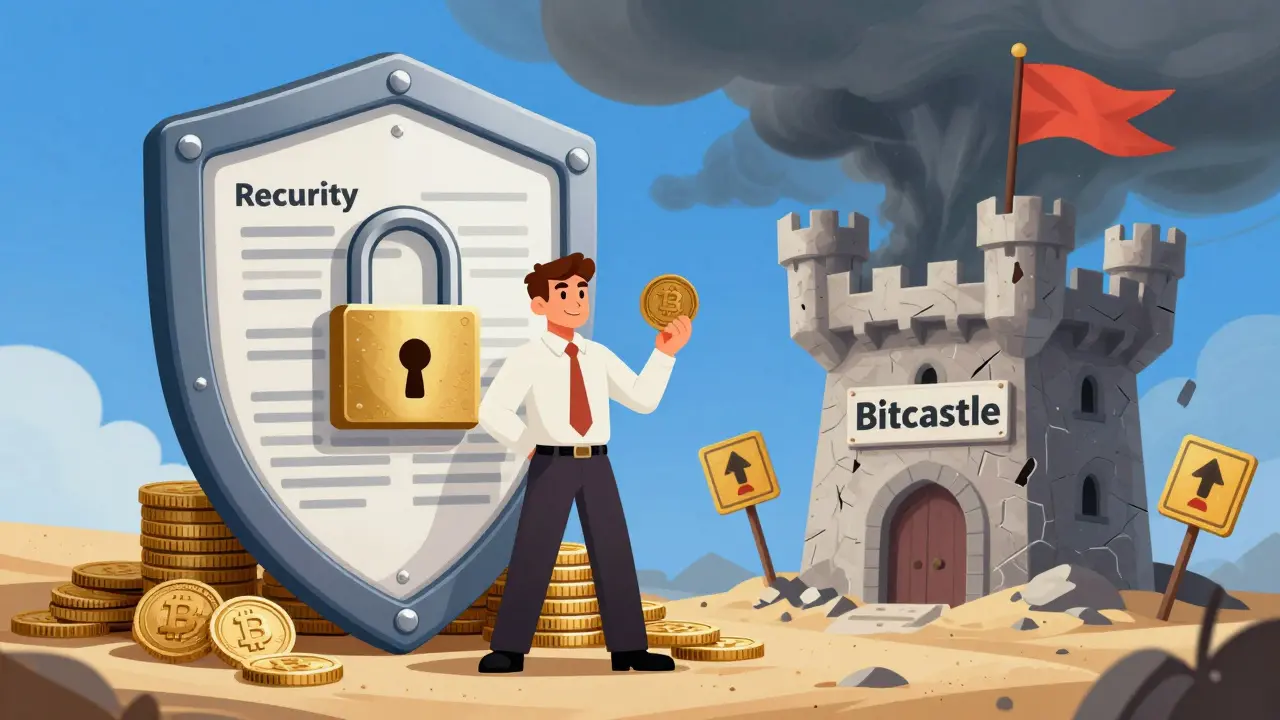
Bitcastle presents a classic case of "too good to be true." Zero fees, huge bonuses, and access to professional trading tools like MetaTrader 5 are attractive. However, the lack of regulation, offshore registration, and opaque business practices pose significant risks to your capital. In the crypto industry, security and transparency are worth far more than saving a fraction of a percent on trading fees.
For most traders, especially beginners, the potential for loss-both from market volatility and platform insolvency-is simply too high. Stick to regulated, well-known exchanges that prioritize user safety over aggressive marketing tactics. Your financial security is not worth gambling on an unverified offshore entity.
Is Bitcastle a legitimate exchange?
While Bitcastle operates as a functional website and processes trades, its legitimacy is questionable due to its lack of regulatory oversight. It is registered in St. Vincent and the Grenadines, a jurisdiction with minimal financial protections. There is no evidence of regulatory approval from major bodies like the SEC or FCA, which increases the risk for users.
Are Bitcastle's zero fees real?
Bitcastle claims zero fees for major cryptocurrencies, but this likely applies only to specific spot trades. The platform generates revenue through spreads, leverage trading costs, and potentially hidden charges associated with their CFD and forex products. Always check the detailed fee schedule before trading.
Can I use Bitcastle in the United States?
No. Bitcastle explicitly prohibits residents of the United States from using its services. Attempting to bypass these restrictions can result in frozen funds and account closure without recourse.
Does Bitcastle offer MetaTrader 5?
Yes, Bitcastle integrates MetaTrader 5 (MT5), allowing users to trade forex, CFDs, indices, and cryptocurrencies. However, this means you are often trading derivatives rather than owning the actual underlying assets, which carries higher risk.
What happens if Bitcastle shuts down?
Because Bitcastle is unregulated and offshore, there is no insurance fund or government agency to compensate users if the platform collapses. You would likely lose all deposited funds and any assets held on the exchange.
Is the Bitcastle welcome bonus worth it?
Probably not. Bonuses on unregulated exchanges often come with stringent withdrawal conditions, such as requiring you to trade a certain volume before you can withdraw your own money. This traps your capital and exposes you to further risk.