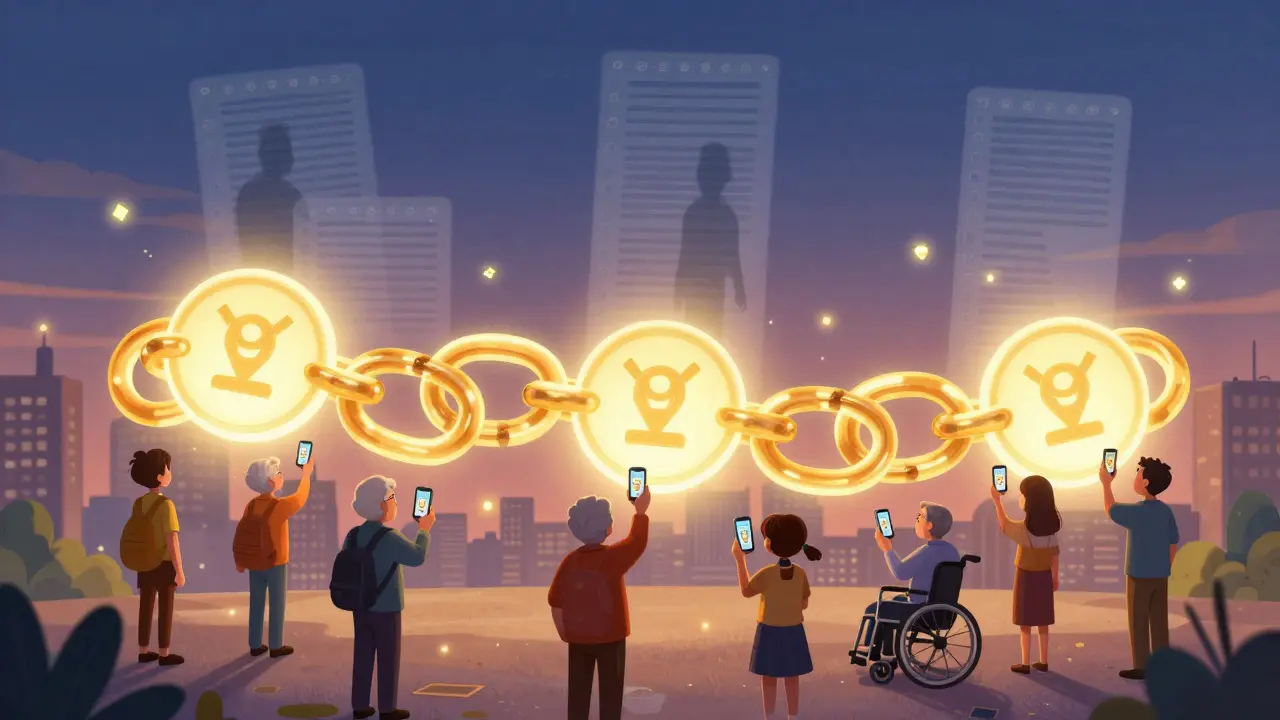
Imagine casting your vote from your phone, knowing it was counted exactly as you cast it-no waiting days for results, no rumors of tampering, no central authority that could quietly change the outcome. That’s the promise of blockchain voting. It’s not science fiction. It’s already been tested in real elections. But here’s the real question: how does it actually deliver on transparency and auditability, and why does that matter more than speed or convenience?
What Makes Blockchain Voting Different?
Traditional voting systems rely on a few trusted entities: election officials, ballot counters, and paper records stored in secure warehouses. If something goes wrong, you have to trust that those people didn’t make a mistake-or worse, didn’t cheat. There’s no public way to check every vote after the fact. Blockchain voting flips that model entirely. Instead of trusting people, you trust math. Every vote on a blockchain becomes a permanent, encrypted entry in a distributed ledger. That ledger isn’t stored on one server. It’s copied across hundreds or thousands of computers around the world. If someone tries to change a vote, they’d need to alter every single copy at once. That’s impossible with current technology. Even if they hacked half the nodes, the rest would reject the change. This isn’t theoretical. It’s how Bitcoin and Ethereum have stayed secure for over a decade.How Transparency Works in Practice
Transparency in blockchain voting doesn’t mean everyone sees who you voted for. It means everyone can see that your vote was counted correctly and that no votes were added, deleted, or altered. Here’s how:- Each vote is hashed into a unique digital fingerprint and added to a block.
- That block is linked to the previous one using cryptography, forming an unbreakable chain.
- Every node on the network validates the vote using consensus rules-no single entity controls the outcome.
- Smart contracts automatically count votes as soon as they’re verified, with no human intervention.
- The entire ledger is public. Anyone can download it and verify the tally themselves.
Auditability: The Real Power of Public Verification
Auditability is what turns transparency from a nice feature into a democratic safeguard. In paper-based systems, recounts are slow, expensive, and often inconclusive. With blockchain, auditing is instant and foolproof. Because every vote is cryptographically signed and chained to the next, auditors can:- Confirm that the total number of votes matches the number of registered voters.
- Check that no duplicate votes were submitted using the same credential.
- Trace every vote back to its origin without exposing voter identity.
- Verify that the smart contract counted votes exactly as programmed.

Privacy Without Anonymity: The Pseudonymity Balance
A common fear is that blockchain voting means your vote is public. It’s not. Blockchain systems use pseudonymous credentials. Think of it like using a nickname that’s tied to your identity only by a private key you control. Here’s how it works:- You register with your real ID (driver’s license, passport) through a secure government portal.
- The system gives you a unique, randomized voting credential-like a one-time password tied to your identity but not your vote.
- You use that credential to cast your vote on the blockchain.
- Your vote is recorded, but your name is never attached to it.
- Only the election authority can link your credential to your identity if there’s fraud suspicion.
Why This Beats Traditional Systems
Compare this to a typical election:- In-person voting: Ballots can be lost, miscounted, or destroyed. Recounts take weeks.
- Mail-in voting: Ballots can be intercepted, forged, or rejected for minor errors.
- Electronic voting machines: Often proprietary software, no public audit trail, vulnerable to hacking.
Real-World Tests and What They Showed
West Virginia’s 2018 pilot wasn’t perfect. Only about 130 overseas voters used it. But it proved the concept: secure, verifiable, and functional. No votes were lost. No tampering occurred. Results were available within minutes of polls closing. Estonia has been using blockchain for online voting since 2005. Their system, called i-Voting, has handled over 400,000 votes per election. Independent audits have repeatedly confirmed its integrity. The system doesn’t rely on secrecy-it relies on verifiability. Anyone can check the public ledger to confirm that their vote was included. Switzerland, the EU, and several U.S. counties have run similar pilots. The pattern is consistent: when implemented correctly, blockchain voting delivers higher trust, faster results, and fewer disputes.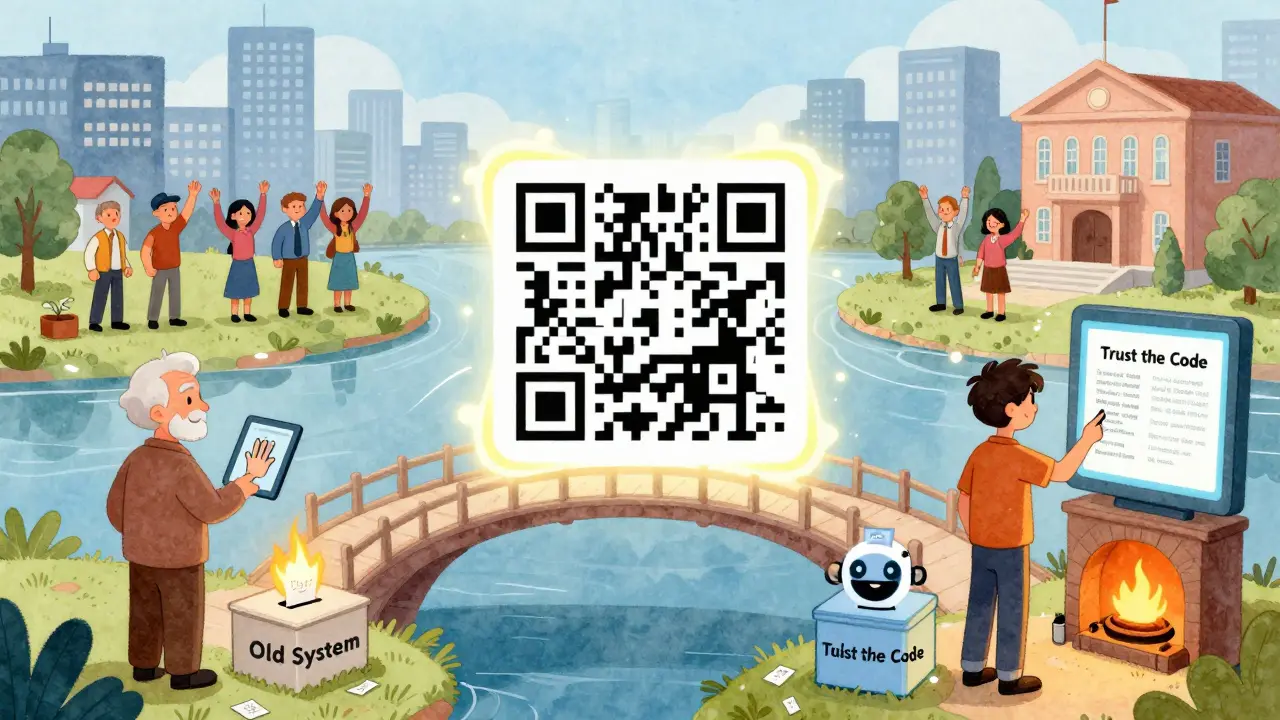
The Real Barriers: Not Tech, But People
The technology works. The bigger problem? People don’t understand it. Many voters assume “blockchain” means “cryptocurrency” and think their vote might be turned into Bitcoin. Others worry about hacking-even though blockchain is one of the most secure systems ever built. There’s also the digital divide: elderly voters, rural communities, and low-income groups may not have reliable internet or the confidence to use a voting app. These aren’t flaws in the blockchain. They’re flaws in how we roll it out. Solutions exist:- Hybrid systems: Allow both in-person and blockchain voting to ensure accessibility.
- Public education: Simple explainers, demo tools, and community workshops.
- Offline verification: Print out a QR code after voting that lets you check your vote later on a public website.
What’s Next for Blockchain Voting?
The next five years will decide if this becomes mainstream. Countries like Canada and Australia are exploring pilot programs. The U.S. National Institute of Standards and Technology (NIST) is developing guidelines for secure blockchain voting systems. Researchers are working on zero-knowledge proofs-technology that lets you prove your vote was valid without revealing anything about it. The real test won’t be whether the system is secure. It’ll be whether voters believe in it. And that belief only comes from transparency you can see, auditability you can prove, and results you can trust. This isn’t about replacing democracy with technology. It’s about restoring faith in democracy with technology. When people know their vote can’t be erased, hidden, or changed-that’s when participation rises. That’s when elections stop being a mystery and become a public record.Frequently Asked Questions
Can blockchain voting systems be hacked?
The blockchain itself is extremely hard to hack because it’s distributed across thousands of computers. To alter a vote, a hacker would need to control more than half of all nodes at the same time-something that’s never been done on any major blockchain. The bigger risk is in the apps or devices voters use to cast ballots. That’s why secure authentication and user education are critical.
Does blockchain voting reveal who I voted for?
No. Blockchain voting systems use pseudonymous credentials. Your vote is recorded on the public ledger, but your identity is never linked to it. Only election authorities, using secure private keys, can match credentials to voters if there’s a legal need to investigate fraud. Your ballot remains private.
Can I verify my own vote was counted?
Yes. After voting, you’ll receive a unique transaction ID or QR code. You can enter that into a public blockchain explorer and see your vote listed in the tally. You won’t see who you voted for, but you’ll see that your vote was received and included in the final count. This is called voter-verifiable audit trails.
Is blockchain voting only for tech-savvy people?
Not if it’s designed well. The interface should be as simple as online banking or a ride-share app. Many older voters already use smartphones for other tasks. The key is offering clear instructions, support hotlines, and hybrid options-like voting at a polling station where staff help you use the blockchain terminal. Technology should adapt to people, not the other way around.
What happens if the internet goes down during voting?
Most blockchain voting systems are designed with redundancy. Votes are stored locally on your device until the connection is restored, then synced automatically. In case of widespread outages, paper ballots or offline kiosks can serve as backup. The blockchain only records votes that are successfully submitted-it doesn’t require constant internet to function.
Why hasn’t every country adopted blockchain voting yet?
Change moves slowly in government. There are legal, political, and cultural hurdles. Some fear losing control over the process. Others worry about public trust. But pilot programs keep proving it works. The real barrier isn’t technology-it’s inertia. Once enough people see that blockchain voting is secure, fast, and verifiable, adoption will accelerate.



Brooke Schmalbach
December 6, 2025 AT 10:33Let’s cut through the blockchain hype. This isn’t about transparency-it’s about replacing one opaque system with another that’s harder to understand and even harder to fix when it breaks. The West Virginia pilot? A glorified demo with 130 voters. Estonia’s system? Riddled with vulnerabilities exposed by academics. You can’t audit what you can’t see, and most voters don’t have the technical literacy to verify a Merkle tree. This isn’t democracy-it’s technocratic theater wrapped in crypto buzzwords.
Sandra Lee Beagan
December 7, 2025 AT 22:17I’ve spent years working on digital identity systems in rural Canada, and I’ve seen how easily tech solutions fail when they ignore human context. The blockchain architecture here is elegant, yes-but what about the 70-year-old farmer in Saskatchewan who doesn’t own a smartphone? Or the single mom working two shifts who can’t afford data? The math works. The empathy doesn’t. We need hybrid models that preserve access, not just auditability.
Also, the pseudonymity model is brilliant if implemented right-but what’s the fallback if the private key is lost? No one talks about that.
sonia sifflet
December 8, 2025 AT 04:54Wow, so you’re seriously suggesting we replace our entire electoral infrastructure with a system that runs on code written by Silicon Valley engineers who’ve never even voted? Blockchain isn’t magic-it’s just distributed databases with extra steps. And let’s not pretend the nodes aren’t controlled by a handful of mining pools or cloud providers. You think this is decentralized? Wake up. The real threat isn’t ballot stuffing-it’s algorithmic capture.
Thomas Downey
December 9, 2025 AT 01:05One must question the epistemological foundations of this so-called ‘trustless’ paradigm. The notion that cryptographic verification supersedes institutional legitimacy is not only naive-it is profoundly dangerous. Democracy is not a computational problem to be optimized; it is a social contract rooted in shared norms, civic ritual, and human accountability. To reduce the sacred act of voting to a blockchain transaction is to debase the very essence of participatory governance.
Furthermore, the reliance on smart contracts introduces an unacceptably rigid framework-what of unforeseen contingencies? What of legal challenges? What of the elderly, the disabled, the illiterate? The system is not merely flawed-it is morally incoherent.
ronald dayrit
December 10, 2025 AT 23:03What’s fascinating here is how the architecture mirrors the philosophical underpinnings of modern liberalism: individual sovereignty enforced through decentralized consensus. The blockchain doesn’t just record votes-it externalizes the moral weight of participation into an immutable ledger, making each ballot not just a choice, but a historical artifact. But here’s the deeper tension: if transparency is the goal, why not make the entire voting process public? Why pseudonymity at all? Isn’t that just a compromise with privacy norms that were designed for a pre-digital age? The real innovation isn’t the ledger-it’s the redefinition of trust as a mathematical property rather than a social one. And that shift, whether we like it or not, is irreversible.
But let’s not pretend this solves voter suppression. If your phone doesn’t work, your vote doesn’t exist. The system is elegant, yes-but it’s also exclusionary by design unless actively mitigated. And mitigation requires resources, infrastructure, and political will-all things we’re notoriously bad at funding.
Tara Marshall
December 12, 2025 AT 21:31Ballot hashing and public verification work. Saw it in a county pilot last year. No issues. Just make sure the app is simple and offer kiosks at libraries. Done.
Joe West
December 14, 2025 AT 12:36Hey, I’ve used blockchain voting in my city’s neighborhood association elections-it’s actually way easier than paper. I got a QR code after voting and checked it on the public site. My vote was there. No drama. My grandma even used it with help from her grandkid. The tech isn’t the problem. It’s the fear. We just need to show people how it works, not just tell them it’s secure.
Richard T
December 16, 2025 AT 06:19One thing I’ve noticed in all these pilots: the real win isn’t the speed or the audit trail-it’s the psychological effect. When people know they can verify their vote, they feel more invested. Even if they never check, the *possibility* changes behavior. That’s huge. It’s not just about preventing fraud-it’s about reducing cynicism. And that’s maybe the most important thing we can fix.
jonathan dunlow
December 16, 2025 AT 17:58Let me tell you something-this isn’t just about voting. This is about reclaiming power. For too long, elections have felt like black boxes. You cast your ballot and pray someone’s telling the truth. Blockchain voting flips that script. It turns every citizen into an auditor. Imagine a world where no one can lie about the count because the proof is public, permanent, and mathematically undeniable. That’s not a tech upgrade-it’s a revolution in accountability. And yeah, it’s messy to roll out. Yeah, there are edge cases. But the cost of *not* doing this? A democracy that people stop believing in. That’s a price we can’t afford to pay.
We don’t need to replace polling stations tomorrow. We need to give people the *option* to trust the system. And once they see it works? They’ll demand it everywhere. This is the future-and we’re already living in it, just not everywhere yet.
Mariam Almatrook
December 17, 2025 AT 11:58How utterly disingenuous. You speak of transparency as if it were a virtue, yet you propose a system where only the technically proficient may audit, while the masses remain passive consumers of algorithmic outcomes. This is not democracy-it is digital feudalism. The blockchain elite, cloaked in cryptographic robes, dictate legitimacy through code they alone fully comprehend. And you call this progress? This is the arrogance of technocrats who mistake complexity for sophistication. The people do not need more obfuscation-they need accountability. And accountability requires human oversight, not distributed ledgers.
rita linda
December 18, 2025 AT 18:54Let’s be clear: this is a Trojan horse for globalist tech elites to undermine national sovereignty. Blockchain voting enables foreign actors to infiltrate electoral infrastructure under the guise of ‘open source’ and ‘transparency.’ Who owns the nodes? Who audits the auditors? You think Estonia’s system is safe? They’re part of NATO’s digital infrastructure-this isn’t about voting, it’s about control. And don’t tell me about ‘pseudonymity’-your data is still harvested, tracked, and monetized. This isn’t freedom. It’s surveillance with a blockchain sticker.
Stanley Wong
December 19, 2025 AT 19:52I get why people are scared. I really do. I used to think blockchain was just crypto nonsense too. But after watching that county pilot in Oregon, seeing how a retiree with arthritis verified her vote on a tablet at the library and smiled because she knew it counted-I started to see it differently. It’s not about replacing people. It’s about giving them more control. The fear of tech is real. But the fear of being ignored by the system? That’s worse. Maybe we don’t need to convince everyone to use it. Maybe we just need to make sure it’s there when someone needs it. And if it saves even one person from feeling like their vote didn’t matter? That’s worth it.
miriam gionfriddo
December 20, 2025 AT 15:58THEY’RE USING BLOCKCHAIN TO STEAL ELECTIONS AND YOU’RE CLAPPING??? I SAW A VIDEO OF A GUY IN VIRGINIA WHO GOT HIS VOTE CHANGED BECAUSE HIS PHONE AUTO-UPDATED AND THE APP CRASHED AND NO ONE COULD FIX IT BECAUSE THE CODE WAS ‘IMMUTABLE’ AND NOW HE’S SUING AND NOBODY CARES BECAUSE THE SYSTEM IS ‘SECURE’ HAHAHAHAHA