
Can you pay for coffee, rent, or a new laptop with Bitcoin in Russia? The short answer is no - not legally. But the reality is more complicated than a simple yes or no. While owning cryptocurrency is perfectly legal in Russia, using it to buy goods or services inside the country is banned. The government doesn’t want crypto to compete with the ruble. And they’re getting serious about enforcing it.
Ownership vs. Usage: Two Different Rules
There’s a big difference between holding crypto and spending it. Russian law lets citizens buy, store, and trade Bitcoin, Ethereum, and other digital assets. Millions do. The Russian Association of Cryptoeconomics estimates over $40 billion in crypto is held by Russian residents. But when it comes to paying for anything - from a grocery store to an online subscription - using crypto is illegal. The Central Bank of Russia has been clear: the ruble is the only legal tender. Any other form of payment, even if it’s backed by blockchain, breaks the law. This split creates a strange situation. You can own crypto like an investment, but you can’t use it like money. That’s why many Russians still trade on foreign exchanges like Binance or KuCoin. There are no licensed local exchanges, so people rely on overseas platforms. It’s not illegal to use them, but it’s risky. If you’re caught using crypto to pay for something domestically, you could face serious penalties.The Only Legal Way: International Trade
There’s one exception. Russia created an Experimental Legal Regime (ELR) in 2023, and it’s the only legal channel for crypto payments - but only for international business. Russian companies can use cryptocurrency to pay suppliers, contractors, or customers outside Russia. This wasn’t designed to help tech startups. It was made to bypass Western sanctions. After the invasion of Ukraine, Western countries froze Russian banks, cut off access to SWIFT, and blocked dollar transactions. Crypto became a workaround. In 2025, crypto-facilitated trade between Russia and foreign partners hit 1 trillion rubles (over $10 billion USD). That’s real money moving through digital assets. The government didn’t stop it. They formalized it. The ELR only applies to companies with specific licenses. Ordinary people can’t use it. Even then, the transactions must be reported, taxed, and tied to real contracts. It’s not a loophole. It’s a controlled channel - and it’s growing.2026: Fines Are Coming - And They’re Heavy
The Russian government isn’t just watching. They’re preparing to punish. Starting in 2026, new fines will hit anyone caught using crypto for domestic payments. Individuals could pay 100,000 to 200,000 rubles ($1,100-$2,200 USD). Companies? Up to 1 million rubles ($11,000 USD). And here’s the kicker: any cryptocurrency used in the illegal transaction will be seized. This isn’t just about money. It’s about control. The State Duma’s financial market committee, led by Anatoly Aksakov, says the goal is to close the gray zones where people have been quietly using crypto to avoid sanctions or evade taxes. Some businesses have been using crypto to pay employees or suppliers in cash equivalents - a practice that’s now being targeted. The enforcement system is already active. Russian tax authorities have automated tools that track crypto wallet movements. If you mined Bitcoin, earned staking rewards, or sold an NFT - and didn’t report it - you’re at risk. The tax deadline is April 30 each year. You must declare all crypto income, convert it to rubles using official exchange rates, and pay income tax by July 15.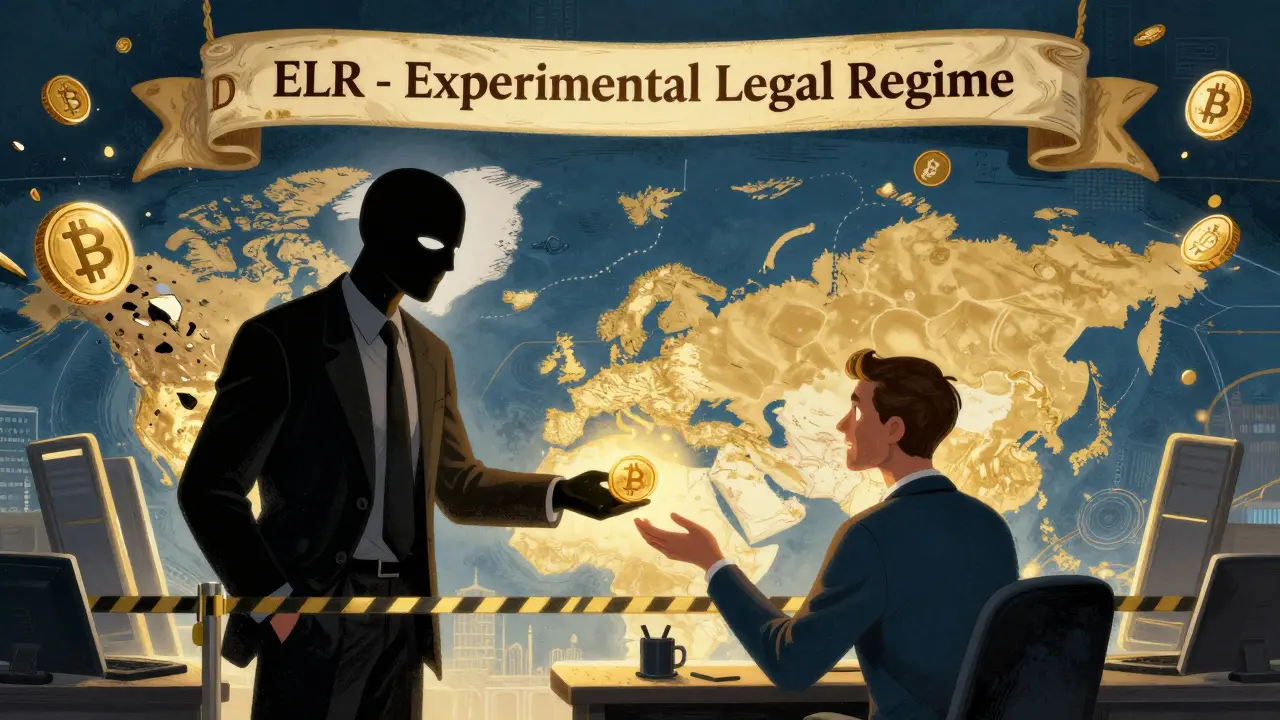
Taxing Crypto: It’s Not Optional
Crypto isn’t tax-free in Russia. Every gain counts. That includes:- Buying and selling crypto
- Staking rewards
- Mining income
- Airdrops
- Lending crypto
- Selling NFTs
Why Is Russia So Strict?
The government’s stance isn’t about hating technology. It’s about protecting the ruble. After sanctions hit, the ruble’s value dropped. The Central Bank saw crypto as a threat to monetary control. If people start using Bitcoin to pay for groceries, they stop using rubles. And if ruble usage falls, inflation could spike. The state can’t control crypto. That’s the real fear. There’s also a political angle. The ELR allows Russia to use crypto as a tool against Western financial pressure. But domestically? No. The message is clear: crypto is a weapon for international trade - not a replacement for your local bank. Some experts, like Irina Kuyantseva of BGP Litigation, say the new fines are meant to scare people out of the shadows. But others, like analysts at ForkLog, believe the demand for crypto payments won’t disappear. People still need alternatives. And if the ruble keeps losing value, the pressure to find workarounds will only grow.
What’s Happening Now?
Russia dropped from 7th to last place in Chainalysis’s 2025 Global Adoption Index. That sounds bad - until you look closer. The decline happened because domestic usage fell, not because people stopped using crypto. The number of users is still rising - about 15% per year since 2021. They’re just not spending it locally. Instead, they’re holding. They’re trading. They’re using it to send money abroad. Some even use crypto to buy foreign assets - real estate, stocks, or luxury goods - through offshore platforms. The government doesn’t stop that. It’s not illegal to own crypto. It’s not illegal to send it overseas. It’s only illegal to use it to pay for your neighbor’s car. Meanwhile, lawmakers are quietly pushing for change. The Finance Ministry recently asked for broader access to crypto for investors. Some legislators want licensed Russian exchanges. The Central Bank still resists. The tension between economic pragmatism and control is growing.Bottom Line: What Should You Do?
If you’re in Russia:- You can own crypto - no problem.
- You can trade it on foreign exchanges - still legal.
- You can send it abroad - allowed under ELR if you’re a business.
- You can’t use it to buy coffee, pay rent, or tip a delivery driver - that’s illegal.
- You must report every crypto transaction to the tax office - or risk fines and jail.
Is it illegal to own Bitcoin in Russia?
No, owning Bitcoin or any other cryptocurrency is completely legal in Russia. You can buy, hold, and trade digital assets without breaking any laws. The ban only applies to using crypto as payment for goods and services within the country.
Can I use crypto to pay for rent or utilities in Russia?
No. Using cryptocurrency to pay for rent, utilities, groceries, or any domestic transaction is illegal. Only the Russian ruble is recognized as legal tender for payments inside the country. Violating this rule can lead to fines and confiscation of the crypto used.
What happens if I get caught using crypto for payments?
Starting in 2026, individuals caught using crypto for domestic payments can be fined between 100,000 and 200,000 rubles ($1,100-$2,200 USD). Companies face fines of 700,000 to 1 million rubles ($7,700-$11,000 USD). The cryptocurrency involved will be seized. Repeat offenses or large-scale violations may lead to criminal charges.
Do I have to pay taxes on my crypto earnings in Russia?
Yes. All crypto income - including trading profits, staking rewards, mining, airdrops, and NFT sales - must be reported as taxable income. You must convert your crypto gains to rubles using official exchange rates and file a tax return by April 30 each year. Failure to report can result in fines up to 2 million rubles, forced labor, or imprisonment.
Can Russian businesses use crypto to pay foreign suppliers?
Yes, under the Experimental Legal Regime (ELR). Licensed Russian companies can use cryptocurrency for international transactions. This system was created to help businesses bypass Western sanctions. However, these transactions must be documented, reported, and comply with strict regulatory requirements.
Why did Russia drop in the global crypto adoption ranking?
Russia fell to the bottom of Chainalysis’s 2025 Global Adoption Index because domestic crypto payments were banned, reducing everyday usage. Despite this, the number of crypto holders continues to grow. The decline reflects reduced local spending, not reduced interest - many Russians still use crypto for savings and international transfers.
Are there any licensed crypto exchanges in Russia?
No. As of 2026, there are no licensed domestic cryptocurrency exchanges. Russian users rely on foreign platforms like Binance, KuCoin, and Bybit to buy and sell crypto. Lawmakers have urged the Central Bank to issue licenses, but no action has been taken yet.
Will Russia ever allow crypto payments domestically?
Unlikely in the near future. The Central Bank and government remain firmly opposed to crypto as a payment method within Russia. Their priority is maintaining control over the ruble. While international crypto use is expanding, domestic use remains banned - and enforcement is getting stricter.




Zachary N
March 16, 2026 AT 11:32So let me get this straight - you can own $40B in crypto in Russia, but if you try to buy a pizza with it, you’re looking at a fine and confiscation? That’s not regulation, that’s psychological warfare. People aren’t dumb. If the ruble keeps tanking and wages don’t keep up, they’ll find ways around this. The state thinks it’s controlling the narrative, but it’s just creating a black market with higher stakes. I’ve seen this before in Argentina, Venezuela, Nigeria - when you outlaw a tool people need, you don’t eliminate it, you just make it more dangerous and more expensive. The real story here isn’t the law - it’s the quiet rebellion happening in Telegram groups and peer-to-peer swaps.
Elizabeth Kurtz
March 17, 2026 AT 23:56As someone who’s lived in both the US and Russia, I can say this: the government’s fear of crypto isn’t about the ruble - it’s about losing control over information flow. Crypto isn’t just money, it’s a way to bypass state surveillance. When you use Binance or KuCoin, you’re not just sending value - you’re sending data outside their reach. That’s why they’re so aggressive about taxing every staking reward and airdrop. They’re not trying to collect taxes - they’re trying to map every wallet. The fines? They’re a deterrent. But the real punishment is the fear they’ve cultivated.
john peter
March 19, 2026 AT 04:20This entire article reads like a PR pamphlet from the Central Bank of Russia. You say crypto is illegal for domestic use, yet you cite $10B in international trade via ELR - which is essentially crypto laundering under state sanction. The hypocrisy is staggering. You can’t have it both ways: either crypto is a threat to monetary sovereignty, or it’s a strategic tool. You’re not protecting the ruble - you’re weaponizing it as a political symbol while letting your oligarchs use crypto to stash wealth abroad. This isn’t economic policy. It’s theater.
Derek Lynch
March 20, 2026 AT 11:17Look - I get why the government’s scared. But here’s the truth they’re ignoring: people aren’t using crypto because they love blockchain. They’re using it because the bank system is broken. Inflation is eating wages. Salaries are paid in rubles that lose value by lunchtime. People need a way to preserve wealth. If you outlaw Bitcoin, you don’t stop people from saving - you just force them into riskier, unregulated corners. The real solution isn’t fines - it’s fixing the ruble. Or better yet, let people use crypto as a hedge. You’re not protecting the economy - you’re punishing the people trying to survive it.
Sarah Hammon
March 21, 2026 AT 19:38Just wanted to say thanks for this post - really clear breakdown. I’ve been trying to figure out if I can send crypto to my cousin in Kazakhstan for her tuition and wasn’t sure if that counted as ‘domestic’ or ‘international’. So glad you clarified the ELR thing. I think a lot of people are confused about what’s allowed - like, can I buy a laptop from a US seller using BTC? I think yes? But if I buy from a guy in Moscow who sells it to me in BTC? That’s a no. It’s wild how nuanced it is. Also - tax reporting is a nightmare. I’ve been using a spreadsheet but it’s so easy to mess up the exchange rate. Ugh.
Ann Liu
March 23, 2026 AT 10:57Correction: the fine for companies under the new 2026 regime is 700,000 to 1,000,000 rubles - not 1 million as a flat figure. Also, the tax deadline for filing is April 30, but payment is due July 15. These distinctions matter. Misreporting staking rewards as ‘gifts’ or ‘airdrops’ as ‘non-taxable’ has landed people in court. The Federal Tax Service now cross-references blockchain analytics firms like Chainalysis and Elliptic with bank transaction logs. There is no anonymity left. If you mined 0.5 BTC last year, you owe taxes on it - regardless of whether you sold it. Ignorance is not a defense.
Dionne van Diepenbeek
March 23, 2026 AT 16:57Tony Weaver
March 25, 2026 AT 06:08Let’s be brutally honest: this entire policy is a farce. The Russian state doesn’t care about the ruble. It cares about power. Crypto threatens centralized control. Period. The fact that they’ve created an ELR for international trade while banning domestic use proves they’re not anti-crypto - they’re anti-democracy. They want crypto to be a tool for the elite to evade sanctions, not a tool for the people to evade poverty. This isn’t economics. It’s authoritarianism dressed up as fiscal policy. And the irony? The people who are most affected - ordinary Russians trying to pay rent - are the ones being criminalized. Meanwhile, the oligarchs are laughing all the way to their offshore wallets.
Brenda White
March 25, 2026 AT 21:46Tobias Wriedt
March 27, 2026 AT 07:50THEY WANT TO CONTROL YOUR MONEY 💸
THEY WANT TO KNOW EVERY TRANSACTION 🕵️♂️
THEY WANT TO TAKE YOUR BTC 💥
THIS IS TOTALITARIANISM WITH A BANK LICENSE 🚩
STOP TRUSTING THE SYSTEM 🙏
OWN YOUR ASSETS 🛡️
CRYPTO IS FREEDOM 🔥
Manali Sovani
March 28, 2026 AT 20:25This article is fundamentally flawed. The Russian government is not acting out of fear of the ruble. It is acting out of fear of decentralization. The ELR is not a solution - it is a trap. Only state-approved entities can participate. This is not innovation. This is surveillance with a blockchain interface. The tax reporting requirements are designed to identify and isolate dissenters. The fines are not punitive - they are eliminative. The state does not want you to use crypto. It wants you to fear it. And it is succeeding.
Konakuze Christopher
March 30, 2026 AT 01:26S F
March 31, 2026 AT 05:49Western media loves to portray Russia as some crypto-hating dystopia. But let’s not forget - this is a country that survived hyperinflation, collapse, and sanctions. The government isn’t against crypto - it’s against Americans telling them how to run their economy. If the West wanted to help Russians, they’d stop sanctioning their banks and start letting them use crypto freely. Instead, they’re screaming ‘authoritarian!’ while strangling the economy. Hypocrisy much?
Angelica Stovall
April 1, 2026 AT 07:07Let me guess - you think this is about money? No. This is about control. The state doesn’t care if you own Bitcoin. They care if you use it to avoid their surveillance. They track every wallet because they know: if people can move money without permission, they can move ideas. And ideas are dangerous. That’s why they’re fining people for staking rewards - not because they want taxes. Because they want to know who’s doing what. This isn’t economics. It’s espionage.
Sahithi Reddy
April 1, 2026 AT 23:10George Hutchings
April 2, 2026 AT 17:08Just chiming in - I’ve got friends in Moscow who trade crypto daily. They use it to send money to family in Armenia, buy used cars from Belarus, even pay for VPNs. No one gets caught. The government’s tools aren’t perfect. And honestly? Most people don’t even know the rules. The fines are scary, but enforcement is patchy. It’s not a crackdown - it’s a warning. And people are still playing the game.
Henrique Lyma
April 2, 2026 AT 20:35Let’s not romanticize this. The ELR is not a breakthrough - it’s a selective loophole for sanctioned corporations. Only companies with ties to the state or defense sector are approved. The average Russian entrepreneur? No license. No access. No chance. Meanwhile, the tax authorities are using blockchain analytics to trace every micro-transaction. If you received a single satoshi from a foreign exchange, you’re now on a list. This isn’t regulation. It’s a digital dragnet. And it’s expanding. The 2026 fines? They’re just the opening salvo.
Steph Andrews
April 4, 2026 AT 18:54I really appreciate how detailed this is. I’ve been trying to figure out if I can use crypto to pay for my daughter’s online course from a US provider - is that allowed? I think yes? But I’m nervous because I don’t know if the platform counts as ‘foreign’ or if it’s still considered a domestic transaction because she’s in Russia. The ambiguity is exhausting. I just want to do the right thing without getting punished. Thanks for helping me understand the gray areas.
Prakash Patel
April 5, 2026 AT 12:28Everyone’s missing the point. Russia didn’t ban crypto because it’s dangerous. They banned it because it’s too effective. If people start using Bitcoin to pay for rent, they stop paying taxes in rubles. That means less revenue for the state. And if they stop paying taxes, they stop needing the state. That’s the real threat. This isn’t about money. It’s about power. And power doesn’t like competition.
Kira Dreamland
April 5, 2026 AT 20:07Thanks for writing this - it’s one of the clearest explanations I’ve seen. I’ve been holding crypto for years and was terrified I’d get in trouble just by owning it. Good to know I’m safe as long as I don’t spend it locally. Also - the tax reporting part is terrifying. I think I need to hire an accountant who understands crypto. I’m not doing this alone. Anyone know a good one? 👀