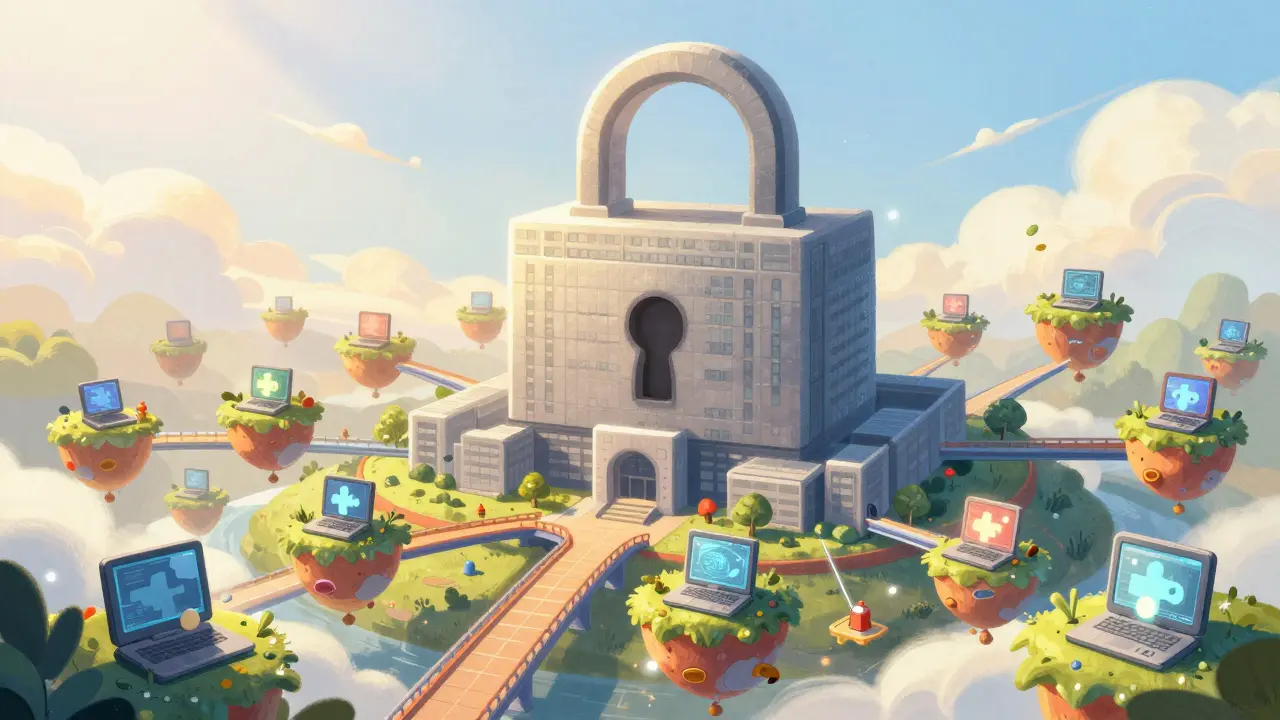
Most people think of "the cloud" as a magical place, but it's actually just someone else's computer. CESS flips this script. Instead of relying on a central authority, it uses a distributed network to store information and a built-in delivery system to make sure you can access that data in milliseconds. Whether you are a developer building a new app or a company needing secure archives, CESS provides the plumbing for the next generation of the internet.
How CESS Works: The Technical Engine
CESS isn't just a storage app; it's a full-blown Layer-1 blockchain built using the Substrate framework. This means it has its own rules, its own security, and its own way of agreeing on the truth (consensus). To keep things fast and secure, the network is split into a few key layers.
First, the Blockchain Layer handles the "who owns what" part. Then, the Distributed Storage Resource Layer manages the actual physical hard drive space across the globe. Finally, the Content Decentralized Delivery Network (CD²N) acts like a turbo-booster, ensuring that when you request a file, it comes from the nearest possible node to reduce lag.
One of the coolest parts of the tech is Proxy Re-encryption Technology (PReT). In simple terms, it lets you share an encrypted file with someone else without you ever having to reveal your private key or decrypt the file first. It's a massive win for privacy. To make sure your data doesn't just vanish, CESS uses Proof of Decentralized Retrieval and Replication (PoDR²), which constantly checks that your files are actually there and backed up.
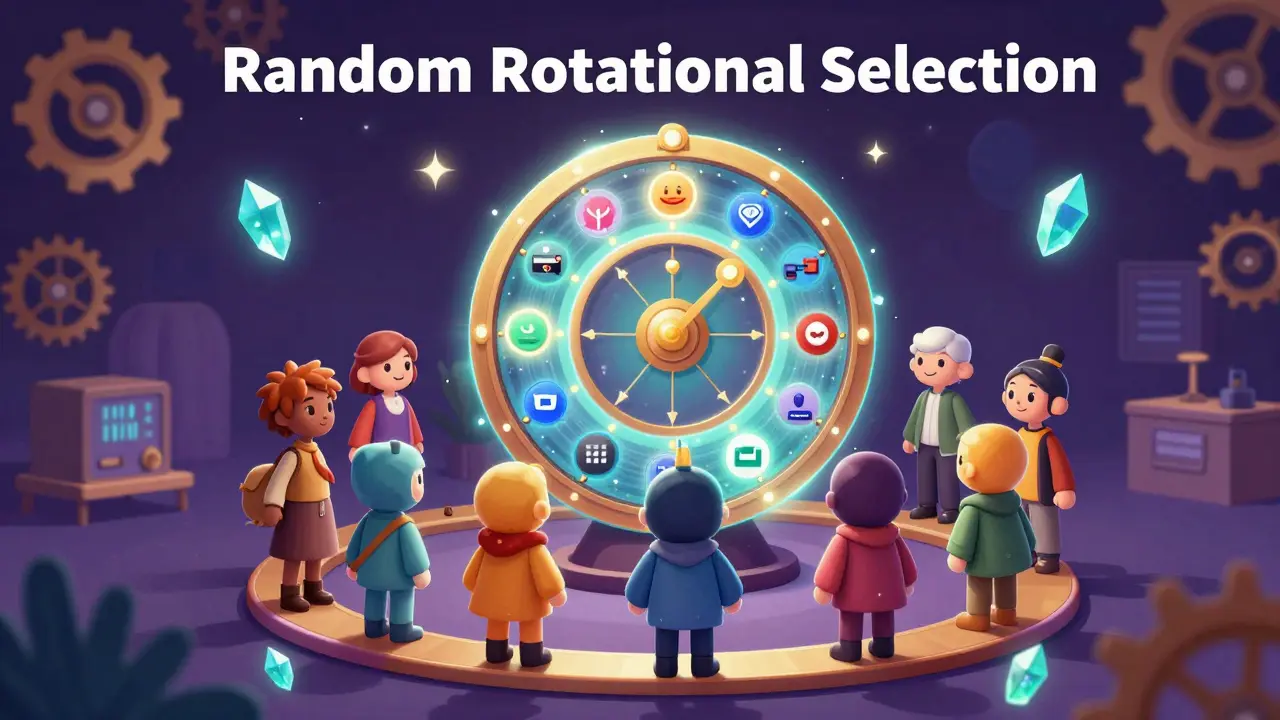
The Consensus Secret: Random Rotational Selection
Most blockchains use Proof of Stake, where the richest people often have the most power. CESS uses something different called Random Rotational Selection (R²S). This mechanism randomly picks 11 validators for each cycle. The selection isn't just random; it considers how much the node is working and how many tokens are staked.
This prevents a small group of "whales" from controlling the network and keeps the system democratic. To keep the lights on, the network relies on four types of nodes:
- Consensus Nodes: The judges who verify transactions using R²S.
- Storage Nodes: The digital warehouses where the data actually lives.
- CDN Nodes: The delivery drivers that get data to the user quickly.
- TEE Nodes: Specialized nodes that use Trusted Execution Environments to handle sensitive data privately.
CESS Tokenomics: What Does the Coin Actually Do?
The CESS token is the fuel for the entire ecosystem. It isn't just a speculative asset; it has real utility within the network. If you want to store data or use the content delivery network, you pay in CESS. If you want to help secure the network by running a node, you stake CESS.
| Attribute | Value / Detail |
|---|---|
| Total Max Supply | 10 Billion CESS |
| Circulating Supply | 2.65 Billion CESS |
| Current Price | $0.003845 USD |
| Mining Allocation | 45% for storage node operators |
| Reward Schedule | 31 years total, halving every 4 years |
The long-term reward schedule is a smart move. By spreading the mining rewards over three decades, CESS avoids the "inflation shock" that kills many new coins. It gives operators a reason to keep their hard drives running for years to come.

CESS vs. The Competition: Why It's Different
You've probably heard of Filecoin or Arweave . While those are great, they often focus on just one thing: storage. CESS attempts to be a "full-stack" solution. It doesn't just store the data; it delivers it (CDN) and even processes it using AI.
CESS also acts as a Data Availability (DA) layer. This is a fancy way of saying it can help other blockchains, like Ethereum or Bitcoin , by storing their heavy data off-chain. This makes those other networks faster and cheaper while CESS handles the heavy lifting of data verification.
The Future: AI and Decentralized Science
CESS is moving beyond just being a digital hard drive. With the XESS AI Protocol Suite, they are integrating Ethical AI . This allows the network to support collaborative model training where the data stays private. Instead of sending your data to a central AI company, the AI can essentially "learn" from the data while it stays securely stored in the CESS network.
This opens the door for Decentralized Science (DeSci). Imagine researchers worldwide sharing massive genomic datasets or climate models without worrying about a single company owning the research or locking it behind a paywall. By combining storage, delivery, and AI, CESS is building a toolkit for the most ambitious projects in Web3.
Is CESS Network a good alternative to Google Drive or AWS?
For most casual users, Google Drive is simpler. However, for those who care about censorship resistance, data sovereignty, and privacy, CESS is a superior choice because no single company can delete your files or peek at your data. For businesses, it offers a way to reduce costs by using a decentralized pool of resources rather than expensive centralized contracts.
How do I earn CESS tokens?
The primary way to earn CESS is by becoming a network operator. You can run a storage node to provide disk space, a consensus node to verify transactions, or a CDN node to help deliver content. These participants are rewarded with tokens from the 45% mining allocation.
What is the "Data Availability" service mentioned?
Data Availability (DA) means ensuring that the data needed to verify a blockchain transaction is actually available to everyone. CESS allows other blockchains to offload their bulky data to its network, which reduces the load on the main chain and lowers transaction fees for users of those other networks.
What happens if a storage node goes offline?
CESS uses a replication system. Your data isn't stored in just one place; it's mirrored across multiple nodes. The Proof of Decentralized Retrieval and Replication (PoDR²) system constantly monitors these mirrors. If one node fails, the network ensures there are still enough copies elsewhere so you never lose your files.
Can CESS be used for AI?
Yes, through the XESS AI Protocol Suite. CESS provides the infrastructure for AI Agents and AI-LINK, which allow for privacy-preserving AI training. This means AI models can be trained on distributed data without the raw data ever leaving its secure, encrypted storage.




Ian Chait
April 17, 2026 AT 05:49Typical globalist slush fund. Thnk they can hide our data in 'decentralized' nodes while the deep state just monitors the packets anyway. This whole R2S thing is just another way to lurre in the sheeple with fake 'democracy' while the elites hold the real keys. Its all a psyop to get us off legacy systems into something they can track better with their quantum compute arrays. Wake up ppl!!
Joshua Salwen
April 17, 2026 AT 09:41Omg please!! Like, does anyone actually believe the 'random selection' is random?? lol. I've seen this exact same pattern in like five other failed L1s and it always ends in a total disaster where the devs just rug everything. Totalypredictable!!
Chintu Parikh
April 18, 2026 AT 02:28It is truly commendable how the CESS Network integrates the Content Decentralized Delivery Network to mitigate latency issues. This holistic approach to data infrastructure is precisely what the Web3 ecosystem requires to achieve mainstream scalability and efficiency.
John and Lauren Busch
April 19, 2026 AT 15:24Sure, it's a revolution. Totally.
Michelle Stanish
April 20, 2026 AT 21:54I don't see why this is better than AWS.
Saurav Bhattarai
April 22, 2026 AT 11:56Oh, look at that. Another 'groundbreaking' project that thinks it can replace the giants. How adorable. I'm sure the three people running nodes in their basements will provide the 'reliability' we all desperately need. Pure comedy.
Abhinav Chaubey
April 22, 2026 AT 16:19Actually, the technical architecture here is far superior to the legacy systems used in the West. The implementation of TEE nodes ensures a level of security that Google cannot even dream of providing. If you don't understand the PoDR² mechanism, you simply aren't qualified to critique the system.
Adam Mann
April 23, 2026 AT 03:36I just think it is so wonderful that we are moving toward a world where everyone can share their research freely! Imagine a young student in a small village being able to access the same genomic data as a professor at Harvard because the data isn't locked behind a corporate paywall. It's just such a beautiful vision of human cooperation and inclusivity that makes me really hopeful for the future of science and how we all learn together!
Shannon Kelly Smith
April 24, 2026 AT 15:08This is the way! 🚀 Let's get more people running storage nodes and actually owning their digital footprint! 🌐 The future is decentralized or it's nothing! 💎🙌
Adedamola Oyebo
April 25, 2026 AT 05:09The 31-year reward schedule is key... prevents crashes... very stable!!
Kim Smith
April 26, 2026 AT 21:13it is kinda wild when u think about the philosophy of it all... we spent decades building these giant digital cathedrals for big tech to rule over and now we are just... breaking them down into tiny pieces and scattering them across the earth. its almost poetic in a way, like we are returning the data to the soil of the internet so it can grow naturally without being pruned by some corporate algorithm deciding what we get to see or keep for posterity...
Kaitlyn Wu
April 27, 2026 AT 23:23We need to be clear that while decentralization is great, the barrier to entry for running a node still needs to be lowered for non-technical users if this is actually going to scale.
nikki krinkin
April 29, 2026 AT 08:02I appreciate the focus on privacy here. It's a relief to see a project that treats data sovereignty as a right rather than a feature.
Mark Pfeifer
April 30, 2026 AT 15:36The XESS AI protocol sounds promising, but the actual implementation of privacy-preserving training on a distributed network is a massive hurdle. I'd like to see more documentation on how they handle the compute overhead.
Keri Pommerenk
May 2, 2026 AT 11:25sounds like a great way to earn some extra tokens if u have the hardware
Jeff Barlett
May 4, 2026 AT 08:19Wait, so you're telling me my data is just 'mirrored' on random computers? Yeah, right. One power outage in a specific region and suddenly my 'decentralized' files are gone. This is just a fancy way to make everything more fragile while pretending it's secure. Absolute joke!
Mike Kempenich
May 6, 2026 AT 01:06I'm definitely optimistic about the long-term vision here. It's an assertive move to challenge the cloud giants, and even if it takes time, the groundwork for a more fair internet is being laid right now.