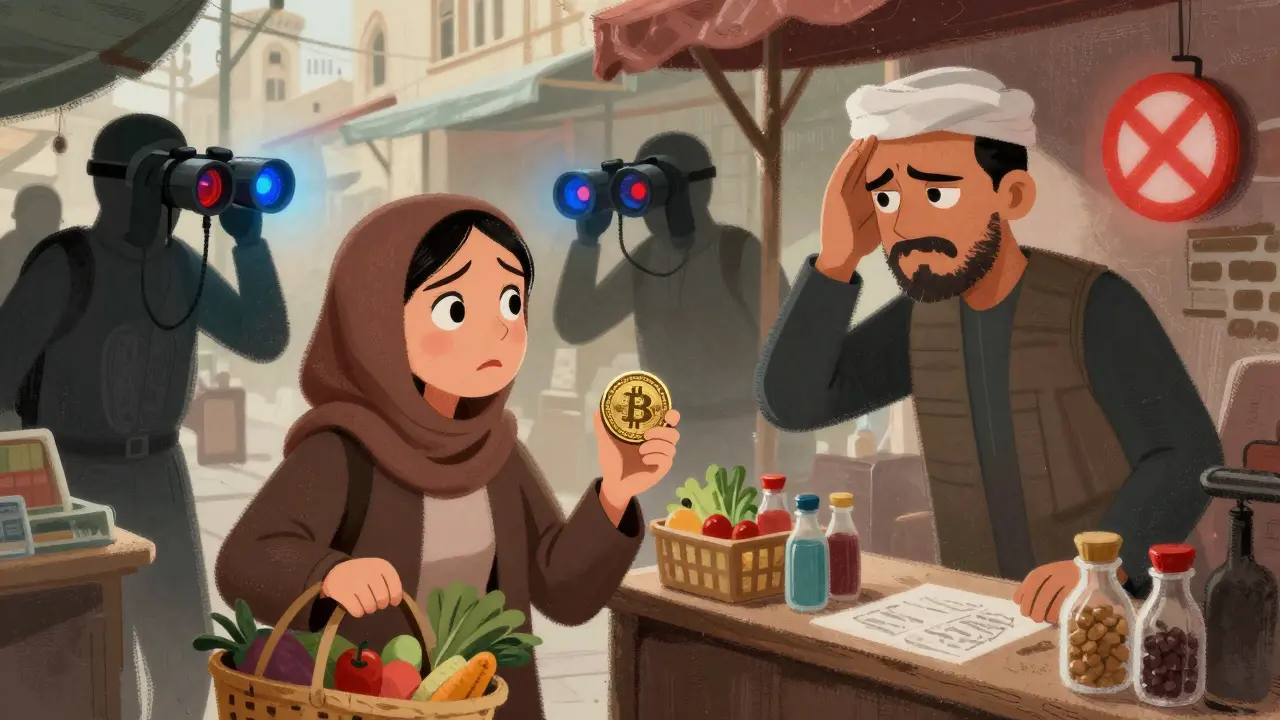
Can you use Bitcoin to buy groceries in Tehran today? The short answer is no. But the long answer is complicated, messy, and dangerous if you get it wrong. If you are looking to send money from Perth to a friend in Iran using crypto, or if you are an Iranian citizen trying to preserve your savings against inflation, the rules have changed drastically since early 2025. What was once a wild west of unregulated trading has turned into a tightly controlled surveillance state.
In this guide, we break down exactly what is legal, what is banned, and how the Central Bank of Iran (CBI) is enforcing its will over your digital wallet. We will look at the recent bans on payment gateways, the ongoing legality of mining, and the rise of the Digital Rial. This isn't just theory; these are the operational realities for anyone interacting with the Iranian crypto market in 2026.
The Current Status: A Controlled Gray Area
To understand where things stand in May 2026, we have to look at the rapid pivot that happened between late 2024 and mid-2025. For years, Iran had a unique position: it tolerated crypto because it helped bypass international sanctions. Then, the government realized that crypto was also helping people flee the country with capital, hurting the national currency.
As of January 2025, President Masoud Pezeshkian designated the Central Bank of Iran as the sole authority responsible for regulating the cryptocurrency market. This was a game-changer. It meant that every transaction, every exchange, and every miner fell under direct CBI oversight.
Here is the core reality for payments:
- Peer-to-Peer (P2P) Payments for Goods: Effectively prohibited. You cannot legally use Bitcoin or USDT to pay for a car, rent, or daily goods within Iran without triggering regulatory flags.
- Crypto-to-Rial Exchanges: Legal but heavily monitored. You can trade, but only through licensed platforms that share your data with the government.
- International Transfers: High risk. Foreign exchanges often freeze assets linked to Iranian IP addresses or known local wallets.
The goal of the government is clear: they want the revenue from mining and the utility of blockchain technology, but they do not want the anonymity that allows citizens to escape economic controls.
The Payment Gateway Crackdown
If you run a business in Iran or try to use local e-commerce sites, you have likely noticed that crypto checkout options have disappeared. This wasn't an accident. In December 2024, the CBI implemented a program that blocked all Iranian cryptocurrency-to-rial and rial-to-cryptocurrency payments through standard internet websites.
Why did they do this? To stop speculative activity and protect the rial. When people could easily convert their falling national currency into stablecoins like USDT, the demand for the rial plummeted. By cutting off the easy on-ramps, the government made it harder to exit the fiat system.
However, by January 2025, they didn't ban it entirely. Instead, they forced exchanges to use a government-approved API system. Think of it like a toll booth where every single car must stop, show its license, and let the guard inspect the trunk before moving forward. This "controlled permission" means that while you might see some trading volume, the state sees everything. There is no privacy left in these transactions.
Is Cryptocurrency Mining Still Legal?
Yes, mining remains legal, but it is a different beast than it was five years ago. Iran legalized mining in 2019 to generate foreign currency revenue amidst heavy sanctions. Today, it accounts for about 4.5% of global mining activity. That sounds impressive, but it comes at a cost.
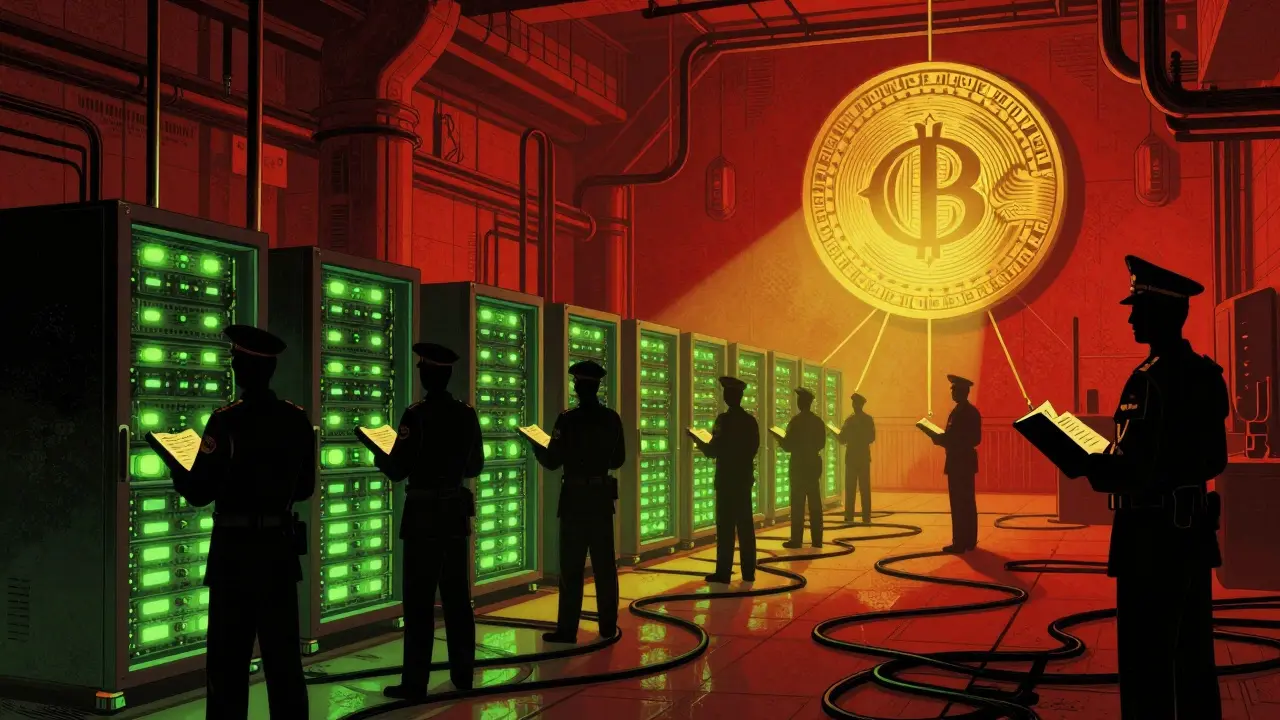
Bitcoin mining operations in Iran are subject to strict licensing from the Ministry of Industry, Mine and Trade. Miners must use approved hardware and pay specific electricity tariffs. Here is the catch: those tariffs have skyrocketed. The government wants miners to sell their mined coins directly to the Central Bank. If you don't comply, you are operating illegally.
This has created a two-tier system:
- Licensed Miners: They operate in industrial zones, pay high energy costs, and sell to the state. Many find it financially unsustainable due to the rising costs and grid restrictions.
- Illegal Miners: These operators hide in residential areas or rural villages, stealing power or using subsidized rates. In December 2024, rolling blackouts across multiple regions were blamed on unauthorized mining. Authorities raided these sites, confiscating rigs and prosecuting owners.
So, while mining is "legal," doing it profitably without becoming a state contractor is nearly impossible. The era of cheap electricity fueling a crypto boom is over.
The Advertising Ban and Public Perception
In February 2025, the Iranian government went further than most nations by imposing a comprehensive nationwide ban on cryptocurrency advertising. This applies to both online ads and physical billboards. You won't see crypto promotions on Instagram, Telegram channels, or TV.
This move signals a desire to limit public exposure. The government doesn't want everyday citizens getting excited about decentralization. They want crypto to remain a tool for experts and state-controlled entities, not a mass movement. For marketers and promoters, this means the Iranian market is effectively closed for business unless you are working with state-approved entities.
The Rise of the Digital Rial
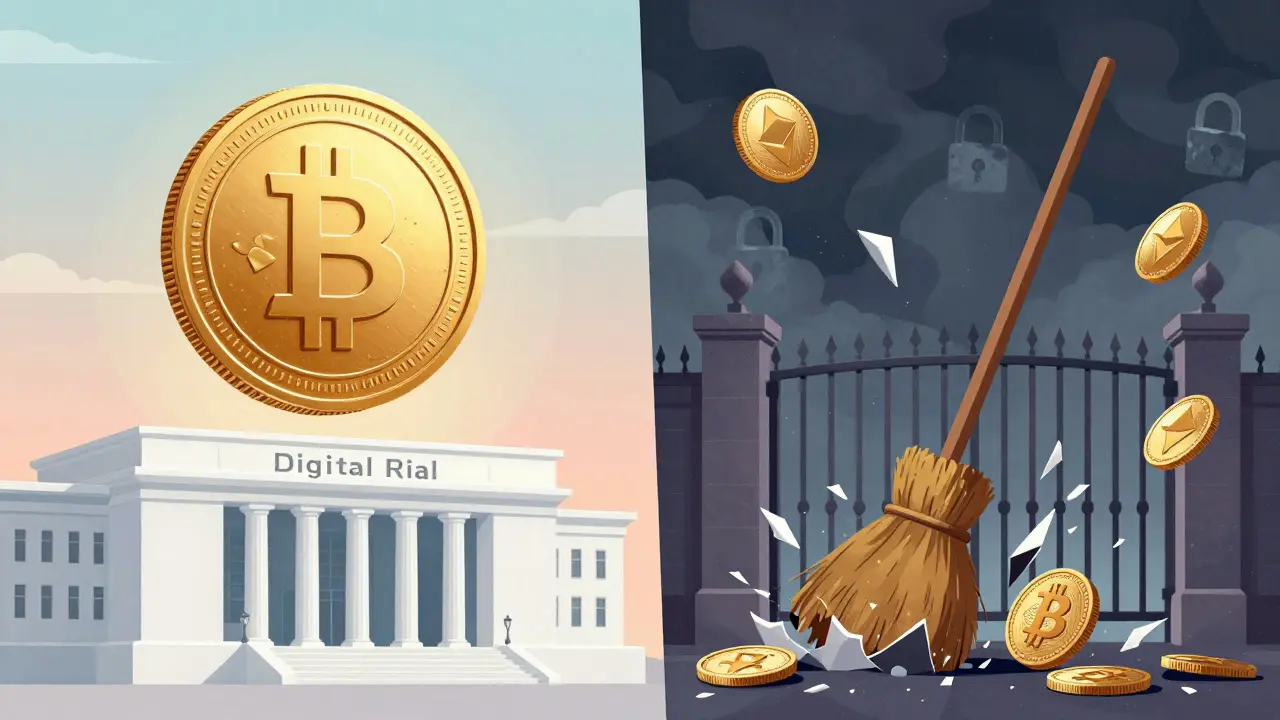
If you think the government is banning crypto out of fear, look closer. They are building their own version. Iran is developing a Central Bank Digital Currency (CBDC) called "Rial Currency." Unlike Bitcoin, which is decentralized, the Digital Rial is fully controlled by the CBI.
Digital Rial serves as electronic cash, representing the digital version of common banknotes. It cannot be mined. Its supply is regulated exclusively by the central bank. Pilot programs, such as the one on Kish Island, aim to reduce dependency on the US dollar for domestic transactions.
For users, this creates a confusing landscape. You have private cryptocurrencies (Bitcoin, Ethereum) that are restricted and surveilled, and you have the Digital Rial, which is promoted but still in early stages. The government hopes that eventually, the Digital Rial will replace the need for foreign crypto entirely, giving them total control over monetary policy while offering the speed of digital payments.
Exchange Operations and Compliance Risks
Local exchanges like Nobitex operate under stringent regulations. They are required to conduct Know Your Customer (KYC) checks and adhere to Anti-Money Laundering (AML) protocols. This means you cannot create an anonymous account. Your identity is tied to your wallet.
But there is a bigger risk coming from outside Iran. International pressure is mounting. On July 2, 2025, Tether (the issuer of USDT) froze 42 cryptocurrency addresses linked to Iran, including many with exposure to Nobitex. This was their largest-ever freeze of Iranian-linked funds.
What does this mean for you? If you hold USDT or other stablecoins and interact with Iranian IPs or known local exchanges, your funds could be frozen by the issuer. This is a massive risk for traders. Many Iranians now use Virtual Private Networks (VPNs) to access foreign exchanges, trying to circumvent local restrictions and avoid being flagged by international compliance algorithms. But this is a cat-and-mouse game, and the net is tightening.
| Activity | Legal Status | Risk Level | Government Oversight |
|---|---|---|---|
| Licensed Mining | Legal | Low (if compliant) | High (Must sell to CBI) |
| Illegal Mining | Criminal Offense | Very High | Raids and Confiscation |
| Trading on Local Exchanges | Legal | Medium | Total Surveillance (API Access) |
| P2P Payments for Goods | Effectively Banned | High | Financial Penalties |
| Using Foreign Exchanges | Gray Area | Very High | Asset Freezing Risk (Tether/USDT) |
Sanctions Evasion and International Implications
Iran's interest in crypto began in 2017 when international sanctions cut off access to the global financial system. Crypto became a lifeline for importing medicine and food. However, the involvement of groups like the Islamic Revolutionary Guard Corps (IRGC) in crypto activities has raised red flags globally.
International compliance actions now specifically target IRGC-linked wallets. This means that even if you are a regular person in Iran, if your funds touch a wallet associated with sanctioned entities, you could be caught in the crossfire. The narrative has shifted from "crypto helps Iran survive sanctions" to "crypto facilitates illicit finance." This shift has led to stricter KYC requirements globally and more frequent freezes by major issuers like Tether.
Practical Advice for Users in 2026
If you are navigating this space, here is what you need to know:
- Don't Expect Privacy: Assume the CBI knows every transaction you make on a licensed platform. Use strong security measures, but accept that anonymity is gone.
- Beware of Stablecoin Freezes: Holding large amounts of USDT or USDC carries the risk of sudden freezing if your wallet is flagged as Iranian-linked. Diversify into assets that are less prone to centralized censorship, though liquidity may be lower.
- Avoid P2P for Daily Spending: Using crypto to buy coffee or pay rent is technically prohibited and can lead to account closures or legal trouble.
- Watch the Grid: If you are considering mining, factor in the high electricity tariffs and the risk of blackouts. The cheap energy days are over.
The market volume reflects this caution. Between January and July 2025, total crypto flows in Iran dropped by 11% compared to the previous year. People are pulling back, either out of fear or because the barriers to entry have become too high.
Can I use Bitcoin to pay for goods in Iran in 2026?
No, direct peer-to-peer cryptocurrency payments for goods and services are effectively prohibited. While you can trade crypto for rials on licensed exchanges, using those rials or crypto directly for daily purchases is restricted to maintain control over the national currency.
Is cryptocurrency mining legal in Iran?
Yes, mining is legal but strictly regulated. You must obtain a license from the Ministry of Industry, Mine and Trade, use approved hardware, and pay high electricity tariffs. Licensed miners are required to sell their earnings to the Central Bank of Iran. Unlicensed mining is illegal and subject to raids and confiscation.
Why did Tether freeze Iranian wallets in 2025?
Tether froze wallets to comply with international sanctions and anti-money laundering regulations. Many of the frozen addresses were linked to Iranian exchanges like Nobitex or entities associated with the IRGC. This highlights the risk of holding centralized stablecoins if you are located in or transacting with Iran.
What is the Digital Rial?
The Digital Rial is Iran's Central Bank Digital Currency (CBDC). Unlike Bitcoin, it is centralized and controlled by the Central Bank of Iran. It aims to provide fast digital payments while maintaining full state oversight, reducing reliance on the US dollar for domestic transactions.
Can I advertise cryptocurrency in Iran?
No. As of February 2025, there is a comprehensive nationwide ban on all cryptocurrency advertising, both online and offline. This includes social media posts, billboards, and website banners.





Samara McCallum
May 10, 2026 AT 09:18the whole concept of privacy is just a fairy tale we tell ourselves to sleep at night
governments always win because they control the infrastructure
crypto was supposed to be freedom but it ended up being another surveillance tool
i guess that is just how life goes
Sheldon Friesen
May 11, 2026 AT 07:19Oh, really? Did you read the article or just skim the headlines?! It explicitly states that P2P payments are effectively prohibited! You cannot use Bitcoin for groceries! The Central Bank of Iran is watching every single transaction! Are you trying to get your assets frozen by Tether?! Be careful out there!
Bradley Geldenhuys
May 12, 2026 AT 10:07look man i think people are overreacting to the regulations
sure its tight now but thats just how these things go when sanctions hit
the real issue is the energy cost for miners which is skyrocketing
if u cant mine profitably then maybe u shouldnt be doing it
simple as that honestly
robert Whitehead
May 14, 2026 AT 04:23You are all missing the point entirely. This is not about 'freedom' or 'privacy.' It is about national security and economic stability. The government has every right to regulate financial instruments that threaten the integrity of the Rial. If you cannot comply with KYC/AML protocols, you are likely involved in illicit activities. Do not romanticize the 'wild west' era; it was dangerous and unregulated chaos.
Mike S
May 16, 2026 AT 00:23Honestly this entire situation is a joke
first they ban ads then they freeze wallets
what is next banning thoughts about crypto
the digital rial is just a step towards total control
i hope everyone realizes this is not sustainable
H F
May 16, 2026 AT 17:59Wow, this is quite a shift from the previous years! I remember when mining was a bit more relaxed, although even then it was tricky. The part about the Digital Rial replacing foreign crypto is fascinating, though terrifying for anyone who values decentralization. It really shows how the state is adapting to new technology rather than just rejecting it outright.
Michael Berggren
May 17, 2026 AT 04:41Great breakdown 👍 The distinction between licensed and illegal mining is crucial here. Many people don't realize that while mining is legal, the economic viability has changed drastically due to electricity tariffs. Also, the risk of Tether freezing USDT linked to Iranian IPs is a massive red flag for traders 🚩 Always diversify!
Kiran CS
May 18, 2026 AT 00:01It is rather amusing to watch the masses scramble for 'financial freedom' only to find themselves trapped in a digital cage constructed by their own governments. The notion that one can simply 'exit' the fiat system via stablecoins is a quaint illusion, especially when the issuers of said stablecoins adhere to Western sanctions. How utterly predictable.
Jesse Alston
May 19, 2026 AT 00:27I appreciate this detailed overview! 😊 It's really helpful to understand the specific risks regarding Tether freezes. For anyone considering holding USDT, please be aware that compliance algorithms are getting smarter. Using a VPN might help bypass local restrictions, but it won't necessarily hide you from international issuer scrutiny. Stay safe out there! 🙏
Sarah C
May 19, 2026 AT 04:54This is really important information for anyone with connections to Iran. I worry about my friends there who are trying to save money against inflation. The lack of privacy on licensed exchanges is concerning. We need better ways to support them without putting them at risk.
Kimberly Herbstritt
May 19, 2026 AT 19:52Actually I think the ban on advertising is a good thing
less hype means fewer scams
people will have to do their own research instead of following influencers
maybe it will clean up the market a bit
Sharada Vakkund
May 21, 2026 AT 05:48Let's discuss the implications of the Digital Rial. While it offers speed and convenience, the loss of anonymity is significant. However, for domestic transactions, it might actually streamline the economy. What do you all think about the long-term impact of CBDCs in sanctioned countries?
Sudarshan Anbazhagan
May 22, 2026 AT 21:36one must consider the broader geopolitical context wherein cryptocurrency serves as both a shield and a sword for nations under sanction the central bank of iran's pivot towards regulation is not merely an act of control but a strategic maneuver to retain sovereignty over monetary policy while simultaneously engaging with the global blockchain ecosystem albeit under strict conditions
John Gonzalez Bentham
May 23, 2026 AT 14:18typical propaganda
they say its for security but its really just to stop capital flight
nobody believes the gov cares about protecting the rial
they just want to keep their hands on the money
Ellie Riddell
May 23, 2026 AT 16:37So basically the game is rigged either way
if you play by the rules you get watched
if you break the rules you get raided
classic authoritarian move
i suppose that is why they call it the 'gray area'
Destiny Kilby
May 24, 2026 AT 10:48i find the situation deeply troubling yet inevitable
the erosion of privacy is a global trend not limited to iran
however the severity here is unmatched
one must tread carefully
Jerry CUNNINGHAM SR
May 25, 2026 AT 02:32It is essential to respect the regulatory frameworks established by sovereign nations. While the desire for financial autonomy is understandable, operating within the law ensures stability and protects the broader community from illicit financial flows. The measures taken by the CBI are consistent with global AML standards.
Shelby Cantu
May 26, 2026 AT 16:19Stay safe everyone
dont take risks you cant afford
Tobias Gjerlufsen
May 27, 2026 AT 22:13you guys are so naive thinking this changes anything
the irgc is still running the show
crypto is just another tool for them to evade sanctions
nothing has really changed except the price of electricity
wake up sheeple
Ruben Michel
May 29, 2026 AT 14:41The assertion that privacy is dead is somewhat reductive. While true for centralized exchanges, the underlying technology of blockchain remains decentralized. However, the practical reality for users in Iran is indeed grim. The state's ability to monitor and control financial flows through APIs is unprecedented. One must acknowledge the sophistication of this surveillance apparatus.
Gavin Wonnacott
May 30, 2026 AT 00:24You are all idiots if you think you can beat the state
they have the power
they have the money
they have the guns
stop pretending you are some revolutionary hero
you are just a number in a database
Michelle Bonahoom
May 31, 2026 AT 21:16iran should just stick to its own business
no need for crypto
they are causing problems for everyone
sanctions are their own fault
Matt Davis
June 2, 2026 AT 07:15This is precisely the kind of draconian overreach that undermines any semblance of free markets. The government's attempt to co-opt cryptocurrency for its own ends is not only hypocritical but also counterproductive. They claim to support innovation while simultaneously strangling it with red tape. Typical.
Albert Lee
June 2, 2026 AT 07:39I am so worried about the people affected by this! 😢 The stress of living under such constant surveillance must be unimaginable. Please remember that you are not alone in your concerns. Let us continue to raise awareness about these issues so that we can advocate for better policies and protections for individuals worldwide. 💪