You’ve probably scrolled past a dozen cat-themed cryptocurrencies this year alone. Some promise the moon, others vanish overnight. Meowcoin (MEWC) is one of those projects that claims to do more than just look cute-it says it’s building a blockchain specifically for animal welfare. But does it actually work, or is it just another micro-cap token with a fluffy logo?
Here’s the short answer: Meowcoin is a real, functioning cryptocurrency launched in September 2022. It uses a specific mining algorithm designed to keep things fair for everyday users with gaming computers. Its main hook is that a chunk of every block reward goes directly to animal shelters. However, if you’re looking to get rich quick or trade easily, you might be disappointed. The liquidity is practically non-existent.
The Core Idea: Mining for Animals
Most cryptocurrencies are built for speed, security, or financial speculation. Meowcoin flips the script by making philanthropy its core feature. The project was launched with what creators call a "fair launch." That means no team premine, no initial coin offering (ICO) where insiders buy cheap, and no masternodes that require huge holdings to earn rewards. Instead, everyone starts on equal footing.
The goal is simple: integrate blockchain into the pet industry while funding shelters. They want to use MEWC for things like pet adoption fees, loyalty programs at pet stores, and even documenting pedigree records on the blockchain. It sounds noble, but execution is tricky. Unlike larger charity platforms like The Giving Block, which processes millions in donations annually, Meowcoin operates on a tiny scale. As of late 2023, its market cap hovered around $136,000. To put that in perspective, that’s less than many individual startups raise in seed funding.
The team behind Meowcoin remains anonymous, operating under the banner of animal advocacy. This anonymity is common in early-stage crypto but raises questions about accountability. If something goes wrong, who do you talk to? There’s no CEO to sue and no legal entity registered in most jurisdictions. For a project handling charitable funds, transparency is usually key-but here, it’s limited to on-chain data and occasional updates.
How the Technology Works: KaWPOW and MeowPow
If you care about the tech, Meowcoin runs on the KaWPOW blockchain protocol. This is a proof-of-work system, similar to Bitcoin or Litecoin, but with a twist. It’s designed to be ASIC-resistant. ASICs are specialized machines that mine Bitcoin efficiently but cost thousands of dollars. By blocking them, Meowcoin ensures that regular people with decent gaming graphics cards can still mine coins.
They use a modified version of the ProgPow algorithm called MeowPow. The claim is that this reduces power consumption by up to 60% compared to standard implementations. Whether that’s true depends on your hardware, but the intent is clear: make mining greener and more accessible. Blocks are generated every 60 seconds, which is relatively fast for a proof-of-work chain.
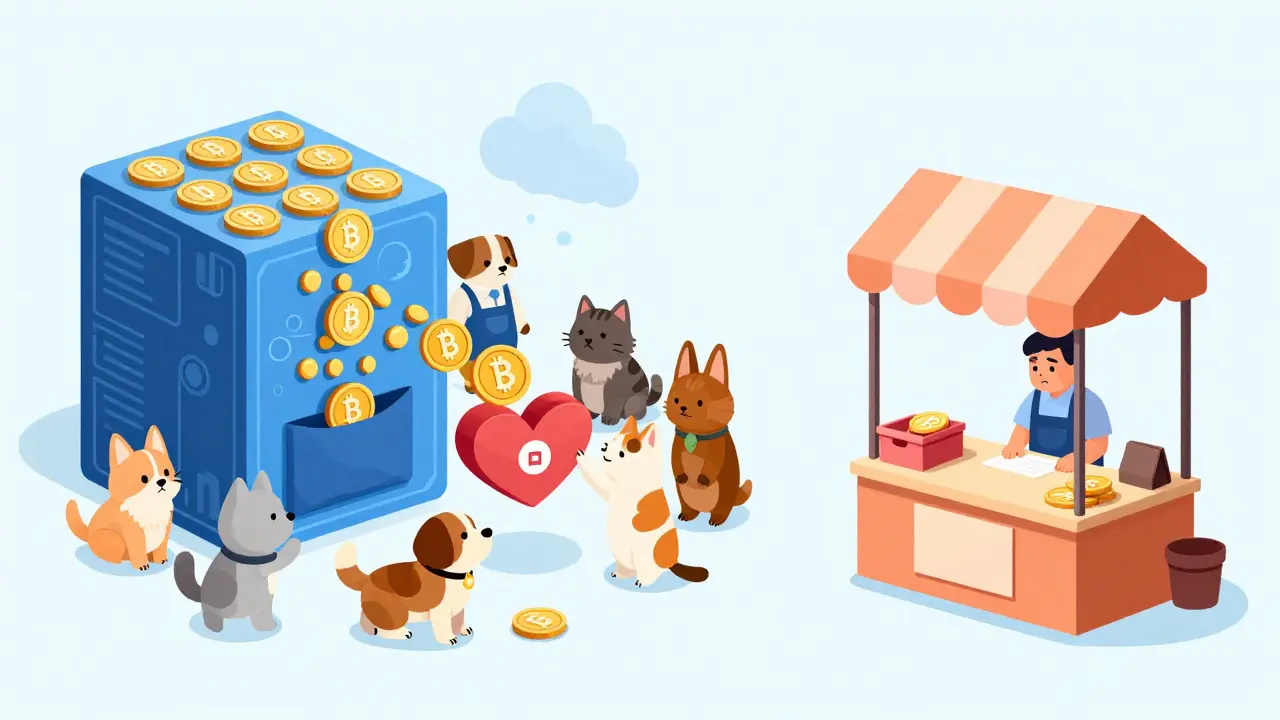
Here’s where it gets interesting. Each block produces 5,000 MEWC. Of those, 2,000 go to the miner who found the block. The other 3,000? They go straight into the Meowcoin Fund. This fund covers donations to shelters, development costs, and marketing. It’s an automatic tax on mining that forces the network to contribute to its mission. You don’t have to choose whether to donate; the code does it for you.
| Feature | Detail |
|---|---|
| Algorithm | KaWPOW (MeowPow variant) |
| Block Time | 60 seconds |
| Block Reward | 5,000 MEWC (2,000 to miner, 3,000 to fund) |
| Mining Hardware | Consumer-grade GPU (ASIC resistant) |
| Merge Mining | Compatible with Litecoin (LTC) |
| Max Supply | 21 Billion MEWC |
The Liquidity Problem: Can You Actually Sell It?
This is the part most reviews skip. You can mine MEWC. You can hold MEWC. But can you sell it? Not really.
Liquidity refers to how easily you can buy or sell an asset without affecting its price. Meowcoin has almost zero liquidity. In December 2023, CoinMarketCap reported $0 trading volume over 24 hours. Other trackers showed slightly better numbers-around $4,500 on Nonkyc.io-but that’s nothing for a global currency. If you try to sell even a small amount, you’ll likely face massive slippage. Your sale could crash the price by 10% or more because there aren’t enough buyers waiting in the order book.
Why does this matter? Because if you mine 50,000 MEWC and want to convert it to cash to help a shelter, you might find yourself stuck. One Reddit user noted they successfully donated tokens to a local shelter, but couldn’t sell any of their own holdings. Another user complained about bid-ask spreads exceeding 15% on TradeOgre. That means if you buy at $0.00006, you’d need the price to jump significantly just to break even when selling.
For comparison, major coins like Bitcoin or Ethereum have billions in daily volume. Even smaller altcoins often see hundreds of thousands. Meowcoin is in a different league entirely-a micro-cap niche with severe exit barriers.
Mining MEWC: Is It Worth Your Electricity?
If you already have a GPU rig sitting around, mining Meowcoin might be fun. It supports merge mining with Litecoin. This means you can mine both LTC and MEWC simultaneously using the same hardware. Since Litecoin is established and liquid, you get paid in a useful currency while also earning MEWC as a bonus. It’s a clever way to boost efficiency.
Setting up a miner takes about 2-3 hours for beginners. The official guides walk you through wallet setup and configuration. You’ll need a basic understanding of command-line interfaces and perhaps some help from their Telegram channel. Support response times vary, but users report getting answers within 48 hours for technical issues.
However, don’t expect profits. With a max supply of 21 billion MEWC and current prices hovering around $0.000059, the value per coin is negligible. Unless electricity is free, you’re unlikely to make money purely from mining. Most participants do it for the cause or out of curiosity. If you’re doing it for charity, verify that your local shelter accepts crypto donations before sending anything.
Expert Opinions and Market Reality
Industry experts are skeptical. Dr. Elena Rodriguez from the University of Zurich noted that while the engineering behind KaWPOW is competent, the market positioning is flawed. A micro-cap charity token with near-zero liquidity struggles to create meaningful impact without massive community growth. Mark Cuban famously called such projects "well-intentioned but technically overcomplicated," highlighting the difficulty of gaining traction without liquidity.
Analysts at Messari pointed out unsustainable tokenomics. With a 21 billion supply cap and a tiny market cap, dilution is a real risk if more coins enter circulation. Galaxy Digital research suggests only 12% of similar micro-cap charity cryptos survive beyond three years. Meowcoin’s five-year survival probability is estimated at just 28%.
Yet, there are success stories. A volunteer in Austin, Texas, confirmed receiving a $250 donation converted from MEWC by a local shelter. These instances prove the model works on a small scale. The issue isn’t the technology; it’s the economics. Without more users, exchanges, and partners, the cycle remains stagnant.
Future Roadmap: PetChain and Beyond
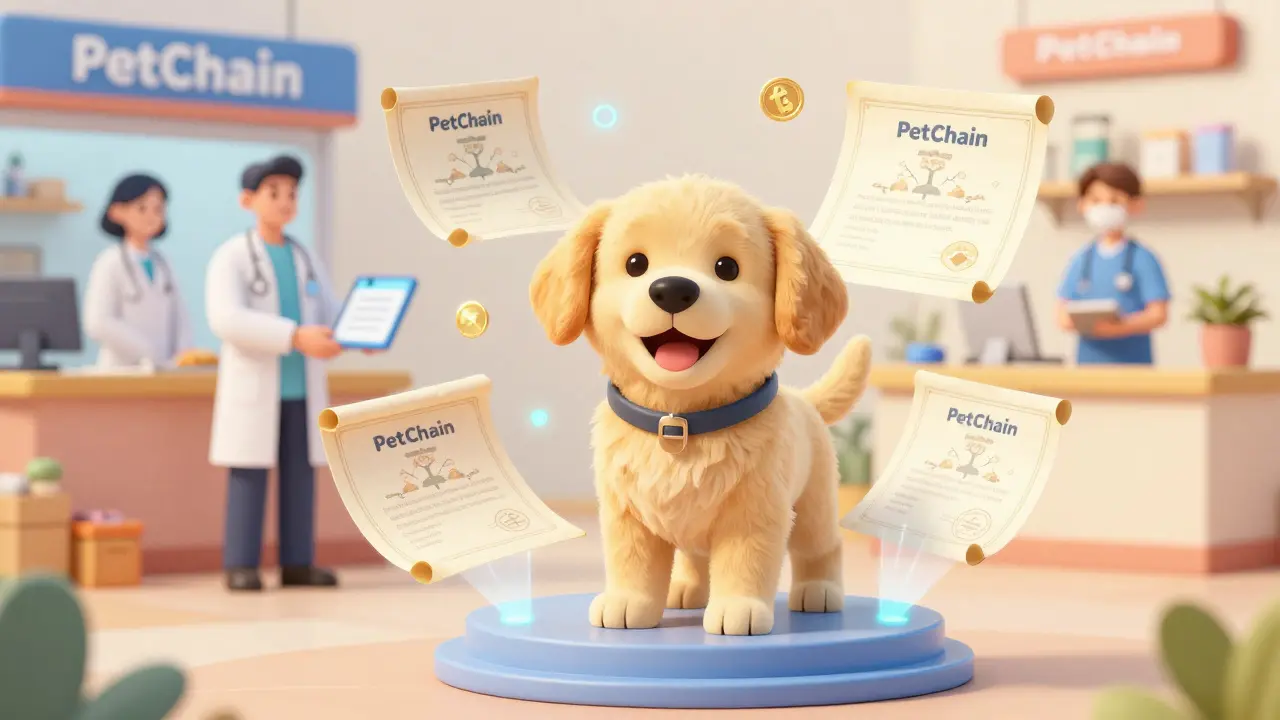
The team isn’t idle. Their 2024 roadmap includes implementing Taproot and Segwit upgrades to improve transaction capabilities. More ambitiously, they plan to launch "PetChain" in 2025. This initiative aims to tokenize pets on the blockchain, creating unique digital identities for ownership records and pedigrees. Imagine buying a puppy and receiving a NFT-like certificate proving its lineage, all stored on Meowcoin’s ledger.
If PetChain gains traction, it could solve the utility problem. Right now, MEWC has no real-world use case beyond donations. PetChain would give merchants, breeders, and vets a reason to interact with the network. But until then, it remains a speculative experiment.
Is Meowcoin a scam?
No, Meowcoin is not a scam in the traditional sense. It has a functional blockchain, active miners, and verified donations to shelters. However, it is a high-risk investment due to extreme illiquidity and low market capitalization. You should not expect to profit from it.
Can I buy Meowcoin on Coinbase or Binance?
No, Meowcoin is not listed on major centralized exchanges like Coinbase or Binance. You can only trade it on smaller platforms like Nonkyc.io or via decentralized swaps, which come with high fees and slippage risks.
How much electricity does mining MEWC use?
Meowcoin uses the MeowPow algorithm, which claims to reduce power consumption by up to 60% compared to standard ProgPow. Actual usage depends on your GPU, but it is generally considered more energy-efficient than Bitcoin mining.
What happens to the 3,000 MEWC sent to the fund each block?
These coins are allocated to the Meowcoin Fund, which covers direct donations to animal shelters, development costs, and marketing efforts. The distribution is managed by the anonymous team, with transparency reports provided periodically.
Is it safe to store MEWC in a hardware wallet?
Meowcoin is compatible with Komodo Wallet, which supports hardware wallets like Trezor. Using a hardware wallet is recommended for security, especially since the project lacks extensive customer support for lost keys or stolen funds.