
What Exactly is This Airdrop?
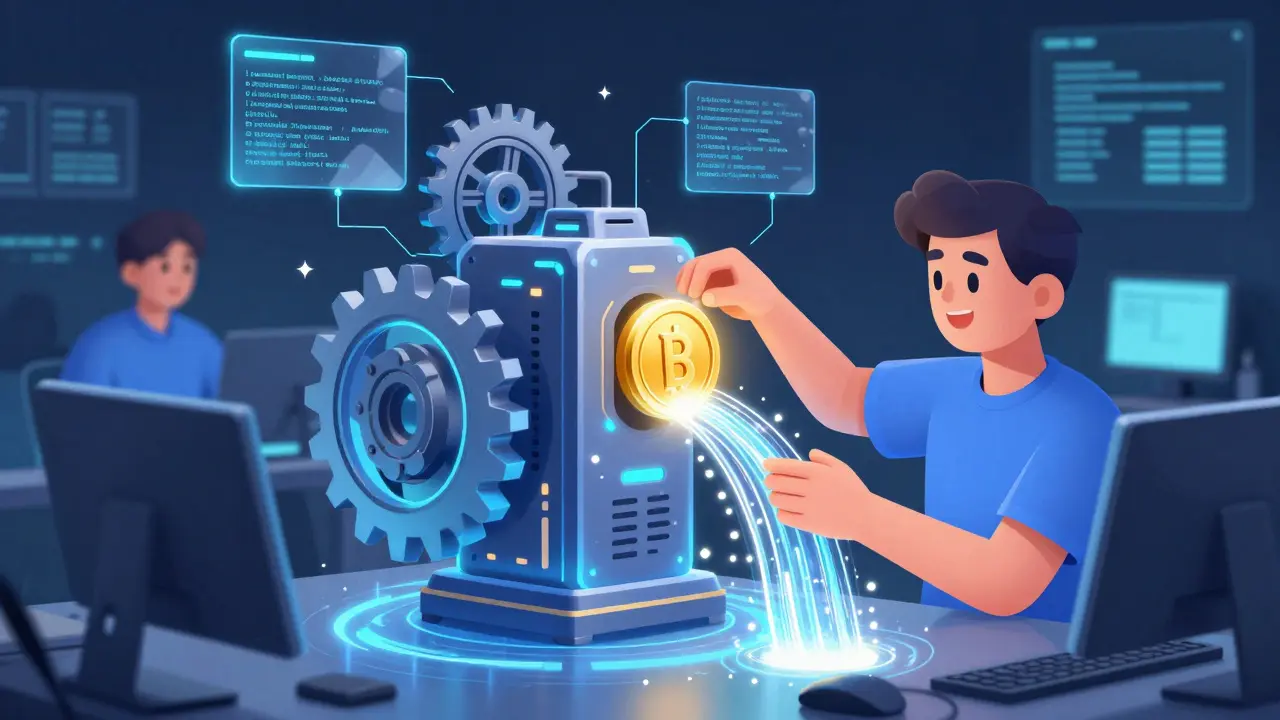
Before you connect your wallet to any random site, let's clear up the confusion. There is a significant difference between a project named 'The APIS' and the rewards program run by the Crypto APIs infrastructure firm. The latter isn't just a coin; it's a suite of tools that helps developers build apps without having to manage their own heavy-duty nodes. In a typical scenario, these rewards are designed to incentivize developers and early adopters who utilize their Blockchain as a Service (BaaS) a cloud-based model where blockchain components are managed by a provider to reduce technical overhead . For example, if you're building a portfolio tracker, you'd use their market data APIs to fetch prices. By rewarding these users with tokens, the company creates a loyal base of developers who are financially invested in the platform's success.Understanding the Utility of API Tokens
Why would a company give away tokens? It's not just about free money; it's about governance and access. In the case of infrastructure tokens, they often act as a "key" to unlock higher rate limits or premium data feeds. Consider a developer working on a high-frequency trading bot. They need data that updates every millisecond. A standard free tier won't cut it. By holding a specific amount of tokens, that developer might get priority access to the REST API a standardized architectural style for creating web services that allows different systems to communicate over HTTP , ensuring their bot doesn't lag behind the market. This transforms the airdrop from a simple gift into a functional tool for business growth.| Feature | Infrastructure Token (e.g., API Tokens) | Standard Meme Airdrop |
|---|---|---|
| Primary Value | Utility and Service Access | Speculation and Hype |
| Target Audience | Developers and Power Users | General Public/Social Media Users |
| Longevity | Linked to Platform Usage | Linked to Viral Trends |
| Risk Level | Moderate (Project Delivery Risk) | High (Volatility Risk) |
How to Qualify for Infrastructure Airdrops
Getting a piece of an infrastructure airdrop usually requires more than just following a Twitter account. Since these projects target developers, the criteria are often technical. Here is how you can typically position yourself for these rewards:- API Integration: Sign up for a developer account and actually make requests to the platform. Most projects track "active users" by looking at the volume of API calls made over a 30-day period.
- Beta Testing: Join the early access programs for new features, such as a new Ethereum support module a decentralized, open-source blockchain with smart contract functionality or a specialized indexer.
- Documentation Contributions: Many infrastructure projects reward those who help clean up their technical docs or report bugs in their SDKs.
- Liquidity Provision: Some tokens require you to provide liquidity on a decentralized exchange to prove you are a long-term stakeholder.

Red Flags: Avoiding Airdrop Scams
Because the term "API" is so common, scammers often create fake "The APIS" portals to steal private keys. If you encounter a site claiming to give away tokens, ask yourself a few hard questions. Does the site ask for your seed phrase? If yes, leave immediately. Real airdrops only require your public wallet address or a connection via a verified wallet like MetaMask a software cryptocurrency wallet used to interact with the Ethereum blockchain and other EVM-compatible networks . Another red flag is a "gas fee" request. If a site tells you to send 0.1 ETH to "verify" your wallet before receiving your airdrop, it's a scam. Legitimate distributions are pushed to your wallet by the project, or you claim them by paying a small transaction fee directly to the blockchain network, not to a private address.The Bigger Picture: Why Blockchain Infrastructure Matters
Whether it's The APIS or another provider, the shift toward scalable infrastructure is the only way crypto goes mainstream. Right now, most apps are slow because they rely on fragmented data. Providers that can aggregate data from Bitcoin the first decentralized cryptocurrency, utilizing a proof-of-work consensus mechanism and Litecoin a peer-to-peer cryptocurrency created as a lighter version of Bitcoin into a single, fast stream are the ones that will actually survive the next bull run. When you participate in these airdrops, you aren't just chasing a quick profit. You're essentially becoming an early stakeholder in the "plumbing" of the internet. If the plumbing works, the whole building stays standing. That's why focusing on utility-driven tokens is generally a smarter move than chasing the latest viral token with no actual product.Is 'The APIS' a separate coin or part of Crypto APIs?
Based on current market data, most references to 'The APIS' rewards relate to the ecosystem created by Crypto APIs, a blockchain infrastructure company. Always verify if you are interacting with an official company portal rather than a third-party project using a similar name.
How do I know if I am eligible for the API token airdrop?
Eligibility usually depends on your history as a developer or user of the platform's services. Check the official documentation or a verified announcement channel to see if your wallet address or developer ID is on the snapshot list.
Do I need to be a coder to participate in these airdrops?
While infrastructure projects prioritize developers, many also reward community managers, beta testers, and long-term holders. However, the most lucrative rewards usually go to those who actually integrate the API into a working application.
Where can I safely claim my tokens?
Only use official links provided in the project's whitepaper or their verified social media profiles. Avoid clicking links in Telegram DMs or unexpected emails, as these are common phishing vectors.
What happens after I receive the tokens?
You can typically either hold them for potential value increase, use them to upgrade your API service tier, or trade them on supported exchanges if the token has been listed publicly.





Samson Selleck
April 11, 2026 AT 12:03The conceptual dichotomy presented between utility-driven infrastructure tokens and purely speculative assets is rudimentary at best. One must account for the asymptotic nature of liquidity provision in these ecosystems, where the actual utility often pales in comparison to the systemic risk of smart contract vulnerabilities. The systemic fragility of relying on a centralized API provider for "decentralized" data is a paradox that most retail investors simply lack the intellectual capacity to grasp. We are essentially witnessing a rebranding of SaaS subscriptions into tokenized governance, which is a transparent attempt to inflate valuation through artificial scarcity. The architectural overhead of maintaining these nodes is far more taxing than the post suggests, and the supposed "democratization" of data access is merely a tiered access model disguised as Web3 innovation. It's frankly exhausting to see such simplistic narratives dominate the discourse when the actual macroeconomic implications of infrastructure tokens are so fraught with volatility and regulatory ambiguity.
Amanda Faust
April 12, 2026 AT 20:45obviously the distinction between a specific airdrop and a service provider is basic crypto 101 but most people just google the name and click the first link they see without reading a single doc
Kelly Cantrell
April 14, 2026 AT 03:27Just remember that these "infrastructure" plays are usually just fronts for bigger data collection schemes. They want you to "integrate" your apps so they can map out every single developer's workflow and then sell that metadata to the highest bidder or the government. It's all just one giant web of surveillance disguised as a reward program. Stay vigilant and don't trust the official portals too much because that's exactly where they get you.
Will Dixon
April 15, 2026 AT 09:31This is super helpful for anyone tryin to get into the dev side of things. I didnt even know you could get rewards just for cleaning up documentation, that sounds like a great way to start learning!
Jason Davis
April 16, 2026 AT 10:20I tried useing a similar API last year and the rate limits were a nightmare until I got the tokens. Just be careful with the SDK versions because some of the old ones have bugs that will crash your whole build if you dont update them first.
ssjuul z
April 16, 2026 AT 17:57Let's gooo! This is the way to actually build value in the space 🚀 Utility is everything!
Prasanna Shembekar
April 17, 2026 AT 11:00omg i almost fell for a fake site once it was so scary i actually cried for a bit
Jessie Tayaban
April 19, 2026 AT 00:32Omg yes!! I totaly agree that the scams are getting way too realistic now... I almost clicked a link in my DMs yesterday but then I remembered this advice and like, NOPE!! Not today scammer!!
Carroll Foster
April 20, 2026 AT 06:30Oh great, another "game changing" piece of plumbing for the internet. I'm sure the high-frequency trading bots are just thrilled to have a new way to front-run the rest of us into oblivion. Absolute peak efficiency right here.
Terrance Hausmann
April 22, 2026 AT 03:55It's really great to see a guide that emphasizes safety and utility over pure hype. If you're new to this, just take it slow. Don't feel pressured to rush into things just because of FOMO. You've got this!
Akshay Gorad
April 22, 2026 AT 19:10The detailed comparison table is quite useful for understanding the risk profiles. It is important to maintain a balanced perspective when approaching these rewards.
Lauren Abrams
April 23, 2026 AT 10:41The part about the gas fees is a really good reminder. I noticed that a lot of people still get tricked by that simple trick even in 2024.
Agnessa Dale
April 23, 2026 AT 18:40This is such a positive way to look at the ecosystem! I love how it encourages people to actually contribute and build something meaningful.
Rima Dinar
April 23, 2026 AT 20:54I truly believe that if more people spent time understanding the technical documentation as suggested in the guide, the overall quality of dApps would improve significantly and we would see far fewer catastrophic failures in smart contracts across the board because developers would be more incentivized to be thorough.
Scott Fenton
April 25, 2026 AT 14:34I concur with the assessment regarding the necessity of scalable infrastructure. Without robust data aggregation, the user experience will remain suboptimal for the average consumer.
logan bates
April 26, 2026 AT 03:21USA needs to lead the way in this infrastructure or we're just handing the keys to the internet over to foreign competitors who don't share our values.