Cryptocurrency Tracing: How to Track Coins, Spot Scams, and Avoid Lost Funds
When you hear cryptocurrency tracing, the process of following digital coins across public blockchains to identify their movement and origin. Also known as blockchain analysis, it’s not just for investigators—it’s your first line of defense against fake airdrops, dead tokens, and stolen funds. If you’ve ever bought a coin that vanished overnight, or clicked on a "free token" link that led to a drained wallet, you’ve felt the need for this.
Cryptocurrency tracing isn’t magic. It’s math. Every Bitcoin, Ethereum, or BSC token leaves a public trail on the blockchain. Tools can show you where a coin came from, how many wallets it touched, and if it ever hit a known exchange or mixer. That’s how you spot a scam before you invest. Take DOGMI or OKFLY—both were hyped as the next big thing, but tracing their transactions showed zero activity, no liquidity, and a team that disappeared. Same with VikingsChain and E2P Token. The money didn’t go anywhere because there was never any real project behind them. Tracing reveals that.
It’s not just about avoiding scams. Tracing helps you understand real market behavior. When a big holder moves a pile of tokens, it often signals a sell-off. When a new token gets dumped into a DEX like BabySwap or SunSwap, you can trace how fast it spreads—and if it’s being pumped by bots. Even regulation ties into this. MiCA-compliant exchanges like Millionero and SpireX use tracing tools to flag suspicious activity. Meanwhile, platforms like UZX and NinjaSwap, with no audits and zero transparency, are red flags you can confirm with tracing.
You don’t need to be a coder to do this. Free tools let you paste a wallet address and see every transaction ever made from it. You can see if a token’s supply is real or just fake numbers on a website. You can check if an airdrop like Arch Network is actually active or just a promise with no on-chain proof. And you can spot when a project like InspireAI or NFMart has no movement at all—meaning it’s dead, even if someone’s still listing it on CoinMarketCap.
What you’ll find in these posts isn’t theory. It’s real cases. From the shutdown of DOGMI to the silent death of NinjaSwap, from fake CoinMarketCap airdrops to the hidden truth behind SPIN and 2CRZ, every story here was uncovered by tracing. You’ll learn how to do it yourself, what tools actually work, and how to avoid becoming the next victim of a coin that vanished into thin air.
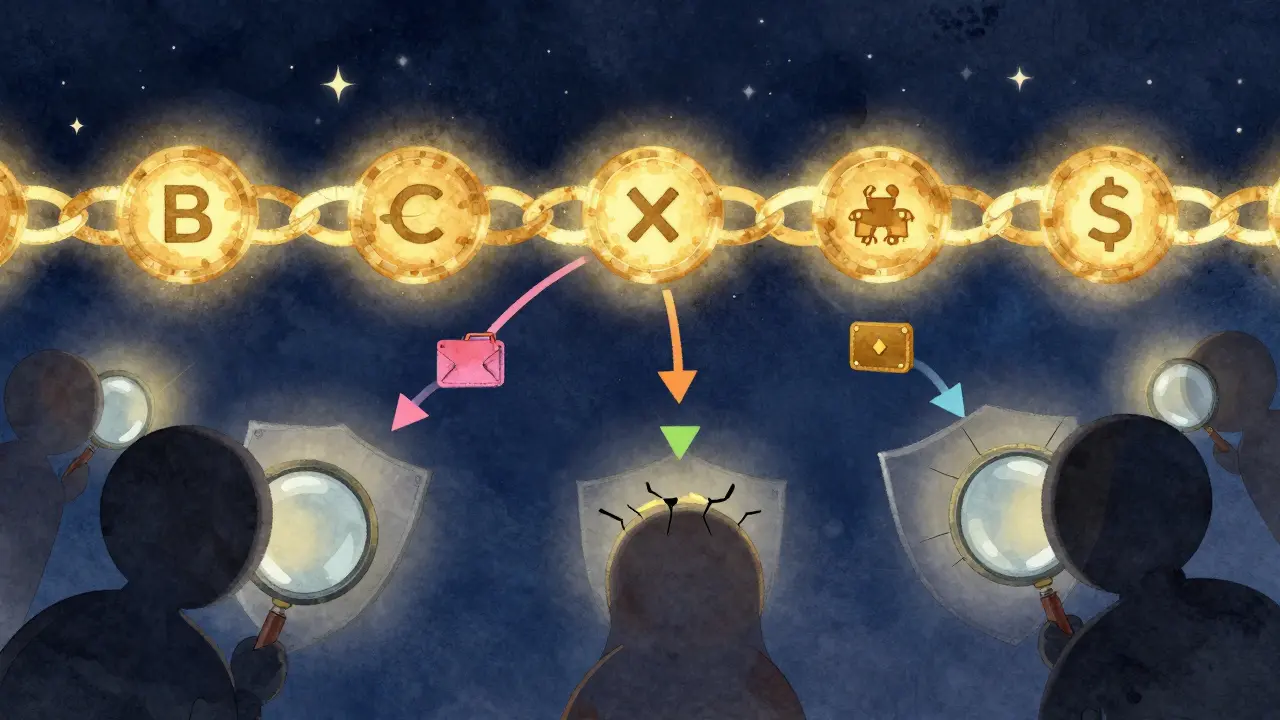
How Authorities Use Blockchain Forensics to Detect Crypto Sanctions Evasion
Authorities use blockchain forensics to trace crypto transactions, detect sanctions evasion, and freeze illicit funds. Tools now identify complex laundering patterns across chains, making crypto less anonymous than ever.