Crypto Tax Calculator for India
Calculate your tax liability on cryptocurrency transactions under India's current regulations (30% capital gains tax + 1% TDS).
As of 2025, crypto is legal but not regulated in India. The government imposes a 30% tax on crypto gains plus 1% TDS on all transactions.
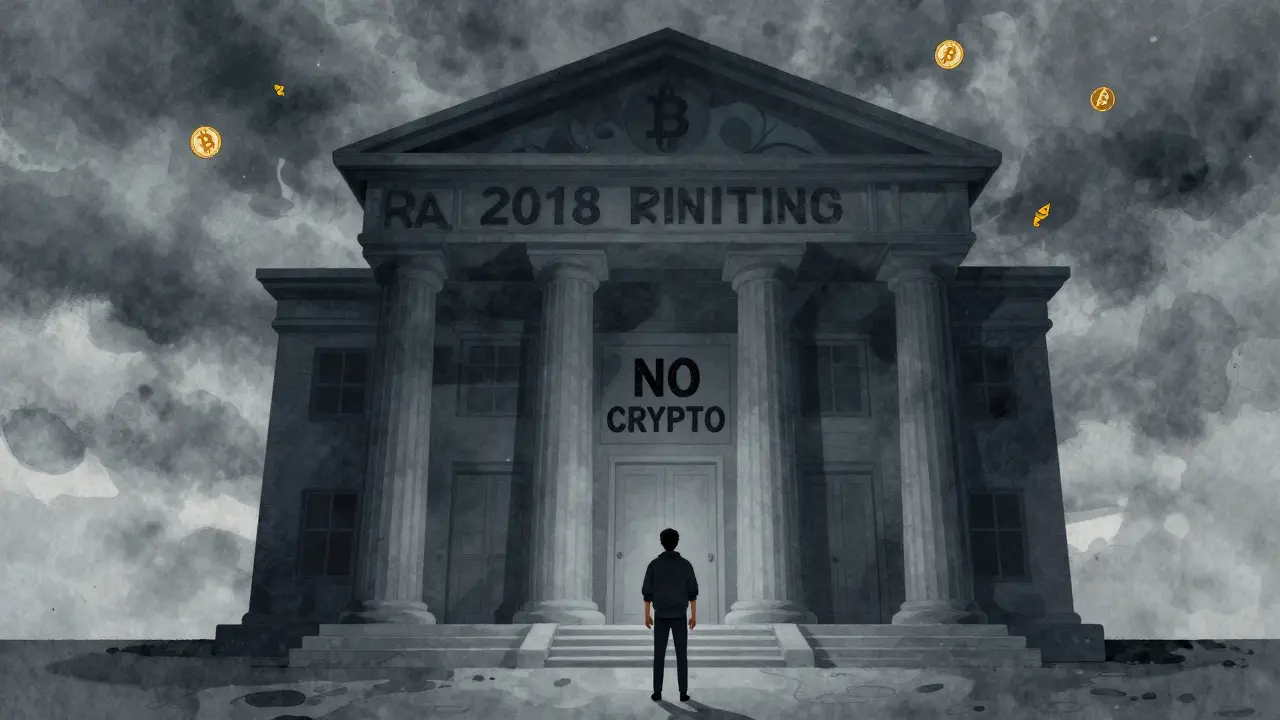
Before March 2020, if you wanted to buy Bitcoin in India, you had to find a way around the banks. Not because the government banned crypto - but because the Reserve Bank of India made it impossible for exchanges to operate. They cut off banking services. No deposits. No withdrawals. No way to turn rupees into crypto. Thousands of users were locked out. Exchanges shut down. Developers left. It wasn’t just about Bitcoin - it was about shutting down an entire industry with no warning, no trial, no alternative.
How the RBI’s 2018 Ban Broke India’s Crypto Market
On April 6, 2018, the RBI issued a circular that told every bank, payment processor, and financial institution under its control: Do not serve anyone dealing in virtual currencies. That included Bitcoin, Ethereum, and every other crypto asset. The rule didn’t say crypto was illegal. It didn’t even say it was risky. It just said: No banking access. And that was enough. Imagine running a business that needs to move money - but no bank will touch you. That’s what happened to CoinSwitch, ZebPay, and other Indian exchanges. They couldn’t accept rupees. They couldn’t pay their staff. They couldn’t refund users. Some tried to work with offshore banks. Others moved operations to Singapore or the UAE. Many just closed. Trading volume dropped by over 80% in six months. The RBI claimed it was protecting consumers and the financial system. But here’s the problem: they never showed any proof. No data. No case studies. No reports of banks losing money. No evidence of fraud. Just fear. And that fear became a weapon.The Supreme Court Step In - And What It Changed
On March 4, 2020, the Supreme Court of India overturned the RBI’s ban. The case was brought by the Internet and Mobile Association of India, representing crypto businesses. The court didn’t say crypto was good. It didn’t say the RBI was wrong to be cautious. It said: You didn’t follow the law. The judges ruled the ban violated Article 19(1)(g) of the Indian Constitution - the right to carry on any profession or business. The RBI had used a sledgehammer when a scalpel would’ve worked. If the concern was money laundering or financial instability, why not apply existing AML rules? Why not require KYC? Why not cap transaction sizes? Instead, they banned everything - even blockchain startups building supply chain tools or digital identity systems. Justice Rohinton Fali Nariman wrote that the RBI failed the test of proportionality. That’s legal jargon for: Was this punishment way too harsh for the crime? The answer was yes. The court found no evidence that any regulated bank had suffered harm from serving crypto firms. That was the death knell for the ban.What Happened After the Ruling?
Within days, banks started reopening accounts. Exchanges came back online. CoinSwitch saw a 300% spike in new users in the first month. ZebPay reported a 400% increase in deposits. By mid-2020, India had the second-highest crypto trading volume in the world - behind only the U.S. The ban’s reversal didn’t just bring back trading. It revived innovation. Startups working on blockchain-based land records, remittance platforms, and decentralized lending found banks willing to work with them again. The RBI’s blanket ban had hurt more than crypto - it hurt India’s tech ecosystem. But here’s the catch: the Supreme Court didn’t make crypto legal tender. It didn’t create a regulatory framework. It just removed the banking blockade. That left a gray zone. Crypto could be bought and sold. But you couldn’t use it to pay for groceries. You couldn’t get a loan backed by Bitcoin. You couldn’t even open a crypto savings account with a traditional bank - most still avoided it out of caution.
The Government’s Failed Attempt to Ban Crypto (Again)
In January 2021, the Indian government leaked a draft bill called the Cryptocurrency and Regulation of Official Digital Currency Bill. The headline? Ban all private cryptocurrencies. The plan was to outlaw mining, trading, holding, and even gifting crypto. The only exception? A government-backed digital rupee - a Central Bank Digital Currency (CBDC) controlled by the RBI. The bill sent shockwaves through the crypto community. Investors pulled out. Exchanges scrambled to prepare for shutdowns. But here’s what nobody expected: the bill never passed. Not in 2021. Not in 2022. Not in 2023. It disappeared from Parliament’s agenda. Why? Two reasons. First, the Supreme Court’s 2020 ruling set a legal precedent. Any new ban would face immediate legal challenges - and likely lose again. Second, the crypto market had grown too big to ignore. Over 15 million Indians held crypto by 2023. Banning it would’ve meant criminalizing millions of ordinary people - not just speculators.Where Things Stand in 2025
As of 2025, crypto in India is legal - but not regulated. You can buy, sell, and hold Bitcoin, Ethereum, Solana, or any other coin. You can use Indian exchanges like CoinDCX, WazirX, or Bitbns. Banks now allow crypto-related transactions - though many still treat them as high-risk. But here’s the reality: the government still doesn’t like it. The RBI continues to warn about volatility, fraud, and capital flight. Former Governor Shaktikanta Das called crypto a “threat to monetary sovereignty.” The finance ministry still talks about a potential ban. The threat is quiet now - but it’s not gone. The biggest change since 2020? Taxes. In 2022, the government slapped a 30% tax on crypto gains - plus a 1% TDS (tax deducted at source) on every trade. That’s higher than any other asset class in India. It’s not a ban - but it’s a heavy hand. It tells investors: We’re not stopping you, but we’re not helping you either.






Jerry Perisho
December 7, 2025 AT 19:53India's crypto scene is a perfect example of regulatory overreach being corrected by judicial restraint. The RBI never proved harm, just fear. Courts don't need to understand crypto to know when power is abused.
Jonathan Sundqvist
December 9, 2025 AT 15:32They taxed it 30% to scare people off but it just made everyone buy more. Classic.
Renelle Wilson
December 11, 2025 AT 01:48The Supreme Court’s ruling was not a victory for cryptocurrency per se, but a reaffirmation of constitutional rights - specifically, the fundamental right to pursue lawful economic activity without arbitrary state interference. The RBI’s blanket prohibition, devoid of empirical evidence, constituted a disproportionate restriction under Article 19(1)(g). This is not about Bitcoin or blockchain; it is about the rule of law in a democracy. When regulators act without data, they undermine institutional credibility - and courts have a duty to correct such imbalances. The fact that the government has since avoided a legislative ban speaks volumes about the strength of this precedent. Legal clarity, not moral panic, must guide policy.
Elizabeth Miranda
December 12, 2025 AT 18:39It's wild how a banking ban can kill an entire industry overnight - and how just lifting it brings everything back to life. No new laws, no fancy policies. Just let people use banks. The real lesson? Regulation doesn't always mean control. Sometimes it just means getting out of the way.
Mairead Stiùbhart
December 13, 2025 AT 19:55Oh wow, so the RBI thought banning banks from working with crypto startups was a good idea? And then the court was like, ‘Wait, you didn’t even try?’ 😅
Isha Kaur
December 13, 2025 AT 20:10I remember when ZebPay shut down in 2018. My uncle had invested in Bitcoin and he cried because he couldn’t withdraw. We all thought it was over. But then in 2020, everything just came back. People started trading again. Now my cousin works at CoinDCX. It’s not perfect, but at least we’re not stuck. The government talks about banning it again, but how? Everyone has crypto now. Even my aunt in Pune has a wallet. You can’t unring that bell.
Glenn Jones
December 14, 2025 AT 03:02THE RBI IS A CRYPTOFASCIST ORGANIZATION THAT WANTS TO MONOPOLIZE DIGITAL CURRENCY SO THEY CAN TRACK EVERY RUPEE YOU SPEND AND DESTROY YOUR FINANCIAL FREEDOM!!! THE SUPREME COURT SAVED US FROM A DIGITAL POLICE STATE!!! NOW THE GOVT WANTS TO SLAP A 30% TAX ON EVERY SINGLE TRADE BECAUSE THEY’RE JEALOUS THEY CAN’T CONTROL IT!!! THEY’RE SCARED OF DECENTRALIZATION BECAUSE IT MEANS NO MORE CORRUPTION, NO MORE BUREAUCRACY, NO MORE LIESSSSSSSS!!!
Uzoma Jenfrancis
December 14, 2025 AT 22:41India should focus on its own digital currency. Private crypto is foreign influence. We don’t need Western speculation destroying our economy. The RBI was right to be cautious.
Noriko Robinson
December 16, 2025 AT 04:16It's so frustrating that the government keeps threatening to ban crypto while doing nothing else. If they're worried about fraud, why not enforce KYC? If they're worried about volatility, why not create investor education programs? Instead they just tax it into oblivion and hope people give up. It's like being mad at your kid for riding a bike after you took away the training wheels - and then not giving them a real one.
Tara Marshall
December 16, 2025 AT 22:52Taxing crypto at 30% while stocks are at 10% sends a clear message: we tolerate it but don’t want you to take it seriously. It’s punishment disguised as policy.
Billye Nipper
December 18, 2025 AT 13:24Can we just pause for a second and appreciate how insane it is that a central bank could shut down an entire industry with a single circular? No hearing. No debate. No evidence. Just ‘no banking for you.’ And then the court says, ‘Wait - you can’t do that.’ It’s not about crypto. It’s about accountability. And I’m so glad India’s judiciary didn’t look away.
Nelson Issangya
December 20, 2025 AT 05:58People act like the 30% tax is the end of the world - but look at the numbers. Trading volume is still through the roof. India’s crypto community didn’t just survive - it got stronger. The government can tax all it wants, but you can’t tax out innovation. This isn’t over. We’re just getting started.
Roseline Stephen
December 21, 2025 AT 18:39I’m not sure I understand why anyone would risk their money on something the government doesn’t officially support. But I also don’t think I should be the one deciding for others.
Chloe Hayslett
December 23, 2025 AT 08:48Oh wow, the RBI banned crypto because it was ‘risky’ - but then the government created a digital rupee that’s basically crypto with extra steps and no privacy. So it’s fine if the state controls your money, but not if you do? Fascinating logic.
Annette LeRoux
December 23, 2025 AT 11:15It’s like the RBI was trying to stop people from using the internet because some websites had ads. They didn’t fix the ads - they blocked the whole thing. And then the court said, ‘You can’t do that.’ Now we have the internet. And we still have ads. But at least we can choose what to click.
Manish Yadav
December 24, 2025 AT 15:08This is all wrong. Crypto is haram. It’s gambling. The RBI was right. Now everyone is losing money. I told you so.