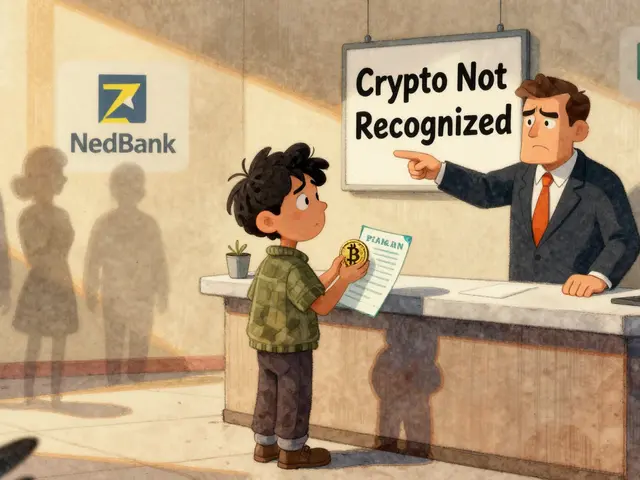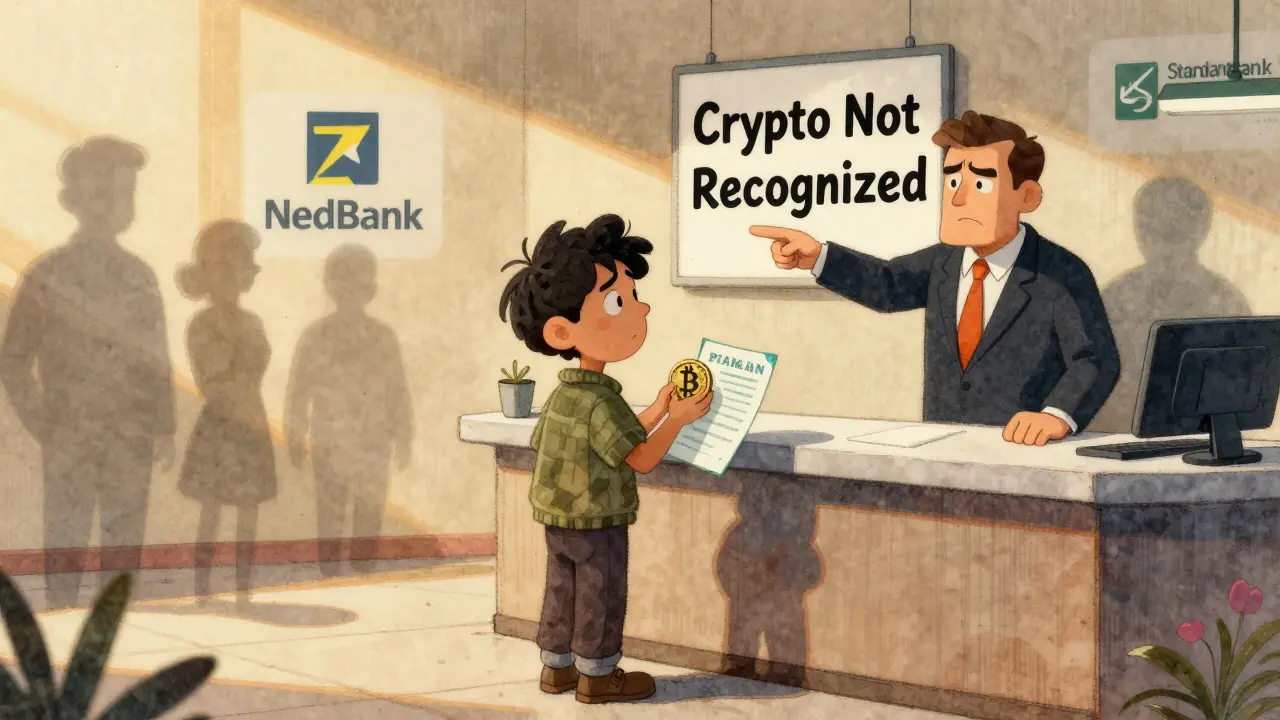
When you try to send Bitcoin from your wallet to a Namibian exchange, your bank might block it. Not because the transaction is suspicious, but because Namibia banking restrictions on crypto transactions are still very much in force-even though the government claims it’s trying to regulate the space. It’s a confusing mess. On one hand, the country passed a law to license crypto businesses. On the other, your personal bank account could get frozen if you’re caught buying or selling digital assets.
Why Namibia’s Banks Still Block Crypto
In May 2018, the Bank of Namibia (BON) made it clear: cryptocurrencies aren’t money here. They don’t count as legal tender. They’re not commodities. They’re not supported. If you lose money trading Bitcoin, you’re on your own. No recourse. No protection. That statement didn’t just warn people-it set the tone for years of hostility from the country’s financial institutions. Even when Bitcoin started popping up as a payment option at some local shops in 2022, the bank didn’t change its stance. Merchants could accept it, sure. But the moment that transaction hit the banking system, it became a red flag. Banks like NedBank and Standard Bank began monitoring accounts for crypto-related activity. If you were part of a crypto investment club, traded on Binance, or even just held coins in a wallet linked to your bank account, you could suddenly find your funds frozen or your account closed. No warning. No explanation. Just silence. This isn’t about fraud. It’s about control. The central bank doesn’t have the legal power to ban cryptocurrency outright, but it can restrict access to the banking system. And that’s exactly what it’s doing. For most Namibians, the real barrier to crypto isn’t the law-it’s the bank.The Virtual Assets Act of 2023: A Legal Paradox
Things started shifting in June 2023 when Namibia’s National Assembly passed the Virtual Assets Act (Act No. 10 of 2023). This wasn’t a minor update. It was a full regulatory overhaul. For the first time, the government recognized that virtual assets exist-and they need rules. The law created the framework for licensing Virtual Asset Service Providers (VASPs). That means crypto exchanges, wallet providers, and trading platforms now need to register with NAMFISA, Namibia’s financial watchdog. They must follow strict anti-money laundering rules, track every transaction over NAD 20,000 (about $1,000), and report user details under the Travel Rule-just like banks do for wire transfers. But here’s the twist: the law licenses businesses. It doesn’t legalize crypto for regular people. The Bank of Namibia still says Bitcoin isn’t legal tender. It still refuses to recognize blockchain as a payment system. So while a company like Landifa Bitcoin Trade CC can get a provisional license to operate, you, the individual, still can’t legally buy crypto through a licensed exchange without risking your bank account. It’s like saying, "We’ll let a gas station open, but you’re not allowed to own a car."Provisional Licenses and the Waiting Game
In January 2025, the Bank of Namibia granted provisional authorization to three companies: Landifa Bitcoin Trade CC, United PayPoint (Pty) Ltd, and Mindex Virtual Asset Exchange. These aren’t full licenses. They’re trial runs. During the six-month provisional period, these companies are forbidden from serving any customers in Namibia. They can’t take deposits. They can’t process trades. They can’t even advertise. All they can do is build systems, hire staff, and prove they meet the bank’s compliance standards. Two of the three companies asked for extensions. Landifa got until July 31, 2025. United PayPoint got until May 13. Mindex got until November 21, 2025. The bank says it’s still checking their paperwork, their security, their AML controls. Only after those six months-and only if they pass inspection-will they get full approval. And even then, it’s not guaranteed. The bank can still deny them. No appeal process. No public reasoning. Just a letter saying "no." This isn’t regulation. It’s a slow, silent gatekeeping system.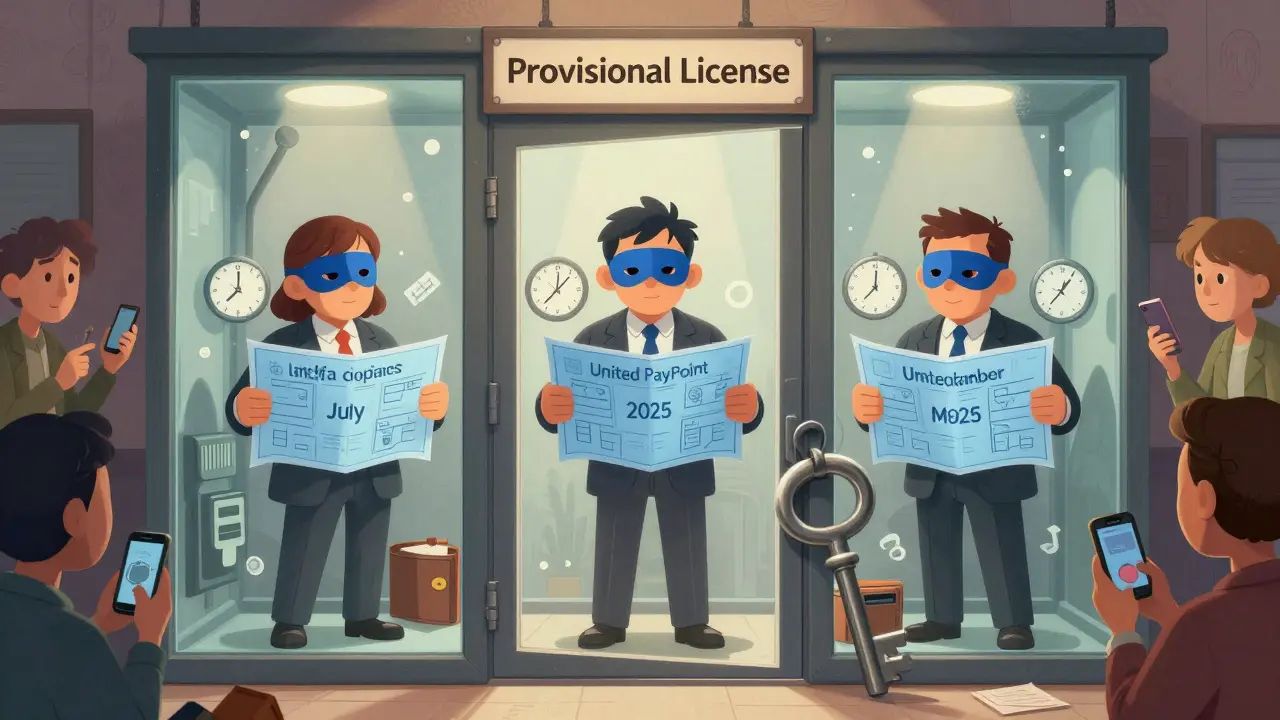
How the Travel Rule Changes Everything
One of the most serious parts of the Virtual Assets Act is the Travel Rule. Any transaction over NAD 20,000 must include full sender and receiver details: full name, ID number, bank account, phone number, address. VASPs must store this data for at least five years and report suspicious activity in real time. That’s not just compliance-it’s surveillance. For a country with low digital banking penetration, this requirement makes it nearly impossible for small traders to operate. Most Namibians don’t have government-issued IDs tied to bank accounts. Many use cash or mobile money. For them, the Travel Rule isn’t a tool for safety-it’s a wall. And here’s the catch: if you’re trading crypto privately-say, buying Bitcoin from a friend over WhatsApp-you’re not bound by the rule. But if you use a licensed platform, every transaction is tracked. That means the only way to trade anonymously is to break the law. The system is designed to force users into the gray zone.Who’s Really Being Punished?
Legal experts in Windhoek have raised alarms. They argue that the Bank of Namibia has no authority to restrict individual accounts based on crypto activity. The Virtual Assets Act regulates businesses, not citizens. Yet, banks are acting like they’re enforcing a ban on individuals. There are documented cases. People who ran crypto education groups had their accounts frozen. Freelancers who got paid in Bitcoin had their withdrawals blocked. One man lost access to his savings after using a peer-to-peer app to buy Litecoin. He wasn’t laundering money. He wasn’t scamming anyone. He just used crypto to send money across borders cheaper than Western Union. The central bank doesn’t publish a list of blocked accounts. It doesn’t explain why. And it doesn’t allow appeals. That’s not transparency. That’s arbitrary enforcement. Meanwhile, the few licensed VASPs are stuck in limbo. They’ve spent months and thousands of dollars preparing for launch. But without public access, they can’t earn revenue. Without revenue, they can’t hire staff. Without staff, they can’t pass inspections. It’s a loop designed to delay, not enable.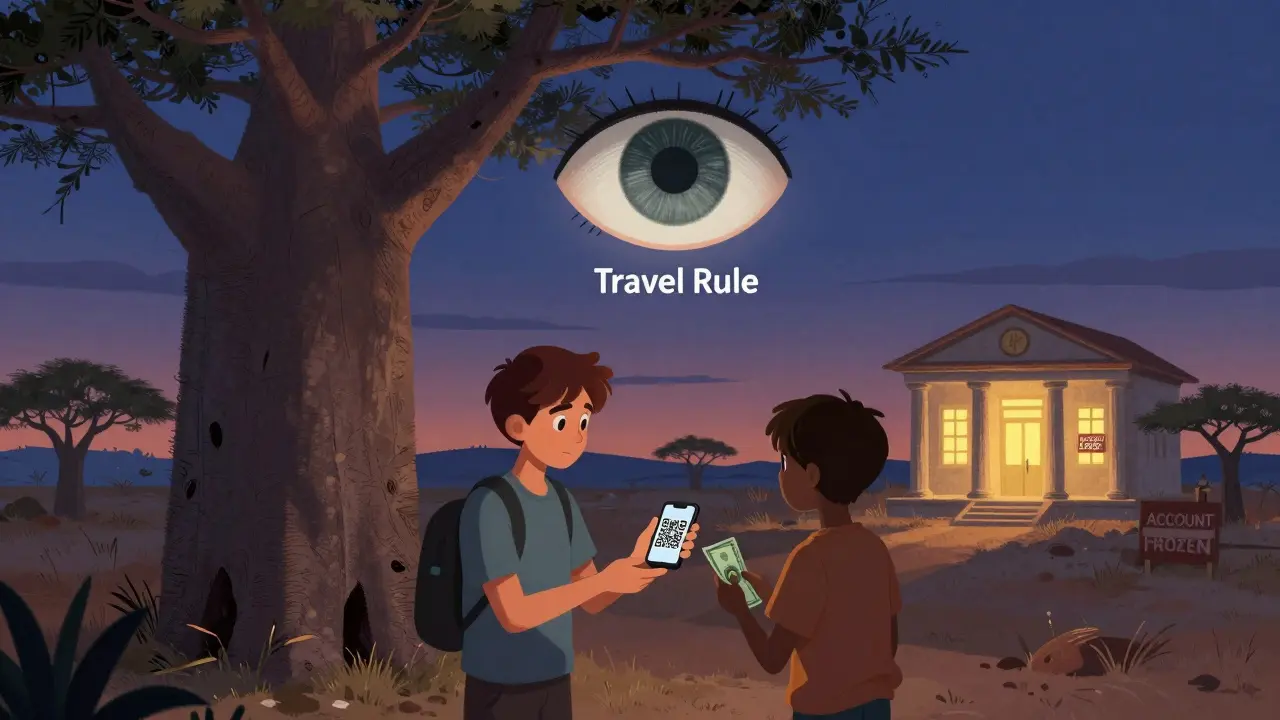
The Bigger Picture: Is Namibia Leading or Lagging?
Compared to its neighbors, Namibia’s approach is oddly advanced. South Africa has no licensing system for crypto. Zimbabwe allows crypto trading but has no clear rules. Botswana is still debating. Namibia at least has a law. But having a law doesn’t mean having access. The country’s real problem isn’t lack of regulation-it’s lack of clarity. Is crypto legal? No. Is it licensed? Sort of. Can you use it? Only if you’re okay with losing your bank account. The central bank claims it’s protecting consumers. But the people most at risk aren’t the traders-they’re the ones locked out of the system. Small business owners. Remittance senders. Young entrepreneurs. They’re the ones who need crypto the most. And they’re the ones being pushed into the shadows.What Happens Next?
By December 2025, Mindex Virtual Asset Exchange’s provisional license expires. If it gets approved, it could become the first fully licensed crypto platform in Namibia. But will anyone be allowed to use it? That’s the unanswered question. The Bank of Namibia hasn’t said whether it will allow individuals to open accounts with licensed VASPs. Until that happens, the restrictions won’t change. Crypto will remain illegal for everyday users-even if the government pretends it’s regulating it. For now, the only safe way to trade crypto in Namibia is to avoid banks entirely. Use peer-to-peer platforms. Trade in cash. Use foreign exchanges. But know this: if your bank finds out, they can-and will-shut you down. Namibia isn’t banning crypto. It’s making it so hard to use that most people give up. That’s not innovation. That’s control dressed up as caution.Is cryptocurrency legal in Namibia as of 2025?
No, cryptocurrency is not legal as legal tender in Namibia. The Bank of Namibia still does not recognize Bitcoin or other digital assets as money. While the Virtual Assets Act of 2023 allows licensed businesses to operate, trading crypto as an individual remains technically illegal. Banks can and do restrict accounts linked to crypto activity.
Can I open a crypto exchange account in Namibia?
Not yet. Three companies have provisional licenses, but they are not allowed to serve customers in Namibia until they pass a full compliance review. Even after approval, the Bank of Namibia has not confirmed whether individuals will be permitted to open accounts with these platforms. Until then, no licensed crypto exchange is legally open to the public.
Why did my bank block my crypto transaction?
Banks in Namibia, including NedBank and Standard Bank, actively monitor accounts for crypto-related activity. Even if you didn’t break any law, your bank may flag transfers to foreign exchanges, peer-to-peer payments, or wallet addresses as high-risk. They’re not required to explain why they freeze accounts-only that they’re acting under the Bank of Namibia’s unofficial guidance.
What is the Travel Rule in Namibia’s crypto law?
The Travel Rule requires Virtual Asset Service Providers to collect and share the full identity details of both sender and receiver for any transaction over NAD 20,000 (about $1,000). This includes names, ID numbers, addresses, and bank account details. The goal is to prevent money laundering, but it makes small, private crypto trades nearly impossible through licensed platforms.
Can I get fined for using cryptocurrency in Namibia?
There are no specific fines for individuals using crypto. However, if your bank reports you for suspicious activity, you could face account closures, asset freezes, or even investigation by NAMFISA if you’re linked to an unlicensed exchange. The real penalty isn’t a fine-it’s losing access to your money.