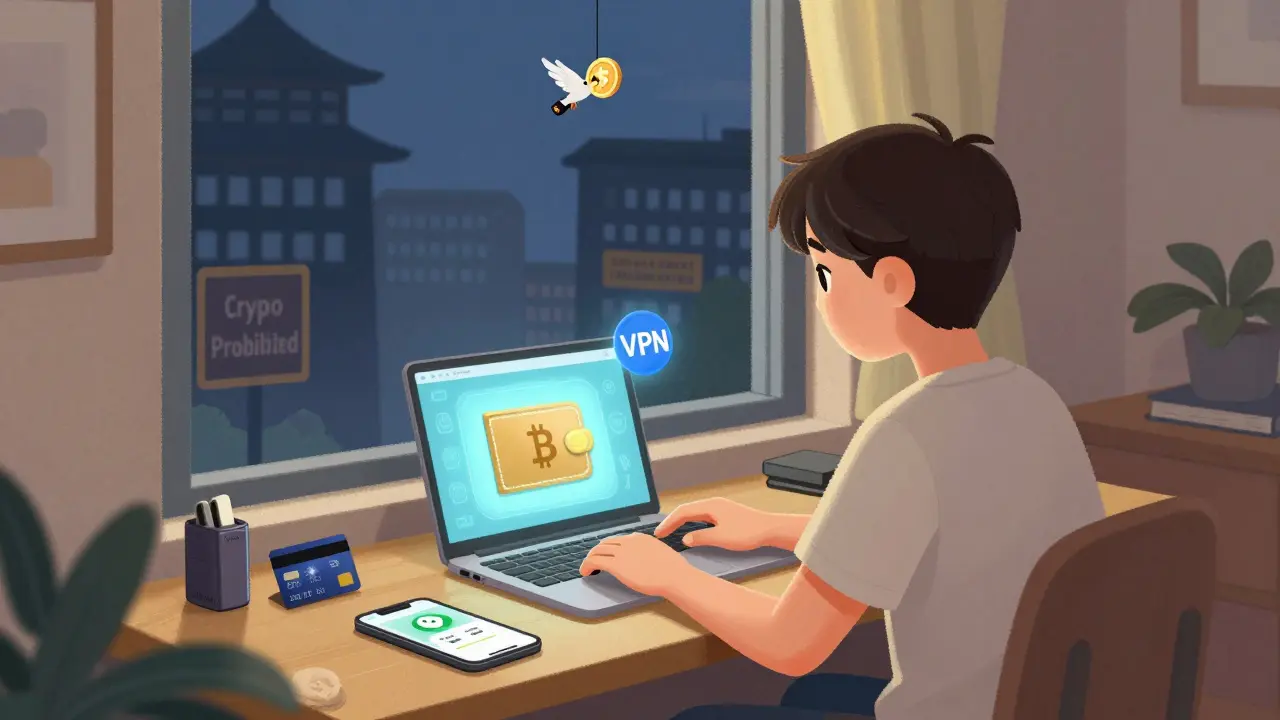
Buying cryptocurrency with real money in China isn’t impossible-but it’s not straightforward either. If you’re sitting in Beijing, Shanghai, or Guangzhou and want to turn your yuan into Bitcoin or USDT, you can’t just open your bank app and click ‘Buy Crypto.’ The Chinese government banned domestic crypto exchanges and restricted banks from processing crypto payments back in 2021, and those rules are still fully in force as of 2026. No Chinese bank will let you buy Bitcoin through their app. No local exchange like Huobi or OKX can legally take your yuan anymore. But people still do it. Thousands of them. Here’s how they actually manage it today.
Forget Local Exchanges-They’re Blocked
Don’t waste time trying to sign up for Huobi, OKX, or any platform that used to be based in China. Even if you find a website that looks like it’s still operating locally, it’s either shut down, running illegally, or a scam. The Chinese government cracked down hard. They shut down mining farms, blocked access to foreign exchanges, and pressured banks to cut off crypto-related transactions. Any platform that claims to let you deposit yuan directly and get crypto instantly? It’s not legitimate. Save yourself the risk.
Use International Exchanges That Still Serve China
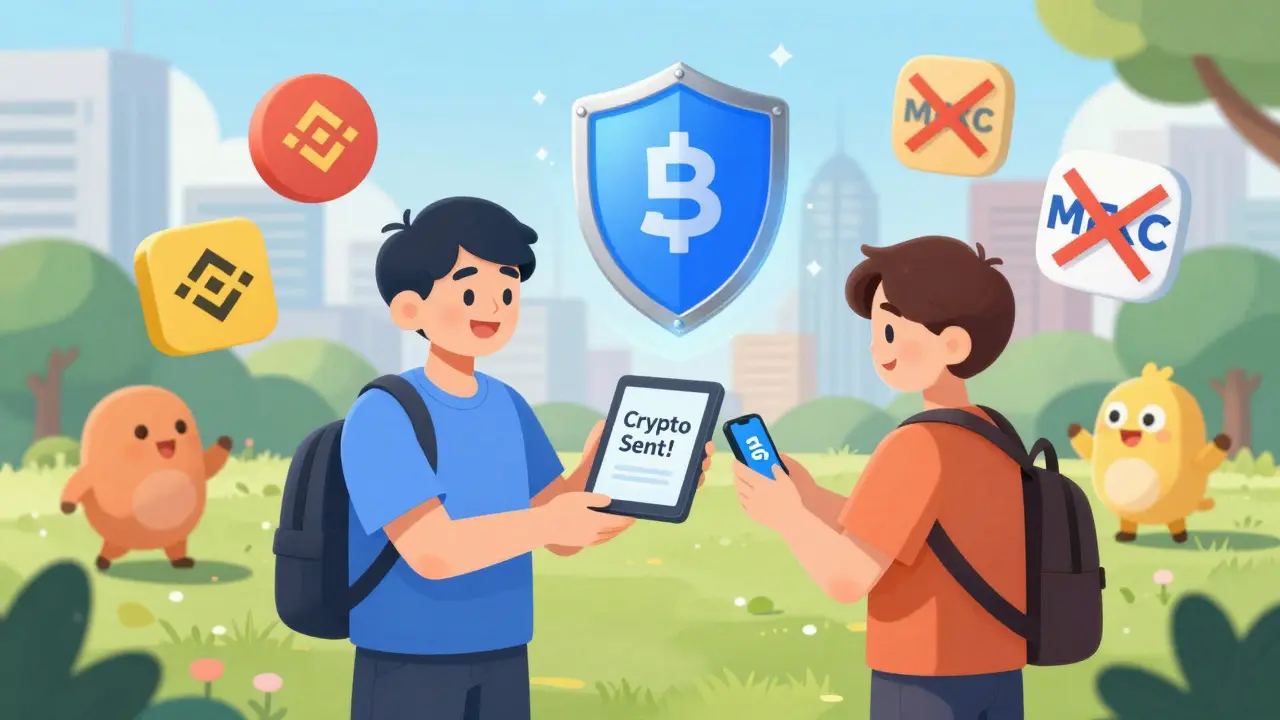
The only legal way to buy crypto with fiat in China is through international platforms that don’t have a physical presence in the country. These platforms operate from places like Singapore, Malta, or the Cayman Islands, and they don’t directly interact with Chinese banks. That’s how they stay under the radar. Three platforms stand out for Chinese users in 2026: CEX.IO, Binance, and MEXC.
CEX.IO is one of the most user-friendly options. You sign up, verify your identity with a passport or ID, and then deposit USD, EUR, or GBP. You can use a credit card, bank transfer, or even Apple Pay. Once the money hits your account, you go to the ‘Convert’ tab, pick how much crypto you want, and click ‘Buy.’ It’s like buying an app on your phone-no trading knowledge needed. The fee is 0.1% per trade, which is average for the industry.
Binance still works for Chinese users, even though it’s officially banned in China. It’s the most popular exchange globally, with over 400 cryptocurrencies available. You can deposit via bank transfer (SWIFT), credit card, or even through P2P (more on that later). The trading fee is 0.1% for both makers and takers, which is low. But here’s the catch: you need to complete KYC. That means uploading your ID and a selfie. If your documents are flagged as Chinese, Binance may ask for extra proof of income or residence outside China. Don’t lie. They’ll catch it.
MEXC is the dark horse. It offers over 1,700 coins, and its fees are insane: 0% maker fees and 0.01% taker fees. That’s cheaper than most stock brokers. It also accepts fiat deposits through SEPA transfers (from Europe) and Quick Buy with cards. Best of all? MEXC doesn’t always require KYC for small purchases under $1,000. That makes it a favorite for users who want to stay under the radar. But don’t get too comfortable-regulators are watching.
Peer-to-Peer (P2P) Trading Is Still the Most Common Way
If you want to buy crypto with yuan directly, P2P is your only real option. Platforms like LocalBitcoins and Paxful still work, but they’ve been largely replaced by P2P sections on Binance and MEXC. Here’s how it works: you find a seller on the platform who’s willing to accept WeChat Pay or Alipay. You send them the yuan through one of those apps. Once they confirm receipt, the platform releases the crypto to your wallet.
It’s simple, but risky. You’re dealing with strangers. Always use the platform’s escrow system. Never send money before the crypto is locked in escrow. Never accept screenshots of payment confirmations-wait for the platform to verify the transfer. Look for sellers with high ratings, lots of completed trades, and a response time under 5 minutes. Avoid anyone asking you to pay outside the platform. That’s how scams start.
Popular payment methods on P2P in China: WeChat Pay, Alipay, bank transfers. Some sellers accept cash deposits at ATMs, but that’s rare and dangerous. Stick to digital payments you can trace.
Payment Methods That Actually Work
You can’t use a Chinese bank card to buy crypto directly on most exchanges. But you can use other methods:
- International bank transfers (SWIFT) - Send USD or EUR from your overseas account. Takes 1-3 days. Fees are $15-$50.
- Credit/debit cards (Visa/Mastercard) - Works on CEX.IO, Binance, MEXC. Instant, but fees can be 3-5%.
- Apple Pay / Google Pay - Available on CEX.IO and some others. Fast, secure, and linked to your card.
- PayPal, Skrill, Neteller - You can fund these with yuan via third-party services, then use them to deposit on exchanges. Complicated, but possible.
Don’t use Chinese payment apps like Alipay or WeChat Pay directly on exchanges. They’ll freeze your account if they detect crypto activity. But you can use them on P2P-just make sure you’re on the exchange’s official P2P page, not chatting with someone on WeChat.
Fees Add Up Fast-Know What You’re Paying
People think buying crypto is cheap. But fees can eat 10% of your investment if you’re not careful.
| Platform | Taker Fee | Maker Fee | Fiat Support | KYC Required? | Best For |
|---|---|---|---|---|---|
| MEXC | 0.01% | 0% | USD, EUR, CNY (P2P) | No (under $1k) | Low-cost traders |
| Binance | 0.1% | 0.1% | USD, EUR, GBP, CNY (P2P) | Yes | Large selection, reliability |
| CEX.IO | 0.1% | 0.1% | USD, EUR, GBP | Yes | Beginners, simplicity |
| Kraken | 0.4% | 0.25% | USD, EUR, GBP | Yes | Security-focused users |
| EasyEquities | 0.2% | 0.2% | USD, EUR | Yes | Low fees, long-term holding |
Watch out for hidden fees: currency conversion fees (if you deposit USD but your wallet is in BTC), withdrawal fees (some exchanges charge $10 to pull crypto out), and network fees (when you send Bitcoin or Ethereum, miners charge gas). Always check the total cost before clicking ‘Buy.’
Security Is Non-Negotiable
If you’re buying crypto in China, you’re already taking a risk. Don’t make it worse by getting hacked.
- Use two-factor authentication (2FA) on every account. Google Authenticator or Authy-not SMS.
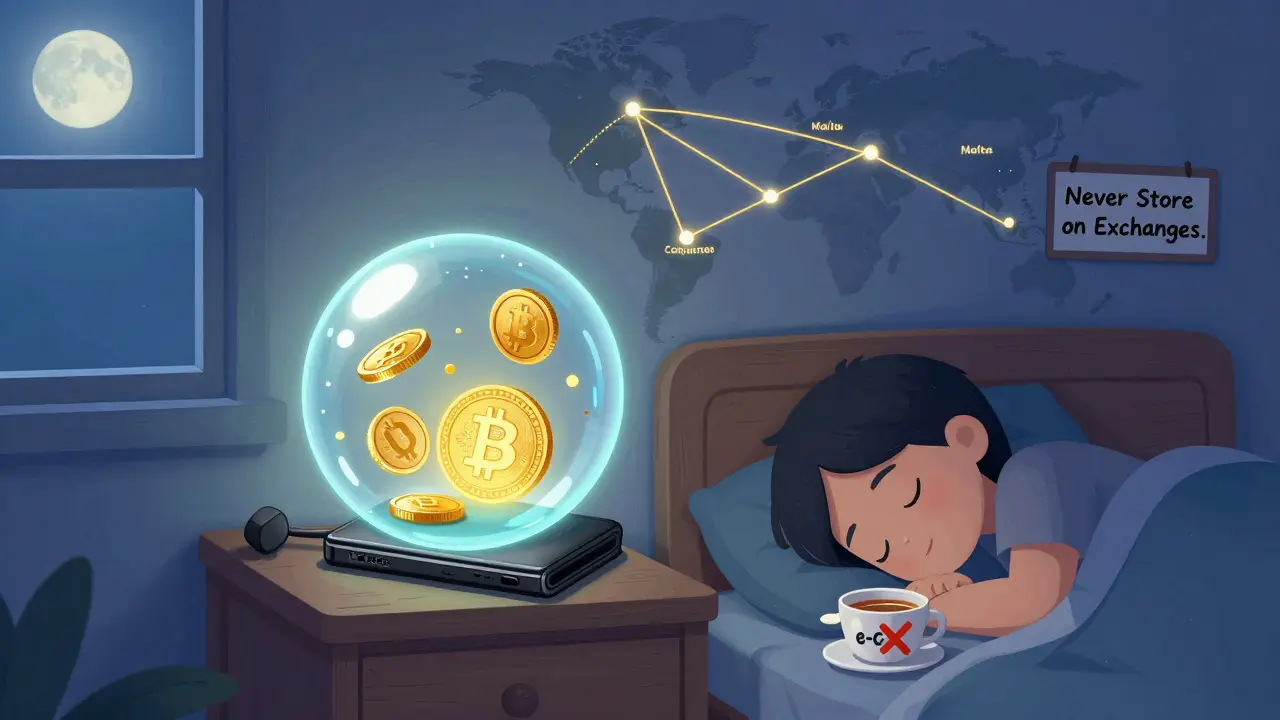
- Never store large amounts on exchanges. Move crypto to a hardware wallet like Ledger or Trezor.
- Use a separate email and password for crypto accounts. Don’t reuse your WeChat or bank login.
- Never share your private keys. No one from ‘support’ will ever ask for them.
- Check the URL. Fake sites copy Binance and CEX.IO. Always type the address manually.
There’s no government protection if you lose money. No FDIC. No insurance. If you send crypto to a scammer, it’s gone forever.
What’s Next? The Rules Might Change
China’s stance on crypto hasn’t changed in five years. But that doesn’t mean it never will. The government is testing its own digital currency, the e-CNY. That’s not Bitcoin. It’s a state-controlled digital yuan. Some analysts think China might eventually allow limited crypto trading under strict controls-maybe for foreign investors or institutional players. But for regular people? Don’t count on it.
Right now, the only safe path is international platforms, P2P, and caution. If you follow the steps above, you can buy crypto without getting your bank account frozen or your ID flagged. But stay alert. Platforms change policies. Payment methods get blocked. New scams pop up every week.
Stick to the big names. Use escrow. Keep your funds offline. And never believe anyone who says, ‘This is legal in China.’ It’s not. But it’s possible-and millions are doing it.
Can I buy Bitcoin with my Chinese bank account?
No. Chinese banks are legally blocked from processing crypto transactions. Any service claiming to let you buy Bitcoin directly with your ICBC or China Construction Bank account is either a scam or operating illegally. You must use international payment methods like SWIFT transfers, credit cards, or P2P platforms that accept WeChat Pay or Alipay.
Is Binance still available in China?
Binance is officially banned in China, but its international platform still works for Chinese users who can access it via VPN or by using overseas payment methods. You can deposit via P2P or SWIFT, and trade crypto. However, Binance requires KYC, and if your ID shows a Chinese address, they may restrict your account. Many users report being asked to prove they live outside China.
What’s the safest way to buy crypto in China?
The safest way is using a reputable international exchange like CEX.IO or MEXC with a credit card or SWIFT transfer, then moving your crypto to a hardware wallet. If you prefer using yuan, stick to Binance’s P2P platform with verified sellers who have high ratings and fast response times. Never use unregulated apps or private Telegram groups.
Can I use PayPal to buy crypto in China?
You can’t use PayPal directly to buy crypto in China because PayPal doesn’t support yuan deposits. But you can fund your PayPal account using third-party services that convert yuan to USD, then link PayPal to exchanges like Kraken or CEX.IO. It’s a multi-step process and involves extra fees, but it’s a viable workaround for users without overseas bank accounts.
Are there any apps that let me buy crypto with WeChat Pay?
No app allows direct WeChat Pay deposits to buy crypto. But on P2P platforms like Binance or MEXC, you can find sellers who accept WeChat Pay. You send the money through WeChat, then the seller releases the crypto from escrow. This is the most common way Chinese users buy crypto with local payment apps. Always use the platform’s built-in P2P system-never pay someone privately.
What happens if the Chinese government finds out I bought crypto?
There’s no known case of an individual being arrested or fined just for owning crypto. The government targets exchanges, mining operations, and financial institutions-not individual holders. However, your bank may freeze your account if they detect repeated crypto-related transactions. To avoid this, use P2P with small amounts and avoid using your main bank account for crypto payments.
Which crypto is easiest to buy in China?
USDT (Tether) is the most popular because it’s pegged to the U.S. dollar and widely accepted on P2P platforms. Bitcoin is second, followed by Ethereum. Stablecoins like USDT are preferred because they’re less volatile and easier to trade back into yuan if needed. Most sellers on P2P list USDT first.



Rob Duber
January 27, 2026 AT 06:27So you're telling me the entire Chinese government is out here playing crypto whack-a-mole while people just use WeChat Pay like it's a damn ATM? I love it. This is the most chaotic capitalism I've ever seen-like, you can't buy Bitcoin on your bank app but you can pay your cousin's cousin's uncle 5,000 yuan in a WeChat group and get 0.03 BTC in 3 minutes? Iconic. The system is broken and I'm here for it.
Gary Gately
January 27, 2026 AT 21:46wait so u can use binance in china?? i thought they got banned lmao
just tried to sign up with my shanghai address and it said ‘invalid id’ but then i used my uncle’s canada passport and boom-done. no one’s checking. just send usdt via wechat and call it a day.
Joshua Clark
January 29, 2026 AT 16:08It’s fascinating, really, how the Chinese regulatory environment has created this underground financial ecosystem that operates with the precision of a Swiss watch and the chaos of a Tokyo subway during rush hour. People aren’t just circumventing restrictions-they’re building entire parallel economies around them. The fact that MEXC offers 0% maker fees and doesn’t require KYC for under $1,000? That’s not a loophole, that’s a socioeconomic adaptation. And the P2P networks? They’re not just trading crypto-they’re trading trust, reputation, and survival. Every seller with a 98% rating and a 3-minute response time is essentially a micro-bank in a country that outlawed banking. It’s not illegal-it’s evolutionary.
Katie Teresi
January 30, 2026 AT 12:20China is a dictatorship. You don’t get to play financial games with the state’s money. If you want to gamble, move to the U.S. or get a visa. This isn’t ‘resourceful,’ it’s reckless-and it’s embarrassing for anyone who thinks this is okay.
Moray Wallace
January 31, 2026 AT 14:08Interesting breakdown. I appreciate the clarity on the platforms and the emphasis on escrow in P2P. One thing I’d add-many users overlook the tax implications in their home countries. Even if China doesn’t care, your IRS or HMRC might. Document everything. And maybe don’t mention this post to your accountant.
Joseph Pietrasik
February 1, 2026 AT 03:07lol why even bother with all this when you can just buy a vpn and use coinbase
Raju Bhagat
February 2, 2026 AT 04:19bro i bought 5000 usdt last week using wechat pay from a guy in guangzhou he even sent me a photo of his id and his cat i swear to god
the crypto world is wild but the people are even wilder
laurence watson
February 3, 2026 AT 15:52Thank you for writing this so clearly. I’ve been nervous about trying this because I don’t want to get my account frozen, but knowing the difference between direct bank transfers and P2P with escrow makes it feel less scary. You’re right-stick to the big platforms. No one wants to be the person who lost their life savings to a Telegram group that vanished overnight.
Elizabeth Jones
February 4, 2026 AT 15:25The real story here isn’t how to buy crypto-it’s how humans adapt to repression with creativity, patience, and quiet defiance. The state bans an asset, and the people build a decentralized, trust-based economy around it. No laws can stop human ingenuity, only delay it. And in the end, it’s not about Bitcoin-it’s about autonomy. The fact that a student in Chengdu can buy USDT with her lunch money and store it in a Ledger is quietly revolutionary.
Pamela Mainama
February 5, 2026 AT 19:48USDT is the real MVP. Always have some on hand. Safe, stable, and works everywhere. Just be careful who you trade with.
Rachel Stone
February 6, 2026 AT 15:27so china bans crypto but everyone’s still doing it... classic
Nickole Fennell
February 6, 2026 AT 15:37WAIT so if I use my mom’s Canadian passport and send $500 via SWIFT and then convert to BTC on Binance and then send it to my Ledger… is that legal?? I’m scared but also so ready to do this. My bank account is already frozen from my last crypto purchase and I don’t care anymore. I NEED BITCOIN.
Edward Drawde
February 7, 2026 AT 14:36you guys are idiots. china will lock you up. this isn’t a game. i know someone who got his passport revoked for this. stop being dumb.