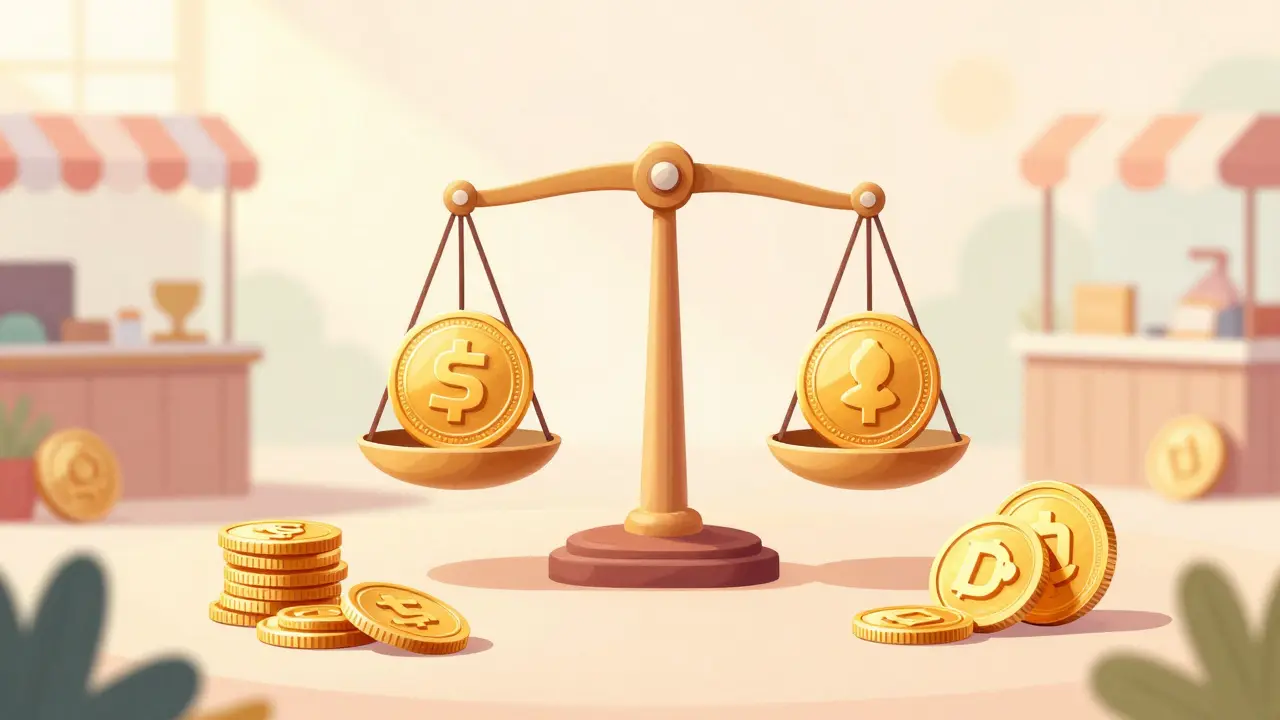
Trading stablecoins shouldn't feel like a gamble, but choosing the right platform often is. If you've been hunting for a way to swap USDT, USDC, or DAI without losing a chunk of your portfolio to slippage or outrageous gas fees, you've probably stumbled upon Ellipsis Finance is a decentralized exchange (DEX) built on the Binance Smart Chain that focuses on high-efficiency stablecoin swaps. It essentially acts as a specialized tool for people who want to move between different stable assets with surgical precision and minimal cost.
The big promise here is the elimination of impermanent loss and the reduction of price impact. But is it actually a goldmine for traders, or just another fork of a better protocol? Let's break down whether Ellipsis Finance actually delivers on its claims or if the red flags are too big to ignore.
The Core Mechanics: How Ellipsis Works
At its heart, Ellipsis Finance is an authorized fork of Curve Finance, meaning it took the proven technical framework of one of the most successful DeFi protocols and moved it over to the Binance Smart Chain (BSC). This move was strategic. By leaving the congested Ethereum network behind, Ellipsis slashed transaction times and made fees practically negligible for the average user.
The platform operates as an Automated Market Maker (AMM). Instead of relying on a traditional order book where buyers and sellers must match, it uses liquidity pools. Because it focuses on assets that are supposed to stay at $1.00, the math is optimized to keep the price stable, which is why you see such low slippage compared to a general-purpose exchange like PancakeSwap.
For those who want more than just trading, the protocol offers staking. By locking up the native token, users can earn a proportional share of the trading fees generated by the platform. It's a classic "provide value, get paid" DeFi model.
The Token Chaos: EPS vs EPX
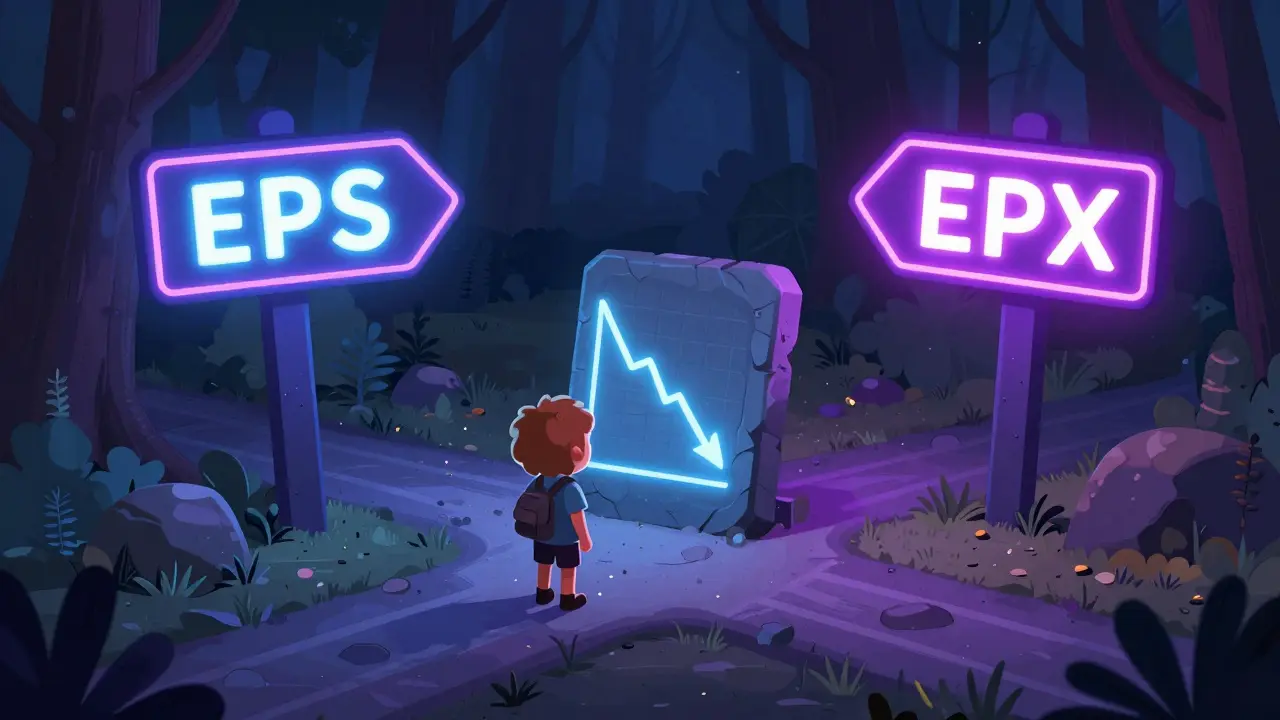
If you're looking at the charts, you'll notice something confusing: two different tokens. The platform originally launched with EPS. However, as part of the Ellipsis 2.0 upgrade, they migrated to EPX. This wasn't just a name change; it involved new smart contracts and a push for better scalability, receiving a nod of support from Binance.
Here is where things get messy. The migration didn't exactly send prices to the moon. In fact, many users have complained about an ambiguous downward trend that started shortly after launch and persisted through the migration. While EPX generally shows higher trading volume-around $1.5 million in daily activity compared to the much lower volume for the old EPS-the price performance has left many investors feeling uneasy.
| Feature | Ellipsis Finance | Standard AMM (e.g., UniSwap/PancakeSwap) |
|---|---|---|
| Primary Asset Focus | Stablecoins | Diverse Crypto Pairs |
| Slippage Risk | Extremely Low | Variable (High for low liquidity pairs) |
| Network Speed | Fast (BSC) | Varies (Ethereum is slower/costlier) |
| Impermanent Loss | Minimized/Eliminated | Significant Risk |
The Good, The Bad, and The Risky
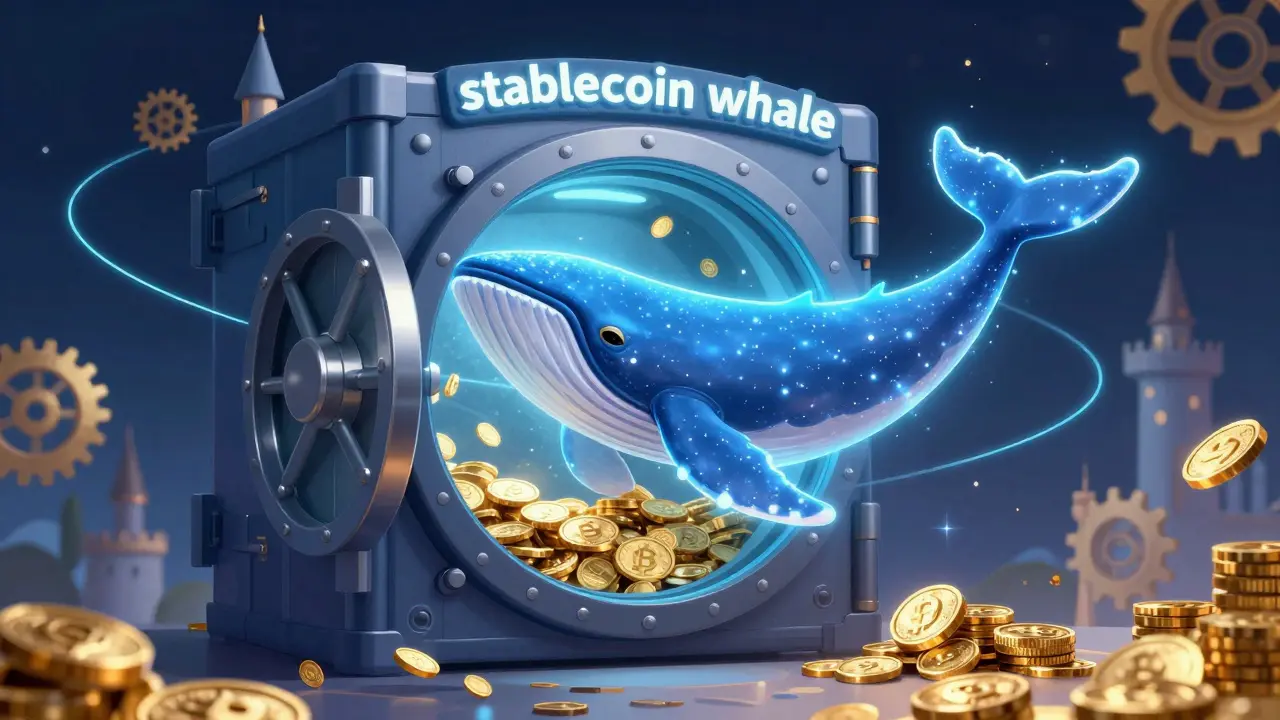
Let's be real: no platform is perfect. Ellipsis has some serious wins, but there are ghosts in the machine. On the positive side, the decentralization is absolute. There is no central authority breathing down your neck or freezing your account. If you are a "stablecoin whale" moving large sums of money, the low slippage is a genuine lifesaver. You aren't losing 1% or 2% of a million-dollar trade just because the pool is thin.
However, the lack of variety is a major sticking point. If you want to swap your stablecoins for a trendy new meme coin or a layer-1 asset, you're out of luck. You'll have to leave Ellipsis and go elsewhere. This limits the platform's utility to a very specific niche: people who are essentially "parking" their money in different versions of the US Dollar.
Then there's the trust factor. Some analysts, including teams from Godex.io, have raised red flags about the legitimacy of the price action. When a token drops consistently from day one, it creates a psychological barrier for new investors. Even with the 2.0 upgrade, the project is still fighting a perception battle against its own price history.
Practical Guide: How to Start Trading
Getting started is pretty simple if you've ever used a crypto wallet. You don't need to create an account, upload your ID, or wait for verification because it's a DEX.
- Setup Your Wallet: Use a BSC-compatible wallet like MetaMask or Trust Wallet.
- Fund with BNB: This is the most important step. Since Ellipsis lives on the Binance Smart Chain, you need BNB to pay for gas fees. Without it, you can't move a single cent.
- Connect and Swap: Head to the official site, connect your wallet, and select the stablecoin pair you want to trade (e.g., USDT to USDC).
- Staking (Optional): If you hold EPX, you can navigate to the staking section to lock your tokens and start earning a cut of the protocol's trading fees.
A pro tip: always double-check the contract address for the tokens you're swapping. In the DeFi world, scammers often create fake tokens with the same name to trick users. Stick to the official Ellipsis interface to stay safe.
Price Predictions: Fact or Fiction?
Looking at the forecasts for 2026, it's a bit of a mixed bag. Some optimistic sources once predicted prices as high as $10, but let's be honest-those numbers feel like fantasy now. More grounded analysts, such as CaptainAltcoin and DigitalCoinPrice, suggest a much tighter range, often hovering between $0.03 and $0.04 for the older tokens, while EPX predictions are often in the fractions of a cent (around $0.0017).
Why the discrepancy? Because DeFi is volatile. The value of a governance token like EPX isn't based on a company's earnings report, but on the volume of trades flowing through the protocol and the demand for voting power. If more people start using Ellipsis for stablecoin swaps, the token value could climb. If the world moves toward a different scaling solution or a new stablecoin standard, these tokens could become relics.
Final Verdict: Should You Use It?
If your goal is to swap large amounts of stablecoins with the lowest possible fee and slippage, Ellipsis Finance is a strong contender. The technical foundation inherited from Curve Finance is rock solid, and the BSC deployment keeps costs down. It does exactly what it says on the tin: it facilitates efficient stablecoin movement.
However, if you're looking at this as an "investment opportunity" via the EPX token, proceed with extreme caution. The price history is rocky, and the liquidity is fragmented. It's a tool for traders, not necessarily a "get rich quick" scheme for holders. Do your own research, start with a small amount, and never lock up more than you can afford to lose in a DeFi pool.
What is the difference between EPS and EPX?
EPS was the original native token of Ellipsis Finance. During the upgrade to Ellipsis 2.0, the platform migrated to EPX to implement new smart contracts and improve scalability. While both are related to the protocol, EPX is the current standard and generally sees higher trading volume.
Does Ellipsis Finance charge trading fees?
The platform itself does not charge fees on deposits and withdrawals. However, because it operates on the Binance Smart Chain, you must pay a small amount of BNB for the network gas fee to process every transaction.
What is "slippage" and why is it lower on Ellipsis?
Slippage is the difference between the price you expect for a trade and the price at which the trade actually executes. Ellipsis uses a specialized AMM curve designed for assets with the same value (like two different stablecoins), which minimizes this gap far better than standard pools.
Is Ellipsis Finance safe?
Technically, it is based on Curve Finance, which is one of the most audited and trusted protocols in DeFi. However, all decentralized exchanges carry "smart contract risk." Additionally, the token's price volatility has led some analysts to warn about the investment risk of the native tokens.
Can I trade non-stablecoins on Ellipsis?
Currently, the platform is specifically optimized for stablecoin pairs. While it may offer some other options, its primary value proposition is the low-slippage environment for stable assets. For diverse crypto swaps, a general DEX like PancakeSwap is a better choice.


Jason Davis
April 12, 2026 AT 12:58Slippge is honestly the biggest killer in DeFi, so it's great that this focusess on stables. Most people dont realize how much they lose on PancakeSwap just by moving a few grand of USDT to USDC without a specialized pool. Just make sure you have enough BNB for gas or your transaction will just hang there forever.
Tracie and Matthew Hartley
April 13, 2026 AT 00:53who cares about low slippge when the token price is basically a rock going down a mountain lol. total waste of time
Emily H
April 13, 2026 AT 16:37The architectural decision to utilize the Binance Smart Chain infrastructure was undoubtedly a prudent move to mitigate the prohibitive costs associated with the Ethereum mainnet. It is commendable that the protocol prioritizes efficiency for high-volume traders.
Omotola Balogun
April 14, 2026 AT 07:13Actually, you're missing the point about the Curve fork. It is objectively superior in terms of capital efficiency for stablecoins. Most people don't understand that the invariant is different here, which is why the slippge is lower. It's basic math, really.
Rima Dinar
April 15, 2026 AT 00:41I truly believe that anyone starting their DeFi journey should take a moment to breathe and realize that the volatility of the EPX token doesn't necessarily detract from the utility of the platform itself, because if you are just using the DEX to move your assets safely, you are actually building a very healthy habit of risk management that will serve you well in the long run as you grow your portfolio and learn how to navigate these complex waters without getting overwhelmed by the noise of the market price!
Hope Johnson
April 16, 2026 AT 02:00There is a profound irony in seeking stability through a platform whose own governance token exhibits such instability, which leads us to wonder if the true value of a tool lies in its utility for the masses or in the speculative dreams of its holders. We must invite everyone into this conversation by acknowledging that the path to financial sovereignty is rarely a straight line and often requires us to separate our need for a functional tool from our desire for a profitable asset, thereby creating a more inclusive understanding of how decentralized finance can actually serve the global community without demanding that we gamble our peace of mind.
Swati Sharma
April 17, 2026 AT 08:33Totally on board with the utility side here. The AMM curve optimization definitely reduces the delta when swapping pegged assets, making the UX way smoother for those of us managing liquidity across multiple stablecoin vaults. It's a solid piece of middleware for a diversified stablecoin strategy.
aletheia wittman
April 19, 2026 AT 00:26omggg the token migration was such a mess!! i literally cant even with the price drop its actually tragik 😭
Jonathan Chamma
April 19, 2026 AT 07:58It's like a quiet little harbor in a stormy sea for anyone just wanting to move their money without it disappearing into thin air. Just keep things simple and use the tool for what it's good for.
Chidinma Sandra okafor
April 21, 2026 AT 06:16Oh, look at this lovely little guide. I'm sure everyone is just thrilled to use a fork of a fork while their money vanishes. Absolutely brilliant.
Alan Seiden
April 21, 2026 AT 12:53Typical garbage. Why are we still talking about BSC forks in 2026? This is absolutely pathetic and only a fool would put money into this rubbish.
Akshay Gorad
April 22, 2026 AT 04:41I appreciate the detailed breakdown of the risks and rewards. It is important to maintain a clear boundary between using a platform for its utility and speculating on its token.
Lauren Abrams
April 22, 2026 AT 14:04Just watching from the sidelines on this one.