Running a cryptocurrency exchange in Taiwan is no longer a wild west scenario. If you are operating or planning to launch a platform that handles digital assets for users in the Republic of China, you are squarely in the crosshairs of the Financial Supervisory Commission (FSC), the primary financial regulator in Taiwan responsible for overseeing banking, securities, and insurance sectors. The days of ignoring local laws are over. In fact, since mid-2024, the regulatory landscape has shifted from "watchful waiting" to active enforcement.
You might think this is just another bureaucratic hurdle, but it’s actually your lifeline. Compliance isn't just about avoiding fines; it’s about gaining legitimacy in a market that values trust above all else. With the FSC treating cryptocurrencies as "virtual commodities" rather than legal tender, the rules are specific, strict, and designed to protect consumers while keeping the door open for innovation. Let’s break down exactly what you need to do to stay on the right side of the law in 2026.
The Core Requirement: VASP Registration
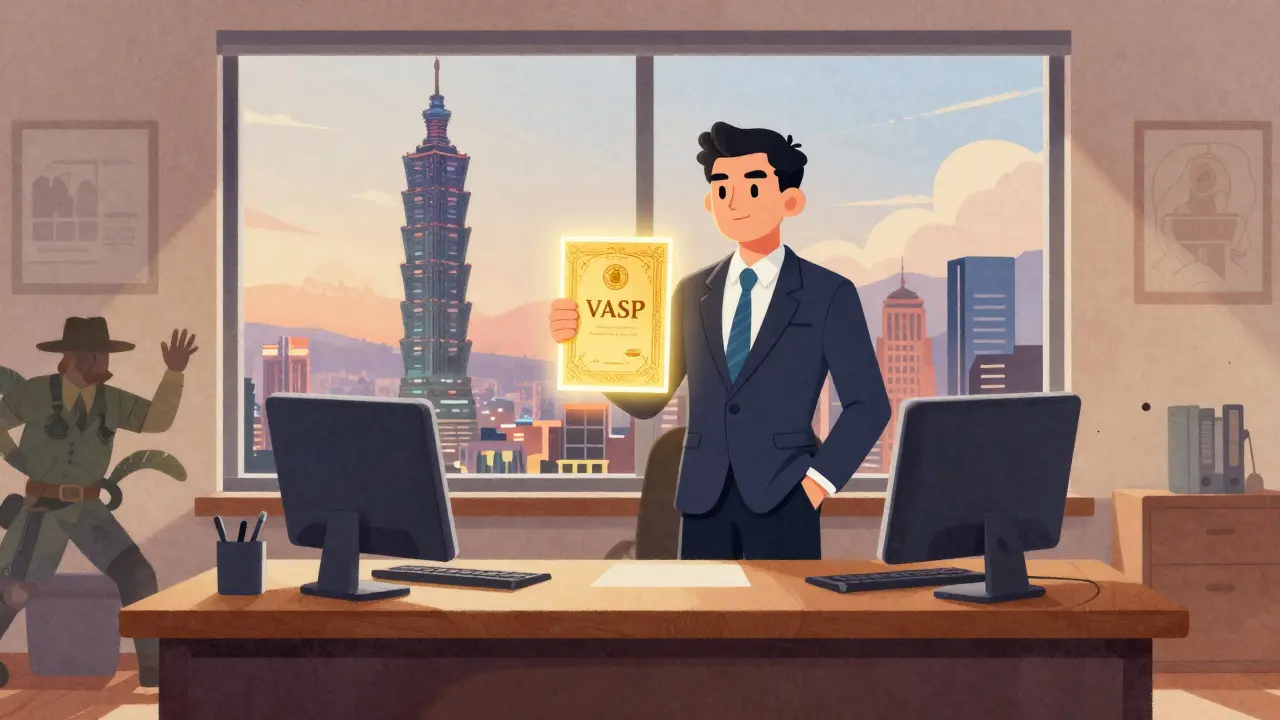
The single most important step for any crypto exchange operating in Taiwan is registering as a Virtual Asset Service Provider (VASP), an entity that facilitates the exchange, transfer, or storage of virtual assets for customers. This isn't optional. Under the updated Anti-Money Laundering (AML) Act, which saw significant reinforcement in July 2024, every VASP must complete mandatory AML registration with the FSC before commencing operations.
This requirement applies whether you are a domestic Taiwanese company or a foreign entity offering services to residents here. The FSC does not distinguish between local and offshore platforms when it comes to jurisdiction if you are serving Taiwanese users. Failure to register can lead to severe penalties, including custodial sentences for executives involved in financial crimes. So, your first job-to-be-done is ensuring your legal entity is properly registered and listed in the FSC’s registry.
- Who needs this? Any platform allowing users to buy, sell, exchange, or store crypto.
- Deadline: Immediate. You cannot operate without it.
- Consequence of non-compliance: Heavy fines, operational shutdowns, and potential criminal liability.
Navigating the VASP Guidelines
Registration is just the ticket to enter the game. How you play matters. In September 2023, following the global shockwaves from the FTX collapse, the FSC introduced comprehensive Guidelines for Virtual Asset Service Providers, a set of operational standards covering issuer responsibilities, asset segregation, and internal controls. While these guidelines don’t carry "hard law" status yet, industry insiders treat them as binding because the FSC expects progressive mandatory compliance.
These guidelines cover eight critical areas. You need to have systems in place for each. For instance, you must publish a "whitepaper" on your website detailing your operations. You need robust mechanisms to review virtual asset launches to prevent scams. Perhaps most importantly, you must implement strict asset segregation protocols. Customer funds cannot mix with your corporate wallet. This separation is non-negotiable for maintaining consumer trust and regulatory approval.
| Requirement Area | Specific Action Needed | Why It Matters |
|---|---|---|
| Asset Segregation | Separate customer wallets from company operational funds | Prevents misuse of client assets during insolvency |
| Cybersecurity | Implement cold and hot wallet management systems | Protects against hacks and ensures data integrity |
| Transparency | Public disclosure of fees, risks, and operational changes | Builds user trust and meets fair trading standards |
| Internal Controls | Regular audits and independent oversight mechanisms | Detects fraud and ensures regulatory alignment |
Security Tokens vs. Virtual Commodities
Not all crypto is created equal in the eyes of the FSC. You need to understand the distinction between general virtual commodities and security tokens. If your platform lists tokens that qualify as securities-essentially investment contracts where investors expect profits from the efforts of others-you fall under the Securities and Exchange Act.
This is a much stricter lane. Security Token Offerings (STOs) can only be traded by licensed securities dealers. The FSC has authorized the Taipei Exchange (TPEx), Taiwan's official stock exchange that also oversees security token trading regulations to implement specific STO rules. Due to high compliance burdens, very few STOs exist in Taiwan currently. If you are an exchange dealing primarily in Bitcoin, Ethereum, or other major utility coins, you are likely in the "virtual commodity" bucket. But if you list new project tokens, you must conduct a rigorous test to ensure they aren't classified as securities. Misclassification can lead to serious legal trouble.

Anti-Fraud Measures and Penalties
Taiwan has cracked down hard on fraud. Four new anti-fraud laws passed by the Legislative Yuan specifically target virtual asset service providers. These laws enhance money laundering regulations and introduce custodial sentences for financial crimes involving crypto.
For exchanges, this means your Know Your Customer (KYC) and Anti-Money Laundering (AML) protocols must be bulletproof. You cannot rely on basic checks anymore. The Ministry of Justice supports these measures to criminalize financial crime via cryptocurrency. This creates a hostile environment for bad actors but a safe harbor for compliant businesses. Your risk management team needs to monitor transactions for suspicious patterns and report them immediately. Ignorance is not a defense in this new regime.
Institutional Access and ETFs
If you are looking to attract institutional clients, there is good news. The FSC has worked with the Securities Business Association of the Republic of China to allow professional investors to invest in foreign virtual asset exchange-traded funds (ETFs). This is a measured integration of crypto into traditional finance.
While retail access to crypto ETFs remains restricted to qualified professionals, this move signals that the FSC sees value in regulated crypto products. For exchanges, this means opportunities to partner with traditional financial institutions. However, you must maintain strict investor qualification requirements. You cannot simply open the floodgates to retail investors for these specific products without meeting stringent criteria.

Industry Self-Regulation
Don't face this alone. Taiwan’s major cryptocurrency exchanges formed the Taiwan Virtual Asset Service Provider Association, a self-regulatory body comprising 24 major crypto exchanges aimed at promoting compliance and industry standards. This 24-member group was created during legislative debates to provide industry input on practical implementation challenges.
Joining or aligning with this association can be beneficial. It shows regulators that you are committed to collective responsibility. It also provides a channel to voice concerns about overly burdensome rules. The association supports the FSC’s broader objectives while helping members navigate the complex compliance landscape. In a market where reputation is everything, being part of this group sends a strong signal of legitimacy.
Looking Ahead: The Virtual Asset Management Bill
The regulatory framework is still evolving. The FSC is actively considering a comprehensive cryptocurrency law. A feasibility study report was expected late in 2024, with a draft law anticipated around mid-2025. By 2026, we should see clearer definitions and potentially more streamlined processes.
Until that law passes, you must operate under the current patchwork of AML rules, VASP guidelines, and securities laws. Keep a close watch on the FSC’s announcements. Regulatory changes often come with short notice periods. Having a flexible compliance infrastructure will save you headaches when the next wave of rules arrives.
Is it illegal to trade crypto in Taiwan?
No, trading crypto is not illegal. However, operating an exchange without proper VASP registration with the FSC is illegal. Retail users can trade on registered platforms, but banks may still restrict direct crypto transactions due to internal risk policies.
What happens if I don't register as a VASP?
You face severe penalties, including heavy fines and potential custodial sentences for executives. The FSC can shut down your operations, and you may be blacklisted from future regulatory approvals.
Can foreign exchanges operate in Taiwan?
Yes, but they must comply with the same VASP registration and AML requirements as domestic entities. The FSC exercises jurisdiction over any service provider targeting Taiwanese residents, regardless of where the company is incorporated.
Are security tokens different from regular crypto?
Yes. Security tokens are governed by the Securities and Exchange Act and can only be traded by licensed securities dealers. Regular cryptocurrencies are treated as virtual commodities under VASP guidelines. Misclassifying a security token as a commodity can lead to legal issues.
When will the new cryptocurrency law take effect?
As of 2026, the comprehensive Virtual Asset Management Bill is still in development. Drafts were anticipated in mid-2025. Until passed, operators must follow existing AML laws and FSC guidelines. Monitor official FSC announcements for updates.