
For years, trying to use a bank account for cryptocurrency in Nigeria felt like walking through a minefield. One day you could trade; the next, your account was frozen or closed without warning. If you’ve been navigating the Nigerian financial landscape since 2017, you know this struggle firsthand. But here is the twist: the Central Bank of Nigeria has completely flipped its script. What started as a strict prohibition on banks touching crypto has evolved into a formal regulatory framework that actually allows licensed businesses to operate legally.
This isn’t just a minor tweak. It’s one of the most dramatic policy reversals in African finance. Understanding how we got from total bans to regulated acceptance is crucial for anyone holding, trading, or building with digital assets in Nigeria today. Let’s break down exactly how this happened, what it means for your money, and where things stand right now in 2026.
The Early Warnings: The 2017 Circular
To understand where we are, we have to look back at where we started. On January 12, 2017, the Central Bank of Nigeria (CBN) issued its first major directive regarding virtual currencies. This document, known as the "Circular to Banks and other Financial Institutions on Virtual Currency Operations," didn't explicitly ban individuals from owning Bitcoin or Ethereum. Instead, it sent a chilling message to the banking sector.
The CBN instructed all deposit money banks and financial institutions to avoid using, holding, or transacting in virtual currencies. More importantly, they were told to implement strict anti-money laundering (AML) and countering the financing of terrorism (CFT) controls for any existing customers who operated cryptocurrency exchanges. In plain English? Banks were told: don’t help these people, and watch them closely if they’re already in your system.
The 2017 Circular is the foundational regulatory document that initiated the restrictive era of crypto policy in Nigeria by prohibiting banks from facilitating virtual currency transactions.
This created a chilling effect. While you weren’t technically illegal for buying crypto, you couldn’t easily move naira to an exchange via bank transfer. The friction was high, but the market didn’t die. It went underground, adapting to survive.
The Hard Line: The 2021 Letter and the P2P Boom
If 2017 was a warning, February 5, 2021, was the hammer drop. The CBN issued a "Letter to all Deposit Money Banks, Non-bank Financial Institutions and other Financial Institutions" that took much harsher measures. This letter explicitly prohibited dealing in cryptocurrencies and facilitated payments for cryptocurrency exchanges.
Banks were directed to identify and close accounts of persons and entities involved in cryptocurrency transactions or operating exchanges. For many Nigerians, this meant sudden account closures with little explanation. The goal was clear: cut off the fiat on-ramp. If you couldn’t move naira from your bank to an exchange, the theory went, the crypto market would collapse.
It didn’t collapse. It mutated.
Peer-to-Peer (P2P) Trading is a decentralized trading model that became the dominant method for Nigerian crypto users after the 2021 banking restrictions forced them to bypass traditional financial institutions.
Users flocked to Peer-to-Peer (P2P) platforms. Instead of sending money directly to an exchange’s corporate bank account, individuals traded directly with each other. You’d find a seller on Binance or Bybit, send naira to their personal bank account, and receive USDT or Bitcoin in your wallet. This circumvented the CBN’s direct ban on institutional facilitation. The resilience of this shift proved that prohibition was ineffective against decentralized technology. The demand for crypto, driven largely by inflation hedging and remittance needs, simply found a new path.
The Dual Regulatory Approach: SEC Steps In
While the CBN was slamming doors, another regulator was opening windows. On September 14, 2020, the Securities and Exchange Commission (SEC) released a statement declaring it would regulate all digital assets that exhibited characteristics of investments under the Investments and Securities Act 2007.
This marked the beginning of a dual regulatory approach. The CBN viewed crypto primarily as a monetary stability risk and a potential vehicle for money laundering. The SEC, however, saw investment products. They established an Inter-Agency Committee on Virtual Currency to collaborate with the CBN, recognizing that some virtual currencies functioned more like stocks than cash.
This tension between the two agencies created a confusing environment. Was crypto a currency (CBN’s domain) or a security (SEC’s domain)? For years, the answer was unclear. But the SEC’s willingness to engage laid the groundwork for the eventual legal recognition of digital assets.
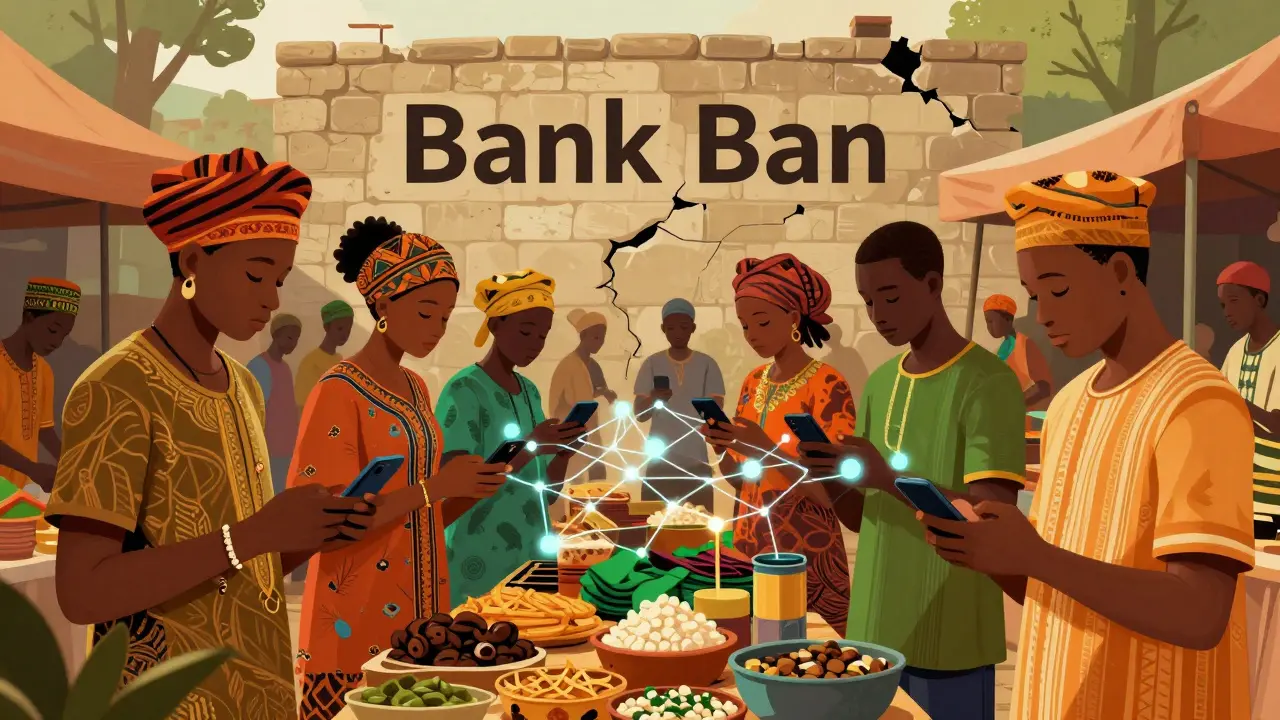
The Turning Point: 2023 VASP Guidelines
The most significant shift occurred in December 2023. After years of resistance, the CBN issued the Virtual Asset Service Provider (VASP) Guidelines. This was a 180-degree turn. The guidelines permitted banks to offer accounts and services to cryptocurrency businesses, provided those businesses were licensed by the Securities and Exchange Commission.
Virtual Asset Service Providers (VASPs) are licensed cryptocurrency businesses that, under the 2023 guidelines, can legally access banking services in Nigeria if they comply with SEC regulations.
This change did not mean the CBN suddenly loved crypto. It meant they accepted reality. They recognized that banning banks from interacting with crypto had pushed activity into unregulated shadows, making it harder to monitor for illicit activities. By bringing VASPs into the light, the CBN and SEC could enforce stricter Anti-Money Laundering (AML) and Know Your Customer (KYC) requirements.
This move also aligned with Nigeria’s broader economic goals. Strengthening AML frameworks is a key requirement for countries seeking removal from the Financial Action Task Force (FATF) Gray List. By regulating crypto formally, Nigeria aimed to boost global confidence in its financial system.
The Legal Framework: Investments and Securities Act 2025
Guidelines are good, but laws are better. The passage of the Investments and Securities Act 2025 formally recognized cryptocurrency as securities under SEC regulation. This legislation ended years of ambiguity. Digital assets were no longer operating in a gray zone; they were defined, categorized, and regulated.
Under this new framework, cryptocurrency firms must obtain licensing from the SEC and adhere to its Digital Assets Rules. These rules represent the first comprehensive attempt to regulate digital assets in Nigeria. Compliance is no longer optional for serious players. It’s the price of admission.
| Period | Key Policy | Bank Access | Primary Trading Method |
|---|---|---|---|
| 2017-2020 | 2017 Circular | Restricted | Direct Exchange Transfers |
| 2021-2023 | 2021 Letter | Prohibited | Peer-to-Peer (P2P) |
| 2023-2025 | VASP Guidelines | Licensed Only | Hybrid (P2P & Institutional) |
| 2025-Present | Investments & Securities Act | Regulated | Compliant Exchanges |

Market Impact: Exits and Adaptations
The road to regulation wasn’t smooth. The restrictive period from 2021 to 2023 caused significant market contraction. At least three prominent cryptocurrency companies pulled out of the Nigerian market due to tightening regulations. OKX, a global exchange headquartered in Seychelles, suspended operations in July 2024, citing recent changes in local laws. Binance removed the naira from its platform and faced legal disputes involving detained executives over untraceable funds.
These exits were painful for users accustomed to global platforms. However, they also cleared the way for local, compliant exchanges to thrive. Companies that invested in SEC licensing and robust KYC/AML infrastructure gained a competitive advantage. The market shifted from a wild west of offshore platforms to a more structured environment dominated by locally accountable entities.
Current Landscape: Balanced Control
As of 2026, Nigeria’s cryptocurrency regulatory landscape represents a carefully balanced approach. The SEC serves as the primary oversight authority for licensed cryptocurrency businesses, ensuring they meet investment protection standards. The CBN maintains its traditional role in banking supervision, ensuring that financial institutions only interact with vetted, licensed VASPs.
Despite this progress, tensions remain. In 2024, the government blamed crypto traders for foreign exchange market volatility. This highlights an ongoing challenge: how to embrace innovation while maintaining monetary control. The CBN still views large-scale crypto adoption as a potential threat to the naira’s stability. Therefore, the regulatory framework is designed to be permissive but controlled. Innovation is welcome, but only within strict boundaries.
For the average user, this means safer transactions but less anonymity. The days of easy, untracked P2P trades are fading. Licensed platforms require identity verification, transaction monitoring, and reporting. This is a trade-off: convenience and privacy for security and legitimacy.
Is cryptocurrency legal in Nigeria in 2026?
Yes, cryptocurrency is legal for investment and trading purposes, provided you use licensed Virtual Asset Service Providers (VASPs). The Investments and Securities Act 2025 formally recognizes digital assets as securities under the regulation of the Securities and Exchange Commission (SEC).
Can I use my bank account to buy crypto?
You can use your bank account to transfer funds to licensed cryptocurrency exchanges. Since the 2023 VASP Guidelines, banks are permitted to service crypto businesses that hold a valid license from the SEC. However, banks will still block transfers to unlicensed or suspicious entities.
Why did the CBN ban crypto initially?
The initial restrictions were driven by concerns over monetary stability, capital flight, and the potential use of cryptocurrencies for money laundering and terrorism financing. The CBN feared that widespread crypto adoption would undermine the value of the naira and reduce its control over the money supply.
What is the role of the SEC in crypto regulation?
The Securities and Exchange Commission (SEC) is the primary regulator for digital assets classified as investments. They issue licenses to Virtual Asset Service Providers (VASPs), enforce compliance with Digital Assets Rules, and ensure investor protection through strict KYC and AML requirements.
Are P2P crypto trades still allowed?
Peer-to-Peer (P2P) trading is not explicitly banned for individuals, but it operates in a tighter regulatory environment. Licensed platforms facilitate P2P trades, but they are subject to strict monitoring to prevent illicit activities. Unregulated, informal P2P networks face increasing scrutiny and risk.
How does the new policy affect FATF Gray List status?
By implementing strict AML and KYC regulations for crypto businesses, Nigeria aims to strengthen its financial transparency. This regulatory maturity is a key factor in the country's efforts to be removed from the Financial Action Task Force (FATF) Gray List, which tracks jurisdictions with strategic deficiencies in combating money laundering.