
Trading crypto on Ethereum mainnet feels like paying a luxury tax. You want to swap $50 worth of tokens, but the gas fee hits you for $15. It’s frustrating, expensive, and frankly, it doesn’t make sense. That is exactly why Layer 2 solutions like StarkNet are taking over. But once you are on StarkNet, which exchange do you actually use? If you care about keeping your money, not losing it to slippage or high fees, SithSwap is currently the heavyweight champion of the StarkNet ecosystem.
I’ve been testing decentralized exchanges (DEXs) since the early days of Uniswap V2. I’ve watched protocols rise and fall based on hype rather than utility. SithSwap is different. It isn’t trying to reinvent the wheel; it’s trying to build a better tire. By combining the familiar interface of Uniswap with the efficiency of Curve Finance, SithSwap offers a hybrid model that simply works better for most traders in 2026. Let’s break down whether this platform is right for your portfolio.
What Is SithSwap?
SithSwap is an automated market maker (AMM) built specifically for the StarkNet network. Launched in July 2023 by an anonymous team, it quickly became the go-to spot for swapping tokens on StarkNet. As of late 2025, it holds nearly 40% of the DEX volume share on the network, beating out competitors like JediSwap and mySwap.
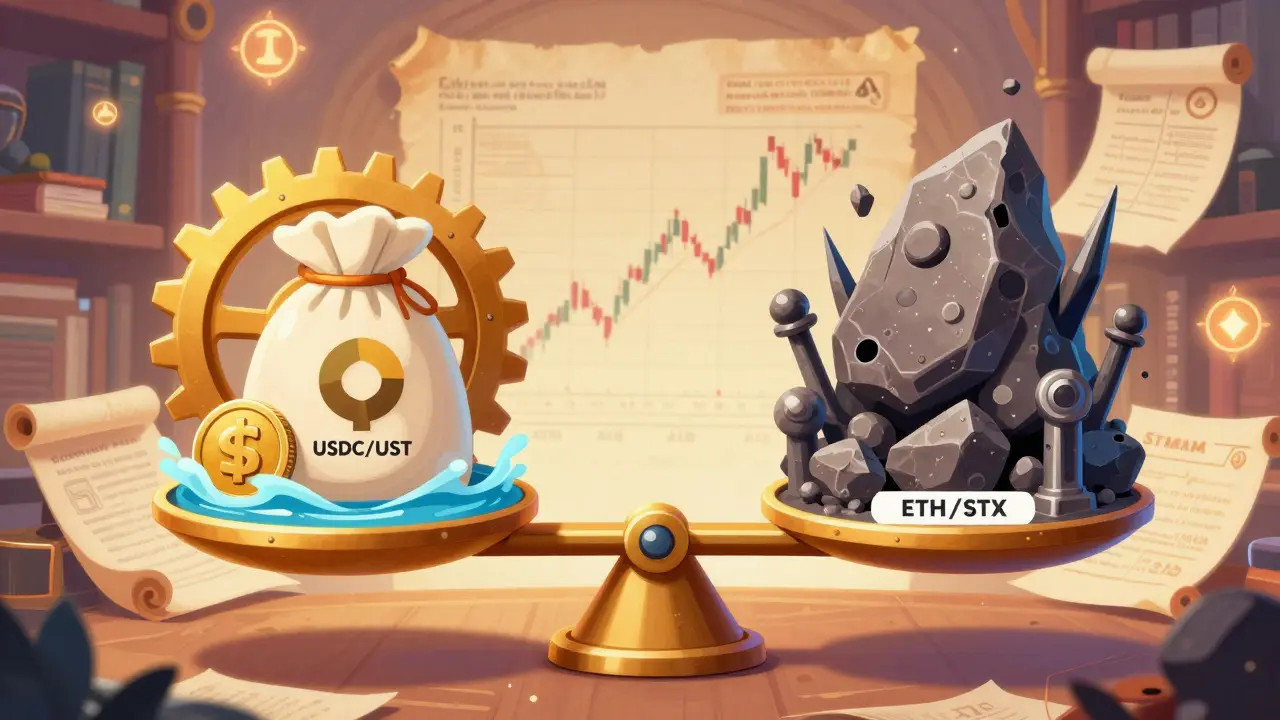
The magic lies in its architecture. Most AMMs force you to choose between two bad options: either use a standard constant product formula (like Uniswap) which causes massive slippage when trading stablecoins, or use a complex stableswap algorithm (like Curve) which is great for stables but terrible for volatile assets. SithSwap does both.
It uses a dynamic bonding curve. When you trade correlated assets like USDC and USDT, the system automatically switches to a low-slippage mode. When you trade volatile pairs like ETH and STX, it reverts to a standard volatility-resistant mode. This means you get the best of both worlds without having to hunt for the right pool manually.
Fees and Slippage: Where SithSwap Shines
If you are a regular trader, fees are your enemy. On Ethereum L1, you might pay 0.3% in protocol fees plus $20 in gas. On StarkNet, gas is negligible. But the protocol fees still matter if you are moving significant capital.
SithSwap charges a dynamic fee structure:
- Stablecoin Pairs: 0.05% fee. This is incredibly low. For context, many centralized exchanges charge higher withdrawal fees alone.
- Volatile Asset Pairs: 0.3% fee. This matches the industry standard set by Uniswap.
But the real win is slippage. In Q2 2025, data from DeFi Llama showed that SithSwap achieved average slippage of just 0.01-0.05% on stable pairs. Compare that to the 0.05-0.1% average on older protocols. If you are swapping $10,000 of USDC for USDT, that difference saves you real money instantly. For volatile pairs, slippage sits between 0.15% and 0.3%, which is significantly tighter than the 0.3-0.8% you might see on less optimized pools.
| Feature | SithSwap | JediSwap | mySwap |
|---|---|---|---|
| Market Share | 38.7% | 29.3% | 18.5% |
| Stable Pair Fee | 0.05% | 0.3% (Flat) | 0.25% (Fixed) |
| Avg. Slippage (Stables) | 0.023% | 0.068% | 0.055% |
| Token Listings | 87 Pairs | 142 Pairs | 118 Pairs |
| Success Rate ($50k swaps) | 98.7% | 92.3% | 90.1% |
User Experience and Interface
Let’s be honest: if a DEX looks confusing, you won’t use it. SithSwap nailed this. If you have ever used Uniswap, you will feel at home here immediately. The layout is clean, the inputs are intuitive, and the transaction details are displayed clearly before you confirm.
To use SithSwap, you need a StarkNet-compatible wallet. The two big players are Argent X and Braavos Wallet. Both integrate seamlessly. Once connected, you can execute your first swap in under five minutes. There is no KYC, no email sign-up, and no account creation. You connect, you swap, you disconnect. Simple.
However, the experience gets more complex if you want to provide liquidity or stake governance tokens. The veSITH (vote-escrowed SITH) mechanics require some learning. You lock your SITH tokens for a period (minimum 14 days) to earn rewards and voting power. While powerful, this adds a layer of friction for casual users who just want to swap tokens.
Security and Trust
In crypto, security isn’t a feature; it’s a requirement. SithSwap benefits directly from StarkNet’s security model. Since StarkNet is a zk-Rollup, all transactions are batched and verified on Ethereum mainnet every 10 minutes. This means SithSwap inherits Ethereum’s full security guarantees. If someone tries to hack the state of SithSwap, they would essentially need to compromise Ethereum itself, which is practically impossible.
That said, smart contract risk always exists. The dual-mode AMM design is innovative, but complexity brings risk. Security firm OpenZeppelin audited the core contracts in mid-2025. They noted that while the code passed verification, the dynamic switching mechanism introduces more potential attack vectors than a simple Uniswap clone. They recommended constant vigilance from liquidity providers. For a trader, this risk is minimal because you are interacting with established, audited contracts. For a liquidity provider, you need to understand impermanent loss and smart contract risks thoroughly.
The SITH Token and Governance
SITH is the governance token of the protocol. With a fixed supply of 1 billion tokens, it powers the ecosystem’s incentives. Here is how the distribution breaks down:
- 45% for liquidity mining rewards (distributed over 4 years)
- 25% for the treasury
- 15% for founders and team (vested over 3 years)
- 10% for strategic partners
- 5% for early supporters
Unlike many projects where tokens are dumped on the market, SITH uses a ve(3,3) model similar to Curve. You lock your tokens to earn a yield boost and governance rights. This encourages long-term holding and reduces sell pressure. However, critics like Dr. Rebecca Shaw argue that this model overemphasizes short-term liquidity incentives. Time will tell if this leads to sustainable value accrual or just temporary boosts.

Pros and Cons: Is It Right for You?
No platform is perfect. Here is the honest breakdown of SithSwap’s strengths and weaknesses as we head into late 2025 and 2026.
Why you should use it:
- Lowest Fees on StarkNet: The 0.05% fee on stables is unbeatable.
- High Success Rate: 98.7% settlement success for large swaps means your trades actually go through.
- Ethereum Security: You get L1 security with L2 costs.
- Familiar UI: Easy transition for Uniswap veterans.
Why you might look elsewhere:
- Limited Token Selection: With only 87 pairs, you won’t find niche meme coins or new launches here. JediSwap has 142 pairs.
- Complex Liquidity Mining: The veSITH system has a steep learning curve.
- Support Response Times: Non-urgent support tickets can take up to 58 hours to resolve, according to user reports.
Future Roadmap: What’s Next?
SithSwap isn’t standing still. Version 3.0 is scheduled for November 2025. This update is huge because it introduces cross-chain swapping via integration with Symbiosis Finance. Currently, you need to bridge assets manually to move them between chains. Version 3.0 will allow you to swap directly from an asset on one chain to another on a different chain within the same interface.
Additionally, veSITH 2.0 is planned for Q1 2026. This will introduce concentrated liquidity positions, allowing providers to allocate capital more efficiently and earn higher yields. These updates suggest the team is focused on scaling and improving capital efficiency, not just chasing trends.
Final Verdict
If you are trading on StarkNet, SithSwap should be your default exchange for 90% of your needs. It is faster, cheaper, and more efficient than its competitors for standard tokens and stablecoins. The only reason to switch to JediSwap or mySwap is if you are hunting for obscure, newly listed tokens that haven’t made it to SithSwap yet.
For the average user, the combination of near-zero gas fees, ultra-low slippage, and a trusted security model makes SithSwap the standout choice in the Layer 2 landscape. Just remember to do your own research, especially if you plan to provide liquidity or stake SITH tokens.
Is SithSwap safe to use?
Yes, SithSwap is considered very safe. It runs on StarkNet, a zk-Rollup that settles transactions on Ethereum mainnet. This means it inherits Ethereum's robust security model. Additionally, its smart contracts have been audited by reputable firms like OpenZeppelin. However, as with any DeFi protocol, you should never invest more than you can afford to lose.
What wallets work with SithSwap?
SithSwap requires a StarkNet-compatible wallet. The most popular options are Argent X and Braavos Wallet. Both are available as browser extensions for Chrome, Firefox, and Brave. Make sure your wallet version is updated (Argent X 2.4.1+ or Braavos 1.8.3+) for the best compatibility.
How do fees compare to Uniswap?
SithSwap is significantly cheaper. While Uniswap on Ethereum L1 charges 0.3% plus high gas fees (often $5-$50+), SithSwap charges 0.05% for stable pairs and 0.3% for volatile pairs, with gas fees typically under $0.01 due to StarkNet's Layer 2 efficiency.
Can I trade any token on SithSwap?
Not exactly. SithSwap supports 87 major token pairs as of late 2025. It focuses on high-liquidity assets. If you are looking for very new or niche tokens, you might need to use a competitor like JediSwap, which lists over 140 pairs.
What is the SITH token used for?
The SITH token is used for governance and incentivizing liquidity providers. By locking SITH tokens (veSITH), users can vote on protocol upgrades and earn boosted rewards from trading fees. It follows a vote-escrow model similar to Curve Finance.




JEVON HALL
June 7, 2026 AT 21:18yo guys just moved all my stables to sithswap and the fees are actually insane like barely anything 😅 been using uniswap for years but this is next level
dan kaffeman
June 8, 2026 AT 20:11you idiots think you're safe because of some zk-rollup hype? it's all a scam designed to bleed retail. the team is anonymous for a reason. they will rug pull when liquidity dries up. wake up sheeple.
Karthikeyan S
June 10, 2026 AT 08:38i dont care about your fear mongering dan i made 5k last week on stable swaps with zero slippage u just jealous bc u cant handle real tech 🙄📉
Dinesh Pattigilli
June 10, 2026 AT 11:09actually the ve(3,3) model is fundamentally flawed in its incentive structure. most of these so-called 'innovations' are just rehashed curve mechanics with worse tokenomics. the dilution rate for early adopters is catastrophic if you look at the vesting schedules properly.
Madhu Menon
June 10, 2026 AT 12:31there is a deeper philosophical question here about trust in decentralized systems. we place our faith in code that we cannot fully audit ourselves. is true freedom possible when the underlying infrastructure relies on complex mathematical proofs that only a few understand? 🤔
Narendra Kulkarni
June 11, 2026 AT 09:24hey madhu thats a deep thought but honestly for me its just about saving money on gas. the ui is super clean and i didnt have any issues connecting my argent wallet. thanks for sharing tho!
verna kennedy
June 12, 2026 AT 23:43Let us be clear: the comparison table provided is misleading. While the fees are lower, the liquidity depth on volatile pairs is insufficient for institutional-grade trading. Retail users may find it adequate, but do not mistake low fees for robust market making capabilities.
Kelly Tenney
June 13, 2026 AT 19:21I appreciate the caution Verna, but for most people starting out, the barrier to entry is much lower now. I helped my cousin set up his Braavos wallet yesterday and he was swapping within minutes. It feels empowering to see tools becoming more accessible to everyone.
Caralee Robertson
June 14, 2026 AT 21:37im trying to figure out how to lock the SITH tokens but the interface is kinda confusing lol anyone got a simple guide? i keep clicking the wrong buttons
Dr Lynea LaVoy
June 15, 2026 AT 07:37Caralee, ensure you navigate to the 'Governance' tab first. You must connect your wallet securely before initiating the lock. The minimum period is 14 days, so plan your liquidity needs accordingly. If you encounter specific errors, check the community Discord for step-by-step visual guides.
Greg Lewis
June 17, 2026 AT 03:06why do you need a guide? just read the docs. also i noticed your wallet address has some weird activity from last month are you sure its secure? maybe you should change your seed phrase just in case
Matthew Malone
June 18, 2026 AT 19:40American innovation is being stifled by these foreign protocols. StarkNet is built on inferior technology compared to our domestic L2 solutions. We should be supporting homegrown projects that respect our financial sovereignty rather than chasing cheap fees on unstable networks.
aaliyah zahid
June 20, 2026 AT 00:47Oh please Matthew, crypto doesn't care about borders. The best tech wins regardless of where it's coded. Your nationalism is cute but irrelevant in a decentralized world. 😂
Erik Kirana
June 20, 2026 AT 09:27The article fails to mention the critical security implications of the dynamic bonding curve switching mechanism. It is an egregious oversight. OpenZeppelin's audit noted potential vectors, yet the author glosses over them as 'minimal risk'. This is negligent reporting. Do not trust platforms with such opaque logic. 🚫
Meg Gran
June 22, 2026 AT 01:36lol erik ur so serious about nothing. yeah the code might have risks but so does keeping cash under your mattress. im gonna keep swapping my stables and enjoying the low fees while u worry about hypothetical hacks. live a little! 😜