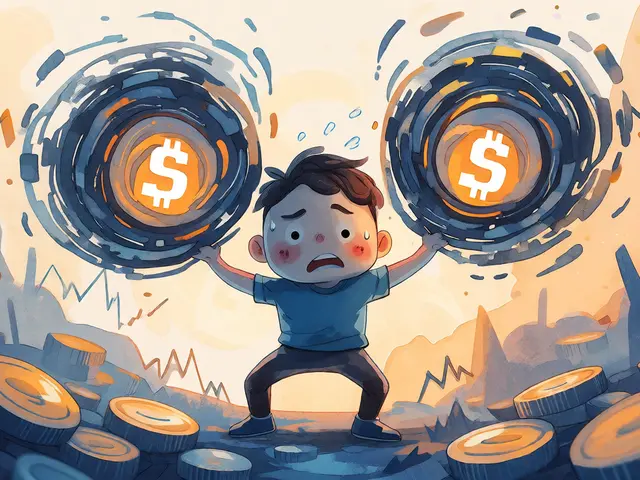
Buying Bitcoin or Ethereum when the price drops feels great. Buying when it’s soaring? That’s when panic sets in. Most people who jump into cryptocurrency get paralyzed by timing the market. They wait for the perfect moment - and end up missing it. That’s where dollar-cost averaging comes in. It’s not flashy. It doesn’t promise quick riches. But for most people, it’s the only way to actually build crypto holdings without losing sleep.
What Is Dollar-Cost Averaging (DCA) in Crypto?
Dollar-cost averaging means buying the same dollar amount of a cryptocurrency at regular intervals - weekly, every two weeks, or monthly - no matter what the price is doing. If Bitcoin drops to $40,000, you buy $100 worth. If it spikes to $70,000, you still buy $100 worth. You’re not trying to guess the bottom. You’re just showing up, consistently. This isn’t new. Investors have used DCA for decades in stocks and mutual funds. But in crypto, where prices swing 10% in a single day, it’s especially powerful. You end up buying more coins when prices are low and fewer when they’re high. Over time, your average cost per coin smooths out. You don’t need to be right about the market direction. You just need to stick with it.Why DCA Works Better Than Lump-Sum Investing for Most People
Some people argue that putting all your money in at once - lump-sum investing - beats DCA. And technically, they’re right… sometimes. If you bought Bitcoin at $3,000 in 2020 and held it, you’d have made a fortune. But that’s hindsight. No one knows when the bottom is. In reality, most people don’t have a big lump sum to invest all at once. They earn a paycheck, and they have bills to pay. DCA fits real life. You set aside $50 or $100 each week. You don’t need to save up for months. You just start small and keep going. Kraken’s 2025 survey found that 59% of crypto investors use DCA as their main strategy. Why? Because it removes emotion. When the market crashes, you don’t freeze. You keep buying. When it surges, you don’t FOMO. You stick to your plan. That discipline is worth more than any trading tip.How DCA Reduces Stress and Decision Fatigue
Crypto markets don’t care if you had a bad day at work. They don’t care if you’re tired, scared, or excited. Prices move randomly. And that’s exhausting to watch. Active traders spend hours checking charts, reading news, and second-guessing every move. It’s a mental grind. DCA takes that off your plate. You set up an automatic buy, and you forget about it until your next paycheck. Many new investors tell me they tried trading first. They bought Bitcoin at $60,000, watched it drop to $45,000, panicked, and sold. Then they missed the next rally. DCA stops that cycle. You stop trying to be a hero. You become a steady investor. Fidelity Investments calls this “taking the guesswork out of market entry.” That’s exactly right. You’re not betting on the next big move. You’re building a position over time. It’s the difference between gambling and saving.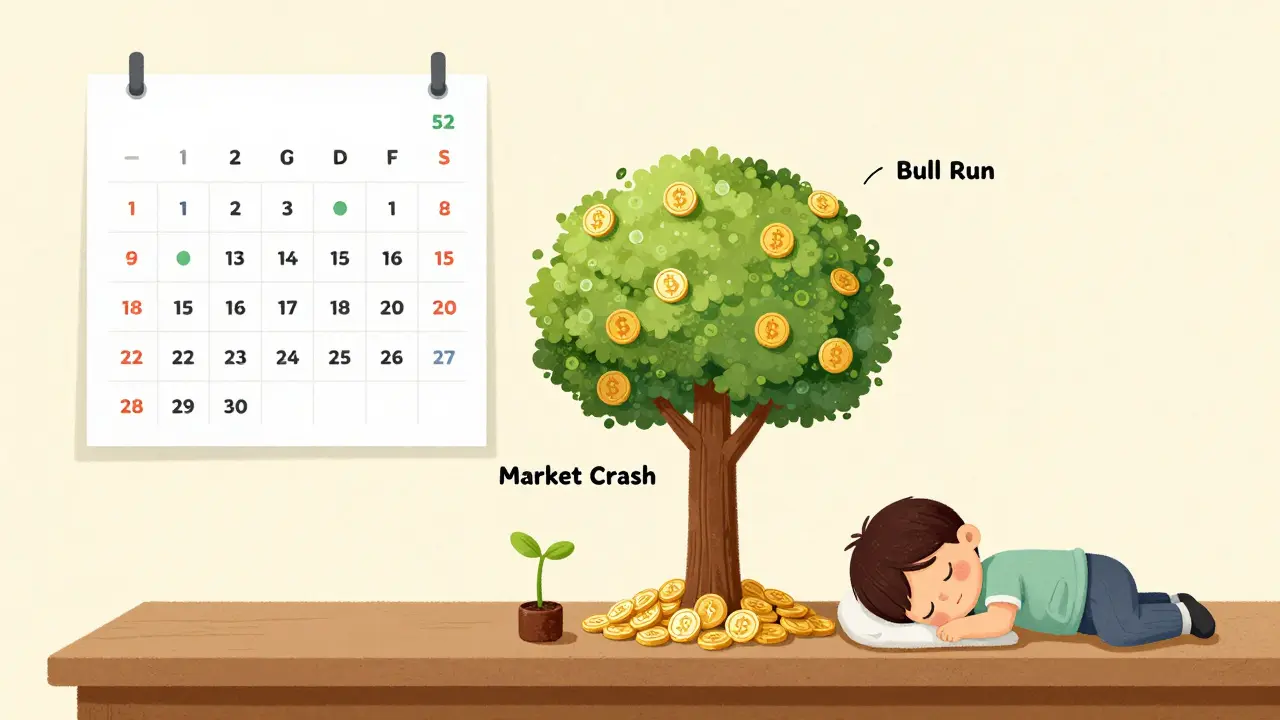
How to Set Up DCA for Crypto (Simple Steps)
You don’t need to be a tech expert. Here’s how to get started in under 10 minutes:- Choose a reputable exchange that supports recurring buys - Coinbase, Kraken, or Kriptomat are good options.
- Link your bank account or debit card. Make sure you have enough funds to cover your planned purchases.
- Set your amount: $25, $50, $100 - whatever you can afford regularly.
- Choose your frequency: weekly is best for most people.
- Select the crypto you want to buy: Bitcoin, Ethereum, or even a diversified basket.
- Turn on auto-purchase and forget it.
What DCA Doesn’t Do - And What You Should Know
DCA isn’t magic. It doesn’t guarantee profits. If the entire crypto market crashes and never recovers, you’ll lose money. That’s the risk of any investment. It also doesn’t beat the market in a strong bull run. If you had put $10,000 into Bitcoin in January 2023 and held it, you’d have outperformed someone who DCA’d $200 a week. But again - who knew that would happen? DCA protects you from bad timing, not from bad assets. Transaction fees can add up. If you’re buying $25 every week on an exchange that charges $1 per trade, you’re paying 4% in fees annually. Look for platforms with lower fees or free recurring buys. Some, like Kraken, now offer fee-free DCA on Bitcoin and Ethereum for users with higher balances.
Who Should Use DCA - And Who Shouldn’t
DCA is perfect for:- Beginners who are nervous about crypto volatility
- People with steady income but no big savings to invest at once
- Anyone who doesn’t have time to watch markets all day
- Investors focused on long-term growth, not short-term gains
- Experienced traders who want to time entries and exits
- People who can’t afford regular contributions (you need cash flow)
- Those who believe crypto will collapse entirely and want to wait for a crash