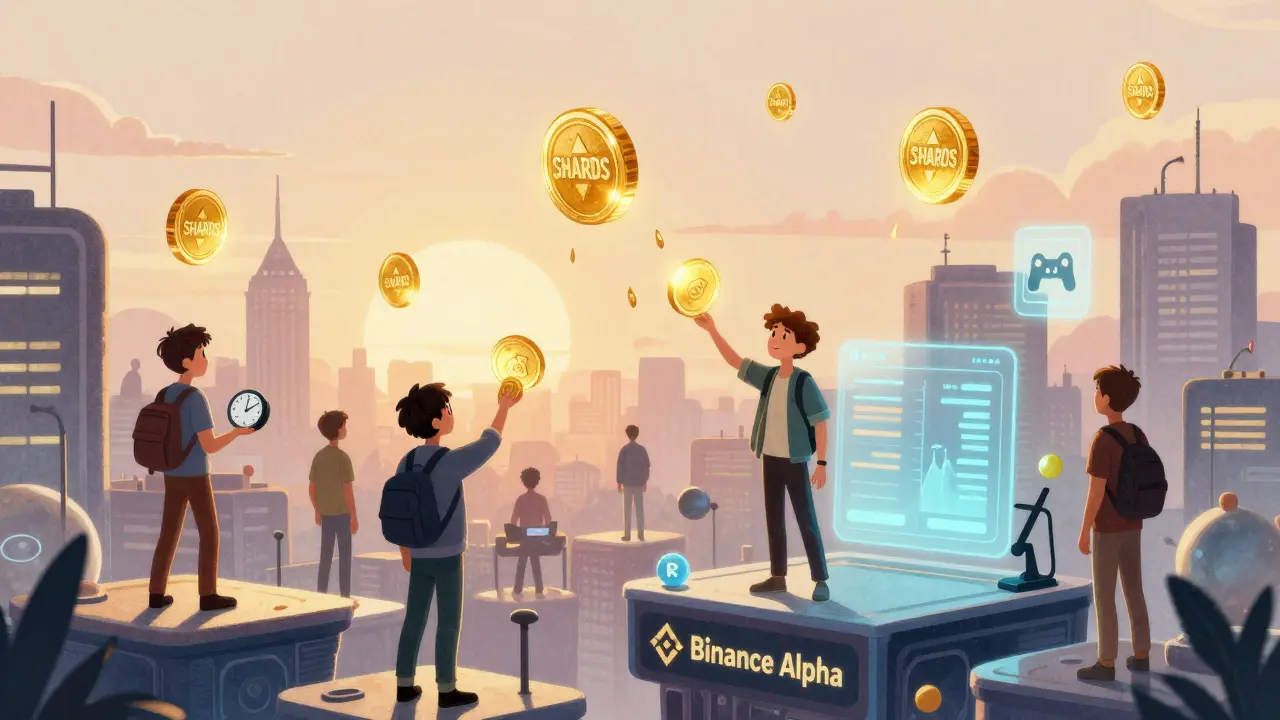
Binance Alpha SHARDS Claim Calculator
How It Works
On September 5, 2025, Binance required 220 Alpha Points to claim 4,000 SHARDS tokens. The requirement dropped by 15 points every hour, but never went below 175 points.
220 points required
175 points required
175 points required
⚠️ Important:
The airdrop ended on September 9, 2025. This calculator shows what you would have received if you claimed at that time.
Never share your private keys with any website claiming to offer SHARDS airdrops.
On September 5, 2025, thousands of crypto users woke up to find SHARDS tokens in their wallets. Not because they bought them. Not because they mined them. But because they played the game - the game of participation.
WorldShards, a Web3 MMORPG built on blockchain, didn’t launch with a private sale, venture capital backing, or team allocations. Instead, it gave away 60 million tokens through two major exchanges: Binance Alpha and Bybit. No insiders. No pre-mined supply. Just players, traders, and stakers who showed up at the right time.
How the Binance Alpha Airdrop Actually Worked
If you had 220 Alpha Points on Binance by September 5, 2025, you could claim 4,000 SHARDS tokens. Sounds simple? It wasn’t.
The catch? Every claim cost you 15 points. And every hour, the point requirement dropped by 15. So if you waited until 3 PM, you only needed 205 points. By midnight? Just 175. That created a real-time race. People refreshed their dashboards hourly. Forums lit up with countdowns. Some users claimed early to lock in their reward. Others held back, betting the drop would go lower.
And here’s the kicker: if you didn’t claim within 24 hours, your chance vanished. No reminders. No extensions. Binance didn’t email you. It didn’t text you. It just let the timer run out. This wasn’t a handout. It was a test of attention.
And it worked. Over 1.2 million users participated. Tokens were credited directly to spot wallets - no claiming portal, no gas fees, no confusion. That’s why it felt clean. That’s why people trusted it.
Bybit’s Megadrop: The Multi-Layered Game
While Binance ran a point-based sprint, Bybit turned the airdrop into a marathon.
Bybit’s Megadrop program gave users three ways to earn points: staking USDT or MNT in Fixed Term Earn, trading daily on Spot markets, and completing simple tasks. Each action multiplied your score. Staking 1,000 USDT for 30 days? That gave you base points. Trading $500 in Spot that day? Doubled them. Do both? Tripled.
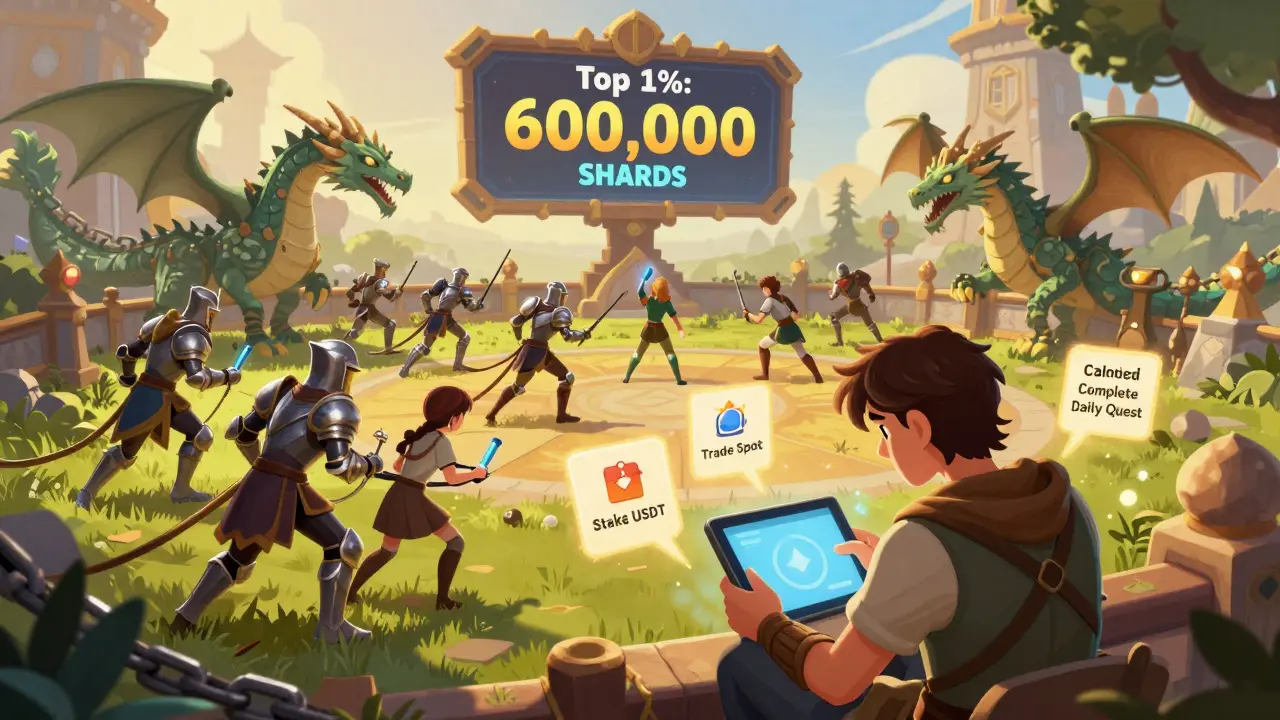
The prize pool? 60 million SHARDS. But no one got the whole thing. Rewards were split into three batches, distributed between September 5 and 9. The top earners got up to 1% of the total pool - that’s 600,000 SHARDS. Most users got between 5,000 and 20,000 tokens.
Unlike Binance, Bybit didn’t require you to just sit and wait. You had to be active. You had to trade. You had to lock up your assets. It favored experienced DeFi users - the kind who already knew what staking meant, who tracked their daily volume, who didn’t panic when prices dipped.
And when SHARDS listed on Bybit Spot on September 5, the same people who earned the tokens were already there - ready to trade, to hold, or to use them in the game when it launched.
Why This Airdrop Was Different
Most airdrops in 2025 felt like lottery tickets. You signed up, did a few Twitter retweets, and hoped for the best. WorldShards didn’t do that.
It tied token distribution to real platform behavior. On Binance, you had to be active in the Alpha ecosystem. On Bybit, you had to stake, trade, and engage. Neither platform gave tokens to passive users. Neither gave tokens to bots. Neither gave tokens to people who didn’t understand the rules.
This wasn’t marketing. This was selection.
WorldShards didn’t want casual speculators. They wanted players. People who would log in, fight monsters, trade NFT gear, and keep the economy alive. The airdrop wasn’t just a giveaway - it was a filter.
What Happened After the Airdrop
On September 5, SHARDS opened at $0.012 on Bybit. Within 48 hours, it hit $0.018 - a 50% jump. That matched the historical trend of Binance Alpha airdrops, which typically rise 30-60% after listing.
But then came the drop.
By September 12, SHARDS fell to $0.014. A 22% retracement. Not unusual. Web3 game tokens do this. They spike when they launch. Then they settle as players test the actual game. If the game sucks, the token dies. If it’s fun, it climbs again.
As of October 2025, the WorldShards game went live on PC and mobile. Early reviews were mixed. Some praised the combat system and NFT item trading. Others complained about slow loading times on mobile and unclear progression paths.
That’s the real test now: does the game keep people playing? Because if it doesn’t, SHARDS becomes just another forgotten token.
The Risks No One Talks About
People focus on price. But the real danger isn’t a price drop. It’s a dead game.
SHARDS has no team allocations. No venture capital. That’s good. But it also means no big budget for marketing, no PR team, no influencer partnerships. If the game doesn’t catch fire on its own, it dies quietly.
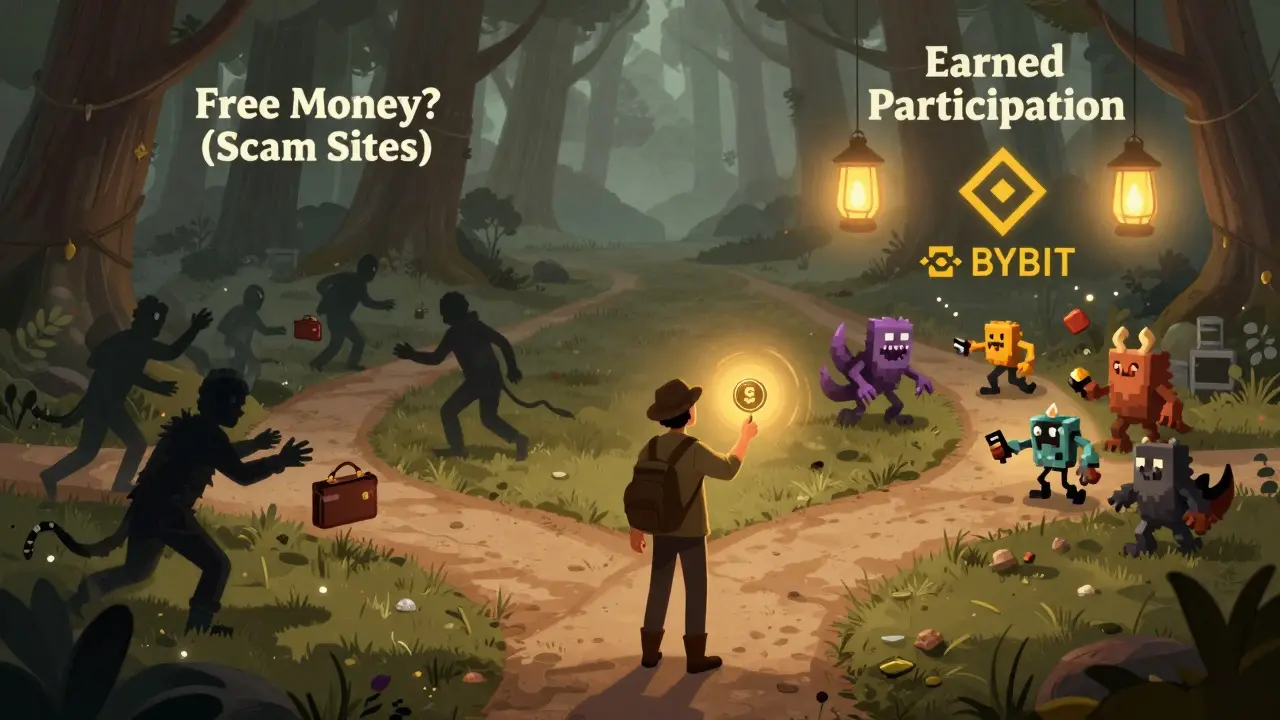
And there’s another risk: phishing. After the airdrop, fake websites popped up claiming to be “WorldShards Claim Portals.” They asked for wallet keys. They sent fake emails. Thousands lost tokens before they even knew what happened.
Real SHARDS never asked for private keys. Never sent emails. Never asked you to connect your wallet to a site. If you didn’t get it through Binance or Bybit, you didn’t get it at all.
Who Won? Who Lost?
Those who won were the ones who understood the system.
Someone who held 220 Alpha Points for months and claimed on day one? They got 4,000 SHARDS and sat tight. They didn’t chase the spike. They waited for the game.
Someone who staked $5,000 in USDT on Bybit, traded daily, and hit the top 1%? They got 600,000 SHARDS. That’s $7,200 at $0.012. Even at $0.008, that’s $4,800. Not bad for a few weeks of activity.
Who lost? The people who thought it was free money. The ones who bought SHARDS at $0.025 after the spike, thinking it was going to $1. The ones who didn’t check if the game was even playable.
Airdrops aren’t luck. They’re a signal. And WorldShards sent a clear one: if you want to earn here, you have to show up - not once, but consistently.
What This Means for Future Airdrops
WorldShards didn’t invent the airdrop. But it perfected a new model.
Future Web3 games will copy this. Not the points. Not the thresholds. But the principle: reward behavior, not just attention.
Instead of asking you to follow a Twitter account, they’ll ask you to complete a tutorial. Instead of asking you to hold a token for 30 days, they’ll ask you to level up a character. Instead of giving tokens to everyone, they’ll give them to the ones who prove they care.
That’s the future. Not giveaways. Engagement filters.
Final Thought: Airdrops Are Not Free Money
SHARDS didn’t hand out free cash. It handed out a chance - a chance to be part of something new. But only if you were willing to learn the rules, show up every day, and play the long game.
If you’re waiting for the next airdrop, don’t just sign up. Study the platform. Understand the mechanics. Watch how points are earned. Ask: What are they really testing?
Because the next big airdrop won’t be about how much you get. It’ll be about who you are.
Was the WorldShards (SHARDS) airdrop really free?
Yes, but not in the way most people think. You didn’t pay money to get SHARDS tokens, but you had to spend time, effort, and sometimes lock up assets. On Binance, you needed to earn Alpha Points through platform activity. On Bybit, you had to stake USDT or trade daily. It wasn’t free money - it was earned participation.
Can I still claim SHARDS tokens?
No. Both the Binance Alpha and Bybit Megadrop campaigns ended in early September 2025. All tokens were distributed by September 9. Any website claiming to offer SHARDS airdrops now is a scam. The only way to get SHARDS now is to buy them on exchanges like Bybit or gate.io.
What’s the current price of SHARDS?
As of October 2025, SHARDS trades between $0.008 and $0.011 on major exchanges. After a strong initial spike to $0.018, the price settled as the WorldShards game launched and player feedback came in. The token’s value now depends on how many players stay active in the game - not speculation.
Is WorldShards a scam?
No, but it’s risky. The project had no team allocations, used reputable exchanges, and delivered tokens as promised. However, the long-term success depends entirely on the game’s quality. If players lose interest, the token will lose value. Many Web3 games fail after launch. WorldShards is still alive, but its future isn’t guaranteed.
How can I avoid SHARDS scams?
Never give out your private keys or connect your wallet to any site outside Binance or Bybit. Official SHARDS communications only come through verified exchange channels. If you see a website asking for a wallet connection, a “claim form,” or a “gas fee,” it’s fake. Bookmark the official WorldShards Twitter and check there for updates - never trust emails or Discord DMs.
Do I need to be an expert to join future airdrops like this?
You don’t need to be an expert, but you need to be careful. The best way to prepare is to start using platforms like Binance or Bybit regularly. Learn how staking works. Understand how point systems function. Watch how airdrops are structured. You don’t need to trade daily, but you do need to know what you’re signing up for. Most people lose money not because they’re bad at crypto - but because they don’t read the rules.

Anselmo Buffet
December 9, 2025 AT 21:42Still holding my SHARDS. Waiting for the game to hit its stride.
Ian Norton
December 11, 2025 AT 05:32Sue Gallaher
December 13, 2025 AT 04:22Jeremy Eugene
December 13, 2025 AT 07:59Nicholas Ethan
December 15, 2025 AT 04:15Rakesh Bhamu
December 15, 2025 AT 14:20Hari Sarasan
December 15, 2025 AT 22:19Stanley Machuki
December 17, 2025 AT 19:15Lynne Kuper
December 19, 2025 AT 03:54Wow. What a revelation. The irony is thicker than a Binance CEO's tie.
Lloyd Cooke
December 20, 2025 AT 19:36What did you learn about yourself when you waited for the point drop?
Kurt Chambers
December 21, 2025 AT 17:28Kelly Burn
December 23, 2025 AT 12:54Candace Murangi
December 23, 2025 AT 16:37That’s rare.
Tiffany M
December 25, 2025 AT 12:08amar zeid
December 27, 2025 AT 11:54Alex Warren
December 28, 2025 AT 08:27Claire Zapanta
December 29, 2025 AT 06:37Kathleen Sudborough
December 29, 2025 AT 12:51Vidhi Kotak
December 30, 2025 AT 07:04Kim Throne
December 31, 2025 AT 01:56