
If you're trading crypto in India, picking the wrong exchange could cost you more than just money-it could land you in legal trouble, freeze your funds for months, or leave you with no way to prove your taxes. It’s not about being paranoid. It’s about knowing which platforms have already failed Indian users-and why.
Why compliance isn’t optional
India doesn’t ban crypto. But it doesn’t protect you either. The Financial Intelligence Unit of India (FIU-IND) sets the rules for crypto exchanges operating here. If an exchange doesn’t follow FIU-IND’s anti-money laundering (AML) and know-your-customer (KYC) rules, it’s not just breaking guidelines-it’s operating illegally in the eyes of Indian authorities.That means no legal recourse if your account gets frozen. No help from Indian regulators if the exchange vanishes. And no tax reports that match what the Income Tax Department expects. Even if you’re doing everything right, using a non-compliant exchange makes you a target for investigation by the Enforcement Directorate (ED) for suspected money laundering. You didn’t break the law-but your exchange did, and now you’re caught in the fallout.
Binance: Global giant, local problem
Binance is the world’s biggest crypto exchange. But in India, it’s been fined over $10 million by FIU-IND for failing to register as a reporting entity. The penalty wasn’t small. It was a warning: if you don’t comply, you won’t be allowed to operate here.Indian users still access Binance through third-party payment processors or offshore accounts. But here’s the catch: those methods are now blocked by Indian banks. Your INR deposit might fail. Your withdrawal might get reversed. Your account could be flagged for suspicious activity-even if you’re just buying Bitcoin.
And if something goes wrong? Good luck getting support. Binance’s customer service doesn’t have a local office in India. No Indian phone number. No physical address. No legal responsibility under Indian law. You’re on your own.
Bybit: Same story, different name
Bybit is another global exchange that got hit with a multi-million-dollar penalty from FIU-IND in early 2025. Like Binance, it ignored India’s reporting requirements. It didn’t submit transaction data. It didn’t verify user identities properly. It didn’t appoint a local compliance officer.Indian users report frequent deposit failures. Many say their INR transfers vanish into a black hole. Some have waited over six months for customer service to respond. Others got locked out of their accounts with no explanation. When they reached out to Indian authorities, they were told: “This exchange isn’t registered. We can’t help.”
Bybit doesn’t offer tax reports for Indian users. That means you’re manually tracking every trade, every swap, every staking reward-just to file your 30% capital gains tax and 1% TDS. One mistake, and you risk an audit.
WazirX: The Indian exchange that broke
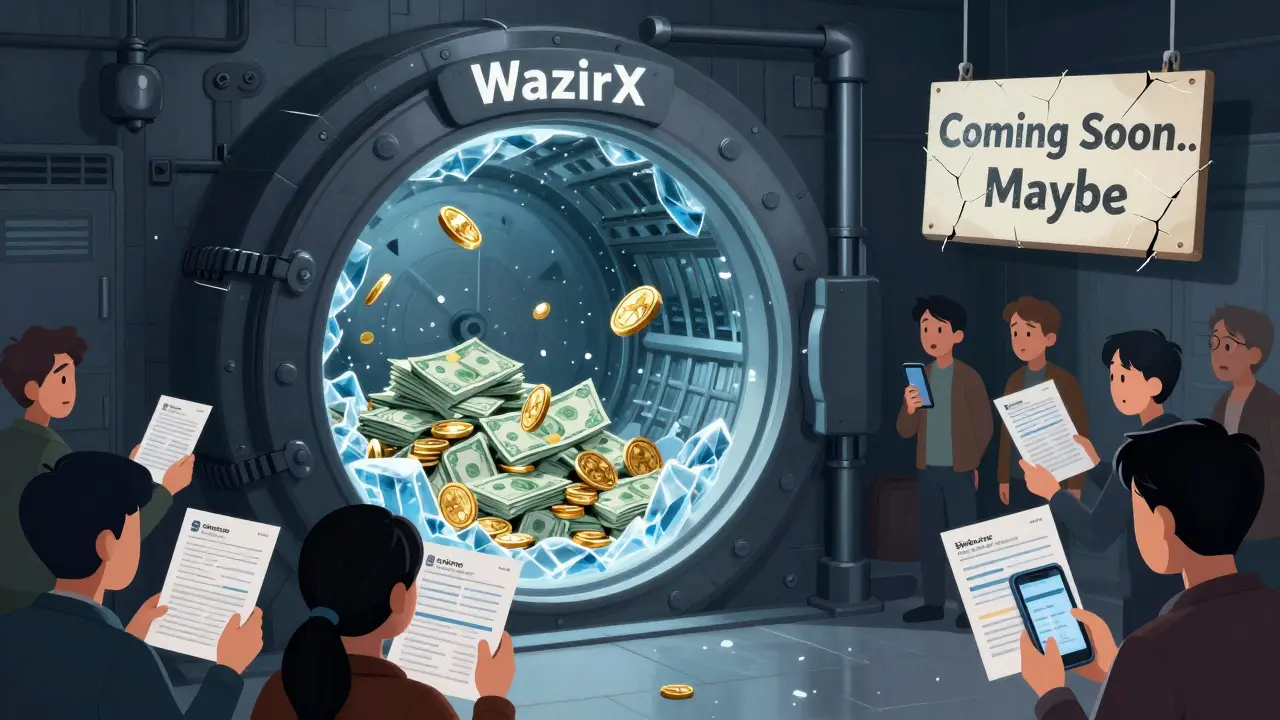
WazirX was supposed to be the safe choice. It was India’s biggest local exchange-with 6 million users, $5.4 billion in monthly volume, and ties to Binance. It even had backing from the Blockchain India Fund.Then, in July 2024, it got hacked.
Over $230 million in user funds disappeared. The hackers exploited a flaw in the multi-signature wallet system. The exchange didn’t have insurance. It didn’t have a recovery plan. And instead of returning funds, it announced a “restructuring.”
Two years later, users still can’t withdraw their money. WazirX says it’s working on a solution. But there’s no timeline. No transparency. No official communication. Meanwhile, the platform still lets people trade. It still takes deposits. But withdrawals? Frozen. Locked. Blocked.
Even worse-WazirX still doesn’t provide tax-ready reports. You’re stuck exporting raw transaction logs and trying to make sense of them in Excel. And if you file your taxes based on incomplete data? You could be flagged for underreporting.
What happens when you use a non-compliant exchange
It’s not just about losing money. It’s about losing control.- Bank blocks: Indian banks like HDFC, ICICI, and Axis now automatically flag transactions to non-FIU exchanges. Your UPI or NEFT transfer might vanish without a trace.
- No customer support: Time zones don’t matter when your support team doesn’t exist in India. Emails go unanswered. Tickets stay open for months.
- No tax help: No 1099-style reports. No auto-calculation of capital gains. You’re on your own to track every trade, every coin swap, every airdrop.
- Legal risk: The Enforcement Directorate has started tracing crypto flows through non-compliant exchanges. Even if you didn’t know the exchange was illegal, you can still be questioned-sometimes for months.
- Account freezes: Exchanges like Binance and Bybit can freeze your account without warning. No appeal. No explanation. Just “violation of terms.”
What to look for instead
You don’t need to stop trading. You just need to pick the right platform.These exchanges have shown better compliance with Indian rules:
- CoinDCX: Registered with FIU-IND. Offers INR deposits via UPI and bank transfers. Provides tax reports for Indian users.
- CoinSwitch: Works with Indian banks. Has a dedicated compliance team in Mumbai. Offers tax summaries aligned with Indian law.
- ZebPay: One of the oldest Indian exchanges. Has a physical office in Bangalore. Offers tax reports and supports TDS calculations.
- Unocoin: Compliant since 2018. Offers INR on-ramps and tax documentation. Has never suffered a major hack.
- Bitbns: FIU-IND registered. Provides monthly tax reports. Supports Indian KYC and bank integrations.
These platforms still aren’t perfect. But they have local teams. They report to Indian authorities. They give you receipts you can use for taxes. And if something goes wrong, you have a real person to call.
How to check if an exchange is safe
You can’t trust marketing. You can’t trust user reviews. Here’s how to verify:- Go to the FIU-IND website and search for the exchange’s name in their registered reporting entities list. (As of May 2025, only a handful are listed.)
- Check if the exchange accepts UPI or NEFT deposits from Indian banks. If it only takes crypto deposits, that’s a red flag.
- Ask for a tax report. If they say “We don’t provide that,” walk away.
- Look for a physical Indian address and local phone number. If they only have a PO box or a WhatsApp number, that’s not enough.
- Search for news about penalties or hacks. If the exchange was fined by FIU-IND or lost millions in a breach, avoid it.
The bottom line
Crypto trading in India is legal. But the system isn’t built to protect you. The exchanges that ignore Indian rules are gambling with your money-and you’re the one who loses.Don’t be fooled by low fees or high liquidity. If an exchange isn’t registered with FIU-IND, it’s not safe. Not today. Not tomorrow. Not ever.
Stick with platforms that have Indian offices, Indian compliance teams, and Indian tax reports. They’re not flashy. They don’t have flashy ads. But they’re the only ones that won’t leave you stranded when things go wrong.
Is it illegal to use Binance or Bybit in India?
No, it’s not illegal for you to use them. But it is illegal for the exchange to operate in India without FIU-IND registration. If you use them, you’re not breaking the law-but you’re exposed to risks the government won’t protect you from, like frozen funds, no tax reports, and potential ED investigations.
Can I get my money back from WazirX?
As of early 2026, over 90% of users who tried to withdraw from WazirX after the July 2024 hack have been unable to do so. The exchange has not provided a clear timeline or plan for refunds. Many users have filed complaints with the Consumer Commission, but legal action moves slowly. Do not expect a full refund.
Do Indian crypto exchanges report to the Income Tax Department?
Only FIU-IND-compliant exchanges like CoinDCX, ZebPay, and Unocoin provide transaction summaries that match Indian tax rules. Non-compliant exchanges don’t report to the tax department. You’re responsible for tracking every trade and filing your own returns. Failure to do so can lead to penalties.
What happens if my bank blocks my crypto deposit?
It’s common. Banks like HDFC and ICICI automatically flag transfers to non-FIU exchanges. Your money may be returned, frozen, or flagged for review. You’ll likely get a message like “transaction suspicious.” There’s no appeal process. The bank follows RBI guidelines, not your trading needs.
Is CoinSwitch safe to use in 2026?
Yes, CoinSwitch is currently one of the safest options for Indian users. It’s registered with FIU-IND, supports UPI deposits, provides tax reports, and has a local compliance team. While no platform is 100% risk-free, CoinSwitch has a strong track record of following Indian regulations and protecting user funds.





Dustin Secrest
January 18, 2026 AT 04:24It’s fascinating how regulatory frameworks can turn a technological innovation into a legal minefield. The real tragedy isn’t the hacks or the frozen funds-it’s that users are forced to become compliance officers just to protect their own assets. Crypto was supposed to liberate us from middlemen, but now we’re trapped in a system where the middleman is the government, and the rules are written in legalese no one actually understands.
Still, I admire the clarity of this post. It doesn’t yell. It doesn’t fearmonger. It just lays out the facts: if you’re in India, and you’re trading crypto, your first question shouldn’t be ‘what’s the fee?’-it should be ‘is this exchange registered with FIU-IND?’
CHISOM UCHE
January 19, 2026 AT 01:30From a regulatory compliance standpoint, the FIU-IND’s stance aligns with FATF Recommendation 16’s Travel Rule implementation. Non-compliant entities are essentially operating outside the AML/CFT ecosystem, which elevates counterparty risk to systemic levels. The absence of localized KYC/AML infrastructure renders off-chain transaction tracing unverifiable, thereby triggering correspondent banking de-risking protocols-hence the UPI/NEFT blocks.
What’s concerning is the lack of interoperability between exchange-reported data and the Income Tax Department’s e-filing portal. Without API-level integration, users are forced into manual reconciliation, which introduces operational risk and audit exposure. This isn’t regulation-it’s regulatory friction with punitive consequences.
Ashlea Zirk
January 20, 2026 AT 07:56This is one of the most balanced, well-researched pieces I’ve read on the Indian crypto landscape. It’s rare to see a post that doesn’t sensationalize or oversimplify. The distinction between ‘illegal to use’ and ‘illegal to operate’ is crucial-and often misunderstood. I appreciate how the author doesn’t just list risks but offers actionable verification steps. The FIU-IND registry check alone should be mandatory reading for every Indian crypto trader.
For those wondering about CoinSwitch or CoinDCX: yes, they’re safe. They’ve invested in compliance, not just marketing. That’s not an accident. It’s a strategy. And in a regulatory gray zone, strategy is survival.
Chris Evans
January 21, 2026 AT 08:59Let me tell you something terrifying: the moment you deposit INR into Binance via a third-party gateway, you’re not just trusting an exchange-you’re trusting a chain of intermediaries who don’t exist legally in your country. Your money is now in a black box owned by a foreign corporation with zero accountability under Indian law. And if it vanishes? You’re not a victim. You’re a footnote in a Bloomberg article.
WazirX was the poster child of ‘Indian pride’ crypto. And now? It’s a ghost town with a website. The only thing more tragic than losing $230 million is watching people still depositing into it, hoping the ghosts will pay up. This isn’t crypto. This is a horror movie with real money.
myrna stovel
January 22, 2026 AT 00:28I know this might sound overly cautious, but I’ve seen too many people get burned thinking ‘it’ll be fine.’ You don’t need to be a financial expert to protect yourself-you just need to be careful. If an exchange doesn’t have a physical office in India, doesn’t respond to local calls, and can’t give you a tax report? That’s not a red flag. That’s a full-blown emergency.
Stick with CoinDCX or ZebPay. They’re not glamorous. They don’t have TikTok ads. But they answer your emails. They file your taxes. And when things go wrong, they don’t disappear. That’s worth more than any low fee or high leverage.
Hannah Campbell
January 22, 2026 AT 18:35Oh wow so now we’re supposed to be grateful that some Indian exchange has a ‘compliance team’ in Mumbai? Like that’s a victory? What’s next? A tea break with the RBI?
Meanwhile, the government is taxing crypto at 30% and 1% TDS but won’t let you use the platforms that actually work. So you’re paying more tax than most CEOs while being treated like a criminal for using your own money. This isn’t regulation. This is extortion with a spreadsheet.
And don’t even get me started on ‘FIU-IND registered’-that’s just a sticker on a coffin. WazirX was registered too. Until it wasn’t.
Pramod Sharma
January 24, 2026 AT 15:23Simple truth: if you don’t have a local office, you’re not in India. You’re just a website. Stick to CoinDCX. Done.
Liza Tait-Bailey
January 26, 2026 AT 04:32ugh i just tried to deposit on bybit and it got reversed and now my bank sent me a ‘suspicious activity’ email like i’m laundering drug money??
why does this feel like being punished for using the internet??
also wazirx still says ‘we’re working on it’ like its 2024 and i’m still waiting for my 12k to come back. i think i’m gonna cry
Bharat Kunduri
January 28, 2026 AT 00:42why even bother with coinDCX? they charge like 1.5% fee and take 3 days to process withdrawals. binance has 0.1% and instant. who cares if they’re not registered? no one ever gets caught. the ed is busy chasing real criminals. not some guy buying btc for 50k
Chris O'Carroll
January 29, 2026 AT 09:33Let’s be real. The Indian government doesn’t want crypto to succeed. They want control. They want to tax it. They want to monitor it. But they don’t want to build the infrastructure to make it safe. So they create this weird limbo where you’re technically allowed to trade-but only if you’re willing to be a detective, a tax accountant, and a legal scholar all at once.
And the worst part? The ‘safe’ exchanges are boring. No memes. No leverage. No hype. Just spreadsheets and compliance forms. Who wants that?
Christina Shrader
January 30, 2026 AT 10:05I’ve been trading crypto since 2021 in India. I lost money on WazirX. I got frozen out of Bybit. I spent 6 months filing my own taxes with Excel. But I kept going-not because I’m brave, but because I believe in the tech.
Now I only use Unocoin. It’s slow. It’s quiet. But I know where my money is. And when I file my taxes, I don’t sweat. That’s peace of mind. And that’s worth more than any ‘low fee’.
Kelly Post
January 31, 2026 AT 22:43I’m not an expert, but I’ve spent hours reading FIU-IND’s site and cross-checking exchanges. What shocked me most? Only five platforms are actually registered. Five. Out of dozens.
And yet, people still use Binance because it’s ‘the biggest’. That’s like choosing a hospital because it has the biggest sign-not because it has a licensed doctor.
If you’re reading this and you’re new to crypto in India: please, just check the registry. It takes 3 minutes. It could save you years.
Andre Suico
February 1, 2026 AT 11:23It is worth noting that the Financial Intelligence Unit of India operates under the Prevention of Money Laundering Act, 2002. Entities that fail to register as reporting entities under Section 12 are in violation of statutory obligations, which may result in civil penalties, criminal liability for officers, and potential asset forfeiture under Section 8.
Therefore, the risk profile associated with non-compliant exchanges is not merely operational-it is juridical. Users are not merely exposed to financial loss; they are exposed to potential liability under Indian law, even absent intent to violate.
For this reason, the recommendation to use FIU-IND-registered platforms is not merely prudent-it is legally necessary.
Chidimma Okafor
February 2, 2026 AT 05:59As a Nigerian also navigating crypto in a regulatory minefield, I see the parallels. Our CBN banned banks from dealing with crypto, then turned around and taxed it. The world doesn’t make it easy for us to be pioneers.
But this post? It’s a lifeline. The clarity on FIU-IND registration, the emphasis on tax reporting, the call for physical presence-it’s the exact framework we need everywhere. You didn’t just list risks. You gave us a map. Thank you.
Bill Sloan
February 3, 2026 AT 01:10Just used CoinDCX for the first time today. Took 48 hours to deposit INR via UPI. Felt like waiting for a letter from the 1990s.
BUT-got my tax report in 2 clicks. No manual spreadsheets. No guesswork.
Worth it. 10/10. I’ll take slow and safe over fast and vanished any day. 🙌
ASHISH SINGH
February 4, 2026 AT 05:26FIU-IND? More like FBI-IND. This whole thing is a trap. The government wants your money, not your freedom. They let you trade so they can tax you. They let you lose money so they can say ‘see? crypto is risky!’ and justify banning it later.
WazirX was hacked? Yeah, because they were too busy kissing the government’s ass to invest in security. The real hack was the system. And we’re all just pawns in it.
Use Binance. Use Bybit. Use whatever. They’ll never catch you. They’re too busy chasing ghosts.
Vinod Dalavai
February 5, 2026 AT 08:59Been using ZebPay since 2020. Slow? Yeah. Boring? Definitely.
But I’ve never lost a rupee. I’ve never had a frozen account. I file my taxes with their report. Done.
Life’s too short to stress over crypto. Just pick one that doesn’t vanish. And chill. 🤙