
Blockchain is often sold as a perfect, unchangeable record. Once data goes on, it’s there forever. Sounds secure, right? But in practice, that same immutability causes real headaches-sometimes expensive ones. You can’t undo a typo in a wallet address. You can’t delete someone’s personal info if they ask. And if someone hacks the network, you might not even be able to fix it. Immutability isn’t a magic shield. It’s a trade-off, and that trade-off is starting to crack under real-world pressure.
Immutability vs. the Law
The European Union’s GDPR gives people the right to have their personal data erased. That’s simple on a regular website-you delete the file, and it’s gone. But on a blockchain? Once your name, email, or ID number is written into a block, it’s locked in forever. There’s no delete button. This isn’t theoretical. In 2023, a healthcare provider in Germany paid €500,000 in fines because patient records were stored on a public blockchain. They thought hashing the data was enough. It wasn’t. Regulators ruled that even a hash pointing to personal data counts as personal data under GDPR. The system couldn’t comply, and the cost was steep.When the Ledger Gets Hacked
Immutability depends on one thing: security. If no one controls more than half the network’s computing power, tampering is nearly impossible. But if someone does? All bets are off. In January 2019, the Ethereum Classic network was hit by a 51% attack. Attackers spent $1.1 million to control the network for 12 hours. They reversed transactions, double-spent 219,500 ETC, and walked away with the cash. The blockchain didn’t break. It did exactly what it was designed to do-record what happened. But that record included fraud. And because it was immutable, the network couldn’t undo it. The community debated a hard fork to reverse the damage. Some agreed. Others said that would break the core promise of blockchain. The attack proved something uncomfortable: immutability isn’t absolute. It’s probabilistic. And if you’re betting your money on it being unbreakable, you’re gambling.Smart Contract Bugs You Can’t Fix
Smart contracts are self-executing code on the blockchain. They’re supposed to run exactly as written. But code has bugs. And once deployed, you can’t patch them. In October 2023, a developer on Reddit lost $4,200 because they typed the wrong wallet address in a smart contract. No one could reverse it. No customer support could help. The money was gone. GitHub has over 200 open issues from developers stuck with broken contracts. DeFi projects, which handle billions in assets, rely on a workaround called the upgradable proxy pattern. It lets them swap out the contract logic without changing the address. But that introduces a new problem: centralization. Someone still holds the keys to upgrade. That’s not decentralized. That’s just a different kind of risk.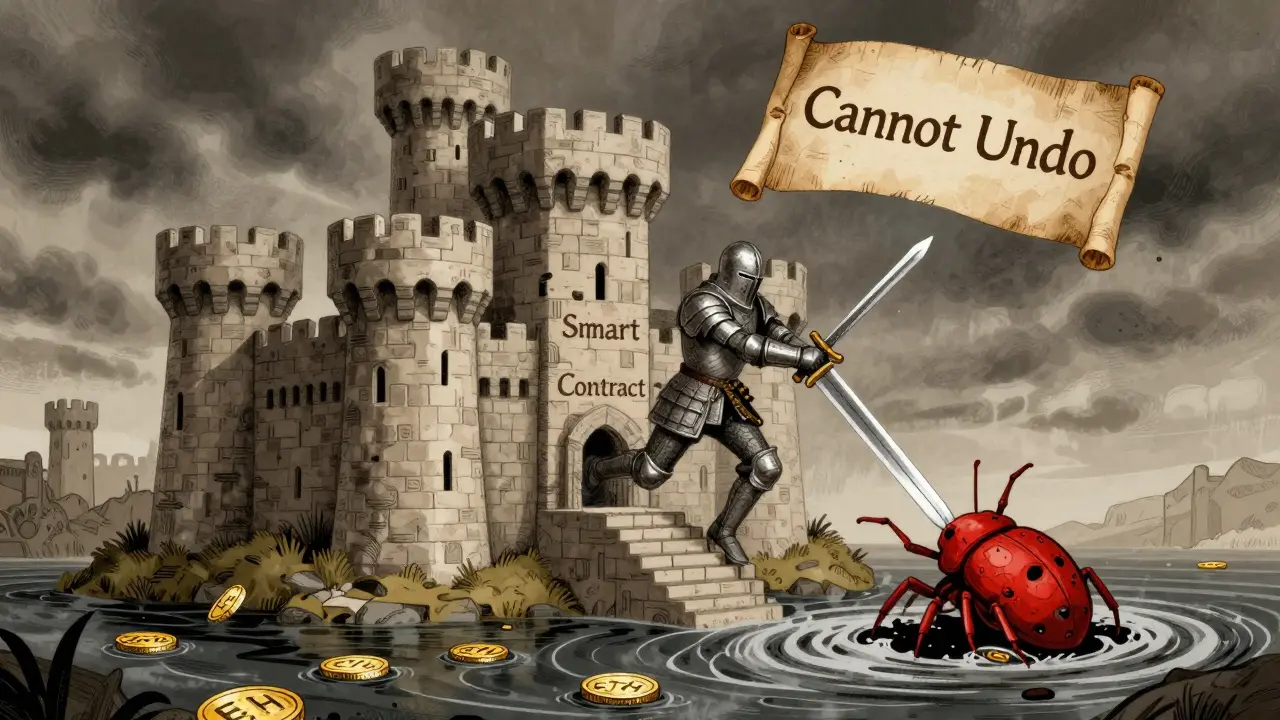
Storage, Speed, and the Energy Cost of Being Immutable
Every transaction stays on the chain forever. Bitcoin’s blockchain is now 473.6 GB and growing. That means you need a powerful computer to run a full node. Most people can’t do it. They rely on third-party services-which defeats part of the point. And speed? Bitcoin handles 7 transactions per second. Visa handles 24,000. When congestion hits, fees spike, and miners prioritize high-paying transactions. That creates a vulnerability window. Attackers can flood the network with low-fee transactions to slow down confirmations, making it easier to pull off double-spends. Then there’s energy. Bitcoin uses more electricity annually than Norway. That’s not sustainable. And none of this is optional. The immutability requirement forces every transaction to be stored, verified, and replicated across thousands of machines. It’s a trade-off: total transparency and permanence, at a massive cost.How Enterprises Are Working Around It
Businesses aren’t giving up on blockchain. They’re just giving up on strict immutability. Hyperledger Fabric, used by 30% of Fortune 500 companies, lets you create private channels where only selected parties see the data. You can even delete data within those channels. R3 Corda, adopted by 250+ banks, uses notaries that can approve corrections under legal rules. IBM’s healthcare blockchain stores patient data off-chain. Only a cryptographic hash of the data goes on the blockchain. If the data needs to be deleted, you delete the off-chain copy. The hash stays, but it no longer points to anything. That’s not perfect, but it’s compliant. And it’s working. According to Gartner, 58.7% of enterprise blockchain projects now include some form of mutability. The European Blockchain Services Infrastructure (EBSI) even launched a version in 2023 with built-in compliance layers that let authorities redact data while keeping the chain’s integrity intact.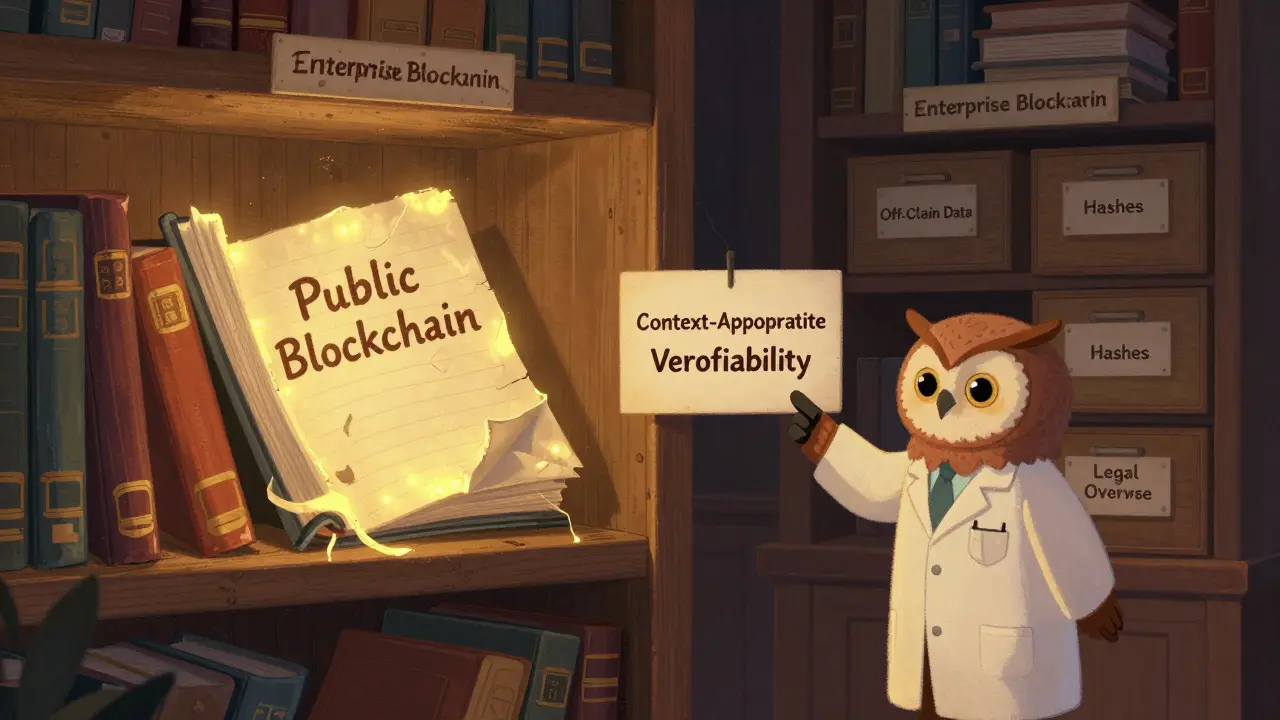
The Future Isn’t Absolute Immutability
The idea that every blockchain must be completely unchangeable is fading. The World Economic Forum put it bluntly in 2023: the future is “context-appropriate verifiability.” That means the level of immutability should match the use case. For cryptocurrency, yes-keep it locked down. For medical records? No. For supply chain tracking? Maybe only the critical checkpoints need to be immutable. Experts like Dr. Jane Smith from Chainalysis say clinging to absolute immutability is a “dangerous myth.” It’s led to financial losses, legal trouble, and failed projects. The real innovation isn’t in making blocks harder to change. It’s in knowing when you need to allow change-and how to do it securely.What You Should Do
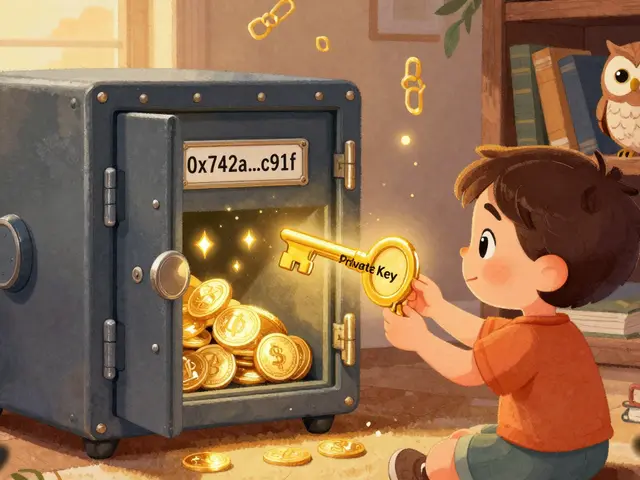
If you’re building on blockchain:- Don’t store personal data on-chain. Store hashes. Keep the real data off-chain where you can delete it.
- Use private or consortium chains for regulated industries. Public chains like Bitcoin or Ethereum aren’t built for compliance.
- Test for errors before deploying. Use simulation tools. Smart contract bugs cost money-and they’re permanent.
- Understand your network’s security. A 51% attack isn’t science fiction. It’s happened. Ask: Who controls the nodes? What’s the cost to attack?
- Plan for governance. Even if you don’t want to change data, have a process for when something goes wrong. Emergency forks, multi-sig recovery, legal override clauses-these aren’t flaws. They’re necessities.
Immutability was a breakthrough. But it’s not the end goal. It’s a tool. And like any tool, it’s only useful if you know when to use it-and when to put it down.
Can blockchain data ever be deleted?
On a public blockchain like Bitcoin or Ethereum, no-data cannot be deleted. But enterprise blockchains like Hyperledger Fabric and R3 Corda allow data deletion within private channels or under legal authority. Most compliant systems store sensitive data off-chain and only keep a cryptographic hash on-chain. If the off-chain data is deleted, the hash becomes meaningless, effectively erasing the data without breaking the chain.
What happened in the Ethereum Classic 51% attack?
In January 2019, attackers gained control of over 51% of Ethereum Classic’s mining power and used it to reverse transactions over 12 hours. They double-spent 219,500 ETC, worth $1.1 million at the time. Because the blockchain records everything-including malicious activity-it faithfully recorded the fraudulent transactions. The community debated reversing the changes via a hard fork, but no consensus was reached. The attack proved that immutability depends on network security, not technology alone.
Why is immutability a problem for GDPR?
GDPR gives individuals the right to have their personal data erased. Blockchain’s immutability makes this impossible if personal data is stored directly on-chain. Even hashes of personal data can be considered personal under GDPR if they can be linked back to an individual. Several European organizations have been fined for storing names, emails, or ID numbers on public blockchains. The solution is to store data off-chain and only record a hash on-chain, so the data can be deleted while preserving auditability.
Can smart contracts be updated after deployment?
Not directly. Once deployed, the code on a public blockchain cannot be changed. But developers use workarounds like the upgradable proxy pattern, where a main contract points to a separate logic contract that can be swapped out. This allows updates but introduces centralization risks since only certain addresses can trigger upgrades. About 68% of DeFi projects use this method, but it contradicts the decentralization ideal of blockchain.
Is Bitcoin’s immutability stronger than Ethereum’s?
Yes, in practice. Bitcoin uses Proof-of-Work with a much larger hash rate-over 700 exahashes per second as of 2023-making a 51% attack prohibitively expensive. Ethereum switched to Proof-of-Stake in 2022, which is more energy-efficient but relies on economic incentives rather than computational power. While Ethereum’s network is still secure, its lower barrier to entry for validators means it’s theoretically more vulnerable to coordinated attacks than Bitcoin. Both are considered secure, but Bitcoin’s immutability is reinforced by scale and cost.
Are there any blockchains designed to be mutable?
Yes. Enterprise blockchains like Hyperledger Fabric, R3 Corda, and Energy Web Chain are built with mutability in mind. They use permissioned access, private data collections, and governance voting to allow data correction or deletion under specific conditions. These aren’t meant for public cryptocurrencies-they’re for banks, hospitals, and supply chains that need to comply with laws and fix errors. The trend is clear: for business use, immutability is being replaced by controlled verifiability.
What’s the biggest mistake people make with blockchain immutability?
Assuming it’s foolproof. Many assume that because data is on a blockchain, it’s safe forever-and that no one can mess with it. That’s wrong. Data can be corrupted by bugs, stolen by insiders, or reversed by attackers. And once it’s on-chain, you can’t fix it. The biggest mistake is treating blockchain as a magic solution without planning for human error, legal requirements, or security failures. Immutability is a feature, not a guarantee.







Jake West
January 2, 2026 AT 12:08Oh wow another blockchain bro crying about immutability like it's a bug and not a feature. You wanted magic? Go use AWS. Blockchain isn't for your grandma's spreadsheet. Get over it.
Also GDPR? LOL. You think a European bureaucrat can delete data from a decentralized network? That's like asking a tree to un-grow.
Stop trying to force centralized laws onto decentralized tech. It doesn't work. Ever.
Abhisekh Chakraborty
January 4, 2026 AT 03:20Bro I just lost $800 because I sent ETH to the wrong address 😭 and now I'm crying in my chai latte. Why does this happen to me??
Also I hate that I can't delete my ex's name from the blockchain. He was toxic and now his data is immortal. This is trauma.
Can we just make a button that says 'I regret this'? 🥺
dina amanda
January 4, 2026 AT 06:01THIS IS WHY THE ELITES WANT BLOCKCHAIN. THEY'RE PUTTING OUR PERSONAL DATA ON A CHAIN SO THE GOVERNMENT CAN'T DELETE IT. THEY KNOW WE'RE WATCHING. THEY KNOW WE'RE ANGRY. THIS IS THE NEW SURVEILLANCE STATE.
They said it was for security. But it's not. It's for control. Mark my words - soon they'll force you to store your voting record on-chain. Then your freedom is gone. Forever.
Wake up, sheeple. This isn't tech. It's tyranny.
Emily L
January 4, 2026 AT 14:19Immutability is a joke. I tried to fix a typo in my wallet address and now I'm $5000 poorer. No one helped. No one cared. The blockchain just sat there like a smug robot saying 'you made your bed, now sleep in it.'
And don't even get me started on smart contracts. I thought I was getting 'decentralized finance' - turns out I got 'decentralized dumpster fire'.
Why are we still pretending this is a good idea? It's like building a house with no doors and then complaining when you can't leave.
Gavin Hill
January 5, 2026 AT 05:41Immutability is not a flaw it's a philosophical stance
It forces us to be careful to be thoughtful to be responsible
Maybe the problem isn't the blockchain
Maybe it's that we keep treating it like a tool we can use without consequence
There's beauty in permanence
And maybe we need to learn to live with the weight of our choices
Not every problem needs a delete button
Some problems need a lesson
SUMIT RAI
January 6, 2026 AT 00:04LOL you think enterprise blockchains are the answer? 😂
Hyperledger Fabric? More like Hyperledger Fabricate.
They're just centralized databases with blockchain glitter on top.
Real blockchain = no admins. No delete buttons. No lawyers.
If you want control go use SQL. Don't call it blockchain. You're just gaslighting yourself. 🤡
Andrea Stewart
January 7, 2026 AT 10:58For anyone building on-chain: don't store raw data. Ever. Use hashes. Store the real data in encrypted off-chain storage with access logs. That way you comply with GDPR, avoid fines, and still get auditability.
Also test smart contracts like your life depends on it - because it might. Use tools like Slither or Foundry. Simulate edge cases. Don't just deploy and pray.
And if you're using upgradable proxies? Document who holds the admin key. And why. And what happens if they get hacked. Because it will.
Josh Seeto
January 9, 2026 AT 08:20So let me get this straight - you spent millions building a system that can't fix a typo… and now you're surprised people are mad?
It's like inventing a toaster that can't turn off and then suing the user for burning their house down.
Immutability isn't a feature. It's a design failure dressed up as ideology.
Also Bitcoin uses more power than Norway? Cool. So we're saving the world by melting the Arctic with electricity. 🤡
surendra meena
January 10, 2026 AT 06:09THIS IS THE END OF FREEDOM!!!
THEY'RE PUTTING EVERYTHING ON CHAIN!! YOUR BIRTHDAY!! YOUR MEDICAL RECORDS!! YOUR LAST TEXT TO YOUR MOM!!
WHAT IF THE GOVERNMENT GETS ACCESS?? WHAT IF THE ALGORITHM DECIDES YOU'RE A RISK??
THEY'RE TURNING US INTO DIGITAL ZOMBIES WITH PERMANENT RECORDS!!
WE NEED TO BURN THE NODES!!
THEY KNOW WHAT WE DID!! THEY'RE WATCHING!!
WHY IS NO ONE TALKING ABOUT THIS??
WHY IS EVERYONE JUST… SITTING THERE??
Kevin Gilchrist
January 10, 2026 AT 22:52Immutability is the blockchain’s emotional baggage. It clings to every mistake like a toxic ex who won’t leave your DMs.
I love the idea - but the reality? It’s like dating someone who refuses to apologize. You can’t fix anything. You can’t grow. You just sit there holding a forever-ugly memory.
And the energy cost? Bro. We’re running the entire internet on coal-powered servers just so someone can prove they sent 0.001 ETH to a stranger.
It’s beautiful. It’s tragic. And honestly? It’s exhausting.
Jordan Fowles
January 11, 2026 AT 23:41Immutability forces accountability
It doesn't solve everything
But it forces us to confront the consequences of our actions
Maybe that's the point
Not every system should be forgiving
Some systems should be sacred
And maybe the cost of permanence is the price of trust
We don't need more flexibility
We need more wisdom
nayan keshari
January 12, 2026 AT 07:31Enterprise blockchains are just corporate databases with a fancy name. You're not building blockchain. You're building a permissioned database and calling it blockchain to impress your investors.
Real blockchain = no central authority. No delete. No backdoors.
If you need to delete data, use a regular database. Stop pretending you're revolutionary.
Also 'context-appropriate verifiability'? That's just corporate speak for 'we gave up and made it centralized.' 🤷♂️
Bianca Martins
January 12, 2026 AT 19:36My friend got scammed on a DeFi app and lost her life savings. She cried for a week. No one could help. No one could reverse it. The blockchain just… kept going.
It’s not a feature. It’s a trauma.
But here’s the thing - I still believe in blockchain. Just not the 'immutable forever' version.
We need guardrails. We need recovery paths. We need to stop pretending tech is neutral.
It’s not. It’s human. And humans make mistakes.
Let’s build systems that forgive - but still verify.
alvin mislang
January 13, 2026 AT 15:16Anyone who thinks blockchain should be mutable is a traitor to the revolution.
This isn't about tech. It's about freedom. About trust. About truth.
If you can delete data, you can lie. If you can lie, you can control. If you can control, you become the system you hate.
Immutability is the last line of defense against tyranny.
Don't you dare weaken it.
God is watching. The chain is watching. And so am I.
Monty Burn
January 15, 2026 AT 14:26Maybe the real issue isn't immutability
Maybe it's that we expect technology to fix human problems
We built this to remove intermediaries
But we still want someone to fix our mistakes
That's not a tech problem
That's a psychological one
We want freedom without responsibility
And that's never going to work
Kenneth Mclaren
January 15, 2026 AT 23:01They're not just deleting data - they're deleting truth.
Once you allow 'controlled mutability' - who decides what gets erased?
Big Pharma? The government? The CEO of a bank?
Soon your entire financial history, your medical records, your political donations - all subject to 'legal override clauses'.
This isn't innovation. It's a backdoor for censorship.
They'll say 'it's for compliance' - but next they'll say 'it's for national security'.
Then it's 'it's for social harmony'.
And then? The chain is just a pretty lie.
Don't be fooled. This is the slippery slope.
They want you to believe change is good.
But sometimes - permanence is the only thing left that's real.
Alexandra Wright
January 16, 2026 AT 11:28Oh honey. You thought blockchain was a magic wand? Sweetie. It's a hammer. And you're trying to use it to fix a leaky faucet.
Storing personal data on-chain? That's like using a flamethrower to light a candle.
Use hashes. Off-chain storage. Permissioned chains. It's not rocket science. It's called 'thinking before you code'.
And if you're using upgradable proxies? Congrats. You just built a centralized system with extra steps.
Stop pretending you're a rebel. You're just a confused startup founder with a PowerPoint deck.
Brooklyn Servin
January 18, 2026 AT 05:50I lost $3,000 because I typed '0x...' wrong and hit send. I cried. My dog licked my face. I felt so alone.
But then I realized - this is the point.
Blockchain doesn't care if you're sad. It doesn't care if you're rich or poor or confused.
It just records. It just remembers.
And maybe that's the lesson.
We spend our lives trying to erase mistakes.
But maybe we need to learn to live with them.
Not because tech forces us to.
But because it reminds us we're human.
And humans? We mess up.
And that's okay.
...right? 🤔💔
Phil McGinnis
January 18, 2026 AT 12:29Immutability is a Western delusion. In China, Russia, and India, we understand that systems must serve the state. Blockchain is not a religious artifact. It is a tool. And tools must adapt to the needs of civilization.
GDPR is a childish regulation. A nation must protect its sovereignty. If your citizens cannot be regulated, they are not citizens. They are anarchists.
Let them cry over their lost ETH. The state moves forward.
Ian Koerich Maciel
January 19, 2026 AT 01:30It is with profound respect for the philosophical underpinnings of decentralized consensus that I offer this reflection:
The architectural integrity of immutable ledgers serves not merely as a technical safeguard, but as a moral imperative - a digital covenant between actors in a trustless environment.
To introduce mutability is to reintroduce the very intermediaries we sought to displace.
One may lament the loss of funds due to human error - yet, is not the consequence of error the most potent educator?
Perhaps the solution does not lie in altering the chain, but in cultivating greater diligence among its participants.
Let us not confuse convenience with virtue.
And let us not mistake the erosion of principle for progress.
Alex Strachan
January 20, 2026 AT 11:45Look - I get it. You're mad. You lost money. You're tired of the hype.
But here's the thing - blockchain isn't broken. It's just not for you.
It's not a solution to your typo. It's not your therapist. It's not your IT department.
It's a new kind of trust. A weird, slow, expensive, energy-guzzling trust.
And if you want something that fixes your mistakes? Go use Google Docs.
But if you want something that can't be erased? This is it.
So pick your poison. 🤷♂️✌️
Rick Hengehold
January 22, 2026 AT 08:17Don't store personal data on-chain. Use hashes. Off-chain storage. Done.
Simple. Effective. Legal.
Stop overcomplicating it.
Brandon Woodard
January 23, 2026 AT 16:34The true innovation isn't in making blocks immutable.
It's in recognizing that human systems require governance.
Immutability without accountability is tyranny.
Mutable systems without transparency are fraud.
The future isn't 'immutable' or 'mutable'.
It's 'verifiable with context'.
And that requires more than code.
It requires wisdom.
Let's build that instead.
Jake West
January 23, 2026 AT 18:20So you think a private chain with a delete button is 'real blockchain'? Bro. That's a database with a blockchain sticker on it.
You're not building the future. You're building a corporate firewall with extra steps.
And now you're calling it 'innovation'? Please. The real blockchain is the one that doesn't care if you cry.
It just records.
And that's the point.