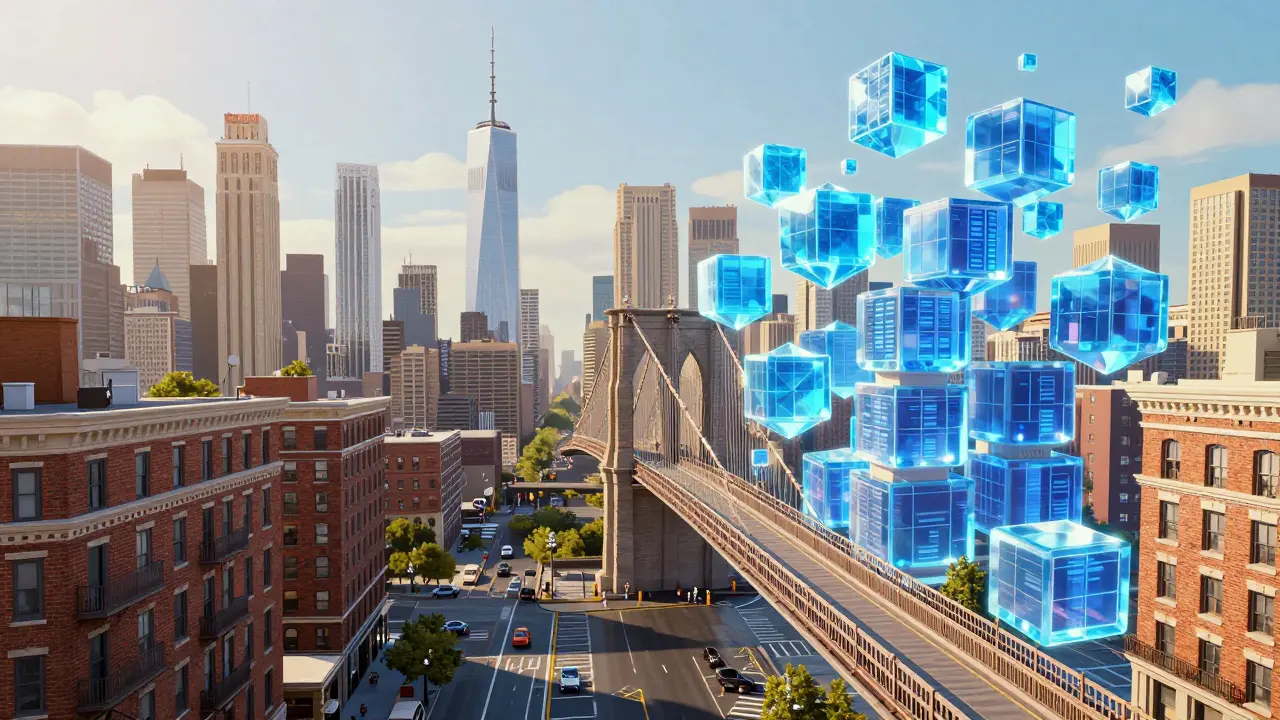
Imagine owning a piece of a luxury apartment complex in New York or a commercial hub in London without needing millions of dollars in the bank. For decades, real estate was a playground for the wealthy, but RealtyX is trying to flip that script. By turning physical property into digital tokens, they're attempting to bring the housing market onto the blockchain.
The Core Concept: What Exactly is RealtyX?
RealtyX (RX) is a cryptocurrency and Real-World Asset Finance (RWAfi) platform launched in 2024 that uses the Ethereum blockchain to tokenize real estate assets. Essentially, it's a bridge between the physical world of bricks and mortar and the digital world of decentralized finance. Instead of buying an entire building, you can buy tokens that represent a fraction of that property's value.
The project operates on the Ethereum blockchain, utilizing the ERC-20 standard to ensure its tokens can work with other Ethereum-based apps. The main goal here is to democratize investment, allowing regular people to earn passive income from rental yields and property value increases without the headache of being a full-time landlord.
How the RX Token and RWA Tokens Differ
It's easy to get confused, but RealtyX actually uses two different types of digital assets. One is the RX token, and the other is the RWA (Real-World Asset) token. They do very different things.
The RX token is the engine of the ecosystem. It serves as a utility and governance token. If you hold RX, you get a seat at the table. You can vote on how properties are managed or how the platform evolves. There is a fixed total supply of 1,000,000,000 tokens, which is designed to prevent inflation over time.
The RWA tokens, on the other hand, are the actual "deeds" to the property. These are KYC-gated, meaning you have to prove who you are before you can buy them-which makes sense, as real estate is heavily regulated. These tokens are what provide the actual financial return, with the platform aiming for passive yearly rental yields between 8% and 10%.
| Feature | RX Token | RWA Token |
|---|---|---|
| Purpose | Governance & Platform Utility | Fractional Property Ownership |
| Income Source | Ecosystem growth / Governance rewards | Rental yields (8-10%) & Appreciation |
| Access | Open (Utility) | KYC-gated (Regulated) |
| Function | Voting and Payments | Asset ownership representation |
The SPDD Framework and the Utility Vault
How does a digital token actually give you legal rights to a physical building? RealtyX uses something called a SPDD (Special Purpose Decentralized Division). In plain English, this means the rights to each property are held within a trust. The RWA token holders are the beneficiaries of that trust. When a decision needs to be made-like whether to renovate a building or sell it-the token holders vote directly on the strategy.
But the project doesn't stop at just owning property. They've introduced the Utility Vault, which is a clever way to make your money work harder. Normally, if you invest in real estate, your money is "locked" in the building. The Utility Vault allows you to integrate your RWA tokens with DeFi (Decentralized Finance). For example, you could potentially use your tokenized property as collateral to take out a loan in stablecoins, giving you liquidity without having to sell your investment.
Market Reality: Price, Liquidity, and Risks
Now, let's talk about the elephant in the room: the market performance. If you're looking at the charts, you'll see a bit of a rollercoaster. The RX token hit an all-time high of roughly $0.0259 in March 2025, but since then, it has seen a massive decline. Depending on which tracker you use, the price has fluctuated between $0.0011 and $0.0071 recently.
Why is the price so inconsistent across different websites? It comes down to liquidity. Currently, RealtyX is not listed on any major Centralized Exchange (CEX) or Decentralized Exchange (DEX). When a coin isn't on a big exchange like Binance or Uniswap, there's no single "official" price. Most trading happens over-the-counter (OTC), which is essentially like buying a used car from a stranger-it's risky and the price depends entirely on what the buyer and seller agree upon.
This lack of exchange listing is a major hurdle. It makes the token highly illiquid, meaning it's hard to buy or sell large amounts without wildly swinging the price. For a project that aims to bring "liquidity" to real estate, the lack of a liquid token is a strange irony.
The Big Picture: Does it Work?
RealtyX is tapping into a massive trend called Real-World Asset tokenization. The idea is to take everything from gold and art to skyscrapers and put them on the blockchain. By using a DAO (Decentralized Autonomous Organization) structure, they are attempting to remove the middleman-the expensive brokers and lawyers-and replace them with smart contracts.
However, the path to success is steep. Real estate is one of the most regulated industries on earth. Every country has different laws about land ownership and securities. While the SPDD framework is a good start, scaling this globally requires navigating a legal minefield that no amount of code can solve alone.
Is RealtyX a safe investment?
Like most early-stage crypto projects, it carries significant risk. The token is currently not listed on major exchanges, making it highly illiquid. While it is backed by real-world assets, the volatility of the RX token itself and the regulatory hurdles of real estate tokenization mean you should only invest what you can afford to lose.
How do I earn money with RX?
There are two primary ways. First, by holding RWA tokens, you can earn a share of the rental yields (estimated at 8-10% annually) and benefit from any increase in the property's value. Second, RX token holders can participate in governance and ecosystem rewards.
Where can I buy RX tokens?
Currently, the RX token is not listed on standard centralized or decentralized exchanges. This means you cannot buy it through a typical app like Coinbase. Most current trading is done via over-the-counter (OTC) methods, which carry a much higher risk of scams or unfair pricing.
What is the difference between a DAO and a regular company?
A regular company has a CEO and a board of directors who make the rules. A DAO, like the one used by RealtyX, allows the token holders to vote on decisions. This means the community, rather than a small group of executives, decides the future of the properties and the platform.
Does RealtyX require ID verification?
Yes, for the RWA tokens specifically, a KYC (Know Your Customer) process is required. This is because these tokens represent ownership in real-world legal assets, and the platform must comply with financial and property laws.
What to do next
If you're interested in the project, don't just jump in based on the tech. First, check the most recent data on Etherscan to see the actual transaction volume. If you're looking for exposure to real estate, compare RealtyX's expected yields against traditional REITs (Real Estate Investment Trusts) to see if the risk of a non-listed token is worth the potential reward.
For those who already hold RX, the best move is to keep an eye on official announcements regarding exchange listings. A move to a major DEX or CEX would be the biggest catalyst for liquidity and price discovery. Until then, be cautious with OTC trades and double-check every contract address.



Deepak Prusty
April 5, 2026 AT 12:54OTC trading for a project claiming to democratize real estate is a massive red flag. You can't have price discovery without a public order book.
Alexandra Lance
April 6, 2026 AT 07:27Oh wow, another "revolutionary" blockchain project that isn't even listed on a DEX 🙄. I'm sure the "trust" is just totally secure and not a front for some shadow cabal to rinse money through luxury condos 🕵️♀️✨. Good luck with your magic beans!
Suvoranjan Mukherjee
April 8, 2026 AT 06:32The RWAfi space is heating up! Integrating these assets via the ERC-20 standard is a great move for interoperability. The Utility Vault basically turns your real estate into a yield-bearing collateralized debt position, which is absolute fire for liquidity management! 🚀
Carol Prates
April 8, 2026 AT 09:54Honey, the price drop is literally a crime! I can't believe anyone is still holding this while it's plummeting like a rock. Absolute nightmare fuel!
Susan Wright
April 9, 2026 AT 07:18Just a heads up, if you're looking at the 8-10% yield, remember that's usually gross, not net. You still have to account for platform fees and the volatility of the RX token if that's how they pay out.
Susan Payne
April 10, 2026 AT 20:41It is profoundly disappointing that such a primitive financial structure is being marketed as innovation. The lack of exchange listings is not a "hurdle," it is a catastrophic failure of viability.
sekhar reddy
April 11, 2026 AT 13:10Omg the volatility is actually insane!! Like why is it $0.0011 one day and $0.0071 the next? This is a total rollercoaster and I am here for the chaos lol!
Lauren Gilbert
April 12, 2026 AT 21:22It's interesting to think about how this shifts the paradigm of ownership from a physical burden to a digital stream of value, though I often wonder if we are simply replacing the old gatekeepers of the banking world with new, less transparent gatekeepers in the world of code, yet the dream of accessibility for the common person remains a beautiful pursuit regardless of the technical glitches we see in the early stages of these platforms.
Hugo Lopez
April 14, 2026 AT 03:07Love the idea of making real estate accessible to everyone! 🌟 Keep pushing the boundaries!
Earnest Mudzengi
April 14, 2026 AT 21:33This whole thing smells like a psyop. They want us in a DAO so the globalists can track every single square inch of land via a smart contract and then freeze your assets when you don't comply with the new world order. This is pure surveillance capitalism disguised as "democratization" man, wake up!
Arlen Medina
April 15, 2026 AT 15:14Listen, if this isn't based on US-regulated assets, it's garbage. We have the best legal system in the world; why would I trust some random DAO with a "trust" that could disappear overnight?
Carmelita Gonzales
April 15, 2026 AT 15:22just be careful with your money everyone
Joshua Aldrich
April 16, 2026 AT 18:51I think the real value is in the philosphy of shared ownership. Its kinda like the old land cooperatives but with better tech. Its a shame about the liqudity issues though, really kills the vibe of the project when u cant just swap tokens on a dex.
Diana Martín Prieto
April 18, 2026 AT 03:36If anyone is struggling with the KYC process for the RWA tokens, I've found that using a high-res scan of your passport usually speeds things up. It's a bit of a pain, but totally necessary for the legal side of real estate!
akash temgire
April 19, 2026 AT 14:02The SPDD framework requires more rigorous legal documentation to be truly viable.
Bruce Micciulla Agency
April 20, 2026 AT 14:33looking at these charts its obvious the project is basically dead in the water because without a centralized exchange listing you have zero buy pressure and the a-time high was just a pump and dump coordinated by a few whales who probably already exited their positions while the retail investors are left holding the bag in an otc market where they get ripped off every time they try to sell
JERRY ORTEGA
April 22, 2026 AT 06:25just take it slow with these things... if the tech works the listing will come eventually
shubhu patel
April 22, 2026 AT 14:04I really appreciate how the platform attempts to bridge the gap between high-entry investments and the average person, and while the volatility is a bit scary, I think there is a long-term peace of mind that comes from knowing there is a physical building backing the asset rather than just a speculative algorithm based on social media hype.
david head
April 24, 2026 AT 01:55looks cool man! hope it hits a big exchange soon 🚀🚀
Patty Levino
April 25, 2026 AT 18:21If you're feeling overwhelmed by the risk, maybe just start with a very small amount of RX for governance. It's a way to learn the system without risking your life savings on something this volatile.
Nicholas Whooley
April 26, 2026 AT 11:40It is heartening to see the ambition behind this project. While the current market conditions are challenging, the pursuit of financial inclusivity is a noble endeavor that deserves our patient support.
Krystal Moore
April 27, 2026 AT 13:48Honestly, it's kind of gross how these projects promise 10% yields while the token value is cratering. Like, what's the point of rental income if the actual asset token is worthless? It's just deceptive marketing to lure in people who don't understand how a balance sheet works.
Sonya Bowen
April 28, 2026 AT 11:30To expand on the REIT comparison mentioned at the end: Traditional REITs are highly liquid and regulated by the SEC, whereas RWA tokens offer direct ownership but with much higher platform risk. It's a trade-off between stability and the potential for higher, decentralized rewards.