Privacy-Preserving Identity Verification in Crypto: How Blockchain Keeps You Anonymous
When you sign up for a crypto exchange, you’re often asked for your ID, selfie, and even proof of address. But what if you could prove you’re over 18, or a citizen of a country, without showing your passport? That’s the power of privacy-preserving identity verification, a system that confirms your identity without exposing your personal details. Also known as zero-knowledge identity proof, it’s changing how crypto users interact with services while staying anonymous. This isn’t science fiction—it’s already in use by DeFi platforms, DAOs, and even some government-backed digital ID trials.
How does it work? Instead of handing over your name and Social Security number, you use zero-knowledge proofs, a cryptographic method that lets you prove something is true without revealing the underlying data. For example, you can prove you have a bank account without showing your account number. Or confirm you’re from the EU without disclosing your birthplace. This ties directly to decentralized identity, a user-owned digital identity not controlled by any company or government. Unlike traditional IDs issued by banks or governments, decentralized identity lives on your device, encrypted and under your control. You decide what to share—and when.
Why does this matter for crypto? Because every time you link your real-world ID to a wallet or exchange, you create a trail. That trail can be tracked, sold, or hacked. Privacy-preserving identity verification breaks that chain. It’s why projects like Aztec, zkSync, and Polygon ID are building it into their networks. It’s also why regulators are watching—because if you can prove compliance without revealing data, it changes the game for KYC, taxes, and cross-border payments.
You won’t find this in every crypto guide. But if you’ve ever worried about your data being leaked, or tired of giving up your personal info just to trade Bitcoin, this is the solution you’ve been waiting for. Below, you’ll find real-world examples of how this tech is being used—and abused—in today’s crypto landscape. Some projects get it right. Others? They’re just pretending.
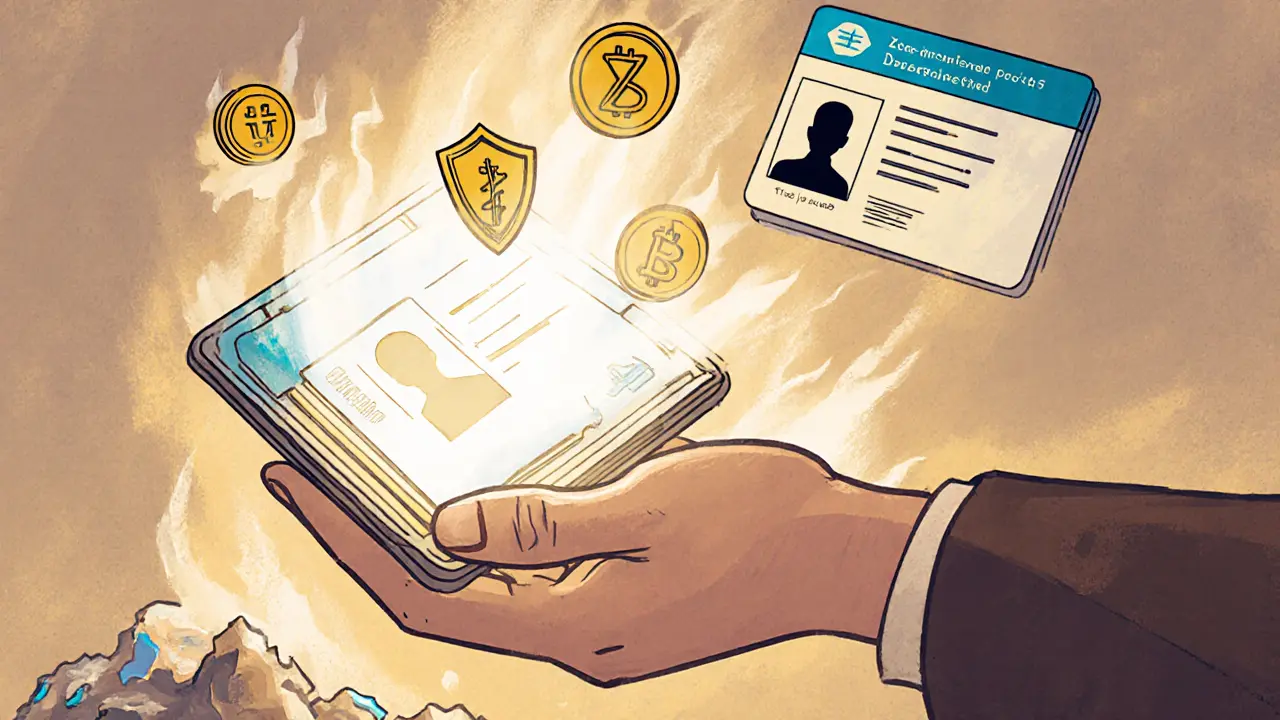
Privacy-Preserving Identity Verification: How Blockchain Keeps Your Data Safe
Privacy-preserving identity verification uses blockchain and cryptography to prove who you are without revealing your personal data. Learn how zero-knowledge proofs and decentralized IDs are replacing traditional ID checks.