Crypto Sanctions: What They Are, Who They Target, and How They Impact Trading
When governments impose crypto sanctions, government restrictions that block cryptocurrency transactions linked to sanctioned entities or countries. Also known as blockchain sanctions, they’re not about banning crypto itself—but cutting off access for specific users, exchanges, or regions. Unlike traditional banking bans, crypto sanctions target wallets, exchanges, and even DeFi protocols that fail to screen users. They’re not theoretical—they’re active right now, shaping how people in Russia, Iran, or North Korea move money, and forcing exchanges to choose between compliance or losing access to global markets.
These sanctions rely on crypto compliance, the practice of verifying users and blocking transactions tied to sanctioned addresses. Exchanges like Bitbuy and Millionero follow these rules because they need banking partners and legal cover. But many DEXs like Omni Exchange V3 or SunSwap V3 don’t require KYC—making them tools of last resort for people in places like Russia, where crypto is legal to hold but banned for spending. That’s why sanctions don’t stop crypto use—they just push it underground or into unregulated spaces.
It’s not just about countries. fiat restrictions, rules that block the link between traditional money and crypto. matter too. In Ecuador, banks won’t touch crypto—so even if you own Bitcoin, you can’t cash out through local banks. That’s a form of indirect sanction. Meanwhile, in Switzerland’s Crypto Valley, clear rules make compliance easy. The difference? One lets you build. The other forces you to hide.
What you’ll find in the posts below isn’t just theory. It’s real cases: how Russians bypass sanctions using foreign platforms, how airdrops like SPIN and OKFLY vanished because they couldn’t comply, why exchanges like UZX and NinjaSwap are dead because they ignored regulation, and how tools like zero-knowledge proofs are being used to protect privacy without breaking the law. This isn’t about politics—it’s about survival in a world where your wallet can be frozen without warning. If you trade crypto, you’re already part of this system. Better know how it works.
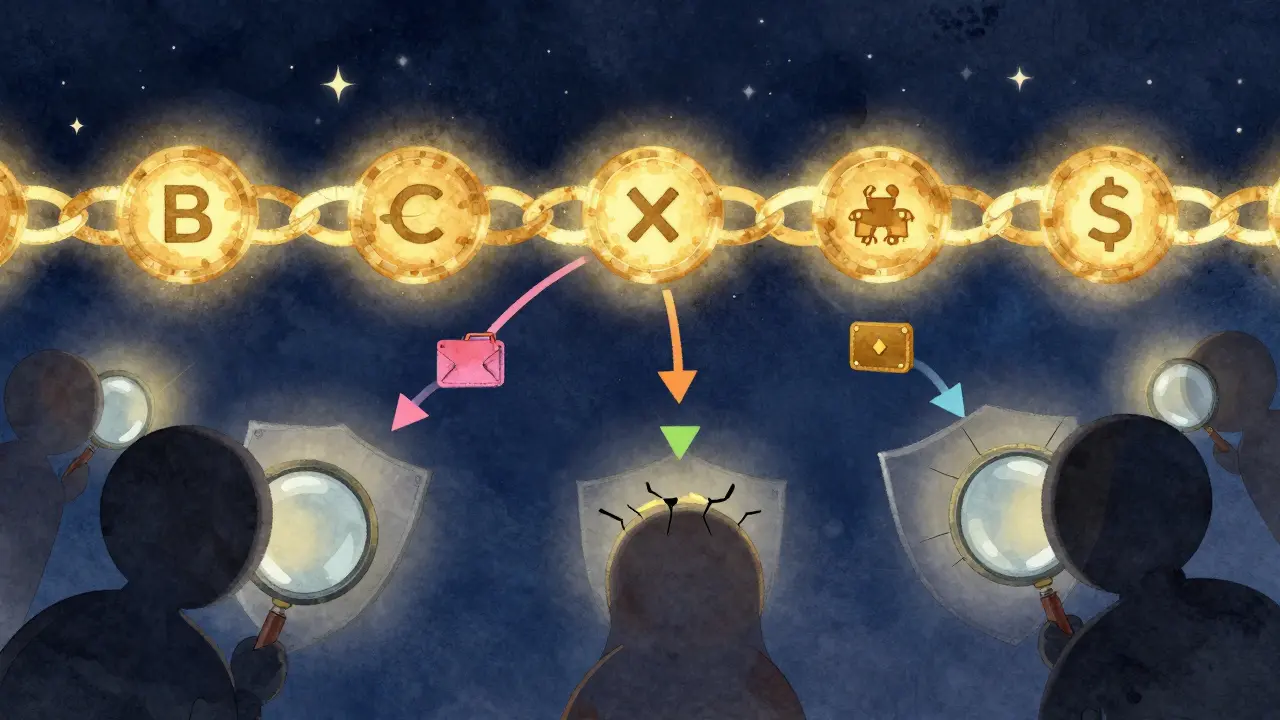
How Authorities Use Blockchain Forensics to Detect Crypto Sanctions Evasion
Authorities use blockchain forensics to trace crypto transactions, detect sanctions evasion, and freeze illicit funds. Tools now identify complex laundering patterns across chains, making crypto less anonymous than ever.