AML Crypto: What It Is and Why It Matters in Today’s Crypto Market
When you hear AML crypto, anti-money laundering rules applied to cryptocurrency transactions. Also known as crypto compliance, it's the set of rules that exchanges and platforms must follow to stop criminals from washing dirty money through digital assets. This isn’t just bureaucracy—it’s what keeps some exchanges alive and shuts down others. If a platform doesn’t follow AML crypto rules, it gets banned, fined, or shut down by regulators. That’s why you see exchanges like Millionero and Bitbuy proudly shouting "MiCA compliant" or "regulated in Europe." They’re not just marketing—they’re surviving.
AML crypto doesn’t just mean asking for your ID. It’s about tracking where your crypto came from, who you sent it to, and whether those addresses have been flagged before. That’s why platforms like UZX and NinjaSwap disappeared—they had no KYC, no audits, no paper trail. Regulators don’t care if you’re trading meme coins or stablecoins. If money moves without identity checks, it’s a red flag. And that’s why even decentralized exchanges like BabySwap and SunSwap have to be careful. They might say "no KYC," but if they’re on a chain like BSC or TRON and get too big, regulators come knocking anyway.
It’s not just about exchanges. AML crypto affects airdrops too. Look at OKFLY, 2CRZ, or E2P Token—none of them had real teams or compliance. They vanished because they were too easy to abuse. Real projects like Arch Network or SPIN airdrop? They built in identity checks from day one. Why? Because they knew if they didn’t, they’d get crushed by regulators or flooded with bots. Even privacy tools like zero-knowledge proofs, which sound like they fight AML, are being built to work with it—not against it. You can prove you’re not a criminal without giving up your name.
So what does this mean for you? If you’re trading on an exchange that doesn’t ask for ID, you’re not being clever—you’re being risky. That platform could vanish tomorrow, and your funds with it. If you’re chasing airdrops from random websites, you’re not getting free crypto—you’re handing over your wallet to scammers. AML crypto isn’t about control. It’s about safety. The ones who play by the rules? They’re still here in 2025. The ones who didn’t? They’re ghosts in the blockchain.
Below, you’ll find real reviews of exchanges, airdrops, and tokens that either nailed compliance or got crushed by it. No fluff. Just what happened, why it mattered, and what you should do next.
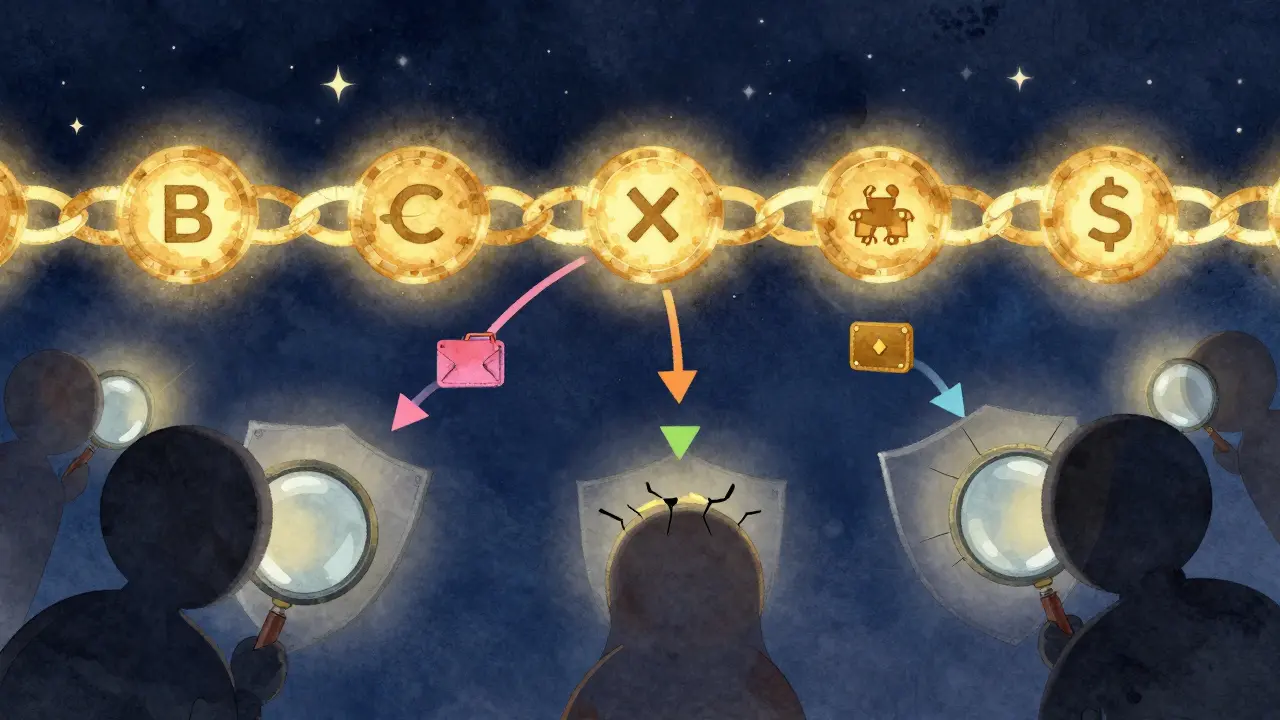
How Authorities Use Blockchain Forensics to Detect Crypto Sanctions Evasion
Authorities use blockchain forensics to trace crypto transactions, detect sanctions evasion, and freeze illicit funds. Tools now identify complex laundering patterns across chains, making crypto less anonymous than ever.