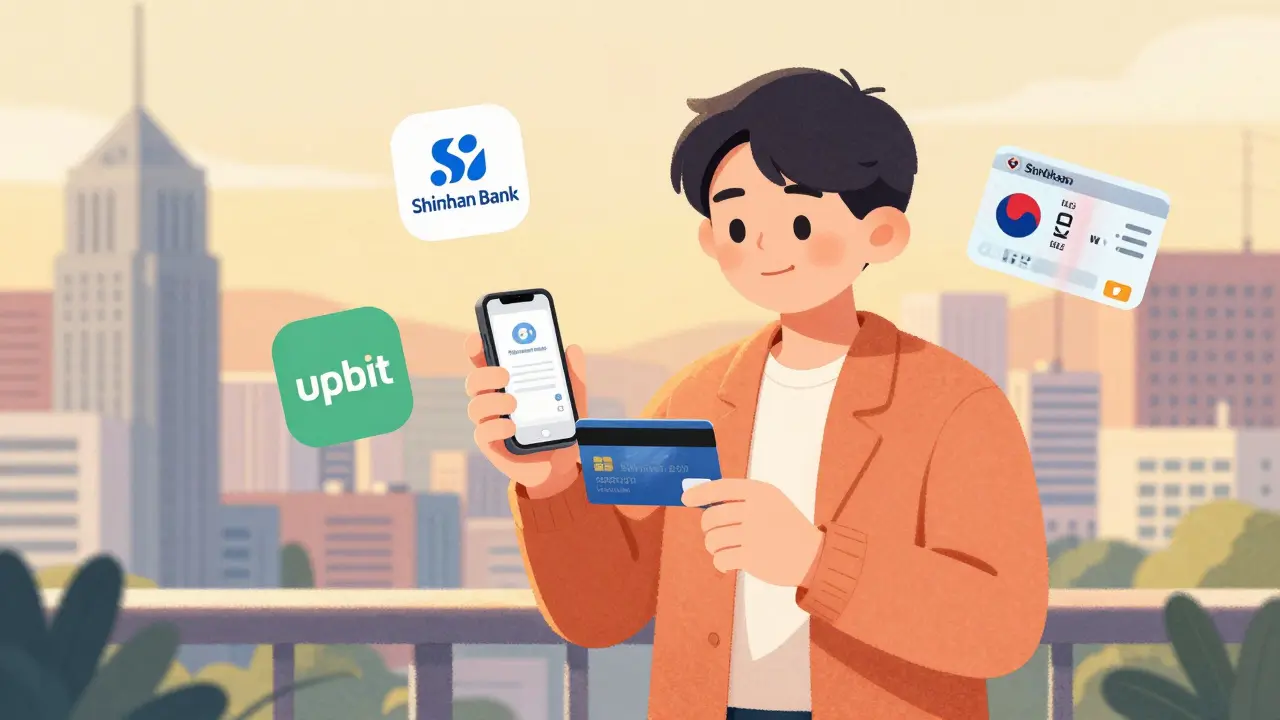
South Korea doesn’t just regulate cryptocurrency-it ties it directly to your real name, your bank account, and your government ID. If you’re trying to trade crypto here, you can’t just sign up with an email and a password. You need to prove who you are, link your bank account, and jump through hoops most other countries don’t even ask for. This isn’t a suggestion. It’s the law. And it’s changed how crypto works in one of the world’s most active digital asset markets.
Why South Korea Demands Real Names for Crypto
In 2018, South Korea came close to banning cryptocurrency entirely. The Justice Minister at the time, Park Sang-ki, said digital assets were a threat to financial stability. But over 220,000 citizens signed a petition demanding a better solution. The government didn’t shut it down. Instead, they built one of the strictest crypto systems on Earth: the real-name bank account system. The goal? Stop money laundering, prevent fraud, and make sure every trade can be traced back to a person with a Korean ID number. The Financial Services Commission (FSC) and the Financial Intelligence Unit (FIU) made it clear: no anonymous trading. No offshore wallets. No bypassing the system. Every deposit and withdrawal must go through a verified bank account in your legal name. This isn’t just KYC like in the U.S. or Europe. This is full integration. Your bank and your crypto exchange share your data. If the exchange doesn’t send transaction logs to the bank, the bank freezes everything. No warnings. No second chances.How the System Actually Works
It’s not complicated to use-if you’re a South Korean citizen. Here’s the step-by-step:- Open a real-name bank account at one of the approved banks: Shinhan, K-Bank, Kookmin, Kakao, or Woori.
- Sign up on a crypto exchange that’s partnered with that bank. Korbit uses Shinhan. Upbit uses K-Bank. Bithumb uses Kookmin. Coinone uses Kakao.
- Verify your identity with your national ID card and phone number.
- Link your bank account to your exchange account. The system checks your name, ID, and bank account number against government databases.
- Deposit Korean Won (KRW) from your bank to the exchange. The transfer must come from the exact same name and account.
- Trade crypto. Withdrawals go back to the same bank account.
Who Can Use It? (Spoiler: Not Many Foreigners)
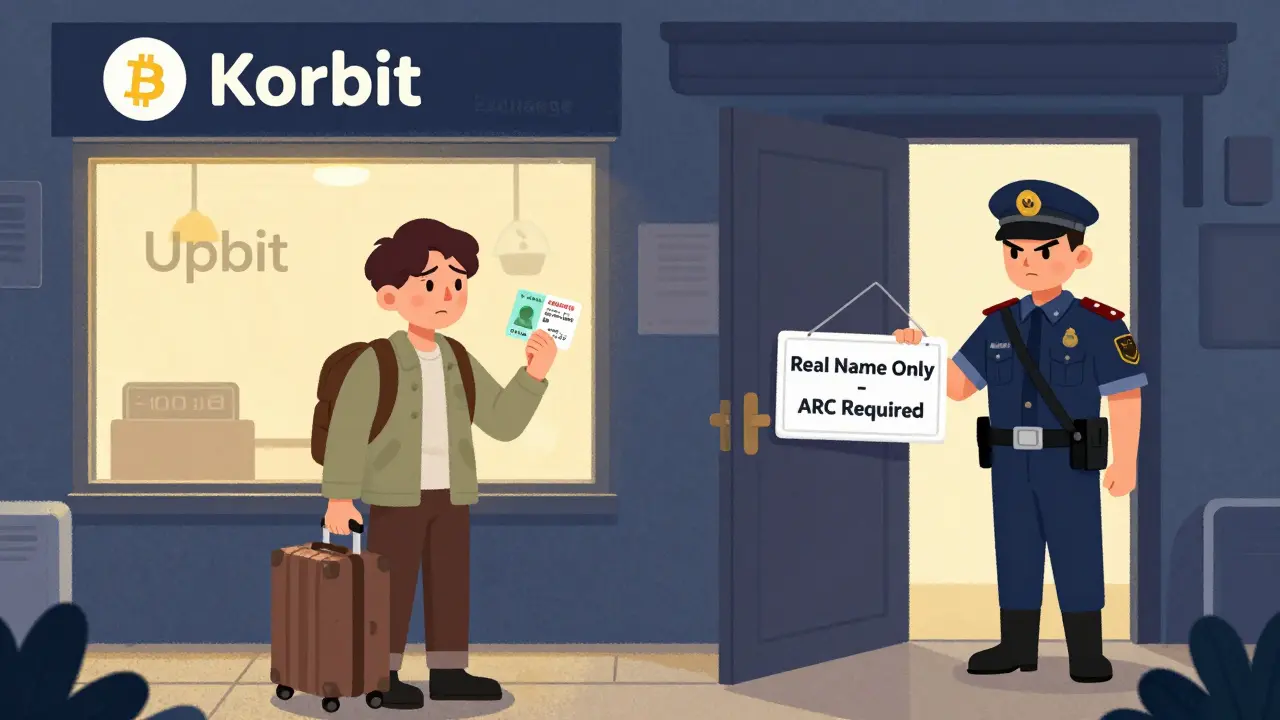
This is where it gets hard. If you’re not a South Korean citizen, you’re practically locked out. To open a real-name bank account, you need:- A permanent resident visa or long-term visa (over one year)
- An Alien Registration Card (ARC)
- A Korean mobile number registered in your name
- A Korean address
Which Exchanges Are Approved?
Not every exchange can operate in South Korea. As of April 2025, only five exchanges have been granted verified real-name bank accounts by the FIU:- Korbit - partnered with Shinhan Bank
- Upbit - partnered with K-Bank
- Bithumb - partnered with Kookmin Bank
- Coinone - partnered with Kakao Bank
- Gopax - partnered with Woori Bank
What About Taxes?
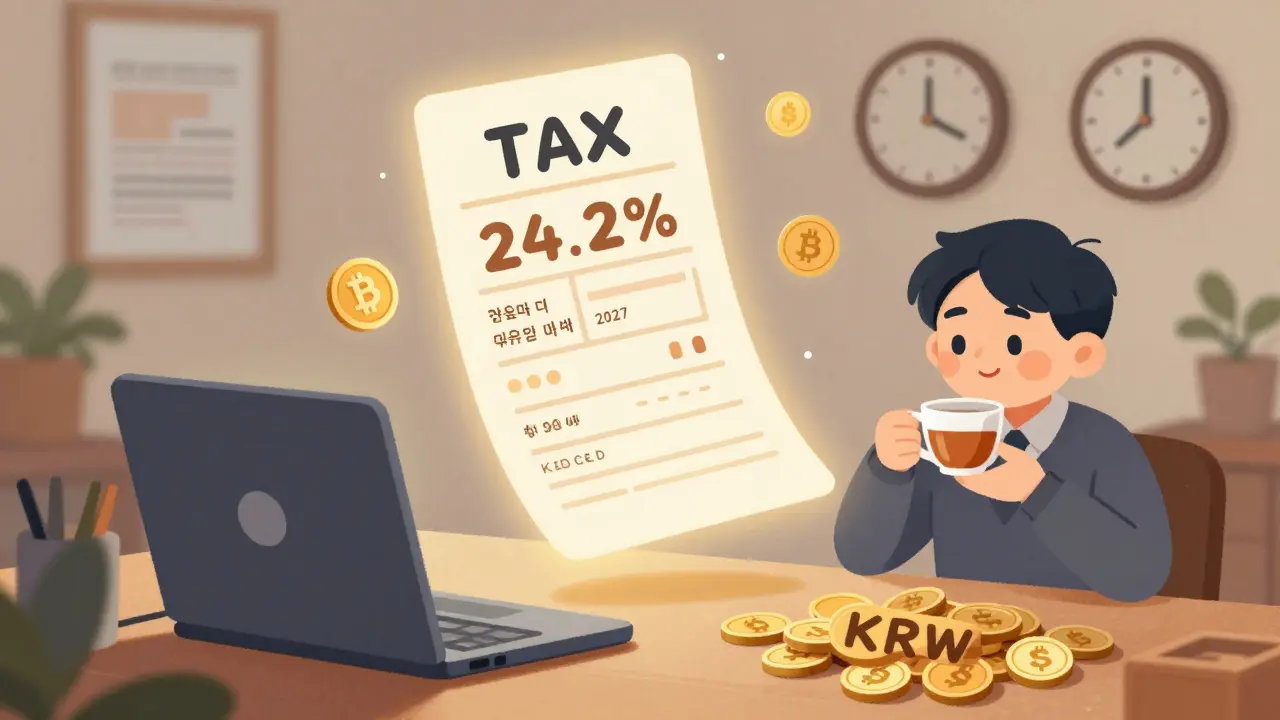
South Korea doesn’t just track your trades. It’s going to tax them. Starting in 2027, any individual who makes a profit from trading crypto will pay income tax on it. The rate? Up to 24.2%, depending on your total income. This isn’t a capital gains tax-it’s treated as regular income. For corporations, the rules are even stricter. Foreign companies earning income from Korean crypto trades will now be taxed as if they’re operating inside South Korea. That means if you run a crypto fund from Singapore but trade KRW pairs on Upbit, you owe taxes in Korea. The government is also collecting up to 24.2% in corporate and local income taxes from exchanges themselves. That’s one of the highest tax burdens on crypto businesses in the world.Pros and Cons of the System
Pros:- Extremely low fraud and scam rates compared to other markets
- High trust in exchanges because they’re regulated and bank-linked
- Easy to trace illegal activity-money laundering is rare
- Market is stable and growing: over 12 million Koreans are expected to hold crypto by 2025
- Foreigners can’t participate without residency
- No privacy-every trade is tied to your ID
- Only five exchanges can accept KRW, limiting choice
- Language barrier: most support and documentation is in Korean
- High compliance costs for exchanges, which get passed to users





Jayakanth Kesan
December 19, 2025 AT 18:01Other countries are still playing catch-up with sketchy exchanges and unregulated wallets. Korea's system is clunky for outsiders, but for locals? It's the gold standard.
Earlene Dollie
December 21, 2025 AT 16:13Collin Crawford
December 22, 2025 AT 23:48Grace Simmons
December 23, 2025 AT 04:31chris yusunas
December 25, 2025 AT 01:37Helen Pieracacos
December 25, 2025 AT 15:03Melissa Black
December 26, 2025 AT 14:42Dusty Rogers
December 27, 2025 AT 12:08Megan O'Brien
December 28, 2025 AT 15:17Sophia Wade
December 28, 2025 AT 17:22Dustin Bright
December 30, 2025 AT 07:18Rachel McDonald
January 1, 2026 AT 03:04Naman Modi
January 1, 2026 AT 19:59Kevin Karpiak
January 1, 2026 AT 20:36Amit Kumar
January 2, 2026 AT 01:13Vijay n
January 2, 2026 AT 05:46Alison Fenske
January 3, 2026 AT 17:26Brian Martitsch
January 4, 2026 AT 01:22Aaron Heaps
January 4, 2026 AT 08:24Rebecca F
January 4, 2026 AT 14:31Tristan Bertles
January 5, 2026 AT 09:53