
Imagine setting up a Bitcoin mining rig in a country where electricity costs less than a penny per kilowatt-hour. For years, that was the dream for miners worldwide. But in Iran, that dream has turned into a regulatory minefield. As of 2026, mining is technically legal, but only if you navigate a maze of licenses, sudden bans, and state-backed competitors who play by different rules. If you're considering entering this market, you need to understand that the landscape is volatile, heavily influenced by energy crises, and dominated by powerful internal players.
The core issue isn't just about legality; it's about stability. The Iranian government has flip-flopped between welcoming miners to boost foreign currency reserves and banning them entirely when the power grid buckles. This article breaks down the current legal framework, the real costs involved, and the hidden risks that could wipe out your investment overnight.
The Current Legal Framework: Who Holds the Power?
Since President Masoud Pezeshkian’s directive in January 2025, the Central Bank of Iran (CBI) has become the sole authority over all cryptocurrency activities. This wasn't always the case. In 2018, the government first recognized mining as a legal industry to monitor existing operations that had sprung up despite ambiguous laws. Today, however, the rules are tighter. Every miner-whether an individual or a large corporate entity-must obtain a license from the CBI. Furthermore, all transactions must be conducted transparently through designated accounts approved by the central bank. This means no more flying under the radar with anonymous wallets; every rial transaction is tracked.
But the CBI isn't the only player. You also need approval from the Ministry of Industry, Mine and Trade. This dual-licensing requirement creates a bureaucratic hurdle that can take months to clear. The documentation required includes proof of hardware compliance, detailed energy consumption projections, and financial transparency reports. It’s not enough to just buy machines; you have to prove you won’t strain the national grid. For foreign investors, the process is even more complex, requiring specialized legal counsel familiar with both blockchain analytics and Iranian financial regulations.
Energy Costs: The Double-Edged Sword
Why do miners still flock to Iran? Electricity. Industrial users in Iran pay approximately $0.004 per kWh, among the lowest rates globally. At face value, this makes Iran a paradise for energy-intensive operations like Bitcoin mining. In 2021, Iran contributed nearly 5% of global Bitcoin output. But there’s a catch: these low rates apply primarily to subsidized industrial zones or specific government-approved projects. Private miners often face higher tariffs set specifically for the mining sector, which are the highest among Iran’s power-intensive industries.
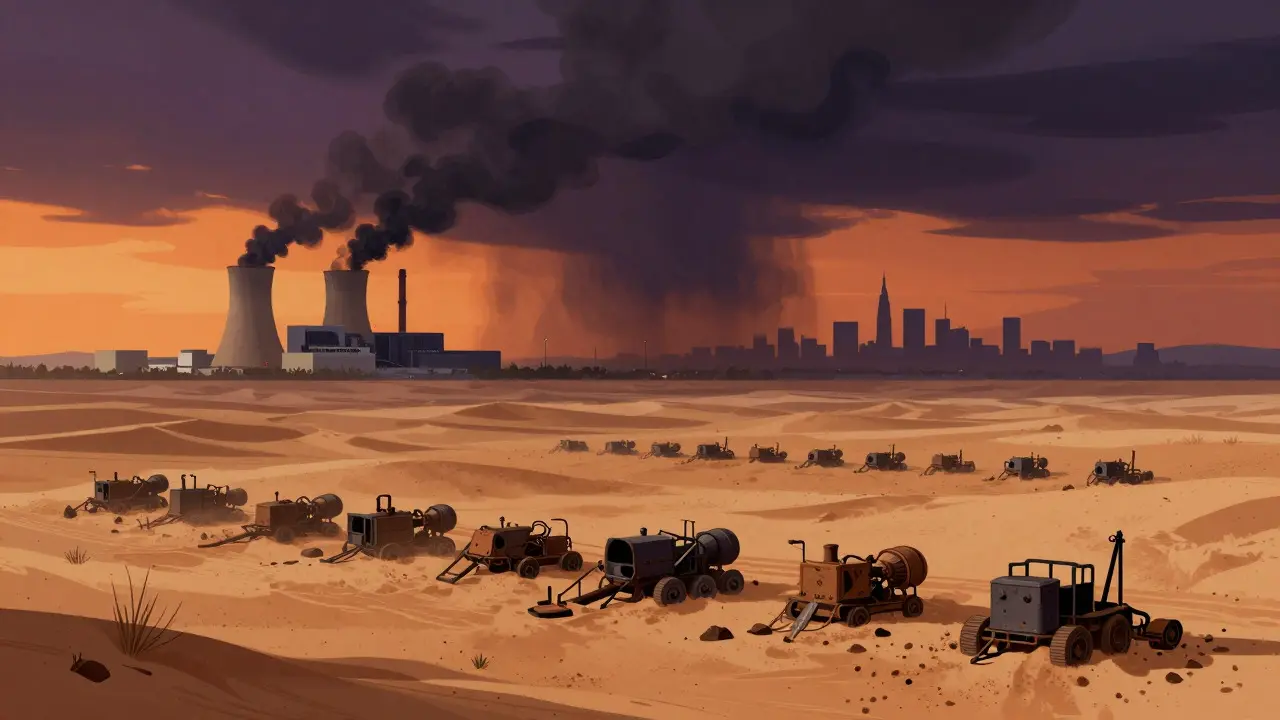
The tension between the state power provider, Tavanir, and private miners is at a breaking point. In December 2024, nationwide blackouts forced a four-month ban on mining operations. Authorities blamed unauthorized miners for stealing roughly 2,000 megawatts of supply. Since then, Tavanir has prioritized residential and industrial consumers over mining during peak demand periods. This means your rigs might get throttled or shut off exactly when hash rates are competitive elsewhere. The fundamental conflict remains unresolved: Tavanir claims mining causes shortages, while miners argue that failing infrastructure and mismanagement are the real culprits. Until this is settled, energy reliability is a major risk factor.
The Shadow Market: State-Affiliated Miners
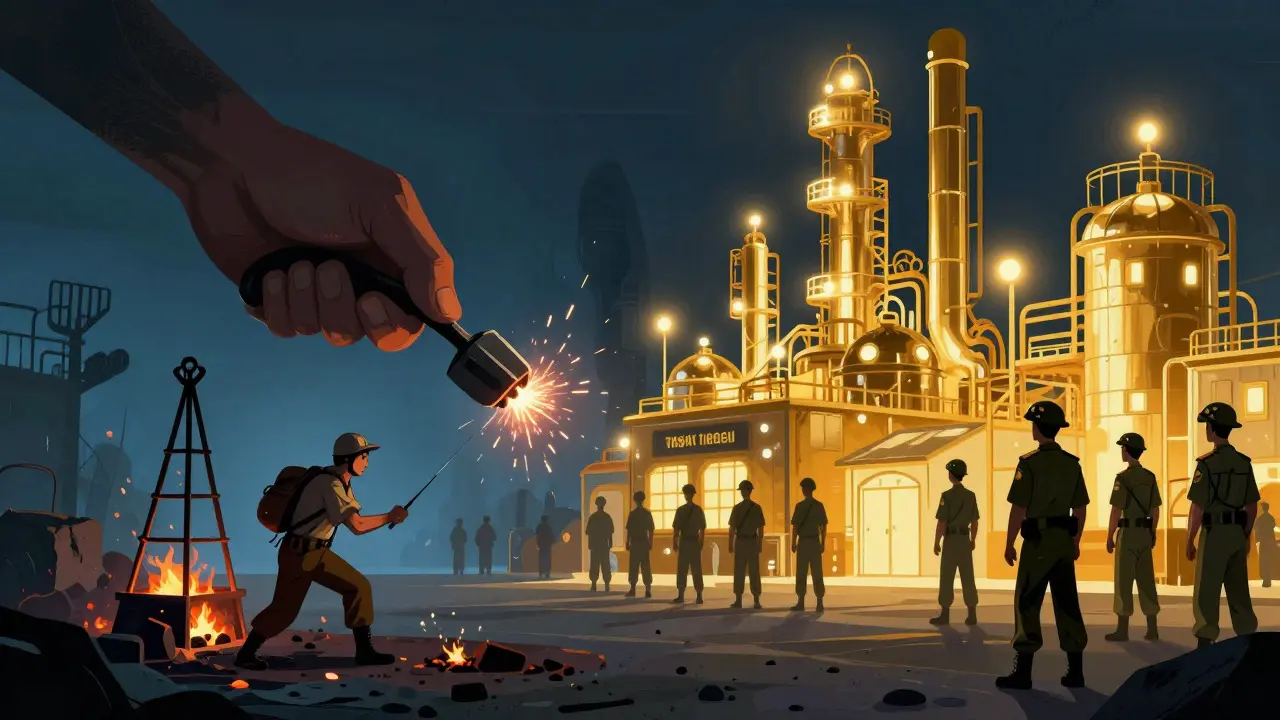
Here’s the part most public reports miss: the biggest miners in Iran aren’t private companies. They’re state-affiliated entities. Investigations by NCR-Iran reveal that the Islamic Revolutionary Guard Corps (IRGC) and entities linked to Supreme Leader Ali Khamenei have established massive mining operations since 2019. One documented facility in Rafsanjan, Kerman province, operates a 175-megawatt Bitcoin farm as a joint venture between IRGC-linked enterprises and Chinese investors. These operations frequently ignore electricity bills entirely, drawing subsidized power without paying the high mining tariffs imposed on private citizens.
This creates a dual-market reality. Legal miners fight for limited energy allocations and pay premium rates, while politically connected entities operate with impunity. According to NCR-Iran, state-affiliated operations control approximately 65% of Iran’s total mining capacity. For a foreign investor, this means competing against giants who have political protection and preferential access to resources. It’s not a level playing field; it’s a tilted board.
Comparing Iran to Neighboring Markets
To understand Iran’s position, it helps to look at its neighbors. Kazakhstan, for instance, has embraced mining with relatively stable regulations, leveraging excess energy capacity to attract international firms. Iran’s approach, by contrast, is reactive. Bans come and go based on immediate grid stress rather than long-term planning. While Kazakhstan offers predictability, Iran offers lower raw energy costs-but only if you can secure a license and survive the next blackout. The table below highlights the key differences:
| Feature | Iran | Kazakhstan |
|---|---|---|
| Legal Status | Legal with strict CBI licensing | Legal with stable regulatory framework |
| Electricity Cost | ~$0.004/kWh (subsidized), higher for private miners | Competitive, market-based rates |
| Regulatory Stability | Low; frequent bans during energy crises | High; consistent policy support |
| State Competition | High; IRGC controls ~65% of capacity | Low; private sector dominant |
| Foreign Investment Risk | Very High; sanctions and political instability | Moderate; standard geopolitical risks |
Practical Challenges for New Entrants
If you decide to proceed, expect a steep learning curve. Maintaining compliance requires daily monitoring of official communications from at least three government entities: the Ministry of Industry, the Central Bank, and Tavanir. Regulations change fast. In February 2025, a global ban on cryptocurrency advertising was implemented, drastically reducing visibility for domestic exchanges. User acquisition costs for these platforms jumped by 300%, according to the Iranian Cryptocurrency Union. For miners, this translates to fewer opportunities to sell mined coins domestically, forcing reliance on peer-to-peer (P2P) markets.
LocalBitcoins data shows a 78% increase in Iranian P2P volume following the December 2024 payment blockade. This shift indicates that individuals are bypassing official channels to trade, creating a gray market that is harder to regulate but also riskier for participants. You’ll need robust software to track these flows and ensure you’re not accidentally violating anti-money laundering rules. Additionally, consider establishing operations in special economic zones that receive dedicated power feeds. However, be aware that these zones are often dominated by IRGC-affiliated entities, meaning you may be sharing infrastructure with your strongest competitors.
Risks and Future Outlook
The long-term viability of private mining in Iran is deeply pessimistic among international analysts. AGSI maintains that cryptocurrency is unlikely to offer the Iranian regime an immediate avenue for evading crippling US sanctions. Instead, the government is pushing its own digital currency, the "Rial Currency," which cannot be mined and whose supply is regulated by the Central Bank. This signals a move toward complete state control. TRM Labs documented an 11% decline in cryptocurrency inflows during the first half of 2025, suggesting the market is contracting. If summer 2026 brings power shortages comparable to previous years, the mining sector could collapse entirely for private operators. The recurring cycle of bans during energy crises suggests continued instability, making Iran a high-risk, high-reward environment only for those with deep local connections and significant capital buffers.
Is cryptocurrency mining legal in Iran in 2026?
Yes, it is legally permitted, but only if you obtain licenses from both the Central Bank of Iran and the Ministry of Industry, Mine and Trade. Unlicensed mining is considered illegal and subject to heavy penalties, including equipment seizure.
How much does electricity cost for miners in Iran?
Subsidized industrial rates are approximately $0.004 per kWh. However, private miners often face higher specific tariffs set for the mining sector, which are among the highest for power-intensive industries in the country. State-affiliated entities often pay less or nothing.
Can foreign investors mine in Iran?
Technically yes, the government invites international participation. However, the risk is extremely high due to US sanctions, regulatory volatility, and competition from state-backed IRGC operations. Most successful foreign partnerships involve joint ventures with local entities to mitigate some of these risks.
What happens if the power goes out?
During peak demand periods, Tavanir prioritizes residential and industrial consumers over miners. Your operation may be throttled or shut off without compensation. This unpredictability is one of the biggest operational risks for miners in Iran.
How does the IRGC affect the mining market?
The IRGC controls an estimated 65% of Iran's mining capacity through state-affiliated farms. These operations often bypass standard regulations and pay minimal electricity costs, giving them a significant cost advantage over licensed private miners.


Darren Moon
August 24, 2026 AT 14:16It is somewhat tedious to parse through this labyrinthine regulatory framework, isn't it? The bureaucratic friction described here suggests a systemic inefficiency that borders on the absurd. One must question whether the 'efficiency' of low energy costs is merely an optical illusion when weighed against the stochastic nature of state intervention. The reliance on centralized licensing creates a single point of failure that no rational actor should ignore.
Quang Thai Tran
August 25, 2026 AT 14:17The data presented is merely a smokescreen for a deeper geopolitical maneuver. Consider the timeline: the CBI's consolidation of power coincides suspiciously with the expansion of IRGC-backed operations. This is not about 'stability'; it is about asset seizure under the guise of regulation. The 'Rial Currency' is simply a tool for capital controls, designed to strangle private liquidity before the next wave of sanctions hits. Trust nothing that flows from Tehran; the grid is not failing, it is being throttled to favor the regime's own hash rates.
Kate Staab
August 26, 2026 AT 23:46This whole situation reeks of moral hazard! How can we possibly justify investing in a market where the rules change based on who you know? It’s practically extortion wrapped in legal jargon. The fact that they ban mining during blackouts but let the big players keep running is just plain unfair and frankly, a bit shameful for a nation claiming to be modernizing its economy.
Tasha Davis
August 28, 2026 AT 19:31Omg wow this is so crazy!! I never knew electricity could be this cheap but also this dangerous at the same time. Like imagine your machines just turning off because the government decided to prioritize houses over crypto?? That sounds like a nightmare but also kind of exciting if you are brave enough to try it. We need more people talking about how risky but cool this place is for miners!
Abigail Sparks
August 30, 2026 AT 19:08You are all missing the forest for the trees! Look at the P2P volume spike. That 78% increase is not a bug, it's a feature of a resilient market. When official channels clog up, people find ways. If you have the capital and the local connections, this is a goldmine. Stop worrying about the 'risks' and start calculating the arbitrage opportunities. The state wants control, but the people want Bitcoin. Ride the wave or get left behind!
Mike Baca
September 1, 2026 AT 00:52its kinda wild how the whole thing hinges on power grids... i mean we talk about decentralization but here we are relying on a central power provider that can just flip the switch off whenever they feel like it. makes you think about what real sovereignty looks like in the digital age. maybe the lesson here is that hardware without stable energy is just expensive paperweights waiting to happen. but hey, history is made by those who take the bet right?
Carmene Jackson
September 1, 2026 AT 11:04ugh honestly why does everyone act like this is some great adventure?? it feels like a trap. like sure the electricity is cheap but the stress of dealing with three different government bodies every day? my head hurts just reading about it. i feel like my brain is being drained just trying to follow the logic of why anyone would do this voluntarily.
Nikki keller
September 3, 2026 AT 00:59It is important to recognize the cultural context here. For many in Iran, cryptocurrency is not just an investment vehicle; it is a lifeline against inflation. The 'gray market' mentioned in the post is not necessarily illegal activity in the Western sense, but rather a survival mechanism. We must view these dynamics with empathy rather than judgment. The resilience of the Iranian people in navigating these constraints is truly admirable, even if the risks are high.
miranda gamboa
September 4, 2026 AT 16:45Let's break down the technical implications of the Tavanir prioritization algorithm. Essentially, you're dealing with a dynamic load management system that treats mining as non-critical load. In terms of ROI modeling, you need to factor in a downtime probability of at least 15-20% during peak summer months. This drastically alters your hashrate efficiency metrics. If you aren't using redundant power sources or solar backup, your marginal cost per terahash will skyrocket. Don't sleep on the operational overhead required to mitigate this specific regulatory risk vector.
Kiran Jayaram
September 6, 2026 AT 06:28stop pretending this is a fair market. its rigged. the irgc owns half the capacity and pays nothing while you guys pay premium rates. its classic nepotism dressed up as industrial policy. why are you still analyzing the pros and cons? the answer is obvious. stay away unless you have a cousin in the ministry. the data is skewed by state actors who don't play by the rules. wake up and smell the corruption.
Uday N M
September 6, 2026 AT 22:41From an Indian perspective, the energy infrastructure challenges in Iran mirror our own historical struggles, yet their solution seems less transparent. While we have moved towards renewable integration to stabilize the grid, Iran remains tethered to subsidized fossil fuels. This dependency creates the volatility described. It is a cautionary tale for emerging markets attempting to leapfrog traditional financial systems without first securing energy sovereignty. The comparison to Kazakhstan is apt; stability breeds investment, chaos repels it.
Melissa G
September 7, 2026 AT 09:44The linguistic nuances in the regulatory documents often reveal the true intent behind the policies. When the Central Bank emphasizes 'transparency' and 'tracking,' it is rarely about consumer protection; it is about surveillance. The shift from ambiguous laws to strict CBI oversight marks a transition from laissez-faire experimentation to state capitalism. Understanding this semantic shift is crucial for any investor seeking to navigate the Iranian landscape. The words on paper tell a story of tightening control, not opening markets.
Aaron Morrissey
September 8, 2026 AT 18:56One might describe this scenario as a tempest in a teapot, albeit a very electrified one. The juxtaposition of 'cheap energy' and 'expensive bureaucracy' is quite poetic in its irony. It reminds one of the old adage: the road to hell is paved with good intentions, or in this case, with subsidized kilowatt-hours. The drama of potential blackouts adds a certain Shakespearean flair to what is essentially a business model struggling against its own host environment. A fascinating, if slightly tragic, tableau.
Patrick Quairoli
September 10, 2026 AT 11:27bet they are hiding something else too. like maybe the irgc mines are actually producing a different coin or laundering money for the regime. the numbers dont add up. 65% capacity but who is buying the output? surely not on the open market. smells like a closed loop system where the coins go back into the state treasury. typical conspiracy stuff but the evidence is right there in the text. they are playing 4d chess while we are stuck in checkers.
Zothana Pachuau
September 11, 2026 AT 22:42Ah, the eternal dance between the regulator and the regulated. You know, sometimes the best advice is just to wait it out. But if you must dive in, remember: the license is only as good as the relationship that secured it. Bureaucracy is a language, and fluency comes from patience, not speed. Don't rush the paperwork; let the ink dry. Or better yet, find a local partner who already speaks the dialect. It's less about the hardware and more about the handshake. Stay humble, stay connected, and maybe the lights won't go out on you.