Everyone loves free money, right? In the crypto world, that "free money" usually comes with strings attached-specifically, you have to do some work first. If you've been hearing whispers about an MDX airdrop, you're likely wondering how to get your hands on those MDX tokens without spending a fortune in gas fees. The truth is, there isn't one single button you press to claim a massive giveaway. Instead, earning MDX is more like mining for gold: you put in effort by providing liquidity or trading, and the protocol pays you back.
Let's clear up the confusion. Mdex, short for Mandala Exchange, isn't just another decentralized exchange (DEX). It’s a cross-chain DeFi ecosystem built primarily on the Huobi Eco Chain (HECO) and Binance Smart Chain (BSC). Because it operates across multiple networks, its reward system is designed to incentivize users who help secure these bridges and provide liquidity. So, if you are looking for a simple "connect wallet and click claim" airdrop, you might be disappointed. But if you’re willing to interact with the platform, the rewards can stack up quickly.
What Exactly Is Mdex?
To understand why you’d want MDX tokens, you need to know what powers them. Mdex is a decentralized exchange protocol that uses Automated Market Making (AMM). Think of AMM as a giant pot where people deposit their crypto pairs (like ETH/USDT), and traders swap against this pot instead of matching with individual buyers and sellers. This model allows for continuous trading without needing a traditional order book.
The platform was co-founded by Nate Flanders and Anant Handa, launching its DEX in January 2021. While it started strong on HECO, it has expanded significantly to BSC and even Ethereum via its bridge technology. The native token, MDX, serves multiple purposes: governance, fee discounts, and most importantly, liquidity mining rewards. Currently, MDX trades at a fraction of a cent, around $0.00118, but its utility within the ecosystem keeps demand steady among active farmers.
Why use Mdex over giants like Uniswap or PancakeSwap? Speed and cost. Transactions on HECO settle in about three seconds and cost roughly $0.001 per trade. That’s negligible compared to Ethereum’s fluctuating gas fees. For small-to-medium traders, this efficiency makes Mdex a practical daily driver, not just a speculative play.
The Truth About "Airdrops" vs. Liquidity Mining
Here is where many beginners get tripped up. When people search for "MDX airdrop," they often expect a retroactive distribution similar to what Arbitrum or Optimism did-where early users got thousands of tokens for free. Mdex works differently. It doesn’t typically run large-scale, snapshot-based airdrops for general users. Instead, it relies on Liquidity Mining.
Liquidity mining is essentially paying users to keep the exchange running. You deposit your tokens into a liquidity pool, receive LP (Liquidity Provider) tokens in return, and then stake those LP tokens in the farm section of the Mdex app. In exchange, you earn MDX tokens continuously. It’s not a one-time gift; it’s an ongoing yield.
| Feature | Retroactive Airdrop | Mdex Liquidity Mining |
|---|---|---|
| Trigger | Past activity snapshot | Current staking & trading |
| Frequency | One-time event | Continuous block rewards |
| Effort Required | None (after the fact) | Deposit, Stake, Claim |
| Cost | Gas fees only | Gas fees + Opportunity Cost |
If you missed out on any minor promotional campaigns in the past, don’t worry. The core value proposition remains the same: participate now, earn later. The protocol distributes MDX emissions to those who actively support the network’s liquidity depth.
How to Start Earning MDX Today
Ready to start farming? Here is a straightforward path to getting your first MDX rewards. Note that you’ll need a Web3 wallet like MetaMask or Trust Wallet configured for either BNB Smart Chain or HECO.
- Fund Your Wallet: Buy some BNB (for BSC) or HT/HECO tokens (for HECO). You’ll need these for gas fees and to pair with other assets.
- Connect to Mdex: Go to the official Mdex website. Ensure you are connecting to the correct network. Mixing up chains is the #1 reason transactions fail.
- Add Liquidity: Navigate to the "Earn" or "Farm" section. Choose a pool with high TVL (Total Value Locked) and decent APY. Popular pairs include USDT/BUSD or ETH/BNB. Deposit equal values of both tokens (e.g., $50 worth of USDT and $50 worth of BUSD).
- Stake Your LP Tokens: Once you add liquidity, you receive LP tokens. These represent your share of the pool. You must manually stake these LP tokens in the Farming section to start earning MDX.
- Claim Rewards: Visit the dashboard periodically to claim your accumulated MDX. Some pools auto-compound, but manual claiming gives you control over when to sell or hold.
Pro Tip: Keep an eye on the "Dual Mining" mechanism mentioned in Mdex documentation. This feature allows you to earn MDX while also participating in transaction mining, effectively doubling your incentive structure if you are an active trader rather than just a passive provider.

Cross-Chain Opportunities: The MDEX Bridge
One of Mdex’s strongest selling points is its interoperability. Through the MDEX Bridge, you can move assets between Ethereum, BSC, and HECO seamlessly. Why does this matter for your airdrop hunting? Because new pools often launch on specific chains to bootstrap liquidity. Sometimes, bridging your ETH from Ethereum mainnet to HECO costs less in time and fees than waiting for a batch process on Layer 2s.
Moreover, cross-chain activity itself can sometimes trigger promotional incentives. While not a guaranteed airdrop, keeping an eye on official Mdex Twitter and Discord channels is crucial. They occasionally announce limited-time boosts for bridging specific amounts of assets. If you see an announcement like "Double MDX rewards for HECO-USDC pairs this week," jump on it immediately. These temporary boosts are the closest thing to a "fast" airdrop you will find on this platform.
Price Predictions and Tokenomics
Is holding MDX worth it? Let’s look at the numbers. With a current price hovering around $0.00118, the market cap is relatively low compared to top-tier DEXes. Analysts are split on its future trajectory.
- Bullish Case: CoinLore predicts MDX could reach $0.2649 by late 2025. This assumes significant adoption of HECO and increased DeFi volume on the platform. If true, this represents a potential 22,000% increase from current lows.
- Conservative Case: DataFlow suggests a range of $0.0015 to $0.0030 for the near term. This reflects a more realistic view of competition from established players like PancakeSwap and Uniswap V3.
- Long-Term: Projections for 2030 suggest values up to $0.6052, though this depends heavily on the survival and growth of the HECO ecosystem.
Remember, token price is driven by utility and scarcity. As more users lock liquidity in Mdex, the circulating supply of MDX gets absorbed by stakers. However, inflationary emission schedules mean new tokens are constantly being minted. Your goal should be to earn enough MDX to offset potential dilution while betting on the platform’s long-term viability.
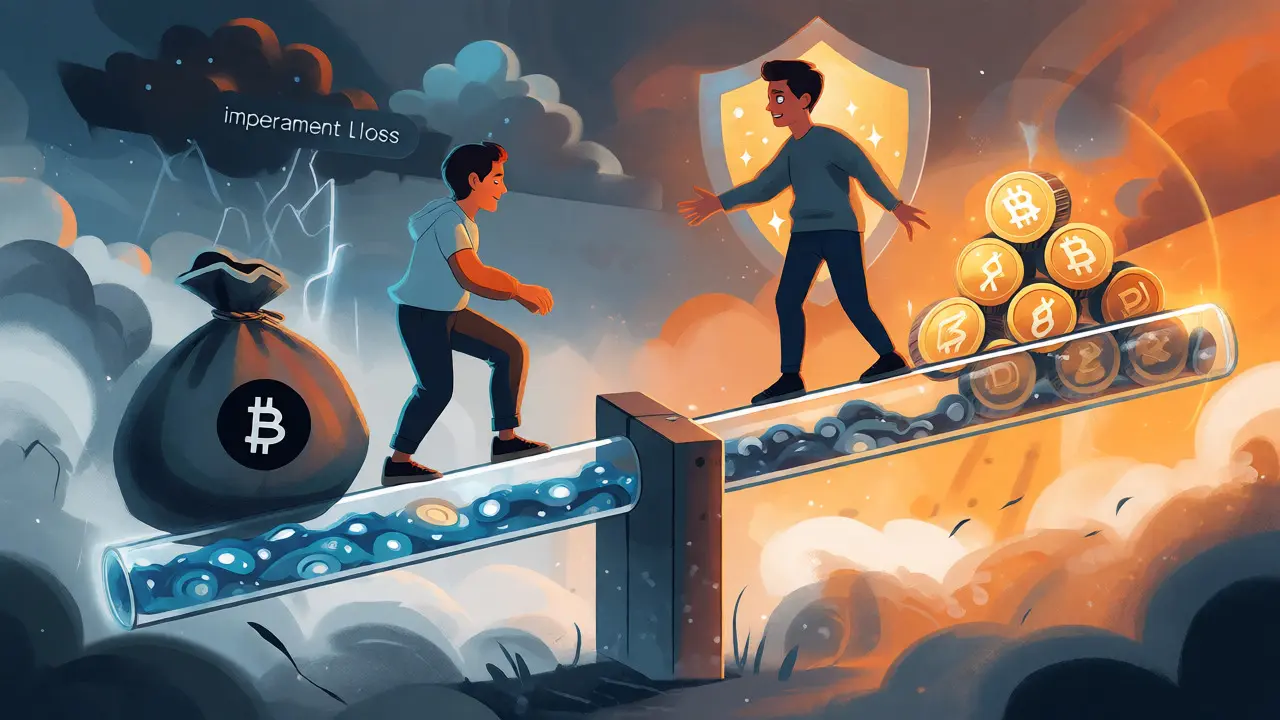
Risks and Pitfalls to Avoid
DeFi isn’t risk-free. Before you dump your savings into an MDX farm, consider these dangers:
- Impermanent Loss: If the price of one asset in your liquidity pair changes significantly compared to the other, you might end up with less value than if you had just held the tokens separately. This is common in volatile markets.
- Smart Contract Bugs: Mdex is audited, but no code is perfect. A hack could drain liquidity pools. Stick to well-established pools with high TVL for lower risk.
- Gas Fee Spikes: While HECO and BSC are cheap, network congestion can still spike fees. Always check gas prices before making large deposits or claims.
- Scams: Be wary of fake "MDX Airdrop" websites asking for your private key. Legitimate protocols never ask for your seed phrase to distribute rewards.
Final Thoughts: Is It Worth Your Time?
If you are already using decentralized exchanges, adding Mdex to your portfolio is a low-effort way to diversify your income streams. It won’t make you rich overnight unless you catch a major bull run, but the consistent flow of MDX rewards can compound nicely over time. Treat it less like a lottery ticket and more like a savings account that pays interest in crypto.
Stay active, monitor the official channels for any surprise announcements, and always prioritize security. The best "airdrop" strategy in DeFi is simply showing up, doing the work, and collecting your dues.
Is there a confirmed MDX airdrop for early users?
Mdex has not conducted a large-scale, retroactive airdrop for all early users like some Layer 2 networks. Instead, it rewards users through continuous liquidity mining and farming programs. Early adopters benefited from higher emission rates in the initial phases, but current rewards are based on ongoing participation.
Which chains does Mdex support for MDX rewards?
Mdex primarily operates on the Huobi Eco Chain (HECO) and Binance Smart Chain (BSC). It also supports cross-chain transactions via the MDEX Bridge, which connects to Ethereum. Most liquidity mining rewards for MDX are distributed on HECO and BSC.
Do I need to hold MDX to earn more MDX?
No, you do not need to hold MDX to earn it. You earn MDX by providing liquidity (depositing other tokens like USDT, BNB, or ETH) and staking your LP tokens. Holding MDX is useful for voting on governance proposals or paying for certain platform features, but it is not required for farming rewards.
How often can I claim my MDX rewards?
You can claim your accrued MDX rewards at any time. There is no minimum claim amount or fixed schedule. However, each claim requires a small gas fee, so it is often more efficient to wait until you have accumulated a meaningful amount of tokens to cover the transaction cost.
What happens if I withdraw my liquidity?
If you withdraw your liquidity, you stop earning MDX rewards immediately. You will receive back your original deposited tokens plus any trading fees generated during your stay, minus any impermanent loss. Any unclaimed MDX rewards remain available to claim until you unstake your LP tokens completely.