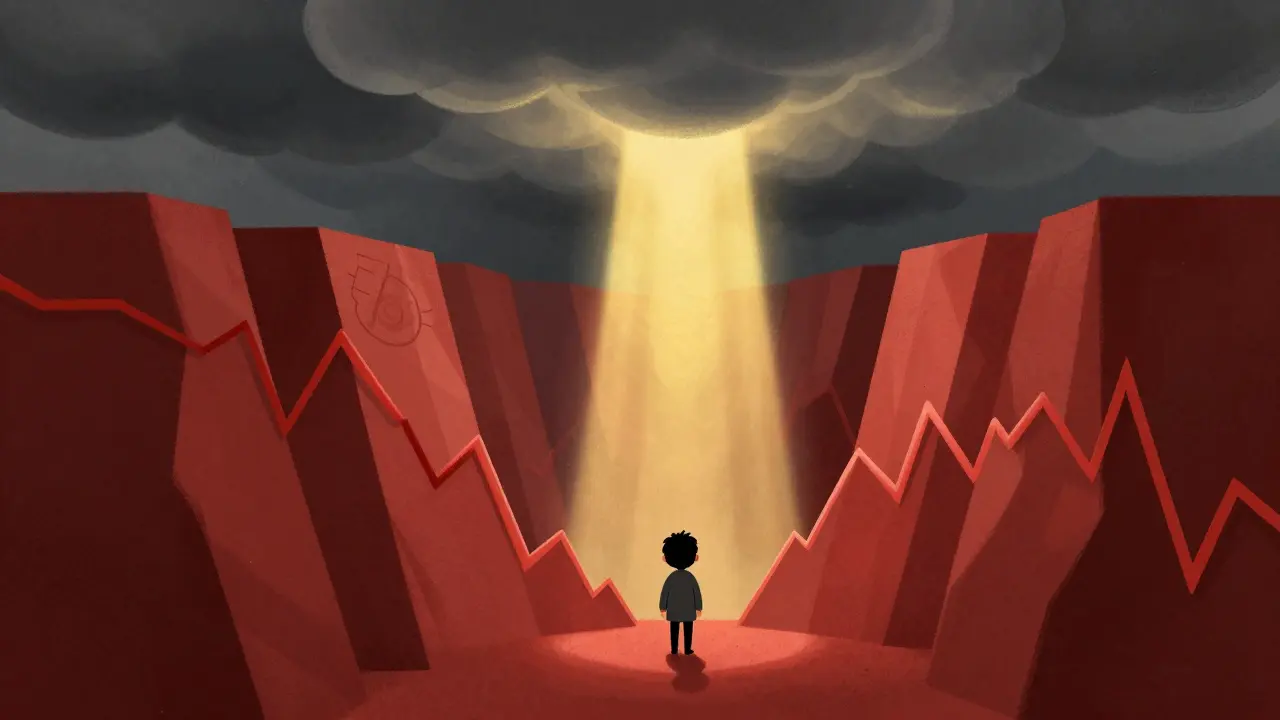
Spotting the exact moment a market stops crashing and starts climbing is the "Holy Grail" of investing. It is the point where the blood is in the streets, but the opportunity for massive gains is at its peak. However, the Bear Market Bottom is the lowest point in a prolonged market decline where asset prices transition from a downward trend to a sustained upward recovery. The problem? Most people are too scared to buy when the bottom actually arrives, and by the time it's "obvious," the biggest gains are already gone.
If you are waiting for a single signal to tell you it's safe, you'll likely miss the boat. Identifying a bottom isn't about finding one "magic" indicator; it's about seeing a convergence of different signals that all point toward the same conclusion: the worst is over.
The Fast Track: How to Recognize a Bottom
Before we get into the weeds, here is the quick checklist for recognizing a potential market floor. You want to see several of these happening at once:
- Extreme Pessimism: People aren't just scared; they've given up. They stop talking about the assets entirely.
- Capitulation Spikes: A final, violent drop in price accompanied by massive trading volume.
- Fundamental Shifts: Corporate earnings stop falling or revenue growth begins to stabilize.
- Policy Pivots: Central banks stop hiking rates or start injecting liquidity back into the system.
- Valuation Reset: Assets are trading significantly below their intrinsic value.
Understanding the Two Types of Bear Markets
Not all crashes are created equal. Whether you're looking at stocks or blockchain assets, the context of the economy changes how you should identify the bottom. Historical data shows a clear split between recessionary and non-recessionary declines.
In a non-recessionary bear market, the dip is usually shallower-around a 22% median drawdown-and moves quickly, often resolving in about three months. These are "correction" style events. On the other hand, recessionary bear markets are brutal. We're talking a median drop of 35% or more, and the pain can last for 18 months or longer. If the broader economy is in a recession, you can't expect a quick "V-shaped" recovery; you're looking for a much longer, grinding process of accumulation.
Fundamental Indicators: The "Real World" Signals
Numbers don't lie, but they can be slow. To find a bottom, you have to look at the plumbing of the economy. Corporate Earnings are a huge tell. When earnings have been degrading for several quarters and finally stop falling, it's a sign that the market has priced in the bad news. When revenue growth stabilizes, it shows the underlying business health is returning, which usually precedes a price jump.
Then there is the Yield Curve. In traditional finance, an inverted yield curve (where short-term rates are higher than long-term rates) almost always precedes a recessionary bear market. The bottom often begins to form when this curve "normalizes." While this is a lagging indicator, seeing the curve flip back is a strong hint that the economic cycle is resetting.
| Indicator Type | Signal for Bottom | Reliability | Speed |
|---|---|---|---|
| Fundamental | Earnings stabilization / Revenue recovery | High | Slow |
| Sentiment | Max pessimism / Widespread apathy | Medium | Fast |
| Technical | Capitulation volume / Bullish divergence | Medium | Very Fast |
| Monetary | Rate cuts / Quantitative easing | High | Medium |

The Psychology of the Bottom: Sentiment and Apathy
Markets are driven by humans, and humans are emotional. The most reliable signal for a bottom isn't a chart-it's the mood of the crowd. Most people think the bottom happens when everyone is terrified. In reality, the bottom often happens when people are bored. This is known as "investor apathy."
When the media stops talking about the crash and people just stop checking their portfolios because it's too depressing, you're getting close. Contrarian Analysis suggests that the maximum level of bearishness usually coincides with the actual price floor. When the "smart money" (institutional investors) starts buying, they do it quietly while the retail crowd is still convinced the world is ending.
Technical Analysis: Watching the Tape
While fundamentals tell you why a bottom should happen, technicals tell you when it's happening. Keep an eye on volume. A "capitulation event" is a massive spike in selling volume where the last remaining bulls finally give up and dump their positions. This often creates a "blow-off bottom" that clears the way for a new uptrend.
You should also look for Market Breadth. If the major indices are still falling, but a few smaller assets start consistently making higher lows, it's a sign that accumulation is starting. This divergence suggests that the selling pressure is exhausted and buyers are stepping back in, starting with the most undervalued assets.

Monetary Policy and the "Fed Put"
We cannot ignore the role of central banks. Monetary policy can either accelerate a crash or truncate it. When the Federal Reserve or other central banks pivot from tightening (raising rates) to easing (lowering rates), it provides a massive catalyst for a market bottom. Fiscal expansion-like increasing government spending relative to GDP-can also counteract a recession, potentially making a bear market shorter than it would have been otherwise.
In the modern era, algorithmic trading and high-frequency bots can make bottom formation look erratic. You might see a "fake out" where the price jumps 10% only to crash another 20%. This is why you need a probabilistic approach. Don't bet everything on one signal; bet on the fact that five different signals are all starting to align.
Avoiding the "Falling Knife" Trap
The biggest risk in trying to recognize a bottom is catching a "falling knife"-buying into a crash only to watch it drop another 50%. To avoid this, stop looking for the exact bottom and start looking for a bottoming process. A bottom is rarely a single point; it's usually a zone.
One way to handle this is through Dollar Cost Averaging (DCA). Instead of trying to time the absolute low, you buy in increments as the indicators align. This removes the emotional stress of being "wrong" by a few percentage points and ensures you have skin in the game when the recovery actually begins.
Can a bear market bottom happen without a price spike?
Yes. While many bottoms feature a violent "capitulation" spike, some markets undergo a "rounding bottom" or a long period of sideways movement. In these cases, the market slowly absorbs the selling pressure over months or years until buyers finally outweigh sellers.
Which is more important: technicals or fundamentals?
Neither is sufficient on its own. Fundamentals tell you if an asset is undervalued (the "what"), but technicals and sentiment tell you when the selling pressure has ended (the "when"). The most successful investors use a combination of both to confirm a trend.
How do I know if it's a 'dead cat bounce' or a real bottom?
A dead cat bounce is a temporary recovery in a falling market. The key difference is volume and breadth. A real bottom usually shows increasing volume on the way up and a growing number of different assets rising together. A dead cat bounce is often a low-volume move that fails to break previous resistance levels.
Does the yield curve always predict the bottom?
The yield curve is great for predicting the start of a recession, but it's less precise for timing the exact bottom. The "un-inversion" of the curve typically happens as the economy begins to heal, which often aligns with the market's recovery phase, but it can lag behind the actual price bottom.
Why is investor apathy a bullish sign?
Apathy means the "weak hands" have already sold. When people are so discouraged that they no longer care about the asset, there is no one left to sell. At that point, any small amount of positive news can trigger a massive price increase because the path of least resistance is now upward.
Next Steps for Your Strategy
If you believe we are approaching a bottom, your next move isn't to go "all in." Start by mapping out your levels. Identify the valuation points where an asset becomes a "steal" based on historical price-to-earnings or price-to-book ratios. Once you hit those zones, start monitoring the sentiment and volume signals.
For those in the blockchain space, pay extra attention to network activity. If the price is crashing but the number of active addresses or developer commits is staying steady or growing, you're looking at a fundamental divergence. That's often the strongest signal that the bear market is nearing its end and a new cycle is preparing to launch.





Aaron Zeiler
April 27, 2026 AT 06:43dca is the only way to keep your sanity during a crash no one actually hits the exact bottom on the first try
Alex Mazonowicz
April 27, 2026 AT 14:28This is such a helpful guide!!! I really believe we are heading toward a great recovery soon!!! Keep your heads up everyone!!!
Emily A
April 29, 2026 AT 05:41The distinction between recessionary and non-recessionary bear markets is fundamental, yet most retail investors ignore it entirely. It is quite naive to expect a V-shaped recovery when the broader macroeconomic data indicates a systemic contraction. True accumulation requires patience and a disciplined adherence to valuation metrics, not just chasing a green candle on a five-minute chart. One must understand that liquidity cycles dictate the pace of recovery far more than individual asset utility. Many of you are simply gambling on noise without understanding the underlying signal. Precision in timing is a myth; the goal should be the probabilistic alignment of indicators. Only those who maintain a rigorous intellectual framework will survive the volatility. Most will panic-sell at the exact moment the smart money enters. It is a classic psychological trap that repeats every single cycle. Learn the history of market cycles or be doomed to repeat the same mistakes. Discipline is the only bridge between a loss and a legacy.
Bevon Findley
April 30, 2026 AT 15:52Pretty basic stuff, but useful for the masses. :)
Rushell Perry
April 30, 2026 AT 19:18just remember to breathe while you wait for those signals to align it is a marathon not a sprint
Carli Bates
May 2, 2026 AT 11:24oh sure because the fed always does exactly what we expect them to do lol
its me
May 2, 2026 AT 11:52It's interesting how we cling to these indicators to mask our fear of the void. Money is just a collective hallucination anyway, but we pretend the yield curve is a sacred text to feel in control of the chaos.
Gabrielle Danis
May 4, 2026 AT 07:54The mention of developer commits as a fundamental divergence is particularly astute for blockchain assets. In a bear market, price often decouples from actual utility development, which creates a powerful spring-loading effect for the next bull run.
Gabby Puche
May 4, 2026 AT 10:43Stay strong everyone! 🌈 You've got this! Just ride the wave 🌊✨
Ipsita Seal
May 6, 2026 AT 06:04too long didn't read
Rachel S
May 6, 2026 AT 11:47My goodness, the sheer terror during a capitulation spike is absolutely visceral! 😱 It is truly a nightmare for the unprepared, but for the strategic investor, it is the most exhilarating moment of the cycle! 📉✨
Kristi Swartz
May 6, 2026 AT 22:17you should not gamble with money you cannot afford to lose it is simply wrong to take such risks without a plan
Kathleen Warren
May 8, 2026 AT 04:41It's okay to feel scared when the market drops. Just take it one step at a time and do what's best for your own situation.
Abhishek Verma
May 9, 2026 AT 21:46Imagine actually thinking the "smart money" cares about you. They're just using retail as exit liquidity while you're reading these "indicators" like they're the gospel.
Lynne Teperman
May 11, 2026 AT 00:20the vibe of a market floor is like a heavy velvet curtain falling on a play just a weird quiet stillness before the next act kicks off
Barbara Jones
May 11, 2026 AT 14:42did this the last time and it worked for me tho I probablly didnt time it perfect haha
Jan Conrad
May 12, 2026 AT 23:24I've noticed that sentiment indicators often bottom out before the price actually does. The apathy stage is really the key signal to watch for.