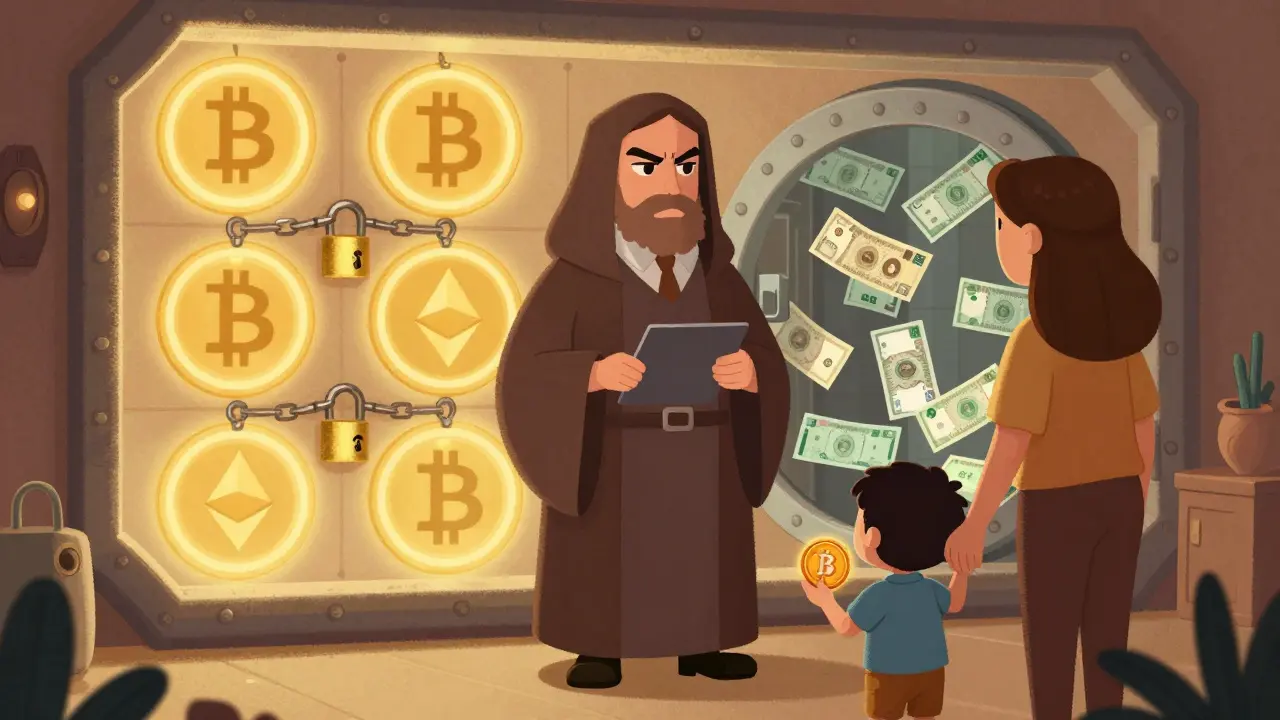
When Morocco banned cryptocurrency in 2017, it wasn’t just about stopping Bitcoin or Ethereum. It was about foreign exchange control. The central bank, Bank Al-Maghrib, saw crypto as a backdoor for citizens to move money out of the country - bypassing official banking channels, dodging currency controls, and threatening national reserves. For years, any trade, mining, or transfer involving crypto was treated as a serious violation of Morocco’s foreign exchange laws. But things changed in 2025. The ban didn’t disappear. It evolved.
What’s Illegal? The Core Violations
Even though Morocco now allows some crypto trading, the rules are tight. And breaking them still means crossing a legal line - especially when it comes to foreign exchange.- Trading on unlicensed platforms - If you use Binance, Coinbase, or any foreign exchange service not approved by Bank Al-Maghrib, you’re violating the law. Only platforms licensed by the central bank are legal.
- Using crypto to pay for goods or services - You can’t buy a phone, pay a freelancer, or settle a business invoice with Bitcoin in Morocco. The law still requires all commercial payments to go through traditional banking.
- Cryptocurrency mining - This is still completely banned. Mining uses electricity, requires imported hardware, and often involves converting local currency into foreign crypto profits. All of that triggers foreign exchange controls.
- Trying to move money out of Morocco via crypto - Sending crypto to a foreign wallet to convert it into dollars or euros? That’s a direct violation. Authorities track wallet activity linked to Moroccan IP addresses and bank accounts.
These aren’t gray areas. They’re black-and-white rules. Even if you think you’re just "hodling" or "trading for fun," if you’re doing it outside the licensed system, you’re breaking the law.
Penalties: How Much Can You Lose?
The government doesn’t mess around when it comes to enforcement. Fines are steep - and they’re rising.- Individuals caught trading illegally face fines between MAD 20,000 and MAD 100,000 (about $2,000 to $10,000 USD). Repeat offenders can be charged under financial crime statutes.
- Businesses that use crypto for payments or try to operate unlicensed exchanges can be fined up to MAD 500,000 (around $50,000 USD).
- Platforms operating without a license face immediate shutdown, asset seizure, and criminal prosecution of owners.
There’s no warning. No first-time leniency. Authorities use bank transaction logs, wallet address tracking, and reports from licensed exchanges to identify violators. In 2025, over 80 cases were filed against individuals and 12 against unlicensed platforms. Most resulted in full fines.
What’s Legal Now? The New Framework
Morocco didn’t go full crypto-friendly. It went controlled. Here’s what’s allowed as of 2026:- Licensed crypto exchanges - Only platforms approved by Bank Al-Maghrib can operate. These must follow strict KYC (Know Your Customer) rules, report all transactions, and freeze accounts linked to suspicious activity.
- Buying and selling crypto - You can buy Bitcoin or Ethereum through a licensed platform, but only using Moroccan Dirham (MAD). You can’t convert it directly to USD or EUR within the platform.
- Crypto as an investment - Holding crypto as an asset is legal. But if you sell it for profit, you pay a 15% capital gains tax. You must report this to the tax office.
- ICO and tokenized securities - These are allowed only if approved by the Moroccan Capital Market Authority (AMMC). No unregistered token sales.
That’s it. No payments. No mining. No cross-border transfers. No anonymous trading. The government wants you to trade - but only on their terms.
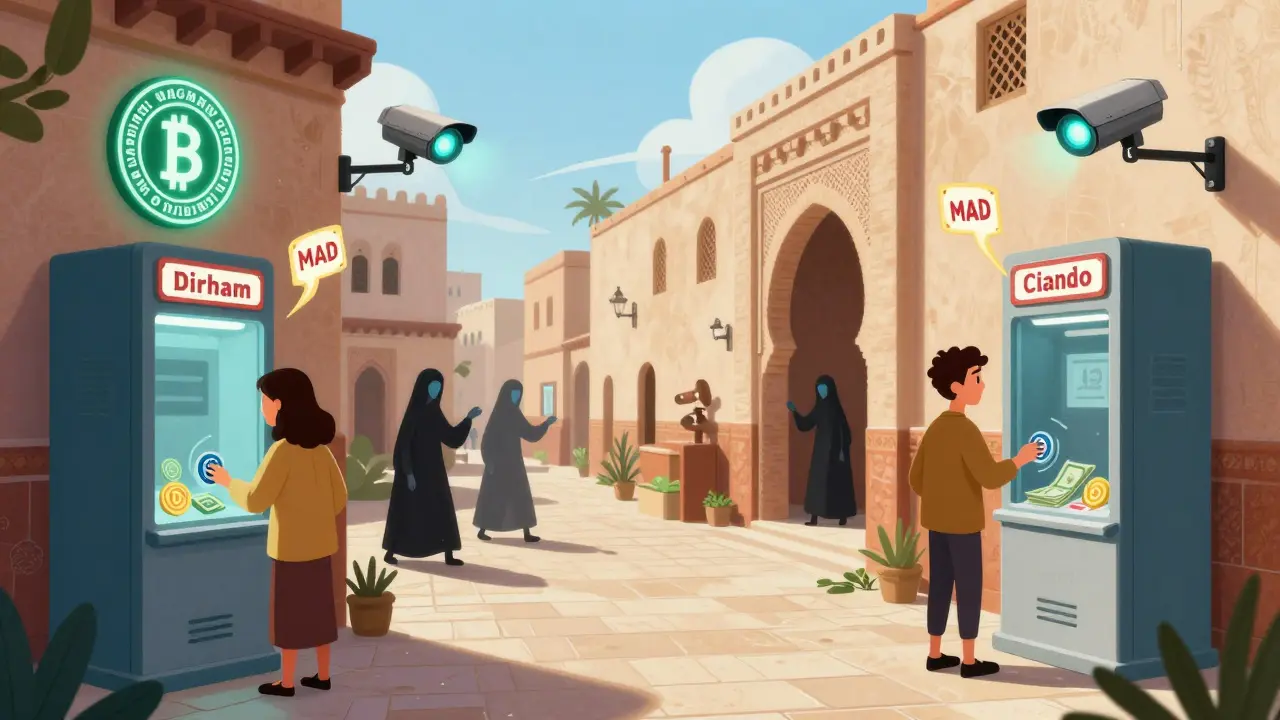
Why Does Morocco Care So Much About Foreign Exchange?
Morocco’s economy relies heavily on foreign currency inflows - tourism, remittances, and exports. The Dirham is pegged to a basket of currencies, and the central bank needs tight control to keep inflation stable and reserves healthy.Crypto threatened that control. Before 2025, people were using P2P platforms to buy crypto with MAD, then sell it abroad for USD. That meant money was leaving the country without being recorded. No taxes. No oversight. No way to track where it went.
That’s why mining was banned - it drains electricity (a national resource), requires imported hardware (foreign currency outflow), and often leads to crypto profits being sent overseas. The government didn’t want thousands of Moroccans running mining rigs that quietly siphoned capital out of the economy.
The solution? Bring crypto under supervision. License the platforms. Tax the gains. Monitor the flows. Let people trade - but only where the state can see it.
How People Are Adapting (And Getting Caught)
Despite the rules, crypto use in Morocco is growing. The market is projected to hit $280 million in 2026. How? People are finding workarounds.- OTC trading - Many use Telegram groups or local meetups to trade crypto directly with cash. It’s risky. If you’re caught, you’re fined.
- Using foreign accounts - Some open bank accounts abroad and transfer MAD to them, then buy crypto overseas. That’s a double violation - foreign exchange + unlicensed crypto use.
- Stablecoin arbitrage - People buy USDT on licensed platforms, then send it to foreign wallets. Authorities are now tracking USDT transactions linked to Moroccan IDs.
Authorities have cracked down hard on these methods. In late 2025, a major OTC ring in Casablanca was shut down after tracking over 300 transactions worth more than MAD 12 million. The leaders were charged with foreign exchange violations and money laundering.
The Bigger Picture: e-Dirham and Regional Influence
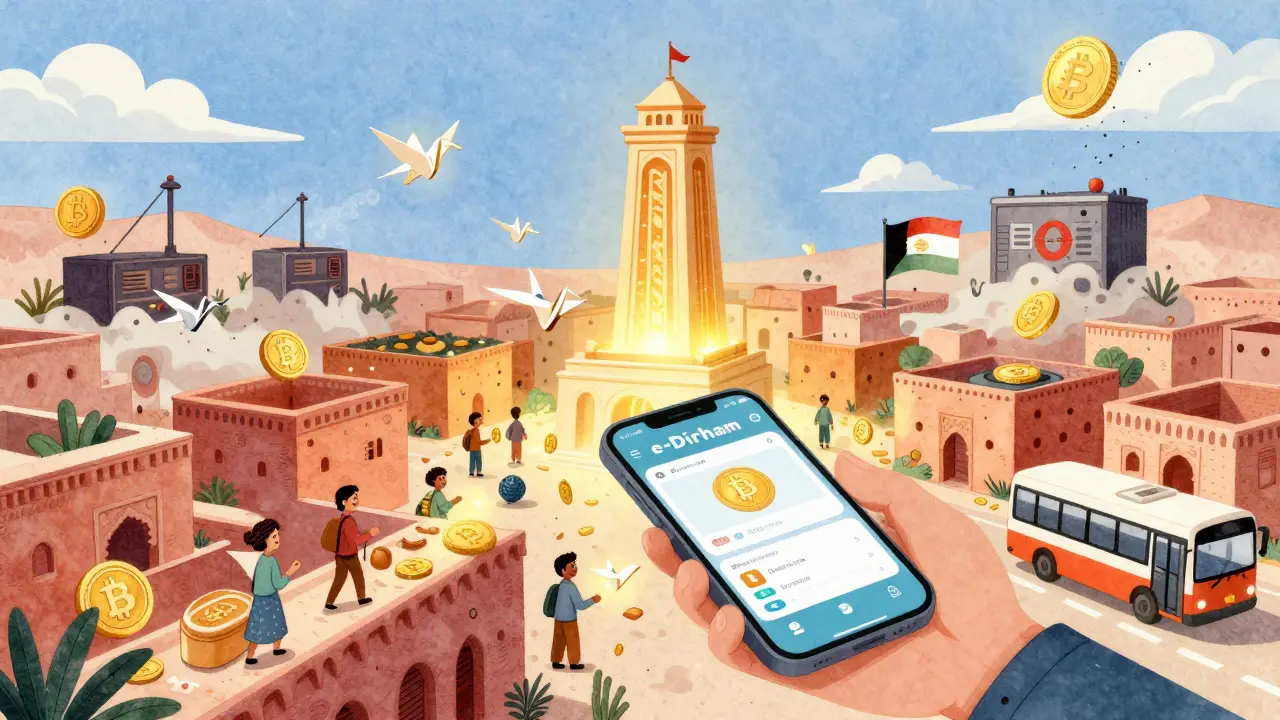
Morocco isn’t just trying to stop crypto. It’s building its own digital alternative: the e-Dirham.This is a sovereign digital currency, backed by Bank Al-Maghrib, designed to replace cash and streamline payments - including cross-border transfers with Egypt and other African partners. The goal? To offer the speed and convenience of crypto - without the foreign exchange risks.
If the e-Dirham pilot succeeds, it could mean less demand for private crypto in the long run. Why use Bitcoin to send money to Spain if you can send an e-Dirham through a central bank app in seconds?
Morocco’s approach is being watched across North Africa. Countries like Tunisia and Algeria are watching closely - wondering if they should follow Morocco’s model of controlled legalization or stick with outright bans.
What Should You Do If You’re in Morocco?
If you’re a resident, here’s the simple guide:- Only trade crypto through a Bank Al-Maghrib licensed platform.
- Never use crypto to pay for anything - stick to bank transfers.
- Don’t mine. It’s illegal and easily traceable.
- Report your crypto profits. Pay the 15% tax. Keep receipts.
- Don’t send crypto to foreign wallets unless you’re prepared to explain it to authorities.
It’s not about banning innovation. It’s about control. Morocco doesn’t want to stop you from owning crypto. It just wants to know where your money goes.
Is cryptocurrency completely illegal in Morocco in 2026?
No, cryptocurrency is not completely illegal in Morocco in 2026. Trading is permitted only through platforms licensed by Bank Al-Maghrib. All other activities - including mining, using crypto for payments, and trading on unlicensed platforms - remain illegal.
What are the penalties for violating crypto foreign exchange rules in Morocco?
Individuals caught trading illegally face fines between MAD 20,000 and MAD 100,000 (about $2,000-$10,000 USD). Businesses can be fined up to MAD 500,000 ($50,000 USD). Repeat offenses or large-scale violations can lead to criminal charges under Morocco’s financial crime laws.
Can I mine Bitcoin in Morocco?
No, cryptocurrency mining is still completely illegal in Morocco as of 2026. The ban, originally imposed in 2017, remains in place because mining involves foreign currency outflows for equipment and electricity, which violates the country’s foreign exchange controls.
Do I have to pay taxes on crypto profits in Morocco?
Yes. Any profit from selling cryptocurrency is subject to a 15% capital gains tax. You must report these gains to the Moroccan tax authorities. Failure to do so can result in penalties, even if you traded on a licensed platform.
Can I send crypto from Morocco to another country?
Sending crypto to a foreign wallet is considered a foreign exchange violation unless it’s done through a licensed platform and properly reported. Authorities monitor cross-border crypto transfers linked to Moroccan bank accounts or IDs. Unauthorized transfers can trigger investigations and fines.
Are there any licensed crypto exchanges in Morocco?
Yes, but very few. As of 2026, only two platforms have received full licensing from Bank Al-Maghrib. These platforms require full KYC, limit transactions to MAD deposits, and report all activity to regulators. You can find the official list on the Bank Al-Maghrib website.
Why did Morocco change its crypto policy in 2025?
Morocco shifted from a total ban to a regulated system because crypto use was growing anyway - mostly underground. The government realized that outright prohibition was unenforceable and that a licensed, taxed, monitored system would better protect consumers, prevent money laundering, and maintain control over foreign exchange flows.
How does the e-Dirham affect crypto in Morocco?
The e-Dirham is Morocco’s government-backed digital currency, designed to replace cash and streamline payments - including international transfers. It’s meant to compete with private crypto by offering speed and convenience under state control. If successful, it could reduce public reliance on Bitcoin and other cryptocurrencies by providing a legal, regulated alternative.

Ryan Burk
February 22, 2026 AT 22:07Amanda Markwick
February 24, 2026 AT 18:24Tabitha Davis
February 26, 2026 AT 08:20Don B.
February 26, 2026 AT 15:02Arya Dev
February 27, 2026 AT 04:13Leslie Cox
February 28, 2026 AT 05:12Andrew Hadder
March 2, 2026 AT 00:03Derek Sasser
March 2, 2026 AT 16:34Neeti Sharma
March 3, 2026 AT 00:38Nadia Shalaby
March 3, 2026 AT 15:23Fiona Monroe
March 4, 2026 AT 11:46Molley Spencer
March 5, 2026 AT 15:51John Fuller
March 7, 2026 AT 00:55Lucy Simmonds
March 7, 2026 AT 15:10Robert Kromberg
March 7, 2026 AT 22:00Daisy Boliaan
March 8, 2026 AT 01:49Nicki Casey
March 8, 2026 AT 16:43