
Imagine spending an hour setting up a new account, only to lose every cent you deposited because you misplaced a piece of paper with twelve random words on it. That is the current reality for thousands of people trying to use decentralized applications. While the tech behind the scenes is revolutionary, the actual experience of using a dApp is a blockchain-based software application that operates without a central authority, using smart contracts to execute peer-to-peer interactions often feels like trying to operate a cockpit of a Boeing 747 without a manual. We have built powerful tools, but we've essentially asked regular people to become cryptography experts overnight just to send some tokens.
| Metric | Traditional Web2 App | Average dApp (Ethereum-based) |
|---|---|---|
| Average Load Time | 2.1 seconds | 12.4 seconds |
| First-time Success Rate | 85% | 38% |
| Onboarding Path | Email/Password (seconds) | Seed Phrases/Wallets (minutes) |
| Error Recovery | "Forgot Password" link | Permanent loss of funds |
The Onboarding Wall: Why Most Users Quit
The biggest hurdle isn't the app itself; it's getting into the app. In a traditional app, you sign up with an email and a password. If you forget them, you click a button and get a reset link. In the world of dApp User Experience Challenges, that safety net doesn't exist. Users have to interact with Non-custodial Wallets is digital tool where users hold their own private keys, giving them full control over their assets without a middleman .
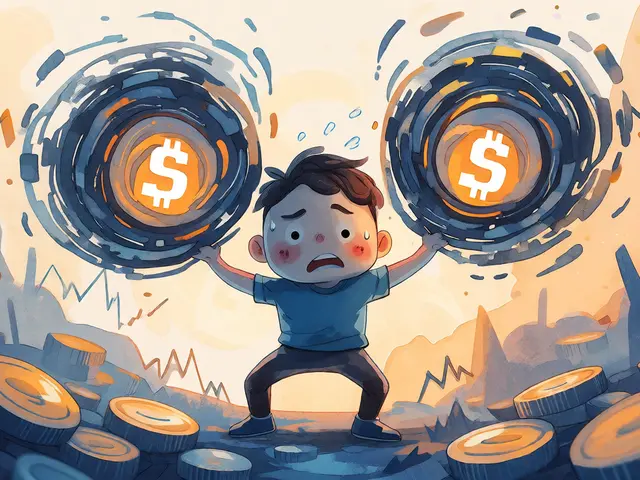
The process of managing a 12-to-24 word seed phrase is terrifying for the average person. Data shows that 78% of users abandon dApps during onboarding. Why? Because the stakes are too high. One typo or one lost piece of paper, and your money is gone forever. This "no customer service" model creates a massive psychological barrier. When 73% of first-time users leave before even completing their first transaction, it's clear that the current approach is failing the very people it's trying to attract.
The Invisible Cost of "Gas" and Latency
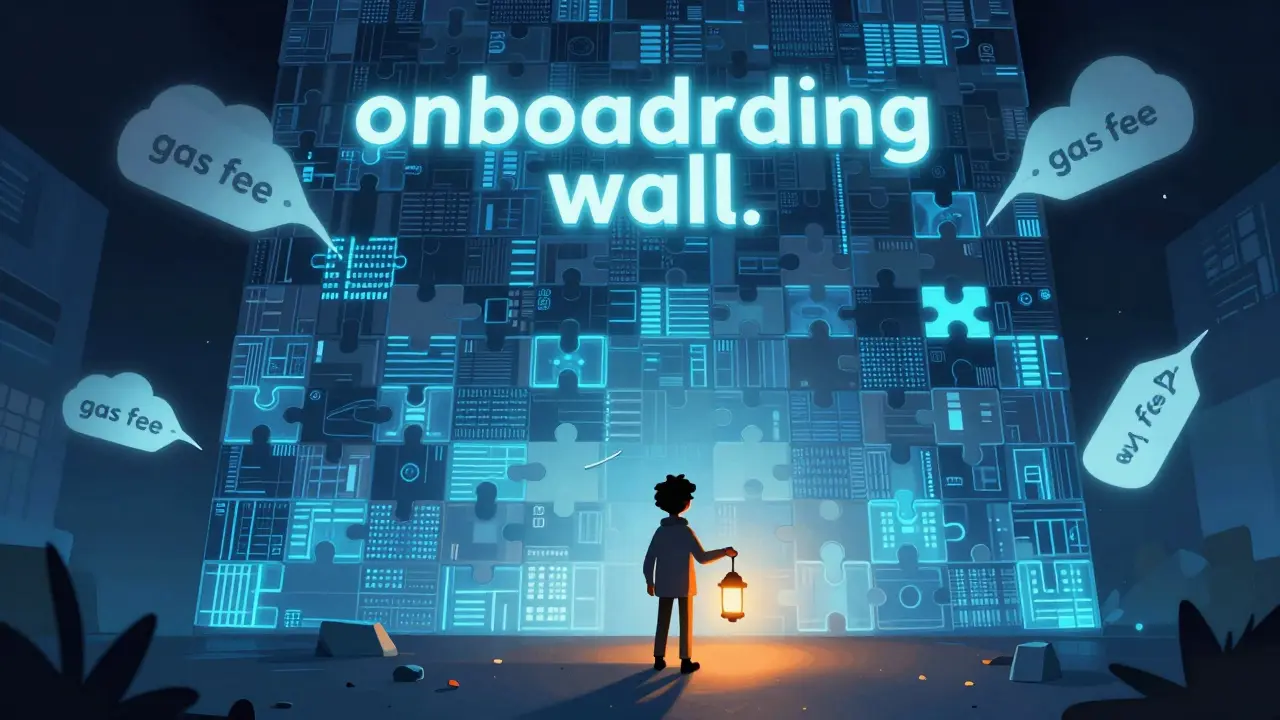
Once a user actually gets in, they hit the "gas fee" wall. In Web2, we take the infrastructure for granted-you don't pay a fee every time you click "Like" on a photo. In Web3, every action requires a transaction on the blockchain, and those transactions cost money.
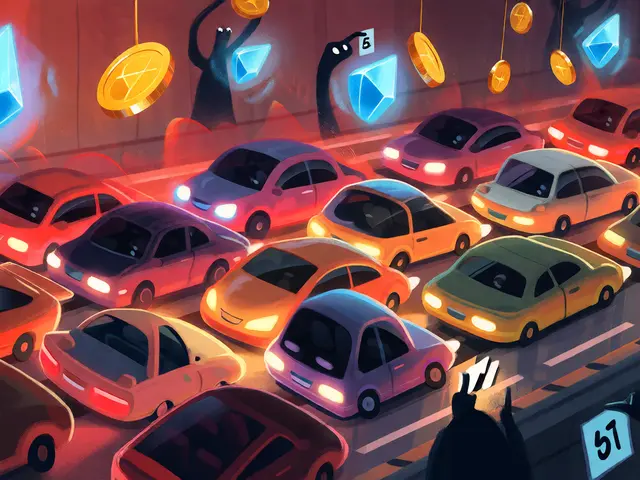
The confusion stems from how these fees are presented. Many dApps hide gas fees behind three different confirmation screens or don't explain them at all. This leads to "sticker shock" where a user tries to move $10 and realizes the network fee is $50. Combine this with the wait times-Ethereum transactions can take anywhere from 15 seconds to several minutes during peak traffic-and the experience feels sluggish and unpredictable. Compare this to the Avalanche network, which provides sub-second finality, and you can see how the choice of blockchain directly dictates whether a user feels like they're using a modern app or a dial-up modem from 1995.
Fragmentation and the "Network Switch" Nightmare
If you've ever used a DeFi platform, you know the frustration of the "Wrong Network" error. Because the ecosystem is split across various blockchains, users often have to manually switch their wallet from one network to another to interact with different protocols.
This manual configuration confuses about 68% of new users. It's a cognitive load that simply shouldn't exist. To do basic financial activities, a user might need to jump between three to five different networks. This creates "silos of information," where you have to keep multiple tabs open just to track your own assets. It's not a seamless flow; it's a series of disjointed jumps that make the technology feel fragmented and fragile.
The Design Dilemma: Sovereignty vs. Simplicity
Developers are caught in a tug-of-war. On one side is decentralization (sovereignty), and on the other is usability. If a developer uses a custodial solution-meaning they hold the keys for the user-the UX becomes amazing, but the "decentralized" part of the dApp disappears. If they go full non-custodial, the security is ironclad, but the learning curve is a mountain.
Most Web3 design patterns are still being invented. Unlike the traditional web, where we all agree that a magnifying glass means "search" and a floppy disk means "save," dApps are wildly inconsistent. A 2025 study found that users take nearly four times longer to complete the same task across different dApps than they do in Web2 apps. We are essentially forcing users to relearn how to navigate an interface every time they switch applications.
Breaking the Cycle: Modern Solutions
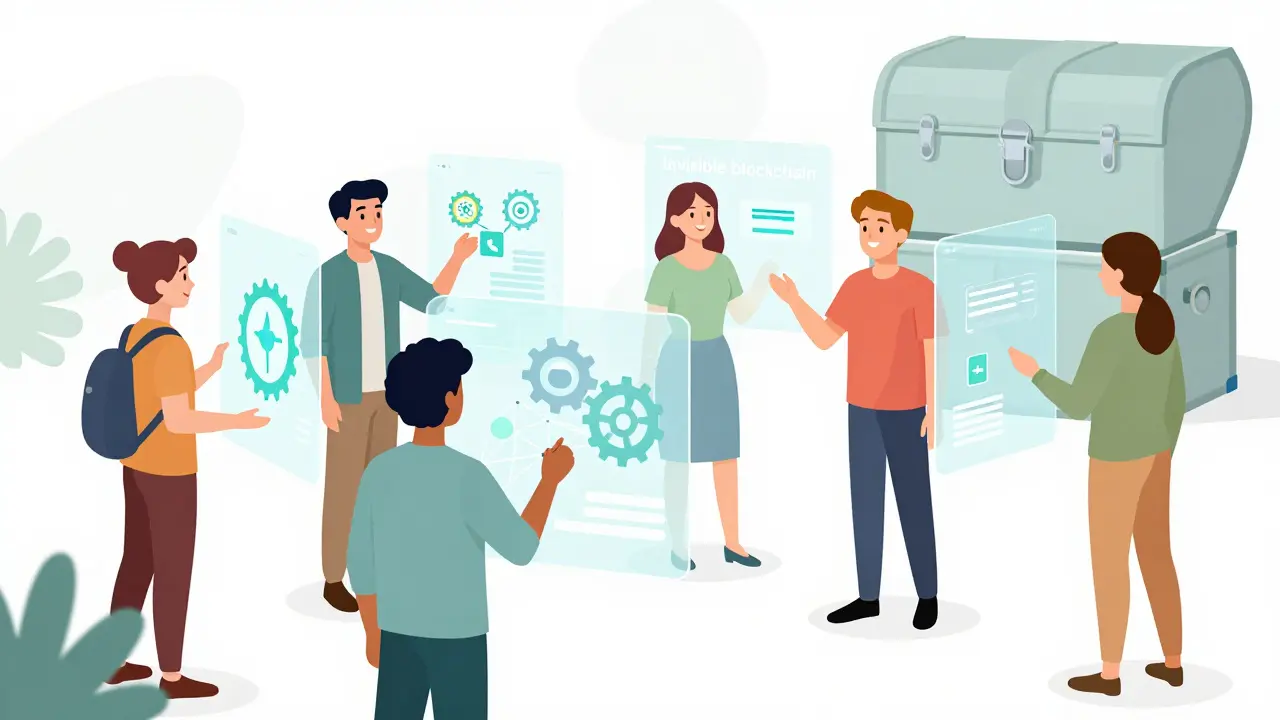
We are finally seeing a shift toward "Web2-equivalent" experiences. One of the most promising moves is the rise of Wallet-as-a-Service. Tools like Web3Auth are allowing users to log in with social accounts. This reduces the onboarding process from seven grueling steps down to two, slashing abandonment rates from 78% to 34%.
Technically, we're also seeing better standards. The ERC-7715 proposal is an attempt to standardize how wallets and dApps talk to each other, which should theoretically cut user confusion in half. Meanwhile, protocols like Avalanche's Interchain Messaging are working to kill the "manual network switch" by allowing different chains to communicate in the background. The goal is simple: the user shouldn't need to know which blockchain they are on; they should only care that the app works.
Why is the onboarding process for dApps so difficult?
The difficulty stems from the non-custodial nature of blockchain. Unlike traditional apps that store passwords on a server, dApps require users to manage their own private keys via seed phrases. If a user loses this phrase, there is no "forgot password" option, making the stakes of the setup process incredibly high and stressful for beginners.
What are gas fees and why do they ruin the UX?
Gas fees are payments made to blockchain validators to process transactions. They ruin the UX because they are often unpredictable, expensive during high traffic, and poorly explained within the app interface, leading to a feeling of "hidden costs" that confuse non-crypto users.
Can a dApp be both decentralized and easy to use?
Yes, but it requires a balance of "smart defaults." This means using tools like social logins for initial onboarding (Account Abstraction) while still allowing advanced users to export their keys for full sovereignty. The key is providing a gradual learning curve rather than forcing expertise on day one.
How does network switching affect the user?
Network switching requires users to manually change the blockchain setting in their wallet (e.g., from Ethereum to Polygon). For a regular person, this is a technical hurdle that often leads to errors or the feeling that the app is broken, significantly increasing the churn rate during the first few minutes of use.
What is the future of dApp design?
The future is "invisible blockchain." We are moving toward interfaces where the complex parts-like gas fees, network switching, and seed phrases-happen in the background. By 2027, experts predict that only dApps with Web2-level simplicity will capture the mainstream market.
Next Steps for Developers and Users
If you're building a dApp, stop focusing on the tokenomics for a second and start focusing on the "Time to Value." How long does it take for a brand-new user to achieve their first success? If it's more than 60 seconds, you have a problem. Implement iterative testing and consider using social login wrappers to lower the barrier to entry.
For users, the best way to avoid the common pitfalls is to start small. Use "hot wallets" for small amounts of experimentation and only move to hardware wallets once you understand the stakes. Always double-check the network you are on before hitting "confirm," and remember that in this ecosystem, you are your own bank-which is a superpower, but also a huge responsibility.

Greg Reynolds
April 22, 2026 AT 04:10The obsession with making blockchain feel like a centralized app is exactly where the industry goes wrong. If you want the safety of a "forgot password" button, just stay on Google and leave the sovereignty to those of us who actually value it. The friction is a feature, not a bug, because it forces the user to acknowledge that they are now solely responsible for their assets. Most people aren't ready for that level of autonomy and they never will be. We shouldn't be dumbing down the tech to fit a lazy user base that refuses to read a manual. The current UX is a filter for competence. If you can't manage a seed phrase, you have no business playing with decentralized finance. It's high time we stop pretending that the average person needs to be a power user of the blockchain for this to be successful.
Mike Krasner
April 23, 2026 AT 17:41imagine thinking a seed phrase is too hard lol just write it down
Tony Gurley-Ward
April 24, 2026 AT 04:33We are basically trying to dress up a digital revolution in a tuxedo of convenience. It's a whimsical little dance where we pretend the plumbing doesn't matter as long as the faucet looks shiny. This push for "invisible blockchain" is just a fancy way of saying we want the magic without the mystery. Why sanitize the experience until it's as bland as a corporate landing page? There is a certain poetic chaos in the current struggle that mirrors the wild west era of the actual west. Let the users stumble a bit. It builds character and a deeper appreciation for the actual architecture of the system. We're trading the soul of the tech for a few seconds of load time and a smoother onboarding flow. It's a tragedy in slow motion wrapped in a sleek UI.
Sarah Fisher
April 25, 2026 AT 18:49I think there's a middle ground here where we can maintain the core ethos of decentralization while still being empathetic to the human experience. We can't expect the world to pivot to a completely new paradigm of ownership without some hand-holding. The balance between sovereignty and simplicity is where the real innovation will happen.
Jason M
April 27, 2026 AT 05:47OH MY GOD YES! Sarah is spot on! We absolutely must bridge this gap or we're just building a playground for the elite! It is heart-wrenching to see so many brilliant projects fail simply because the front door is locked with a key that nobody knows how to use! We need to be the mentors here and guide people through the fog! Let's champion account abstraction and social recovery like our lives depend on it because the adoption of this tech is the only way we move the needle for the common person! We cannot let fear of "too much simplicity" kill the dream of a decentralized web! Let's push for a world where my grandmother can use a dApp without needing a PhD in cryptography!
Lisa Camp
April 27, 2026 AT 08:43STOP COMPLAINING AND JUST FIX IT! If the onboarding is failing 78% of people, that's not a user problem, it's a developer failure! Stop making excuses about "sovereignty" and start building interfaces that don't suck! We need more aggressive iteration and fewer whitepapers! Get the social logins in there and stop treating users like they're toddlers who can't handle a wallet! Move faster or get out of the way!
Liz Ariza
April 28, 2026 AT 07:38I totally get the frustration ✨ it really can feel like a mountain to climb at first! But we just need to be patient and supportive with the newcomers 🌈 maybe a few more friendly guides and some colorful tutorials would make the process feel less scary! Let's just keep encouraging everyone to try it out slowly and safely 🌸💖
praveen subbiah
April 28, 2026 AT 10:06India is going to lead this charge because we have the most developers and the strongest spirit of innovation! We will make the most incredible dApps that the world has ever seen! My country will show everyone how to merge high-tech blockchain with absolute usability! It will be a glorious victory for our tech scene!
Ali Tate
April 29, 2026 AT 04:07lol imagine thinking some basic social login is gonna save this mess. typical midwit take. the sheer audacity of pretending that a wrapper makes it decentralized is peak comedy. go back to your centralized bubble if you're so scared of a 12 word phrase. some of us actually have the intellectual capacity to handle our own keys without needing a babysitter from webauth
Kathleen Bergin
April 30, 2026 AT 09:49The post is just talking about account abstraction and seed phrases which everyone already knows about. It's not that deep. Just use a hardware wallet and you're fine. The gas fees are just how the network works so stop whining about it.
Alex Wan
April 30, 2026 AT 15:43I must agree with the sentiment that we need better standerds. It is truly a travesty that the user experience is so fragmented at this stage of development. If we can collaborate to create a more cohesive interfase, the growth would be exponential. I am truly eager to see the implementtion of ERC-7715 and how it migh alleviate the current frictions encountered by the layperson.
Mike Word
May 1, 2026 AT 13:57It is interesting to see how the cultural perception of security differs between Web2 and Web3. In the traditional sense, trust is placed in the institution, but here, trust is placed in the mathematical process. I wonder if the friction is actually a psychological transition rather than just a technical one.
Alex Hunter
May 2, 2026 AT 17:01Exactly. It's a mental shift. We just need to guide people through it without overwhelming them. Small steps lead to big changes.