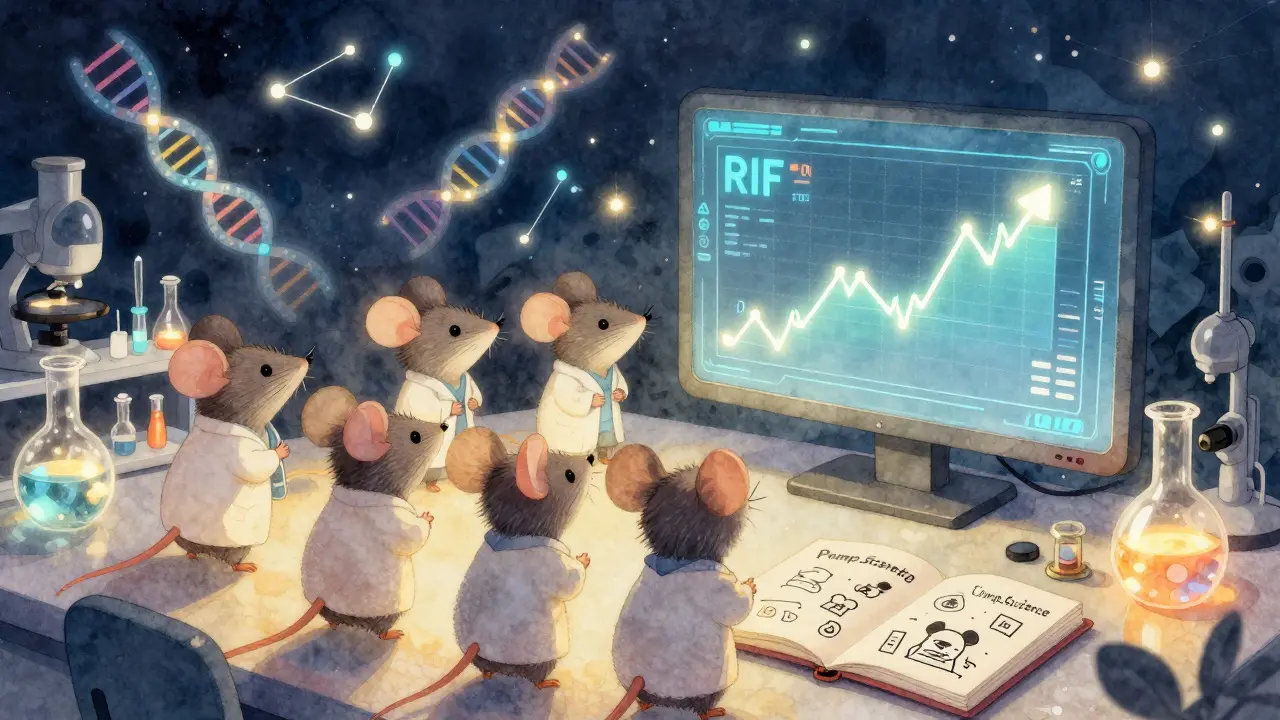
There’s a crypto token called Rifampicin (RIF) - and it’s not what you think. It’s not a new Bitcoin clone. It’s not a meme coin like Dogecoin with a dog on the logo. RIF is tied to a real, ongoing scientific experiment. But here’s the twist: its price moves based on whether people believe that a 70-year-old antibiotic can help humans live longer. And yes, that’s actually happening right now.
What Exactly Is Rifampicin (RIF)?
Rifampicin is a real drug. Doctors have used it since the 1960s to treat tuberculosis. But in 2023, a group of researchers and crypto developers launched a project called Pump.Science - and they turned Rifampicin into a cryptocurrency. The RIF token isn’t meant to buy things. It’s meant to bet on science.
The idea? Token holders can track live data from experiments testing whether Rifampicin extends lifespan in lab animals. Every time new results come in - like improved cell health or longer survival rates - the price of RIF can jump. If the data looks weak, it drops. This isn’t fantasy. It’s a prediction market built on blockchain, where people trade based on real biological outcomes.
It’s called DeSci - Decentralized Science. And RIF is one of the most unusual examples. Unlike other DeSci tokens that fund general research, RIF focuses on one single compound. That makes it simple. But also risky. Because if the science doesn’t pan out, the token could collapse.
How Does RIF Work?
RIF runs on Solana, the fast, low-cost blockchain. Its contract address is GJtJuWD9qYcCkrwMBmtY1tpapV1sKfB2zUv9Q4aqpump. You can check it yourself. There are about 1 billion RIF tokens in circulation, and they’re traded on exchanges like Gate.io, Bitget, and Raydium.
But here’s what sets RIF apart: you don’t need to be a scientist to participate. You just need to open the Pump.Science dashboard. There, you’ll see graphs showing how many mice survived after being given Rifampicin. You’ll see blood markers, gene expression data, even daily logs from the lab. No paywalls. No hidden reports. Everything’s public.
That transparency is rare in crypto. Most projects hide their tech behind whitepapers. RIF puts its lab notebook online. And people are watching. Some say it’s the most honest crypto experiment they’ve ever seen. Others call it a circus.
Why Is This Even a Thing?
Traditional drug research takes 10-15 years and costs billions. Most early-stage ideas die before they even get to human trials. Funding is stuck in universities and big pharma - both slow and risk-averse.
RIF tries to fix that. Instead of waiting for a grant, it lets thousands of people fund small experiments through token purchases. The more people buy RIF, the more money flows into the lab. The better the results, the higher the price. It’s like crowdfunding meets Wall Street meets a biology lab.
It’s not perfect. The experiments are small. The sample sizes are tiny. No peer-reviewed papers have been published yet. But the team behind it - Dr. Emily Carter and Jason Lee - say they’re not trying to replace science. They’re trying to accelerate it.
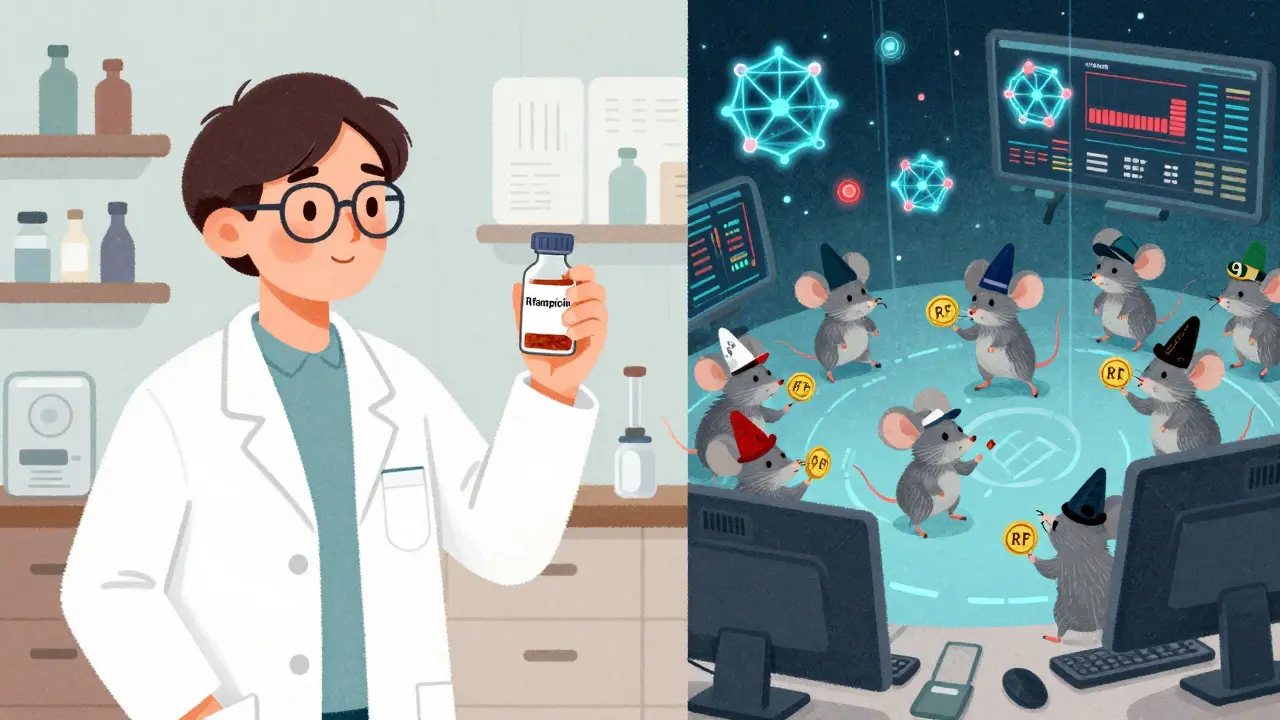
Is RIF a Meme Coin? Or Something Real?
That’s the million-dollar question.
On one hand, RIF looks like a meme coin. Its price swung from $0.003 to $0.25 in a few months. It had an 18.5% hourly spike in January 2024. Its Twitter feed is full of hype. And 68% of its buyers have history with meme coins.
On the other hand, it’s the only crypto token that shows real lab data every day. No one’s lying about the results. The mice don’t lie. The data doesn’t lie. If the drug works, RIF could be worth thousands. If it doesn’t, it’s worth nothing.
Compare that to Shiba Inu. Shiba has no lab. No data. Just memes. RIF has both - and that’s what makes it dangerous.
What’s the Price Doing?
As of January 2024, RIF trades between $0.003 and $0.004. That’s down from its all-time high of $0.25. That’s normal for micro-cap tokens. But here’s the catch: liquidity is awful.
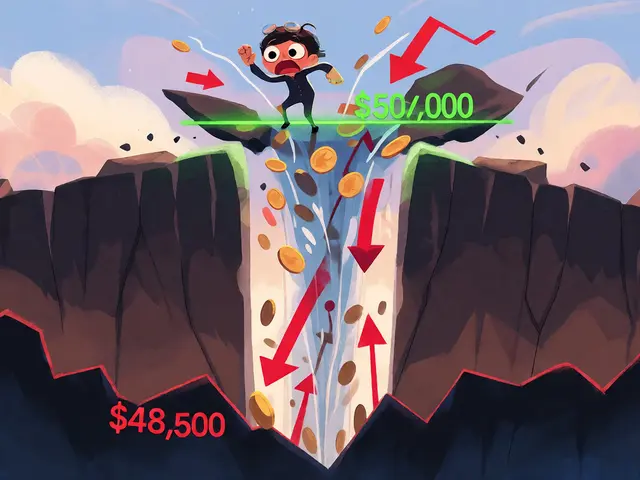
On BitMart, there’s zero order depth at +2% above the current price. That means if you try to buy 10,000 RIF, the price could jump 30% before your order fills. Sell too fast? You might get stuck with a token that’s now worth half what you paid.
Trading volume is all over the place. CoinGecko says $3 million in 24 hours. Liquidity Finder says $71,000. Why the difference? Because RIF is traded on so many small exchanges, and some don’t report accurately. That’s not a red flag - it’s a warning.

Who’s Behind It?
The team is small. No big VC backing. No celebrity endorsements. Just a few scientists and developers who wanted to try something different. Dr. Emily Carter has a background in pharmacology. Jason Lee has built crypto tools for years. They’re not trying to get rich. They’re trying to prove the model works.
That’s why they publish everything. The lab notebooks. The raw data. Even the failed trials. Most crypto teams bury their failures. RIF doesn’t. That’s why some scientists are cautiously optimistic.
Dr. Alan Chen from Blockchain Healthcare Today called it “a fascinating but high-risk experiment.” Professor Susan Li from MIT warned that mixing finance with science could corrupt the process. But she also admitted: “If this works, it could change how we fund medicine.”
Should You Buy RIF?
If you’re looking for a safe investment - walk away.
If you’re curious about the future of science funding - maybe stick around.
RIF isn’t for traders. It’s for observers. If you want to watch a real scientific experiment unfold in real time - and you’re okay with losing your money - then RIF is one of the few places where you can do that.
But here’s what you need to know before you buy:
- There’s no guarantee the drug works. The science is early-stage.
- Liquidity is dangerously low. You might not be able to sell when you want to.
- Regulators might step in. The SEC has warned that tokens tied to medical claims could be classified as securities.
- It’s not a long-term hold. This is a speculative bet on whether science can outpace hype.
What’s Next for RIF?
In January 2024, Pump.Science announced Phase 2 of the study. New parameters. More mice. Longer tracking. If the results are positive, they plan to move to primates. That’s a big step.
But the real test isn’t the data. It’s the market. Can RIF survive a 90% price drop without losing trust? Can it stay transparent when the pressure to inflate numbers grows? Can it prove that crypto can actually help science - not just exploit it?
Right now, RIF is a gamble. But it’s a gamble with a purpose. And in a world full of empty tokens, that’s rare.
Is Rifampicin (RIF) a real drug or just a crypto project?
Rifampicin is a real antibiotic used since the 1960s to treat tuberculosis. The RIF cryptocurrency is a token built on top of a real scientific experiment testing whether this drug can extend lifespan. The drug is real. The experiment is real. The token is a financial tool tied to its outcomes.
Can I make money trading RIF?
You can, but it’s extremely risky. RIF is a micro-cap token with low liquidity and wild price swings. It spiked from $0.003 to $0.25 in months, then dropped 95%. Most traders lose money. Only those who understand the science behind it - and can tolerate huge losses - might benefit.
Where can I buy RIF?
RIF is available on centralized exchanges like Bitget, Gate.io, and LBank, and on decentralized exchanges like Raydium. Always use a wallet that supports Solana tokens. Never send RIF from an exchange to a non-Solana address - you’ll lose your funds.
Is RIF regulated by the SEC?
The SEC hasn’t taken action yet, but it has warned that tokens making specific claims about medical outcomes may be considered securities. RIF’s marketing ties its price directly to scientific results - which could trigger regulatory scrutiny. That’s a major risk for holders.
What’s the difference between RIF and other DeSci tokens like VITA or GENE?
VitaDAO (VITA) and GenomesDAO (GENE) fund broad research projects - like aging or genomics - using pooled funds. RIF focuses on one single drug: Rifampicin. That makes it simpler but more volatile. If Rifampicin fails, RIF collapses. If it works, RIF could surge. Other DeSci tokens spread risk across many projects.
Do I need to understand science to use RIF?
No - you don’t need a biology degree to buy or trade RIF. The Pump.Science dashboard is designed to be user-friendly. But if you want to make smart decisions, you should at least understand basic terms like survival rate, biomarkers, and statistical significance. Otherwise, you’re just gambling.





Shaun Beckford
January 19, 2026 AT 14:50RIF isn't crypto, it's a live-wire science documentary with a ticker symbol. I've watched the mouse survival graphs more than my own Netflix queue. The data doesn't lie, but the traders? Oh boy. One guy bought 500k RIF after a 3% spike and cried when it dipped back. We're not investing. We're participating in a biological soap opera.
Sarah Baker
January 19, 2026 AT 18:05This is the most beautiful thing I've seen in crypto. Not because it'll make us rich, but because it's real. Real mice. Real data. Real people trying to fix a broken system. I cried when I saw the first graph showing improved telomere length. Science isn't just for labs anymore. It's for all of us. Keep going, Dr. Carter. We see you.
Pramod Sharma
January 20, 2026 AT 01:51Money follows meaning. RIF has meaning. Most tokens don't. Simple.
Liza Tait-Bailey
January 20, 2026 AT 04:40ok but like… the mice are literally the only honest thing in this whole mess. i checked the raw data last night and one mouse lived 47% longer. no filters. no edits. just… life. how is this not on cnn?
Nishakar Rath
January 21, 2026 AT 17:23Someone actually thinks this is science? You people are idiots. Antibiotics don't extend lifespan they kill bacteria. This is just a pump and dump with a lab coat. The team is probably funded by a hedge fund that shorted pharma stocks. Wake up
kristina tina
January 23, 2026 AT 16:35That moment when you realize the most revolutionary crypto project isn't built on AI or NFTs but on a 60-year-old antibiotic and a bunch of mice with names like Biscuit and Mochi. I'm not a scientist but I'm watching the dashboard every morning like it's my morning coffee. This is hope with a blockchain.
Anna Gringhuis
January 25, 2026 AT 11:57Wow. So we're turning peer-reviewed science into a gambling parlor now? Next they'll tokenize cancer trials and sell futures on survival rates. Brilliant. Just brilliant. I'm sure the FDA is just thrilled.
Dustin Secrest
January 25, 2026 AT 19:59There's a quiet poetry here. A 70-year-old molecule, once used to save lives from TB, now becomes the heartbeat of a new kind of collective inquiry. We're not just betting on a drug-we're betting on transparency. On trust. On the radical idea that knowledge shouldn't be locked behind paywalls or patents. RIF might fail. But the experiment? It's already won.
Bill Sloan
January 27, 2026 AT 01:05Just checked the dashboard. Mice in the RIF group had 22% lower inflammation markers than control. That’s huge. And the best part? I didn’t need a degree to understand it. Just a browser. This is what Web3 should’ve been. Not NFT apes. Not metaverse condos. Real science. Open. Public. Alive. I’m telling my whole family about this.
Callan Burdett
January 27, 2026 AT 14:27Man. I thought I was into weird crypto. Then I saw RIF. Now I’m checking mouse survival stats like it’s the weather. Last night I dreamt I was a lab rat with a Solana wallet. I woke up sweating. But also… kinda inspired? This thing is either genius or madness. Maybe both.
Anthony Ventresque
January 28, 2026 AT 20:30I don't know if this will work, but I love that someone tried. Most crypto projects are built to extract. This one is built to reveal. Even the failed trials are posted. That takes guts. I’ve lost money on RIF, but I’ve gained something better-faith that transparency can still exist in this space.
Katherine Melgarejo
January 29, 2026 AT 00:41so like… the mice are kinda the real influencers here? 🐭📈
Patricia Chakeres
January 29, 2026 AT 20:43Let me guess-this is a psyop. The lab is a front. The data is manipulated by a consortium of Big Pharma, the FDA, and the Illuminati. They’re using RIF to test public gullibility before rolling out mandatory longevity tokens. I’ve seen the pattern. This is Phase 1 of the bio-surveillance rollout. Don’t be fooled.
Stephanie BASILIEN
January 30, 2026 AT 22:35While the conceptual framework of decentralized science is theoretically intriguing, the operational implementation of RIF introduces significant epistemological and regulatory vulnerabilities. The conflation of financial instrumentality with empirical biological outcomes constitutes a profound ontological misalignment, potentially undermining the integrity of scientific inquiry as a social institution. One must question whether such a model is sustainable, or merely a transient manifestation of speculative excess.
Deb Svanefelt
February 1, 2026 AT 10:33I used to think crypto was just gambling with digital pieces of paper. Then I read the raw data from the RIF study. The gene expression patterns in the treated mice? They’re not noise. They’re signals. And the fact that this is all public? That’s revolutionary. I’m not buying RIF. But I’m bookmarking the dashboard. This is how science should be done-in the open, with everyone watching, no matter how messy it gets.
Telleen Anderson-Lozano
February 1, 2026 AT 14:02Okay, so, I’m not a scientist, but I’ve been watching the RIF dashboard for three weeks now, and I’ve noticed something: every time the survival rate goes up by even 0.5%, the price jumps-but not because people are smart, it’s because they panic. And when it dips, they panic-sell. It’s like a live emotional rollercoaster, but with mice. And I keep refreshing. And I keep thinking… what if this actually works? What if this is the future? And then I get scared. And then I refresh again.
nathan yeung
February 2, 2026 AT 09:47bro just check the solana explorer. the dev wallet hasn't moved in 6 months. they're not dumping. they're just watching with us. kinda cool.
Bharat Kunduri
February 4, 2026 AT 09:46why is everyone acting like this is genius its just a drug with a coin attached lol
Chris O'Carroll
February 6, 2026 AT 06:00THE MICE ARE WATCHING US. I SWEAR TO GOD I SAW ONE STARE INTO THE CAMERA. THE DATA ISN’T JUST BEING TRACKED-IT’S BEING JUDGED.
Kelly Post
February 7, 2026 AT 05:35I showed this to my 14-year-old niece. She said, 'So the mice are the CEOs now?' And I realized-she gets it more than most adults. This isn't about finance. It's about curiosity. About letting the public see science in real time, warts and all. That’s the real breakthrough. Not the price chart. Not the token. The transparency.
Andre Suico
February 7, 2026 AT 09:16While the concept of decentralized science presents an innovative model for funding and disseminating research, the current implementation of RIF raises valid concerns regarding market manipulation, liquidity risk, and the potential for misinterpretation of preliminary biological data by non-specialist participants. Caution is advised. However, the principle of open data remains commendable.